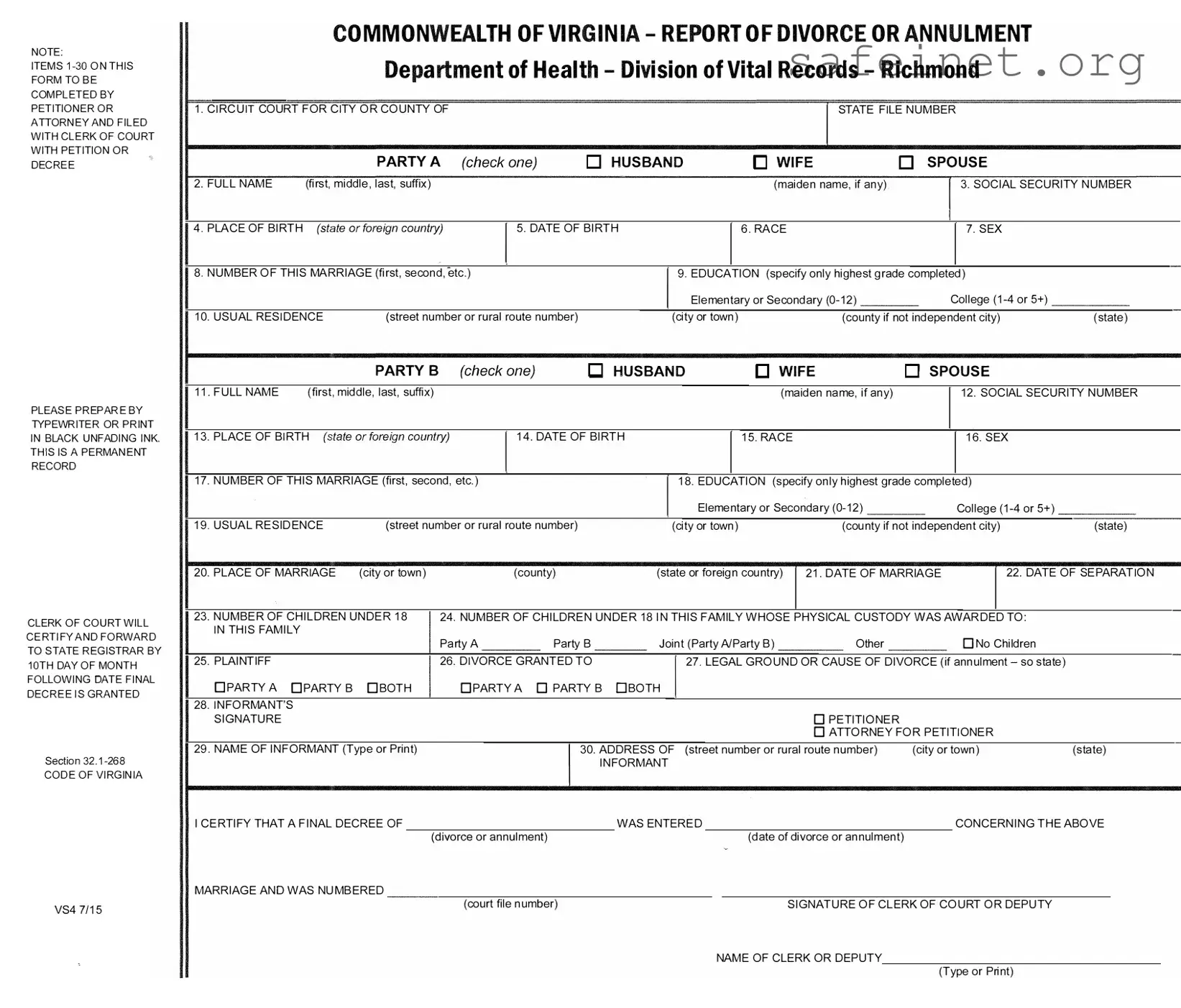
The VS 4 form is an essential document in the process of reporting a divorce or annulment in Virginia. It serves as a formal record that must be completed by either the petitioner or their attorney and filed with the Clerk of Court along with the divorce petition or decree. This form captures critical information about both parties involved, including full names, social security numbers, dates of birth, and places of birth. Additionally, it requires details about the marriage, such as the date of marriage, date of separation, and the number of children under 18. The VS 4 form also necessitates information about the educational background and usual residence of both parties. This is not just a bureaucratic requirement; it contributes to maintaining accurate vital records within the state. Once filled out, the Clerk of Court certifies the document and forwards it to the State Registrar, ensuring that the information is recorded in a permanent archive. By understanding the components of the VS 4 form, individuals can navigate the divorce process more smoothly and ensure compliance with Virginia's legal requirements.

NOTE:
ITEMS
PLEASE PREPARE BY TYPEWRITER OR PRINT IN BLACK UNFADING INK. THIS IS A PERMANENT RECORD
CLERK OF COURT WILL CERTIFY AND FORWARD TO STATE REGISTRAR BY 10TH DAY OF MONTH FOLLOWING DATE FINAL DECREE IS GRANTED
Section
CODE OF VIRGINIA
VS4 7/15
|
|
COMMONWEALTH OF VIRGINIA- REPORT OF DIVORCE OR ANNULMENT |
|
|||||||||||||||||||||||||
|
|
|
Department of Health- Division of Vital Records- Richmond |
|
||||||||||||||||||||||||
1. CIRCUIT COURT FOR CITYOR COUNTYOF |
|
|
|
|
|
|
|
|
|
|
|
|
|
|
|
|
|
I STATE FILE NUMBER |
|
|||||||||
2. FULL NAME |
|
|
PARTYA |
(check one) |
|
0 HUSBAND |
|
|
|
|
0 WIFE |
D SPOUSE |
|
|||||||||||||||
|
(first. middle, last, suffix) |
|
|
I 5. DATE OF BIRTH |
|
|
|
|
|
|
|
|
|
(maiden name, if any) |
|
I |
|
3. SOCIAL SECURITYNUMBER |
||||||||||
4. PLACE OF BIRTH |
(state or foreign country) |
|
|
|
|
|
|
|
16. RACE |
|
|
|
|
|
17. SEX |
|
||||||||||||
8. NUMBER OF THIS MARRIAGE (first, second, etc.) |
|
|
|
|
I 9. EDUCATION (specify only highest grade |
completed) |
|
|||||||||||||||||||||
10. USUAL RESIDENCE |
|
|
|
|
|
|
|
|
|
|
|
|
Elementary or Secondary |
|
College |
|
||||||||||||
(street number or rural route number) |
|
|
|
(city or |
town) |
|
|
|
(county if not independent city) |
(state) |
||||||||||||||||||
11. FULL NAME |
|
|
PARTYB |
(check one) |
|
0 HUSBAND |
|
|
|
|
D |
WIFE |
D SPOUSE |
|
||||||||||||||
|
(first, middle, last, suffix) |
|
|
|
|
|
|
|
|
|
|
|
|
|
|
(maiden name, if any) |
|
112. SOCIAL SECURITYNUMBER |
||||||||||
13. PLACE OF BIRTH (state or foreign country) |
|
114. DATE OF BIRTH |
|
|
|
|
|
|
1 |
15. RACE |
|
|
116. SEX |
|
||||||||||||||
17. NUMBER OF THIS MARRIAGE (first, second, etc.) |
|
|
|
|
1 |
18. EDUCATION (specify only highest grade completed) |
|
|||||||||||||||||||||
19. USUAL RESIDENCE |
|
|
|
|
|
|
|
|
|
|
Elementary or Secondary |
|
|
College |
|
|||||||||||||
(street number or rural route number) |
|
|
|
(city or town) |
|
|
|
(county if not independent city) |
(state) |
|||||||||||||||||||
20. PLACE OF MARRIAGE |
(city or town) |
|
|
(county) |
|
|
(state or foreign country) |
121. DATE OF MARRIAGE |
|
122. DATE OF SEPARATION |
||||||||||||||||||
23. NUMBER OF CHILDREN UNDER 18 |
24. NUMBER OF CHILDREN UNDER 18 IN THIS FAMILYWHOSE PHYSICAL CUSTODY\/VAS |
AWARDED TO: |
|
|||||||||||||||||||||||||
IN THIS FAMILY |
|
|
|
Party A |
Party B |
|
Joint (Party A/Party B) |
|
|
|
Other |
|
|
|
DNo Children |
|
||||||||||||
25. PLAINTIFF |
OPARTYB |
OBOTH |
26. DIVORCE GRANTED TO |
0BOTH |
|
I |
|
27. LEGAL GROUND OR |
CAUSE OF DIVORCE (if annulment- so state) |
|
||||||||||||||||||
OPARTYA |
|
DPARTYA |
D PARTYB |
|
|
|
|
|
|
|
|
|
|
|
|
|
|
|
|
|||||||||
28. INFORMANT'S |
|
|
|
|
|
|
|
|
|
|
|
|
|
|
|
|
|
|
|
D PETITIONER |
|
|
|
|||||
SIGNATURE |
|
|
|
|
|
|
|
|
|
|
|
|
|
|
|
|
|
|
|
|
|
|
|
|
||||
29. NAME OF INFORMANT (Type or Print) |
|
|
|
I |
30. ADDRESS OF |
|
|
|
|
|
|
|
|
D ATTORNEYFOR PETITIONER |
|
|||||||||||||
|
|
|
|
(street number or rural route number) |
|
(city or town) |
(state) |
|||||||||||||||||||||
I CERTIFYTHAT A FINAL DECREE OF |
|
|
|
|
INFORMANT |
|
|
|
|
|
|
|
|
|
|
|
|
CONCERNING THE ABOVE |
||||||||||
|
|
|
WAS ENTERED |
|
|
|
|
|
|
|
|
|
|
|||||||||||||||
|
(divorce or annulment) |
|
|
|
|
(date of divorce or annulment) |
||||||||||||||||||||||
|
|
|
|
|
|
|
|
|
|
|
|
|
|
|
|
|
|
|
|
|
|
|||||||
MARRIAGE ANO WAS NUMBERED |
|
(court file number) |
|
|
|
|
|
|
|
|
|
|
|
|
SIGNATURE OF CLERK OF COURT OR DEPUTY |
|
||||||||||||
|
|
|
|
|
|
|
|
|
|
|
|
|
|
|
|
|
|
|
||||||||||
NAME OF CLERK OR DEPUTY |
(Type or Print) |
|
| Fact Name | Description |
|---|---|
| Governing Law | This form is governed by Section 32.1-268 of the Code of Virginia. |
| Purpose | The form is used to report divorce or annulment to the state registrar. |
| Filing Requirement | It must be filed with the Clerk of Court along with the petition or decree. |
| Completion Instructions | Items 1-30 must be completed by the petitioner or attorney. |
| Certification | The Clerk of Court will certify and forward the form within ten days of the final decree. |
| Permanent Record | This document is considered a permanent record of the divorce or annulment. |
| Information Required | Full names, social security numbers, dates of birth, and education levels are required. |
| Child Custody Information | The form includes sections to specify custody arrangements for children under 18. |
Filling out the Vs 4 form is a straightforward process that requires attention to detail. This form is essential for documenting a divorce or annulment in Virginia. Once completed, it will be submitted to the Clerk of Court along with the petition or decree. Ensure all information is accurate and legible, as it will become part of the permanent record.
What is the purpose of the VS 4 form?
The VS 4 form serves as an official report of divorce or annulment in the Commonwealth of Virginia. It is required to be completed by the petitioner or their attorney and filed with the clerk of court alongside the divorce petition or decree. This form captures essential information regarding both parties involved in the divorce, including their personal details, marriage history, and the circumstances surrounding the dissolution of the marriage. Ultimately, the clerk certifies the form and forwards it to the state registrar, ensuring that the information is recorded in the vital records system.
Who is responsible for filling out the VS 4 form?
The responsibility for completing the VS 4 form lies primarily with the petitioner or their attorney. It is crucial that the form is filled out accurately and completely, as it contains important details that will be part of the public record. Items 1 through 30 on the form must be filled in, and it is recommended that the information be typed or printed in black, unfading ink to maintain the integrity of this permanent record. Failure to provide accurate information may result in complications in the divorce process or issues with record-keeping.
What information is required on the VS 4 form?
The VS 4 form requires a variety of information about both parties involved in the divorce. Key details include full names, dates of birth, social security numbers, places of birth, and educational backgrounds. Additionally, the form asks for information regarding the marriage itself, such as the date and place of marriage, the date of separation, and the number of children under 18. This comprehensive collection of data helps to create a clear record of the divorce and ensures that all relevant information is available for legal and administrative purposes.
What happens after the VS 4 form is submitted?
Once the VS 4 form is completed and submitted to the clerk of court, it undergoes a certification process. The clerk reviews the form to ensure all necessary information has been provided and then certifies it, indicating that a final decree of divorce or annulment has been entered. The certified form is then forwarded to the state registrar within a specified timeframe, typically by the 10th day of the month following the final decree. This process ensures that the divorce is officially recorded in the state's vital records, which can be important for future legal matters, such as custody disputes or remarriage.
Incomplete Information: Failing to fill out all required fields can lead to delays. Each section must be completed fully to ensure the form is processed correctly.
Incorrect Names: Providing incorrect names for either party can create confusion. It is essential to use full legal names, including any suffixes.
Missing Social Security Numbers: Omitting social security numbers for both parties is a common mistake. This information is crucial for identification purposes.
Improper Formatting: Using non-black ink or handwriting can result in the form being rejected. The instructions specify that the form should be filled out in black unfading ink or typed.
Incorrect Dates: Entering wrong dates for birth, marriage, or separation can lead to complications. Double-check all dates for accuracy.
Not Indicating Education Level: Failing to specify the highest grade completed can lead to incomplete records. It is important to provide this information accurately.
Signature Issues: Not signing the form or providing an incorrect signature can result in rejection. Ensure that the signature matches the name provided on the form.
The VS 4 form is an important document used to report a divorce or annulment in Virginia. Along with this form, there are several other documents that are commonly required during the divorce process. Here’s a list of those documents, along with brief descriptions of each.
Each of these documents plays a crucial role in the divorce process. Understanding their purpose can help individuals navigate this challenging time more effectively.
The Vs 4 form, which reports a divorce or annulment, shares similarities with the Form 1040, the U.S. Individual Income Tax Return. Both documents require detailed personal information, such as names, Social Security numbers, and addresses. Just as the Vs 4 form collects data to update marital status, the Form 1040 gathers financial information to assess tax obligations. Each form must be filed with the appropriate authority—courts for the Vs 4 and the IRS for the 1040—ensuring that both personal and financial records are officially documented and maintained.
Another document akin to the Vs 4 is the marriage license application. This application collects similar personal details about both parties, including full names, dates of birth, and places of birth. While the Vs 4 form is filed after the marriage has ended, the marriage license application is completed before the marriage takes place. Both documents serve to establish legal recognition of a relationship, whether it is beginning or dissolving.
The child custody agreement is also comparable to the Vs 4 form, particularly in its focus on family structure and the well-being of children. Both documents require information about the parties involved and their children, including custody arrangements. The Vs 4 may indicate the number of children under 18 and their custody status, similar to how a custody agreement outlines living arrangements and parental responsibilities. Each document aims to clarify the family situation in a legal context.
Additionally, the property settlement agreement parallels the Vs 4 form in addressing the division of assets and liabilities following a divorce. This agreement details how property and debts will be shared or divided between the parties, while the Vs 4 records the dissolution of the marriage itself. Both documents are essential in ensuring that the legal aspects of a marriage's end are clear and enforceable.
The final decree of divorce is another document that works closely with the Vs 4 form. This decree is the court's official order that finalizes the divorce, similar to how the Vs 4 records the essential details of that divorce for state records. Both documents are vital for legal recognition of the divorce, with the final decree serving as the court's ruling and the Vs 4 as a record for vital statistics.
The affidavit of support is relevant when considering the financial implications of a marriage or divorce. This document is often required in immigration cases and outlines the financial support one spouse may provide to the other. Similar to the Vs 4 form, it contains personal information about both parties and serves to establish legal obligations, whether during the marriage or after its dissolution.
The family law petition also bears resemblance to the Vs 4 form. This petition initiates legal proceedings regarding family matters, including divorce, custody, and support. It collects information about the parties and the nature of the request, much like the Vs 4 gathers details about the divorce itself. Both documents aim to facilitate legal processes concerning family relationships.
Lastly, the certificate of dissolution of marriage is closely related to the Vs 4 form. This certificate is issued by the court once a divorce is finalized and serves as an official record of the marriage's end. Like the Vs 4, it includes essential information about the parties involved and the nature of the dissolution, ensuring that there is an official document confirming the legal status of the individuals.
When filling out the VS 4 form, it's important to follow specific guidelines to ensure that your submission is accurate and accepted. Here’s a list of things you should and shouldn't do:
By following these guidelines, you can help ensure that your VS 4 form is filled out correctly and processed without unnecessary delays.
When dealing with the Virginia VS 4 form, several misconceptions can arise. Understanding these can help ensure that the process of filing for divorce or annulment goes smoothly. Here are five common misconceptions:
By addressing these misconceptions, individuals can better navigate the requirements of the VS 4 form and avoid potential pitfalls during the divorce or annulment process.
Filling out the Vs 4 form correctly is essential for ensuring that your divorce or annulment is processed smoothly. Here are some key takeaways to consider: