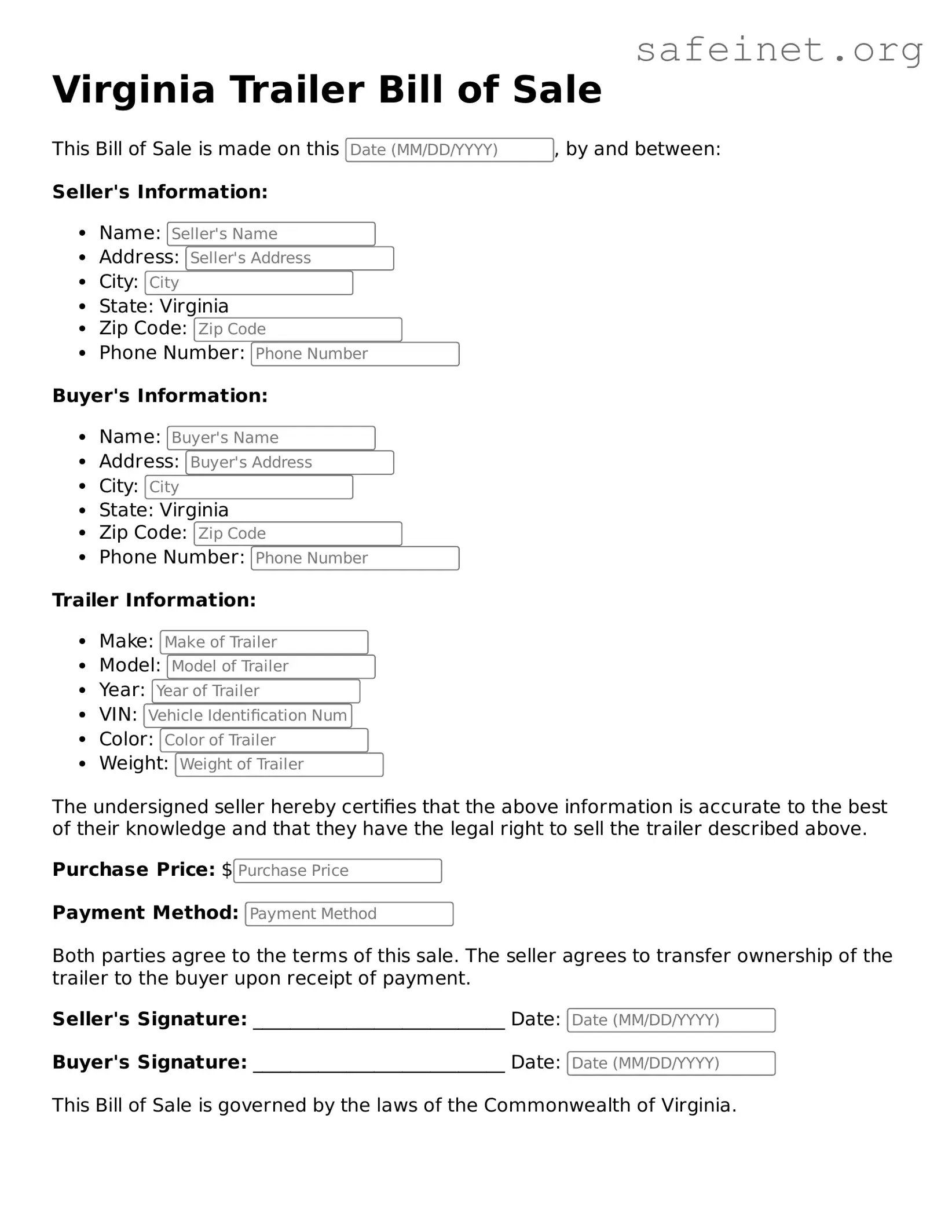
The Virginia Trailer Bill of Sale form serves as an essential document for individuals looking to buy or sell a trailer in the state of Virginia. This form provides a clear record of the transaction, ensuring that both parties have a mutual understanding of the sale's terms. Key elements of the form include the names and addresses of the buyer and seller, a detailed description of the trailer, and the sale price. Additionally, it often requires the seller's signature to validate the transaction. This document not only protects the interests of both parties but also aids in the transfer of ownership, making it easier for the buyer to register the trailer with the Department of Motor Vehicles. Understanding the importance of this form can help streamline the buying or selling process, reducing potential disputes and ensuring a smooth transition of ownership.
Virginia Trailer Bill of Sale
This Bill of Sale is made on this , by and between:
Seller's Information:
Buyer's Information:
Trailer Information:
The undersigned seller hereby certifies that the above information is accurate to the best of their knowledge and that they have the legal right to sell the trailer described above.
Purchase Price: $
Payment Method:
Both parties agree to the terms of this sale. The seller agrees to transfer ownership of the trailer to the buyer upon receipt of payment.
Seller's Signature: ___________________________ Date:
Buyer's Signature: ___________________________ Date:
This Bill of Sale is governed by the laws of the Commonwealth of Virginia.
| Fact Name | Description |
|---|---|
| Purpose | The Virginia Trailer Bill of Sale form is used to document the sale and transfer of ownership of a trailer in Virginia. |
| Governing Law | This form is governed by the Virginia Code, specifically Title 46.2, which covers motor vehicles and trailers. |
| Required Information | Buyers and sellers must provide details such as names, addresses, trailer description, and sale price. |
| Notarization | While notarization is not mandatory, it is recommended to enhance the document's validity and provide additional protection. |
| Use for Registration | The completed form can be used to register the trailer with the Virginia Department of Motor Vehicles. |
After obtaining the Virginia Trailer Bill of Sale form, you will need to complete it accurately. This document is essential for transferring ownership of a trailer. Follow these steps to ensure all necessary information is provided correctly.
Once the form is completed and signed, keep a copy for your records. The buyer will need this document for registration purposes. Make sure to check for any specific requirements in your local jurisdiction regarding trailer sales.
What is a Virginia Trailer Bill of Sale form?
The Virginia Trailer Bill of Sale form is a legal document used to record the sale of a trailer in the state of Virginia. This form captures essential information about the transaction, including details about the buyer, seller, and the trailer itself. It serves as proof of ownership transfer and can be helpful for registration purposes with the Virginia Department of Motor Vehicles (DMV).
What information is required on the form?
When filling out the Virginia Trailer Bill of Sale form, several key details must be included. This includes the names and addresses of both the buyer and seller, the trailer's make, model, year, and Vehicle Identification Number (VIN). The sale price and the date of the transaction should also be documented. Both parties typically sign the form to validate the sale.
Do I need to have the form notarized?
In Virginia, notarization of the Trailer Bill of Sale is not a strict requirement. However, having the document notarized can provide an extra layer of security and verification for both the buyer and seller. It may also be beneficial if there are any disputes in the future regarding the sale.
How do I use the Bill of Sale after completing it?
Once the Virginia Trailer Bill of Sale form is completed and signed by both parties, the buyer should keep a copy for their records. The buyer will need this document when registering the trailer with the DMV. It is advisable to submit the bill of sale along with any other required paperwork, such as a title transfer, to ensure a smooth registration process.
Incomplete Information: Many individuals fail to fill out all required fields. Each section of the form is crucial for establishing a clear record of the transaction. Omitting details can lead to confusion or disputes later.
Incorrect Vehicle Identification Number (VIN): It’s common for sellers to miswrite the VIN. This unique identifier is essential for tracking the trailer’s history. A simple typo can render the document invalid.
Missing Signatures: Both the buyer and seller must sign the form for it to be legally binding. Forgetting to sign can delay the transfer of ownership and create complications during registration.
Not Including Sale Price: Some sellers neglect to list the sale price. This detail is important for tax purposes and helps establish the value of the trailer in case of disputes.
Failure to Date the Document: The date of the sale is a critical component. Without it, there may be questions about when the transaction occurred, which can affect ownership rights and responsibilities.
Ignoring Local Regulations: Each locality may have specific requirements regarding trailer sales. Failing to comply with these can lead to issues with the DMV or other authorities.
Not Retaining a Copy: After completing the form, individuals often forget to keep a copy for their records. Having a duplicate can provide peace of mind and serve as proof of the transaction if needed in the future.
When completing a transaction involving a trailer in Virginia, several additional documents may be necessary to ensure a smooth process. These documents provide essential information and legal protection for both the buyer and the seller.
Having these documents ready can facilitate the transfer of ownership and ensure compliance with state regulations. It is advisable to consult with local authorities or legal experts if there are any uncertainties regarding the required paperwork.
The Virginia Boat Bill of Sale serves a similar purpose as the Trailer Bill of Sale. It is used to document the transfer of ownership of a boat from one party to another. Just like the Trailer Bill of Sale, it includes essential details such as the buyer's and seller's information, a description of the boat, and the sale price. This document helps protect both parties by providing proof of the transaction and can be crucial for registration purposes.
The Virginia Vehicle Bill of Sale is another document that parallels the Trailer Bill of Sale. This form is specifically designed for the sale of motor vehicles, including cars and trucks. It captures similar information, such as the vehicle identification number (VIN), the buyer's and seller's details, and the sale amount. Both documents serve as legal proof of ownership transfer, ensuring that the buyer can register the vehicle in their name without complications.
The Virginia Motorcycle Bill of Sale also shares similarities with the Trailer Bill of Sale. This document is used when transferring ownership of a motorcycle. It includes key details like the make, model, and VIN of the motorcycle, along with the buyer's and seller's information. Both forms facilitate a smooth ownership transfer and provide necessary documentation for registration and titling purposes.
The Virginia ATV Bill of Sale is akin to the Trailer Bill of Sale, as it pertains to the sale of all-terrain vehicles. It includes essential information such as the ATV's description, the parties involved, and the sale price. Both documents serve to protect the interests of both the buyer and seller by providing a clear record of the transaction, making it easier for the buyer to register the ATV after the sale.
The Virginia Snowmobile Bill of Sale is another document that aligns with the Trailer Bill of Sale. This form is used when a snowmobile changes hands. It captures details about the snowmobile, including its make, model, and VIN, along with the buyer's and seller's contact information. Both documents ensure that ownership is clearly established and can be referenced in case of disputes or for registration purposes.
Lastly, the Virginia Personal Watercraft Bill of Sale is similar to the Trailer Bill of Sale in that it documents the sale of personal watercraft, such as jet skis. This document includes pertinent information about the watercraft and the parties involved in the transaction. Both forms provide a necessary legal record that helps protect the interests of both the buyer and seller during the transfer of ownership.
When filling out the Virginia Trailer Bill of Sale form, it is essential to ensure accuracy and completeness. Here are ten things you should and shouldn't do to facilitate a smooth transaction.
When dealing with the Virginia Trailer Bill of Sale form, several misconceptions can lead to confusion. Understanding the truth behind these myths is essential for anyone buying or selling a trailer in Virginia. Here’s a list of common misconceptions:
Being informed about these misconceptions can help ensure a smoother and more secure transaction when buying or selling a trailer in Virginia. Always consider consulting with a knowledgeable professional if you have questions or concerns about the process.
When filling out and using the Virginia Trailer Bill of Sale form, keep these key takeaways in mind: