When buying or selling a recreational vehicle (RV) in Virginia, having a properly completed RV Bill of Sale is essential for both parties involved in the transaction. This document serves as a legal record of the sale, capturing key details such as the names and addresses of the buyer and seller, the vehicle identification number (VIN), and the make and model of the RV. Additionally, it outlines the sale price and any terms agreed upon by both parties. This form not only protects the interests of both the buyer and seller but also simplifies the process of transferring ownership. Whether you are a seasoned RV owner or a first-time buyer, understanding the importance of this document can help ensure a smooth transaction and provide peace of mind as you embark on your new adventures on the road.
Virginia RV Bill of Sale Template
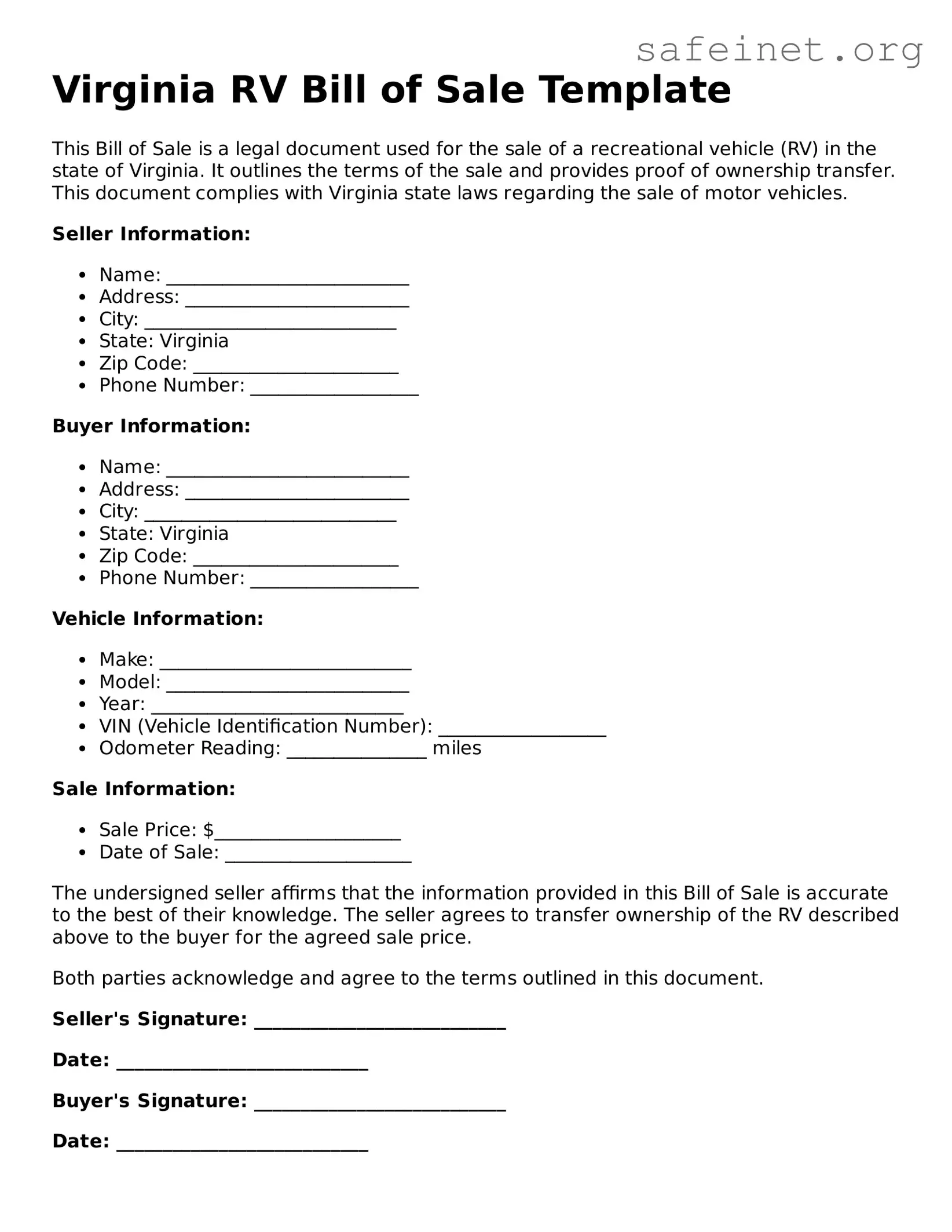
This Bill of Sale is a legal document used for the sale of a recreational vehicle (RV) in the state of Virginia. It outlines the terms of the sale and provides proof of ownership transfer. This document complies with Virginia state laws regarding the sale of motor vehicles.
Seller Information:
Buyer Information:
Vehicle Information:
Sale Information:
The undersigned seller affirms that the information provided in this Bill of Sale is accurate to the best of their knowledge. The seller agrees to transfer ownership of the RV described above to the buyer for the agreed sale price.
Both parties acknowledge and agree to the terms outlined in this document.
Seller's Signature: ___________________________
Date: ___________________________
Buyer's Signature: ___________________________
Date: ___________________________
This document serves as proof of the transaction and should be kept for future reference.
| Fact Name | Description |
|---|---|
| Purpose | The Virginia RV Bill of Sale form serves as a legal document to transfer ownership of a recreational vehicle from one party to another. |
| Governing Law | This form is governed by Virginia state laws regarding vehicle sales and transfers. |
| Required Information | Both the seller and buyer must provide their names, addresses, and signatures. The RV details, including make, model, and VIN, are also necessary. |
| Notarization | While notarization is not mandatory, it is recommended to enhance the document's validity and authenticity. |
| Usage | This form is typically used during private sales, but it can also be used for sales through dealerships. |
| Record Keeping | Both parties should retain a copy of the completed Bill of Sale for their records. This serves as proof of the transaction. |
Once you have the Virginia RV Bill of Sale form in front of you, it’s time to fill it out. This document is essential for transferring ownership of a recreational vehicle. Follow these steps to ensure you complete it correctly.
After filling out the form, it’s important to keep it in a safe place. The buyer will need this document for registration and title transfer purposes. Make sure both parties have a clear understanding of the transaction to avoid any future misunderstandings.
What is a Virginia RV Bill of Sale?
A Virginia RV Bill of Sale is a legal document that serves as proof of the sale and purchase of a recreational vehicle (RV) in the state of Virginia. This document outlines essential details about the transaction, including the buyer and seller's information, the RV's description, and the sale price. It protects both parties by providing a record of the agreement made during the sale.
Why is a Bill of Sale important when buying or selling an RV?
The Bill of Sale is crucial for several reasons. It provides legal protection for both the buyer and the seller by documenting the transaction. For the buyer, it serves as proof of ownership and can be necessary for registering the RV. For the seller, it confirms that they have transferred ownership and are no longer responsible for the vehicle. Additionally, it can be helpful in resolving any disputes that may arise in the future.
What information is required on the Virginia RV Bill of Sale?
Essential information must be included in the Bill of Sale. This includes the full names and addresses of both the buyer and the seller, the RV's make, model, year, and Vehicle Identification Number (VIN). Additionally, the sale price and the date of the transaction should be clearly stated. Any terms or conditions of the sale can also be included to ensure clarity for both parties.
Do I need to have the Bill of Sale notarized?
In Virginia, it is not a legal requirement to have the Bill of Sale notarized. However, having it notarized can add an extra layer of security and authenticity to the document. A notary public can verify the identities of both parties, which can be beneficial if there are any disputes or questions about the transaction in the future.
Can I use a generic Bill of Sale template for my RV sale?
While you can use a generic Bill of Sale template, it is advisable to use a form specifically designed for RV sales in Virginia. This ensures that all necessary information is included and that the document complies with state regulations. A specialized form can help prevent any potential issues during the registration process or in case of disputes.
What should I do after completing the Bill of Sale?
Once the Bill of Sale is completed and signed by both parties, it is essential to keep a copy for your records. The buyer should take the original document to their local Department of Motor Vehicles (DMV) to register the RV in their name. The seller should also retain a copy to document the sale and protect themselves from any future liabilities associated with the vehicle.
Is there a specific format for the Virginia RV Bill of Sale?
There is no strict format mandated by the state for the Virginia RV Bill of Sale. However, it is important to ensure that all required information is clearly presented. A well-organized document that includes all necessary details will help facilitate a smooth transaction and provide clarity for both parties involved.
What if I encounter issues after the sale?
If issues arise after the sale, such as disputes over the condition of the RV or payment, the Bill of Sale can serve as a critical piece of evidence. It is advisable to address any concerns directly with the other party first. If a resolution cannot be reached, seeking legal advice may be necessary. Having a clear and detailed Bill of Sale will help in resolving such matters more effectively.
Incorrect Vehicle Information: Ensure that the make, model, year, and Vehicle Identification Number (VIN) are accurately filled out. Mistakes in this information can lead to issues with registration.
Missing Seller and Buyer Details: Both parties must provide their full names and addresses. Omitting this information can create problems in proving ownership later.
Failure to Sign: The seller must sign the document. Without a signature, the sale is not legally binding, and the buyer may face challenges in registering the RV.
Incorrect Date: Always include the correct date of the transaction. This date is crucial for establishing the timeline of ownership.
Not Including the Sale Price: Clearly state the sale price of the RV. This information is important for tax purposes and future reference.
Neglecting to Keep Copies: Both the buyer and seller should retain a copy of the completed Bill of Sale. This document serves as proof of the transaction and can be essential if disputes arise.
When completing a transaction for a recreational vehicle (RV) in Virginia, it is essential to have the proper documentation in place. Along with the Virginia RV Bill of Sale form, several other forms and documents can facilitate a smooth transfer of ownership and ensure compliance with state regulations. Below are five important documents that are often used in conjunction with the RV Bill of Sale.
Having these documents prepared and properly filled out can help avoid complications during the transfer process. Ensure that all parties involved understand their responsibilities and maintain copies of each document for their records. This proactive approach will help facilitate a successful and compliant RV sale in Virginia.
The Virginia RV Bill of Sale form shares similarities with the Vehicle Bill of Sale. Both documents serve as proof of transfer of ownership for a vehicle, whether it be an RV or a standard car. They typically include essential details such as the buyer's and seller's information, vehicle identification number (VIN), make, model, year, and the sale price. This ensures that both parties have a clear understanding of the transaction and provides legal protection should any disputes arise.
Another document akin to the RV Bill of Sale is the Boat Bill of Sale. Like the RV Bill of Sale, this document is used to record the sale of a boat. It includes similar information, such as the buyer and seller's details, boat specifications, and the sale price. The Boat Bill of Sale also serves to protect both parties by documenting the transfer of ownership and can be required for registration purposes.
The Motorcycle Bill of Sale is yet another similar document. This form is used when buying or selling a motorcycle and contains comparable information to the RV Bill of Sale. It records the transaction details, including the motorcycle's VIN, make, model, and the agreed-upon price. Having this document helps establish ownership and can be essential for future registration and insurance needs.
A Snowmobile Bill of Sale also parallels the RV Bill of Sale. When purchasing or selling a snowmobile, this document captures the necessary transaction details, including the buyer and seller's information, snowmobile specifications, and sale price. It serves a similar purpose by providing proof of ownership transfer, which is crucial for registration and legal purposes.
The Trailer Bill of Sale is another document with a similar function. This form is used when a trailer is sold or purchased, containing essential information such as the trailer's identification details and the sale price. Like the RV Bill of Sale, it serves to document the transaction and protect the interests of both the buyer and seller.
The ATV Bill of Sale is comparable as well. This document is used for the sale of all-terrain vehicles and includes similar details regarding the buyer, seller, and the ATV itself. It provides legal proof of the transaction and helps ensure a smooth transfer of ownership, which is important for registration and potential future sales.
The Personal Watercraft Bill of Sale is another document that mirrors the RV Bill of Sale. This form is specifically used for the sale of personal watercraft, such as jet skis. It includes relevant transaction details, similar to those found in the RV Bill of Sale, ensuring that both parties have a clear record of the ownership transfer.
Lastly, the General Bill of Sale can also be considered similar. This document is broader in scope and can be used for various types of personal property transactions, including RVs. It captures essential information about the buyer, seller, and item being sold, providing a legal record of the transaction. While it may not have the specific details related to vehicles, it serves a similar purpose in documenting ownership transfer.
When filling out the Virginia RV Bill of Sale form, it’s important to follow certain guidelines to ensure the process goes smoothly. Here are some dos and don’ts to keep in mind:
When it comes to the Virginia RV Bill of Sale form, there are several misconceptions that can lead to confusion. Understanding the truth behind these myths can help ensure a smoother transaction when buying or selling a recreational vehicle. Here’s a list of common misconceptions:
By understanding these misconceptions, both buyers and sellers can navigate the RV transaction process with confidence. Always consult with a knowledgeable source if you have questions or need assistance with the Bill of Sale.
When filling out and using the Virginia RV Bill of Sale form, it is important to keep several key points in mind. This document serves as a legal record of the sale and transfer of ownership for recreational vehicles. Below are essential takeaways for effective use of the form:
Following these guidelines will help ensure a smooth transaction when buying or selling an RV in Virginia.