When renting a room in Virginia, having a clear and comprehensive Room Rental Agreement is essential for both landlords and tenants. This document outlines the responsibilities and rights of each party, ensuring that everyone is on the same page from the start. Key components typically included in the agreement are the rental amount, payment due dates, and the duration of the lease. It also addresses security deposits, maintenance responsibilities, and rules regarding pets or guests. Additionally, the agreement should specify the procedures for terminating the lease and the notice required for moving out. By clearly defining these terms, the Room Rental Agreement helps to prevent misunderstandings and disputes, fostering a positive rental experience for both parties involved.
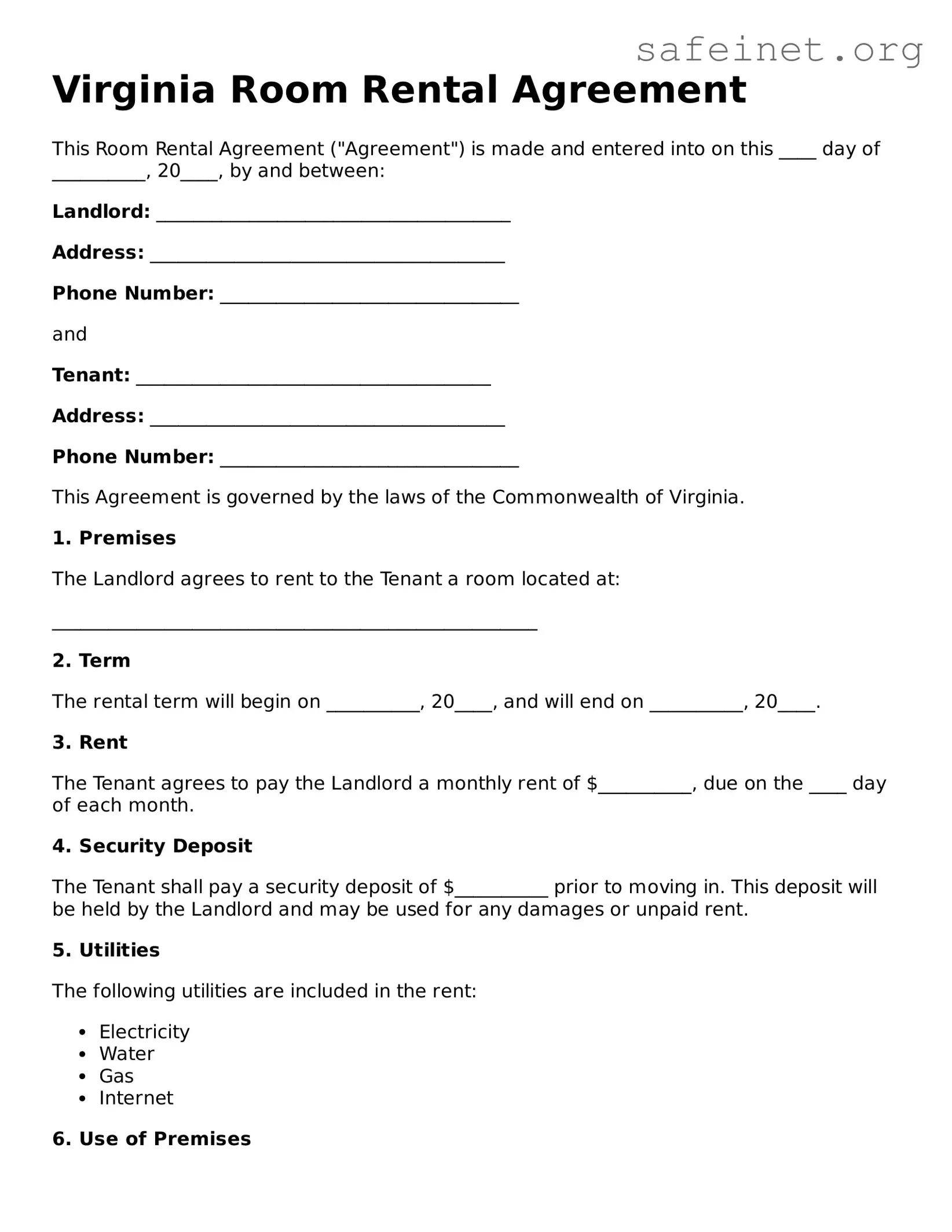
Virginia Room Rental Agreement
This Room Rental Agreement ("Agreement") is made and entered into on this ____ day of __________, 20____, by and between:
Landlord: ______________________________________
Address: ______________________________________
Phone Number: ________________________________
and
Tenant: ______________________________________
Address: ______________________________________
Phone Number: ________________________________
This Agreement is governed by the laws of the Commonwealth of Virginia.
1. Premises
The Landlord agrees to rent to the Tenant a room located at:
____________________________________________________
2. Term
The rental term will begin on __________, 20____, and will end on __________, 20____.
3. Rent
The Tenant agrees to pay the Landlord a monthly rent of $__________, due on the ____ day of each month.
4. Security Deposit
The Tenant shall pay a security deposit of $__________ prior to moving in. This deposit will be held by the Landlord and may be used for any damages or unpaid rent.
5. Utilities
The following utilities are included in the rent:
6. Use of Premises
The Tenant agrees to use the room solely for residential purposes and to comply with all applicable laws and regulations.
7. Maintenance and Repairs
The Tenant shall keep the premises clean and in good condition. Any necessary repairs should be reported to the Landlord promptly.
8. Termination
Either party may terminate this Agreement by providing written notice at least ____ days prior to the desired termination date.
9. Governing Law
This Agreement shall be governed by the laws of the Commonwealth of Virginia.
10. Signatures
By signing below, both parties agree to the terms of this Room Rental Agreement.
Landlord Signature: ___________________________ Date: __________
Tenant Signature: ___________________________ Date: __________
| Fact Name | Details |
|---|---|
| Governing Law | The Virginia Room Rental Agreement is governed by Virginia state law. |
| Purpose | This form outlines the terms and conditions for renting a room in Virginia. |
| Parties Involved | The agreement typically involves a landlord and a tenant. |
| Duration | The rental period can be specified as a fixed term or month-to-month. |
| Security Deposit | The agreement may require a security deposit, which is refundable under certain conditions. |
| Utilities | It outlines which utilities are included in the rental price. |
| Termination Clause | The form includes provisions for terminating the rental agreement. |
| Maintenance Responsibilities | Responsibilities for maintenance and repairs are detailed within the agreement. |
| Signatures Required | Both parties must sign the agreement for it to be legally binding. |
Completing the Virginia Room Rental Agreement form is essential for establishing clear terms between the landlord and tenant. Follow these steps carefully to ensure all necessary information is accurately provided.
After completing the form, ensure that both the landlord and tenant retain a copy for their records. This document serves as a binding agreement once signed.
What is a Virginia Room Rental Agreement?
A Virginia Room Rental Agreement is a legal document that outlines the terms and conditions under which a room is rented in Virginia. It serves as a contract between the landlord and the tenant, detailing important aspects such as the rental amount, duration of the lease, security deposit requirements, and responsibilities of both parties. This agreement helps protect the rights of both the landlord and the tenant by clearly defining what is expected from each party during the rental period.
What should be included in the Room Rental Agreement?
When creating a Room Rental Agreement, several key elements should be included to ensure clarity and legal validity. First, the names and contact information of both the landlord and the tenant should be clearly stated. Next, the agreement should specify the address of the rental property and the exact room being rented. It is essential to outline the rental amount, payment due dates, and accepted payment methods. Additionally, the duration of the lease, any rules regarding pets, maintenance responsibilities, and conditions for terminating the agreement should also be included. Finally, both parties should sign and date the agreement to confirm their acceptance of the terms.
How can I modify a Room Rental Agreement after it has been signed?
If changes need to be made to a Room Rental Agreement after it has been signed, both the landlord and tenant must agree to the modifications. It is advisable to create a written amendment that details the specific changes being made. This amendment should be signed by both parties to ensure that it is legally binding. Verbal agreements are not sufficient, as they can lead to misunderstandings. Keeping a clear and documented record of any changes helps maintain transparency and protects both parties' interests.
What happens if one party violates the Room Rental Agreement?
If either the landlord or the tenant fails to adhere to the terms of the Room Rental Agreement, it is considered a violation of the contract. The first step is usually to communicate the issue directly to the other party, as misunderstandings can often be resolved through discussion. If the problem persists, the affected party may need to take formal action, which could include sending a written notice of the violation. Depending on the severity of the violation, legal remedies may be pursued, such as seeking damages or, in some cases, terminating the lease. It is important to document any violations and attempts to resolve the issue to protect your rights.
Incomplete Information: Many individuals forget to fill out all required fields, leading to delays or issues in processing the agreement.
Incorrect Dates: Entering the wrong rental start or end dates can cause confusion about the rental period.
Missing Signatures: Failing to sign the agreement or having both parties sign can invalidate the contract.
Improper Payment Details: Some renters neglect to specify the correct payment methods or amounts, leading to potential disputes.
Ignoring Terms and Conditions: Not reading or understanding the terms can result in unintentional violations of the agreement.
Inaccurate Personal Information: Providing incorrect names, addresses, or contact information can complicate communication.
Failure to Document Condition: Not noting the condition of the room before moving in can lead to disputes over damages later.
Neglecting to Discuss Utilities: Not clarifying which utilities are included in the rent may lead to unexpected expenses.
Overlooking Pet Policies: Some renters forget to check if pets are allowed, which can lead to complications if a pet is introduced later.
Not Keeping a Copy: Failing to keep a signed copy of the agreement can create issues if disagreements arise in the future.
The Virginia Room Rental Agreement form is an essential document for both landlords and tenants. However, several other forms and documents are often used in conjunction with this agreement to ensure a smooth rental process. Here’s a list of some commonly used documents:
Using these documents alongside the Virginia Room Rental Agreement can help clarify expectations and protect the rights of both landlords and tenants. Having everything in writing makes it easier to resolve issues if they arise.
The Lease Agreement is one of the most similar documents to the Virginia Room Rental Agreement. Both serve to outline the terms and conditions of renting a space, whether it be a room or an entire property. They specify the duration of the rental, the amount of rent due, and the responsibilities of both the landlord and tenant. While a Lease Agreement typically covers a longer-term arrangement, the principles of mutual agreement and obligations remain consistent across both documents.
The Rental Application is another document that shares similarities with the Virginia Room Rental Agreement. This form is often completed by prospective tenants before a rental agreement is finalized. It collects essential information about the applicant, such as employment history and creditworthiness. While the Rental Application does not outline the terms of the rental itself, it plays a crucial role in the selection process, leading to the eventual signing of the Room Rental Agreement.
The Move-In Checklist is also comparable to the Virginia Room Rental Agreement. This document is used to document the condition of the room or property at the time of move-in. Both documents aim to protect the interests of the tenant and landlord. The Move-In Checklist provides a detailed account of any existing damages or issues, which can help prevent disputes when the tenant moves out, similar to how the Room Rental Agreement outlines responsibilities for maintenance and repairs.
The Security Deposit Agreement is another relevant document. This agreement details the amount of money the tenant must pay upfront to cover potential damages or unpaid rent. Like the Room Rental Agreement, it specifies the conditions under which the deposit may be withheld or returned. Both documents work together to ensure that both parties understand their financial obligations and the conditions that govern the rental relationship.
Finally, the House Rules document is similar in that it sets expectations for behavior within the rental property. While the Virginia Room Rental Agreement outlines the legal terms of the rental, the House Rules provide guidelines on day-to-day living, such as noise restrictions and shared responsibilities. Together, these documents create a framework for a respectful and harmonious living environment.
When filling out the Virginia Room Rental Agreement form, it’s important to pay attention to detail. Here are some essential dos and don’ts to guide you through the process:
Following these guidelines can help ensure a smooth rental process and protect your interests. Take your time, and don’t hesitate to ask for clarification if needed.
The Virginia Room Rental Agreement form is a crucial document for both landlords and tenants. However, several misconceptions can lead to confusion. Below are five common misconceptions about this form, along with clarifications.
This is not true. The Virginia Room Rental Agreement can be used for both short-term and long-term rentals. It helps outline the terms of the rental regardless of the duration.
While having a notary can add an extra layer of verification, the agreement is legally binding once both parties sign it, even without notarization.
The agreement provides a framework for the rental relationship, but it cannot cover every possible scenario. Landlords and tenants should communicate openly and address specific concerns as they arise.
This is incorrect. Tenants have the right to negotiate terms before signing. Open dialogue can lead to a mutually beneficial agreement.
While the agreement is binding, both parties can agree to modify the terms at any time. Any changes should be documented in writing and signed by both parties to ensure clarity.
Understanding these misconceptions can lead to a smoother rental experience for everyone involved.
When filling out and using the Virginia Room Rental Agreement form, keep these key takeaways in mind: