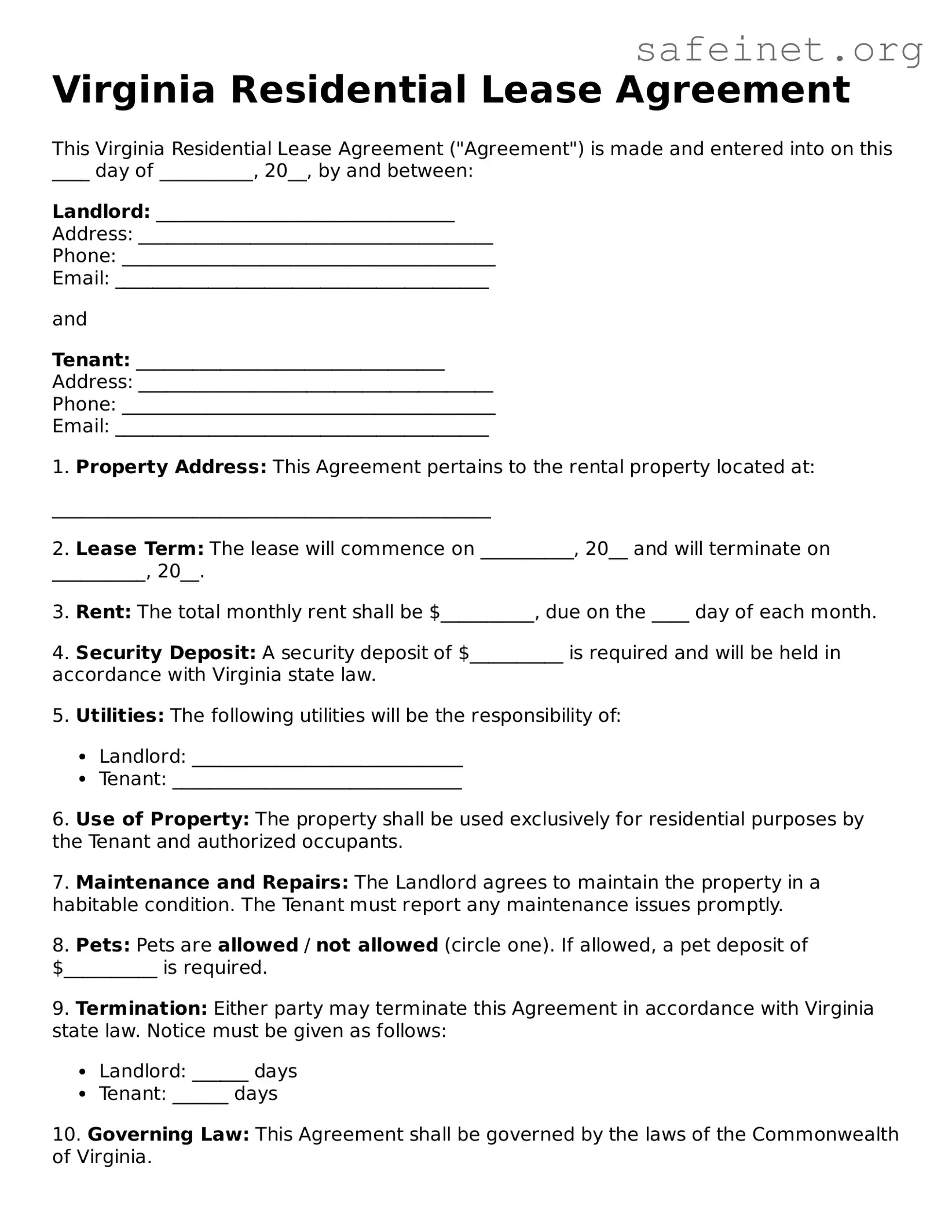
The Virginia Residential Lease Agreement form serves as a crucial document for both landlords and tenants, outlining the terms and conditions governing the rental of residential properties in the state. This agreement typically encompasses essential elements such as the duration of the lease, the amount of rent due, and the payment schedule, ensuring that both parties have a clear understanding of their financial obligations. Additionally, it addresses security deposits, maintenance responsibilities, and provisions for terminating the lease, which help to establish a harmonious living environment. The form also includes clauses regarding pets, alterations to the property, and the rights of both landlords and tenants, fostering a respectful and legally compliant relationship. By providing a comprehensive framework, the Virginia Residential Lease Agreement not only protects the interests of landlords but also empowers tenants with their rights and responsibilities, ultimately promoting a fair and equitable rental experience for all involved.
Virginia Residential Lease Agreement
This Virginia Residential Lease Agreement ("Agreement") is made and entered into on this ____ day of __________, 20__, by and between:
Landlord: ________________________________
Address: ______________________________________
Phone: ________________________________________
Email: ________________________________________
and
Tenant: _________________________________
Address: ______________________________________
Phone: ________________________________________
Email: ________________________________________
1. Property Address: This Agreement pertains to the rental property located at:
_______________________________________________
2. Lease Term: The lease will commence on __________, 20__ and will terminate on __________, 20__.
3. Rent: The total monthly rent shall be $__________, due on the ____ day of each month.
4. Security Deposit: A security deposit of $__________ is required and will be held in accordance with Virginia state law.
5. Utilities: The following utilities will be the responsibility of:
6. Use of Property: The property shall be used exclusively for residential purposes by the Tenant and authorized occupants.
7. Maintenance and Repairs: The Landlord agrees to maintain the property in a habitable condition. The Tenant must report any maintenance issues promptly.
8. Pets: Pets are allowed / not allowed (circle one). If allowed, a pet deposit of $__________ is required.
9. Termination: Either party may terminate this Agreement in accordance with Virginia state law. Notice must be given as follows:
10. Governing Law: This Agreement shall be governed by the laws of the Commonwealth of Virginia.
IN WITNESS WHEREOF, the parties hereto have executed this Virginia Residential Lease Agreement as of the date first above written.
Landlord Signature: ___________________________ Date: ___________
Tenant Signature: ____________________________ Date: ___________
| Fact Name | Description |
|---|---|
| Governing Law | The Virginia Residential Lease Agreement is governed by Virginia state law, specifically the Virginia Residential Landlord and Tenant Act. |
| Parties Involved | The agreement involves two primary parties: the landlord and the tenant. |
| Lease Duration | The lease can be for a fixed term or a month-to-month arrangement, as specified in the agreement. |
| Security Deposit | Landlords may require a security deposit, typically not exceeding two months' rent, to cover damages or unpaid rent. |
| Rent Payment | The lease outlines the amount of rent due, payment methods, and the due date each month. |
| Maintenance Responsibilities | The agreement defines the responsibilities of both the landlord and tenant regarding property maintenance and repairs. |
| Termination Conditions | Conditions for terminating the lease are specified, including notice periods and grounds for eviction. |
| Utilities | The lease specifies which utilities are included in the rent and which are the tenant's responsibility. |
Filling out the Virginia Residential Lease Agreement form is an essential step in establishing a clear understanding between the landlord and tenant. This process ensures that both parties are aware of their rights and responsibilities regarding the rental property. Below are the steps to complete the form effectively.
Once the form is completed, both parties should retain a copy for their records. This ensures that everyone has access to the agreed-upon terms in the future.
What is a Virginia Residential Lease Agreement?
The Virginia Residential Lease Agreement is a legal document that outlines the terms and conditions between a landlord and a tenant for renting a residential property. It covers essential aspects such as rent payment, duration of the lease, security deposits, and responsibilities of both parties.
What should be included in the lease agreement?
A comprehensive lease agreement should include the names of the landlord and tenant, the property address, the lease term, the amount of rent, payment due dates, security deposit details, maintenance responsibilities, and rules regarding pets and smoking. It may also specify conditions for terminating the lease.
How long is a typical lease term in Virginia?
Lease terms can vary, but they commonly range from six months to one year. Some landlords may offer month-to-month leases for more flexibility. It's important for both parties to agree on the term length before signing the agreement.
Can a lease agreement be modified?
Yes, a lease agreement can be modified if both the landlord and tenant agree to the changes. It’s best to document any modifications in writing and have both parties sign the updated agreement to ensure clarity and avoid disputes later on.
What happens if a tenant wants to break the lease early?
If a tenant needs to break the lease early, they should review the lease terms regarding early termination. Often, tenants may be required to provide notice and possibly pay a penalty. Communication with the landlord is key, as they may be willing to negotiate a solution.
Are security deposits required in Virginia?
Yes, security deposits are typically required in Virginia. The maximum amount a landlord can charge is generally equivalent to two months' rent. Landlords must return the security deposit within 45 days after the lease ends, minus any deductions for damages or unpaid rent.
What rights do tenants have under Virginia law?
Tenants in Virginia have several rights, including the right to a habitable living environment, privacy, and protection against unlawful eviction. They also have the right to receive proper notice before any changes are made to the lease or before eviction proceedings begin.
How can disputes be resolved between landlords and tenants?
Disputes can often be resolved through open communication. If that fails, mediation services may help both parties reach an agreement. If necessary, legal action can be taken, but it's advisable to consult with a legal professional before proceeding down that path.
Not reading the entire agreement. Many people rush through the lease without fully understanding the terms. It's crucial to read every section to know your rights and obligations.
Missing signatures. Both the landlord and tenant must sign the lease. Without these signatures, the lease may not be legally binding.
Incorrect dates. Entering the wrong start or end dates can lead to confusion about when the lease begins and ends. Always double-check these details.
Not specifying the rent amount. Clearly stating the rent amount is essential. Omitting this information can create disputes later on.
Ignoring maintenance responsibilities. Each lease should outline who is responsible for repairs and maintenance. Failing to clarify this can lead to misunderstandings.
Overlooking pet policies. If you have pets or plan to get one, ensure the lease clearly states the pet policy. This can prevent issues down the line.
Not including a security deposit clause. The lease should specify the amount of the security deposit and the conditions for its return. This protects both parties.
Neglecting to discuss utilities. Clarifying who pays for utilities is important. Make sure this is addressed in the lease to avoid unexpected costs.
When entering into a lease agreement in Virginia, several additional documents may be necessary to ensure clarity and protection for both landlords and tenants. These documents complement the Virginia Residential Lease Agreement and help outline the rights and responsibilities of each party involved.
These forms and documents are essential in establishing a clear understanding between landlords and tenants. They provide a framework for the rental relationship, helping to avoid misunderstandings and legal issues down the line.
The Virginia Residential Lease Agreement is similar to a Commercial Lease Agreement. Both documents outline the terms and conditions under which a property can be rented. While the Residential Lease Agreement focuses on housing for individuals or families, the Commercial Lease Agreement pertains to business properties. Key similarities include the duration of the lease, rental payment details, and responsibilities regarding maintenance and repairs. Both agreements protect the rights of landlords and tenants, ensuring clear expectations are set for both parties.
Another document comparable to the Virginia Residential Lease Agreement is the Month-to-Month Rental Agreement. This type of lease allows tenants to rent a property on a month-to-month basis, providing flexibility for both parties. Like the Residential Lease Agreement, it includes terms regarding rent, security deposits, and notice periods for termination. However, it typically has fewer long-term commitments, making it suitable for tenants who may need to relocate frequently.
A Sublease Agreement also shares similarities with the Virginia Residential Lease Agreement. This document allows a tenant to rent out their leased property to another person, known as the subtenant. Both agreements detail the responsibilities of each party, including payment of rent and maintenance obligations. The primary difference lies in the fact that the original tenant remains responsible to the landlord for the lease terms, while the subtenant has a separate agreement with the original tenant.
The Rental Application is another related document. It is often used in conjunction with the Residential Lease Agreement. The application collects personal information about potential tenants, including their rental history, employment status, and credit background. This information helps landlords assess the suitability of applicants. While the Rental Application does not outline rental terms, it plays a crucial role in the leasing process, ensuring landlords make informed decisions.
A Lease Termination Agreement is also relevant. This document is used when either party wishes to end the lease before its expiration. It outlines the conditions under which the lease can be terminated, including notice periods and any penalties. Like the Residential Lease Agreement, it ensures that both parties understand their rights and obligations when ending the rental relationship.
The Lease Renewal Agreement is similar in that it addresses the continuation of the rental relationship. When a lease is set to expire, this document allows both parties to agree to extend the lease under the same or modified terms. This agreement may include updated rental rates or changes in responsibilities. It provides clarity and ensures that both the landlord and tenant are on the same page regarding the new lease period.
A Security Deposit Agreement is also closely related. This document specifies the amount of the security deposit required from the tenant, along with the conditions for its return. It outlines what constitutes damage or excessive wear and tear. Both this agreement and the Residential Lease Agreement protect the landlord's investment while also ensuring that tenants are aware of their obligations regarding property care.
Finally, a Property Management Agreement is similar as it involves the management of rental properties. This document outlines the relationship between a property owner and a property management company. It includes terms regarding rent collection, maintenance responsibilities, and tenant management. While it primarily serves the landlord's interests, it indirectly impacts tenants by ensuring that their needs are addressed promptly and professionally.
When filling out the Virginia Residential Lease Agreement form, it is essential to approach the task with care and attention to detail. Here are five important do's and don'ts to consider:
Understanding the Virginia Residential Lease Agreement form is crucial for both landlords and tenants. However, several misconceptions can lead to confusion and potential disputes. Here are five common misconceptions:
While it is strongly recommended to have a written lease for clarity and legal protection, oral agreements can still be enforceable under certain circumstances. However, proving the terms of an oral agreement can be challenging.
While many terms in a lease can be negotiated, some are governed by state law and cannot be altered. For example, security deposit limits are set by Virginia law, and landlords must adhere to these regulations.
Landlords must provide proper notice before entering a tenant's property, except in emergencies. Virginia law requires at least 24 hours' notice for non-emergency situations.
In Virginia, landlords have a legal obligation to maintain the property and ensure it is habitable. While tenants may be responsible for minor repairs, significant issues typically fall under the landlord's responsibilities.
Not all leases automatically renew. Some leases may have a specific end date and require renewal negotiations. It’s important for both parties to understand the terms regarding renewal before signing.
Being aware of these misconceptions can help both landlords and tenants navigate their agreements more effectively, leading to a smoother rental experience.
Filling out and using the Virginia Residential Lease Agreement form is an important step for both landlords and tenants. Here are some key takeaways to keep in mind:
By paying attention to these key aspects, both landlords and tenants can create a clear and effective lease agreement that protects their rights and responsibilities.