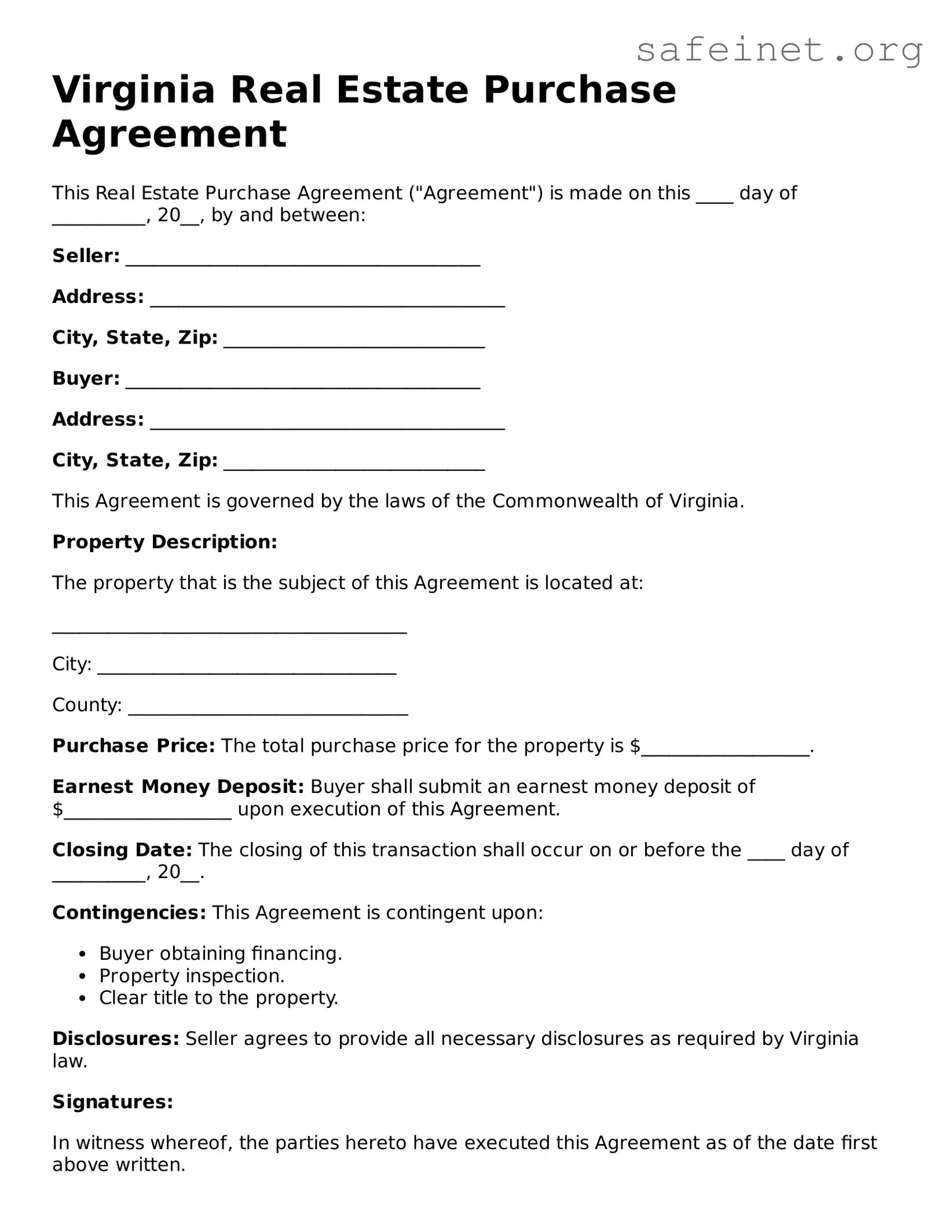
In Virginia, the Real Estate Purchase Agreement form serves as a crucial document in the home buying process, ensuring that both buyers and sellers understand their rights and obligations. This form outlines essential details, such as the purchase price, financing terms, and closing date, while also addressing contingencies that may affect the transaction. Buyers can specify conditions that must be met before the sale is finalized, such as home inspections or securing financing. On the other hand, sellers can outline any disclosures regarding the property’s condition. Additionally, the agreement includes provisions for earnest money, which demonstrates the buyer's commitment to the purchase. Understanding these components is vital for both parties to navigate the complexities of real estate transactions smoothly and effectively.
Virginia Real Estate Purchase Agreement
This Real Estate Purchase Agreement ("Agreement") is made on this ____ day of __________, 20__, by and between:
Seller: ______________________________________
Address: ______________________________________
City, State, Zip: ____________________________
Buyer: ______________________________________
Address: ______________________________________
City, State, Zip: ____________________________
This Agreement is governed by the laws of the Commonwealth of Virginia.
Property Description:
The property that is the subject of this Agreement is located at:
______________________________________
City: ________________________________
County: ______________________________
Purchase Price: The total purchase price for the property is $__________________.
Earnest Money Deposit: Buyer shall submit an earnest money deposit of $__________________ upon execution of this Agreement.
Closing Date: The closing of this transaction shall occur on or before the ____ day of __________, 20__.
Contingencies: This Agreement is contingent upon:
Disclosures: Seller agrees to provide all necessary disclosures as required by Virginia law.
Signatures:
In witness whereof, the parties hereto have executed this Agreement as of the date first above written.
Seller Signature: ___________________________
Date: ______________________
Buyer Signature: ___________________________
Date: ______________________
| Fact Name | Details |
|---|---|
| Purpose | The Virginia Real Estate Purchase Agreement form is used to outline the terms and conditions of a real estate transaction between a buyer and a seller. |
| Governing Laws | This agreement is governed by the laws of the Commonwealth of Virginia, specifically the Virginia Code Title 55.1. |
| Essential Elements | The form includes essential details such as purchase price, property description, and contingencies, which protect both parties. |
| Signatures Required | Both the buyer and seller must sign the agreement for it to be legally binding, ensuring mutual consent. |
Filling out the Virginia Real Estate Purchase Agreement form is an important step in the home buying process. Once you have completed this form, you will be prepared to move forward with negotiations and finalize the sale of the property.
After completing these steps, ensure that all parties have a copy of the signed agreement. This will help facilitate the next stages of the real estate transaction.
What is the Virginia Real Estate Purchase Agreement form?
The Virginia Real Estate Purchase Agreement form is a legal document used when a buyer and seller agree on the sale of a property in Virginia. This form outlines the terms and conditions of the sale, including the purchase price, closing date, and any contingencies that may apply. It serves as a binding contract once both parties have signed it, ensuring that the transaction is conducted fairly and transparently.
What are the key components of the agreement?
Several essential components make up the Virginia Real Estate Purchase Agreement. These include the identification of the buyer and seller, a detailed description of the property, the purchase price, earnest money deposit, contingencies (like financing or inspections), closing date, and any specific terms related to the sale. Each section plays a crucial role in protecting the interests of both parties.
What is earnest money, and why is it important?
Earnest money is a deposit made by the buyer to demonstrate their serious intent to purchase the property. Typically, this amount is held in escrow until the closing of the sale. If the transaction proceeds as planned, the earnest money is applied to the purchase price. However, if the buyer backs out without a valid reason, they may forfeit this deposit. This practice helps reassure sellers that the buyer is committed to completing the transaction.
What contingencies can be included in the agreement?
Contingencies are conditions that must be met for the sale to proceed. Common contingencies in the Virginia Real Estate Purchase Agreement include financing contingencies, which allow the buyer to secure a mortgage; inspection contingencies, which enable the buyer to have the property inspected for issues; and appraisal contingencies, ensuring the property is valued at or above the purchase price. Including these contingencies protects the buyer's interests and allows them to back out of the agreement if necessary.
How is the closing process handled?
The closing process involves finalizing the sale and transferring ownership of the property. It typically occurs at a title company or attorney's office. During this process, both parties review the agreement, sign necessary documents, and settle any outstanding fees or costs. The buyer will provide the remaining funds for the purchase, and the seller will hand over the keys and any relevant documents. Once everything is completed, the property title is officially transferred to the buyer.
Can the agreement be modified after it is signed?
Yes, the Virginia Real Estate Purchase Agreement can be modified after it is signed, but both parties must agree to any changes. Modifications can include adjustments to the closing date, purchase price, or contingencies. It is essential to document any changes in writing and have both parties sign the revised agreement to ensure clarity and avoid misunderstandings.
What happens if either party breaches the agreement?
If either party breaches the agreement, the other party may have several options. The injured party could seek damages, which may include financial compensation for losses incurred due to the breach. Alternatively, they might choose to enforce the contract, compelling the breaching party to fulfill their obligations. In some cases, mediation or arbitration may be pursued to resolve disputes without going to court.
Is legal advice recommended when using this agreement?
While the Virginia Real Estate Purchase Agreement is designed to be user-friendly, seeking legal advice is highly recommended. A qualified attorney can provide guidance on the terms, help identify potential issues, and ensure that the agreement protects your interests. This step can be particularly beneficial for first-time buyers or sellers who may not be familiar with the real estate process.
Incomplete Information: One of the most common mistakes is leaving out critical details. Buyers and sellers often forget to include their full names, addresses, or contact information. Each party should ensure that their information is accurate and complete to avoid confusion later.
Incorrect Property Description: The property description should be precise. Sometimes, people mistakenly use vague terms or omit important details like the lot number or property boundaries. A clear description helps to avoid disputes about what is being sold.
Missing Signatures: A purchase agreement is not valid unless all parties sign it. Often, one party might forget to sign or assume the other party will take care of it. It's crucial to double-check that everyone involved has signed the document before submission.
Ignoring Contingencies: Buyers may overlook important contingencies, such as financing or inspection clauses. These conditions protect buyers and should be clearly outlined in the agreement. Failing to include them can lead to issues if the buyer cannot secure financing or if the inspection reveals problems.
Not Reviewing Terms Thoroughly: Some individuals rush through the agreement without fully understanding the terms. This can lead to misunderstandings about price, closing dates, or responsibilities. Taking the time to read and comprehend every section can prevent future conflicts.
When engaging in a real estate transaction in Virginia, several documents often accompany the Real Estate Purchase Agreement. Each of these forms serves a specific purpose, ensuring that both buyers and sellers are protected and informed throughout the process. Here’s a brief overview of some key documents you may encounter:
Understanding these documents is crucial for anyone involved in a real estate transaction. Each form plays a vital role in protecting the interests of all parties and facilitating a successful transfer of property. By being informed, buyers and sellers can navigate the process with greater confidence.
The Virginia Real Estate Purchase Agreement form shares similarities with the Residential Purchase Agreement, commonly used in many states. Both documents serve the same fundamental purpose: to outline the terms and conditions under which a buyer agrees to purchase a property from a seller. They typically include details such as the purchase price, closing date, and contingencies, ensuring that both parties have a clear understanding of their obligations. Additionally, both agreements are legally binding once signed, providing protection and clarity for both buyers and sellers.
Another document that resembles the Virginia Real Estate Purchase Agreement is the Commercial Purchase Agreement. While it is tailored for commercial properties, the structure and intent are quite similar. Both agreements detail the terms of the sale, including the price and any conditions that must be met before the sale can be finalized. The primary difference lies in the type of property involved and the specific legal considerations pertinent to commercial transactions.
The Lease Purchase Agreement also shares commonalities with the Virginia Real Estate Purchase Agreement. This document allows a tenant to lease a property with the option to purchase it later. Like the purchase agreement, it outlines terms such as the purchase price and the timeframe for exercising the purchase option. Both documents aim to protect the interests of the involved parties while providing a clear framework for the transaction.
A Seller Financing Agreement is another document that parallels the Virginia Real Estate Purchase Agreement. In this case, the seller provides financing to the buyer, allowing them to purchase the property without traditional bank financing. Both agreements will detail the terms of the sale, including payment structure and interest rates, ensuring that both parties understand their rights and responsibilities throughout the transaction.
The Option to Purchase Agreement is closely related as well. This document gives a buyer the right, but not the obligation, to purchase a property at a specified price within a certain timeframe. While it may not be a full purchase agreement, it shares essential elements such as the purchase price and conditions under which the option can be exercised, providing a framework for potential future transactions.
The Exclusive Listing Agreement also shares similarities with the Virginia Real Estate Purchase Agreement. This document is used by real estate agents to secure a contract with a seller to represent them in the sale of their property. While it does not finalize the sale, it outlines the terms under which the agent will work to sell the property, including commission rates and duration of the agreement. Both documents focus on ensuring clear communication and agreement between parties involved in a real estate transaction.
The Buy-Sell Agreement is another document that aligns with the Virginia Real Estate Purchase Agreement. Typically used in business transactions, it outlines the terms under which one party can buy out another's interest in a property or business. Similar to the purchase agreement, it specifies the purchase price, payment terms, and any conditions that must be met, ensuring that both parties have a mutual understanding of the transaction.
The Land Contract, or Contract for Deed, is also comparable. In this arrangement, the buyer makes payments directly to the seller while living on the property, with ownership transferring only after the final payment is made. Like the Virginia Real Estate Purchase Agreement, it details the terms of the sale, including payment schedules and conditions for default, providing a clear path for ownership transfer.
Lastly, the Real Estate Option Agreement mirrors the Virginia Real Estate Purchase Agreement in its purpose of facilitating a potential purchase. This document allows a buyer to secure the right to purchase a property at a later date, under specified terms. It outlines the purchase price and conditions for exercising the option, ensuring both parties are aware of their rights and obligations as they navigate the potential transaction.
When filling out the Virginia Real Estate Purchase Agreement form, attention to detail is crucial. Here are six important dos and don'ts to keep in mind.
Following these guidelines will help ensure a smoother transaction and protect your interests in the real estate process.
When it comes to real estate transactions in Virginia, the Real Estate Purchase Agreement (REPA) is a crucial document. However, several misconceptions surround this form. Here are seven common misunderstandings:
This is not true. While the REPA is commonly used for residential transactions, it can also be applied to commercial real estate deals.
Many people believe that the terms in the REPA are set in stone. In reality, buyers and sellers can negotiate various aspects of the agreement.
Signing the REPA does not guarantee that the sale will be finalized. There are several contingencies that could lead to the deal falling through.
While agents often assist in filling out the REPA, buyers and sellers can complete the form themselves if they choose to do so.
Changes can be made to the REPA after it is signed, but both parties must agree to any modifications in writing.
In addition to the REPA, other documents, such as disclosures and closing statements, are also necessary to complete the transaction.
Each state has its own version of a purchase agreement. The Virginia REPA has specific provisions that may differ from agreements in other states.
Understanding these misconceptions can help buyers and sellers navigate the real estate process more effectively.
Filling out and using the Virginia Real Estate Purchase Agreement form is a crucial step in the home buying process. Here are some key takeaways to keep in mind:
By keeping these key points in mind, individuals can navigate the Virginia Real Estate Purchase Agreement form more effectively, paving the way for a successful property transaction.