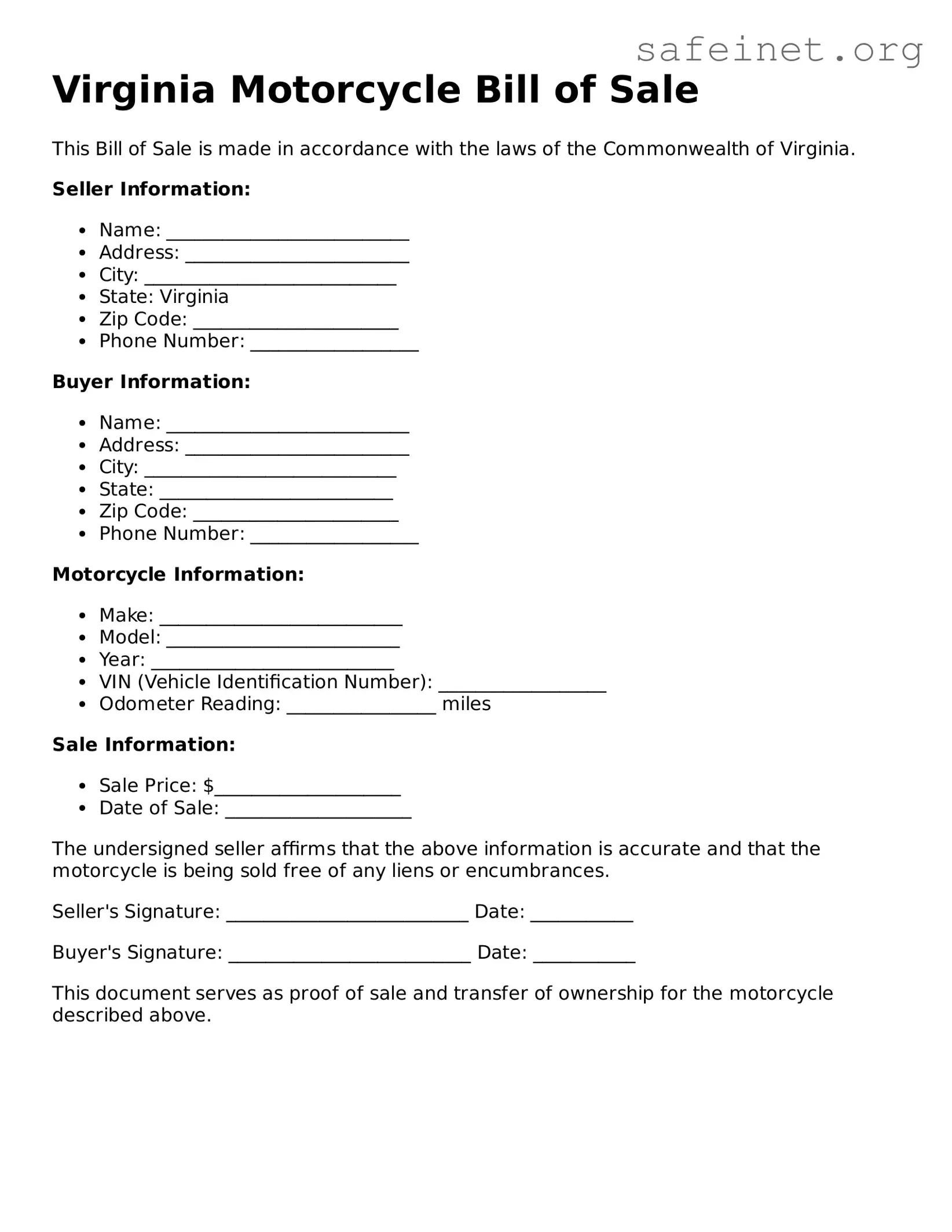
When buying or selling a motorcycle in Virginia, having a properly completed Motorcycle Bill of Sale form is essential for both parties involved in the transaction. This document serves as a legal record of the sale, providing crucial information that protects the interests of the buyer and seller alike. Typically, the form includes details such as the motorcycle's make, model, year, and Vehicle Identification Number (VIN), ensuring that the specific bike is clearly identified. Additionally, it captures the sale price and the date of the transaction, which can be important for tax purposes and future ownership claims. Both the buyer and seller must sign the form to validate the agreement, and it may also include a section for odometer disclosure, which is vital for preventing fraud. By understanding the components and importance of the Motorcycle Bill of Sale, individuals can navigate the buying and selling process with greater confidence and clarity.
Virginia Motorcycle Bill of Sale
This Bill of Sale is made in accordance with the laws of the Commonwealth of Virginia.
Seller Information:
Buyer Information:
Motorcycle Information:
Sale Information:
The undersigned seller affirms that the above information is accurate and that the motorcycle is being sold free of any liens or encumbrances.
Seller's Signature: __________________________ Date: ___________
Buyer's Signature: __________________________ Date: ___________
This document serves as proof of sale and transfer of ownership for the motorcycle described above.
| Fact Name | Description |
|---|---|
| Purpose | The Virginia Motorcycle Bill of Sale form serves as a legal document to record the sale of a motorcycle between a buyer and a seller. |
| Governing Law | This form is governed by the Virginia Code, specifically § 46.2-633, which outlines the requirements for vehicle sales. |
| Required Information | The form must include details such as the motorcycle's make, model, year, VIN, and the sale price. |
| Signatures | Both the buyer and the seller must sign the form to validate the transaction. |
| Notarization | While notarization is not required, it is recommended to enhance the document's authenticity. |
| Record Keeping | Both parties should retain a copy of the completed Bill of Sale for their records and future reference. |
Completing the Virginia Motorcycle Bill of Sale form is essential for transferring ownership of a motorcycle. Once filled out correctly, this document serves as proof of the sale and can facilitate the registration process with the Department of Motor Vehicles (DMV). Follow these steps carefully to ensure all required information is accurately provided.
What is a Virginia Motorcycle Bill of Sale?
A Virginia Motorcycle Bill of Sale is a legal document that records the sale of a motorcycle between a buyer and a seller. This form serves as proof of the transaction and includes important details about the motorcycle, such as its make, model, year, and Vehicle Identification Number (VIN). It protects both parties by documenting the agreement and can be used for registration purposes.
Is a Bill of Sale required in Virginia for motorcycle transactions?
While a Bill of Sale is not legally required in Virginia for every motorcycle sale, it is highly recommended. This document provides essential evidence of the transaction, which can be useful if any disputes arise later. Additionally, when registering the motorcycle with the Department of Motor Vehicles (DMV), having a Bill of Sale can facilitate the process.
What information should be included in the Bill of Sale?
The Bill of Sale should include the following details: the names and addresses of both the buyer and seller, the date of the sale, the motorcycle's make, model, year, VIN, and odometer reading at the time of sale. It is also beneficial to include the sale price and any terms of the sale, such as whether the motorcycle is sold "as is."
Do I need to have the Bill of Sale notarized?
Notarization is not a requirement for a Bill of Sale in Virginia. However, having the document notarized can add an extra layer of security and authenticity, which may be helpful if any issues arise in the future. It can also lend credibility to the document if presented to the DMV or in a legal context.
Can I create my own Bill of Sale, or do I need to use a specific form?
You can create your own Bill of Sale as long as it includes all the necessary information. There are also templates available online that can simplify the process. Using a standardized form can help ensure that you don’t miss any critical details, making it a convenient option for many sellers and buyers.
What should I do with the Bill of Sale after the transaction?
After completing the sale, both the buyer and seller should keep a copy of the Bill of Sale for their records. The buyer will need it when registering the motorcycle with the DMV, while the seller may want it as proof of the sale in case of any future disputes or issues related to the motorcycle.
Can I use a Bill of Sale for a motorcycle that I bought out of state?
Yes, a Bill of Sale can be used for a motorcycle purchased out of state. However, it is important to check the specific requirements of the Virginia DMV for registering an out-of-state motorcycle. Additional documentation may be needed, such as proof of ownership or a title from the previous state.
What if the motorcycle has a lien on it?
If the motorcycle has a lien, it is crucial to address this before completing the sale. The seller should ensure that the lien is satisfied and that the title is clear. The Bill of Sale should reflect any agreements made regarding the lien, and both parties should understand their responsibilities in relation to it.
How can I obtain a Virginia Motorcycle Bill of Sale form?
You can obtain a Virginia Motorcycle Bill of Sale form from various sources, including online templates, legal stationery stores, or by creating one yourself. Many websites offer free or paid templates that are easy to fill out. Ensure that the form you choose includes all the necessary information to protect both parties in the transaction.
Incomplete Information: One of the most common mistakes is failing to fill out all required fields. Ensure that every section of the form is completed, including the buyer's and seller's names, addresses, and contact information.
Incorrect Vehicle Identification Number (VIN): It is crucial to accurately record the VIN. A single typo can lead to significant issues with registration or ownership verification.
Missing Signatures: Both the buyer and seller must sign the form. Omitting a signature can invalidate the sale, causing complications down the line.
Failure to Date the Document: Not including the date of the transaction is another frequent oversight. This date is essential for establishing the timeline of ownership transfer.
Not Including Payment Details: Some individuals neglect to specify the sale price. Including this information helps clarify the terms of the transaction and can be important for tax purposes.
Ignoring Local Requirements: Each locality may have specific requirements regarding the bill of sale. Failing to adhere to these can result in delays or issues with registration.
Not Keeping Copies: After completing the form, it is important to retain a copy for personal records. This documentation can be vital for future reference or in case of disputes.
The Virginia Motorcycle Bill of Sale is an important document for anyone buying or selling a motorcycle in Virginia. However, several other forms and documents are commonly used in conjunction with this bill of sale to ensure a smooth transaction and proper registration. Below is a list of these documents, each serving a unique purpose in the motorcycle transfer process.
In summary, while the Virginia Motorcycle Bill of Sale is crucial for documenting the sale of a motorcycle, these additional forms and documents play significant roles in ensuring a legal and smooth transfer of ownership. Each document contributes to the overall process, safeguarding the interests of both the buyer and the seller.
The Virginia Vehicle Bill of Sale is similar to the Motorcycle Bill of Sale. Both documents serve as proof of a transaction between a buyer and a seller. They include essential details such as the names and addresses of both parties, a description of the vehicle or motorcycle, and the sale price. This document is crucial for registering the vehicle with the state and can help resolve any disputes that may arise after the sale.
The Virginia Boat Bill of Sale also shares similarities with the Motorcycle Bill of Sale. Like the motorcycle version, it provides a record of the sale between the buyer and seller. This document includes information about the boat, such as its make, model, and identification number. Both forms are important for ensuring that ownership is transferred properly and for future registration purposes.
The Virginia Odometer Disclosure Statement is similar in function to the Motorcycle Bill of Sale as it provides crucial information about the vehicle's mileage at the time of sale. This document is often required when transferring ownership to ensure transparency and prevent fraud. Both forms help protect the interests of the buyer and seller by ensuring that all necessary details are disclosed.
The Virginia Affidavit of Heirship can also be compared to the Motorcycle Bill of Sale in terms of transferring ownership. This document is used when a vehicle is inherited, and it helps establish the rightful owner. Both documents serve to clarify ownership and ensure that all parties involved have a clear understanding of the transaction.
Lastly, the Virginia Application for Title form is similar to the Motorcycle Bill of Sale as it is used to apply for a new title after a sale. This form requires information about the vehicle and the new owner, similar to what is found in the Motorcycle Bill of Sale. Both documents are essential for ensuring that the new owner can legally operate the vehicle on public roads.
When completing the Virginia Motorcycle Bill of Sale form, it’s important to follow certain guidelines to ensure accuracy and compliance. Below is a list of things you should and shouldn’t do:
When it comes to the Virginia Motorcycle Bill of Sale form, several misconceptions often arise. Understanding these can help ensure a smoother transaction when buying or selling a motorcycle. Here are four common misunderstandings:
By addressing these misconceptions, individuals can navigate the process of buying or selling a motorcycle in Virginia with greater confidence and clarity.
When dealing with the Virginia Motorcycle Bill of Sale form, it’s important to keep a few key points in mind. This document serves as proof of the sale and helps protect both the buyer and seller. Here are some essential takeaways:
Using the Virginia Motorcycle Bill of Sale form correctly can streamline the buying and selling process. Always double-check the information for accuracy before finalizing the sale.