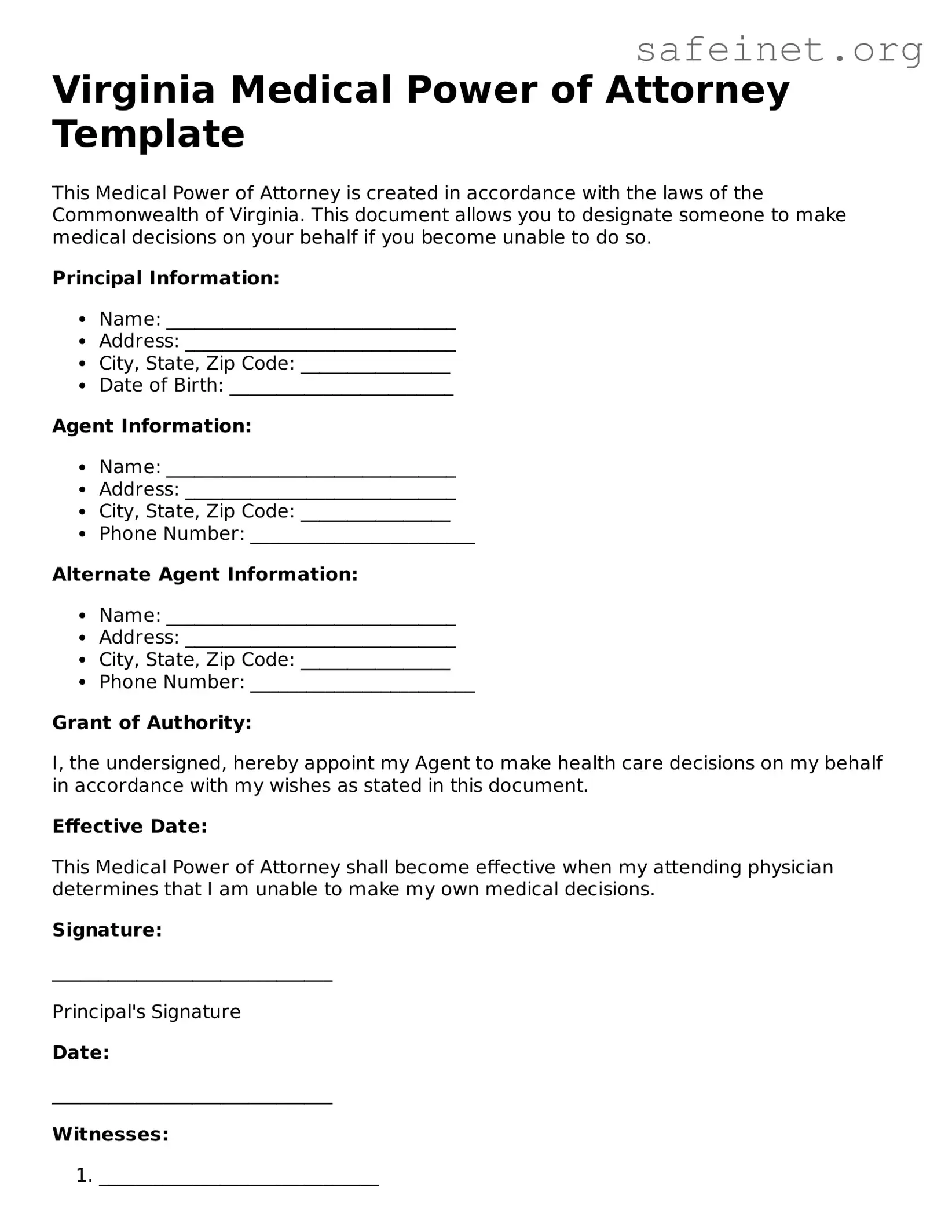
The Virginia Medical Power of Attorney form is a crucial legal document that empowers individuals to make healthcare decisions on behalf of another person when that individual is unable to do so. This form allows a designated agent to act in the best interest of the principal, ensuring that their medical preferences are respected even in times of incapacity. Key elements of the form include the appointment of a trusted individual as the agent, clear instructions regarding medical treatment preferences, and provisions for end-of-life care. Additionally, the form must be signed in the presence of a notary or witnesses to ensure its validity. Understanding the importance of this document can help individuals navigate the complexities of healthcare decisions and provide peace of mind for both the principal and their loved ones.
Virginia Medical Power of Attorney Template
This Medical Power of Attorney is created in accordance with the laws of the Commonwealth of Virginia. This document allows you to designate someone to make medical decisions on your behalf if you become unable to do so.
Principal Information:
Agent Information:
Alternate Agent Information:
Grant of Authority:
I, the undersigned, hereby appoint my Agent to make health care decisions on my behalf in accordance with my wishes as stated in this document.
Effective Date:
This Medical Power of Attorney shall become effective when my attending physician determines that I am unable to make my own medical decisions.
Signature:
______________________________
Principal's Signature
Date:
______________________________
Witnesses:
This document must be signed in the presence of two witnesses who are at least 18 years old and who are not related to you by blood or marriage, nor entitled to any part of your estate.
| Fact Name | Details |
|---|---|
| Definition | A Virginia Medical Power of Attorney allows an individual to appoint someone to make healthcare decisions on their behalf if they become unable to do so. |
| Governing Law | The form is governed by the Virginia Code § 54.1-2981 through § 54.1-2990. |
| Eligibility | Any adult who is at least 18 years old can create a Medical Power of Attorney in Virginia. |
| Agent Selection | The individual can choose any competent adult as their agent, except for certain healthcare providers involved in the individual's care. |
| Durability | The Medical Power of Attorney remains effective even if the individual becomes incapacitated. |
| Revocation | The individual can revoke the Medical Power of Attorney at any time as long as they are competent. |
| Witness Requirement | The form must be signed in the presence of two witnesses who are not related to the individual or their agent. |
| Notarization | Notarization is not required for the Medical Power of Attorney in Virginia, but it can enhance the document's validity. |
| Healthcare Decisions | The agent can make decisions about medical treatment, including end-of-life care, based on the individual's wishes. |
| Form Availability | The Virginia Medical Power of Attorney form is available online through various legal resources and state websites. |
Filling out the Virginia Medical Power of Attorney form is a straightforward process. Once completed, this document will allow you to designate someone to make medical decisions on your behalf if you are unable to do so. Follow the steps below to ensure that you fill out the form correctly.
What is a Virginia Medical Power of Attorney?
A Virginia Medical Power of Attorney is a legal document that allows you to appoint someone to make medical decisions on your behalf if you become unable to do so. This person, known as your agent, can make choices about your healthcare, including treatments, medications, and procedures, based on your wishes and best interests.
Who can serve as my agent in a Medical Power of Attorney?
Your agent can be any adult you trust, such as a family member, friend, or trusted advisor. It is important to choose someone who understands your values and healthcare preferences. They should be willing to advocate for your wishes and be available to make decisions when needed.
Do I need a lawyer to create a Medical Power of Attorney in Virginia?
No, you do not need a lawyer to create a Medical Power of Attorney in Virginia. However, it can be helpful to consult with one to ensure that the document meets all legal requirements and accurately reflects your wishes. You can also find templates and resources online to guide you through the process.
How do I complete the Virginia Medical Power of Attorney form?
To complete the form, you will need to fill in your personal information, including your name and address, as well as the name and contact information of your chosen agent. Be sure to specify any preferences you have regarding medical treatments. After completing the form, you must sign it in the presence of a notary public or two witnesses to make it legally binding.
Can I revoke my Medical Power of Attorney?
Yes, you can revoke your Medical Power of Attorney at any time as long as you are mentally competent. To do this, you should notify your agent in writing and inform any healthcare providers who have a copy of the document. It is also a good idea to destroy any copies of the old document to avoid confusion.
What happens if I do not have a Medical Power of Attorney?
If you do not have a Medical Power of Attorney and become unable to make your own medical decisions, your family members may need to go through a legal process to appoint a guardian. This can be time-consuming and may not reflect your personal wishes. Having a Medical Power of Attorney in place can help ensure that your preferences are followed.
Is a Medical Power of Attorney the same as an Advance Directive?
No, a Medical Power of Attorney is not the same as an Advance Directive, although they can work together. An Advance Directive outlines your wishes regarding specific medical treatments and procedures. The Medical Power of Attorney appoints someone to make decisions on your behalf. It is beneficial to have both documents to ensure comprehensive coverage of your healthcare preferences.
Not Choosing a Reliable Agent: Individuals often overlook the importance of selecting someone trustworthy and capable of making medical decisions. It’s crucial to choose an agent who understands your values and preferences.
Failing to Specify Medical Preferences: Many people leave the form too vague. Clearly outlining your wishes regarding treatments, life support, and end-of-life care can prevent confusion and ensure your desires are respected.
Not Signing and Dating the Document: A common mistake is neglecting to sign and date the form. Without a signature, the document may not be considered valid, rendering your choices ineffective when needed.
Overlooking Witness Requirements: In Virginia, the form requires signatures from two witnesses. Failing to include these witnesses can invalidate the document, so ensure this step is completed correctly.
Not Reviewing Regularly: Life circumstances change. People often forget to review and update their Medical Power of Attorney. Regularly reassessing your choices ensures that the document reflects your current wishes.
When considering a Virginia Medical Power of Attorney, it's essential to be aware of other related documents that can complement your healthcare planning. Each of these documents plays a crucial role in ensuring your wishes are honored and that your loved ones are equipped to make informed decisions on your behalf.
Understanding these documents can significantly enhance your healthcare planning. By having a comprehensive approach, you can ensure that your medical preferences are respected and that your loved ones feel empowered to make decisions aligned with your values.
The Virginia Medical Power of Attorney form is similar to a Durable Power of Attorney. Both documents allow individuals to designate someone to make decisions on their behalf. However, the Durable Power of Attorney extends beyond medical decisions, covering financial and legal matters as well. This broader scope ensures that if an individual becomes incapacitated, their designated agent can manage various aspects of their life, not just healthcare-related issues.
Another document that shares similarities is the Living Will. A Living Will outlines specific medical treatments an individual wishes to receive or refuse in the event of a terminal illness or irreversible condition. While the Virginia Medical Power of Attorney designates an agent to make healthcare decisions, the Living Will provides clear instructions about the individual’s preferences. Together, they ensure that a person’s healthcare wishes are honored, even when they cannot communicate them.
The Advance Healthcare Directive also resembles the Virginia Medical Power of Attorney. This document combines elements of both a Living Will and a Medical Power of Attorney. It allows individuals to express their healthcare preferences and appoint an agent to make decisions on their behalf. By integrating these functions, the Advance Healthcare Directive provides a comprehensive approach to managing healthcare decisions in advance of potential incapacity.
Finally, the Do Not Resuscitate (DNR) order bears similarities as well. A DNR order specifically addresses the individual’s wishes regarding resuscitation efforts in the event of cardiac arrest or respiratory failure. While the Virginia Medical Power of Attorney appoints an agent to make broader medical decisions, a DNR focuses on a specific medical situation. Both documents serve to communicate a person’s healthcare preferences and ensure that their wishes are respected during critical moments.
When filling out the Virginia Medical Power of Attorney form, it's important to approach the task with care. Here are some key do's and don'ts to keep in mind:
When it comes to the Virginia Medical Power of Attorney form, many people harbor misconceptions that can lead to confusion and poor decision-making. Understanding the realities behind these myths is essential for ensuring that your healthcare wishes are respected. Here are eight common misconceptions:
While both documents deal with healthcare decisions, a Medical Power of Attorney specifically designates someone to make decisions on your behalf, whereas a living will outlines your preferences regarding medical treatment.
This is a common myth. Anyone, regardless of age, can face unexpected medical emergencies. Having a Medical Power of Attorney ensures that your wishes are honored at any age.
You can revoke or modify your Medical Power of Attorney at any time, as long as you are mentally competent. It’s important to review it periodically to ensure it reflects your current wishes.
Without a Medical Power of Attorney, family members may face challenges in making decisions on your behalf. Designating an agent ensures clarity and avoids potential conflicts.
This is misleading. A Medical Power of Attorney is applicable for any medical decisions when you are unable to communicate your wishes, not just for end-of-life scenarios.
While verbal communication is important, a formal document provides legal authority and clarity, ensuring your wishes are followed even if family members disagree.
Medical Power of Attorney laws can vary by state. If you move or travel frequently, it’s wise to check the requirements in different states to ensure your document remains valid.
While consulting a lawyer can be helpful, you can also find templates and resources to create a Medical Power of Attorney on your own, as long as you follow Virginia’s legal requirements.
Understanding these misconceptions can empower you to take control of your healthcare decisions. It’s always a good idea to educate yourself and ensure that your wishes are documented clearly and legally.
When considering the Virginia Medical Power of Attorney form, it is essential to understand its purpose and how to complete it effectively. This document allows individuals to designate someone to make medical decisions on their behalf if they become unable to do so. Here are some key takeaways to keep in mind:
By following these guidelines, individuals can create a Medical Power of Attorney that effectively communicates their healthcare preferences and ensures that their wishes are honored in times of need.