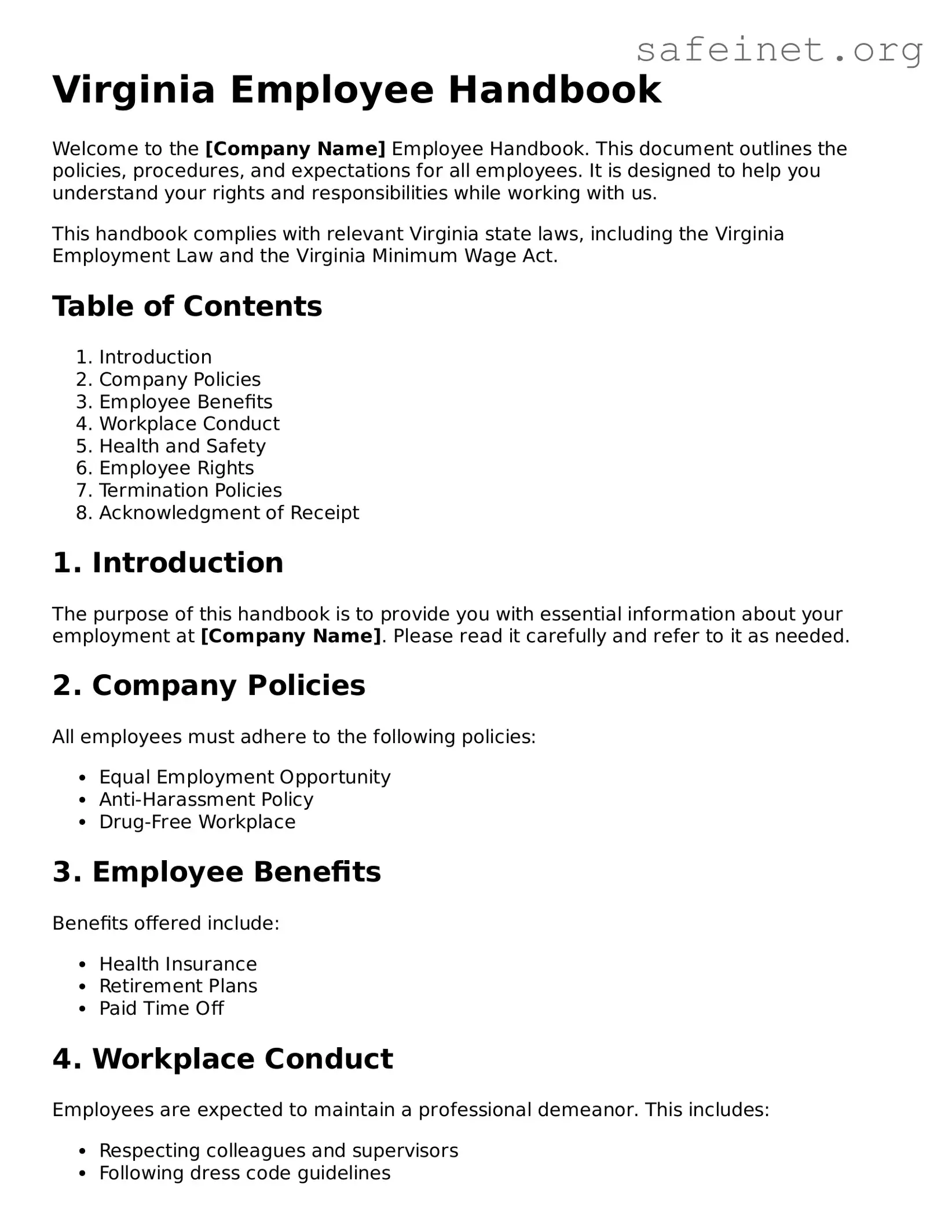
The Virginia Employee Handbook form serves as a vital resource for both employers and employees, outlining essential policies and procedures that govern the workplace. This document typically includes critical information such as employee rights, workplace expectations, and the company’s code of conduct. It often addresses topics like anti-discrimination policies, harassment prevention, and disciplinary measures, ensuring that all employees are aware of their rights and responsibilities. Additionally, the form may detail benefits, leave policies, and procedures for reporting grievances, fostering a transparent and fair work environment. By clearly communicating these elements, the handbook helps to establish a mutual understanding between employers and employees, promoting a positive workplace culture while also mitigating potential legal risks. The proper implementation of this form is crucial, as it not only reflects compliance with state and federal laws but also serves as a foundational document that can guide employee relations and organizational behavior.
Virginia Employee Handbook
Welcome to the [Company Name] Employee Handbook. This document outlines the policies, procedures, and expectations for all employees. It is designed to help you understand your rights and responsibilities while working with us.
This handbook complies with relevant Virginia state laws, including the Virginia Employment Law and the Virginia Minimum Wage Act.
Table of Contents
1. Introduction
The purpose of this handbook is to provide you with essential information about your employment at [Company Name]. Please read it carefully and refer to it as needed.
2. Company Policies
All employees must adhere to the following policies:
3. Employee Benefits
Benefits offered include:
4. Workplace Conduct
Employees are expected to maintain a professional demeanor. This includes:
5. Health and Safety
Your safety is a priority. Adhere to all health and safety guidelines. Report any unsafe conditions to your supervisor immediately.
6. Employee Rights
Employees have the right to:
7. Termination Policies
Termination may occur under the following circumstances:
8. Acknowledgment of Receipt
All employees must sign an acknowledgment form confirming receipt of this handbook. This form will be kept in your personnel file.
For any questions regarding this handbook, please contact [HR Contact Name] at [HR Contact Email].
| Fact Name | Description |
|---|---|
| Purpose | The Virginia Employee Handbook serves as a guide for employees regarding company policies and procedures. |
| Legal Requirement | While not legally required, it is highly recommended for Virginia employers to provide an employee handbook. |
| Governing Laws | The handbook should comply with federal laws such as the Fair Labor Standards Act and state laws including the Virginia Employment Commission regulations. |
| Contents | Common sections include workplace conduct, benefits, and disciplinary procedures. |
| Distribution | Employers should provide the handbook to all employees, typically during onboarding. |
| Updates | Regular updates are necessary to reflect changes in laws or company policies. |
Completing the Virginia Employee Handbook form is a straightforward process. Following these steps will ensure that you accurately fill out the necessary information and submit it correctly.
After submitting the form, keep a copy for your records. You may also want to follow up with your HR department to confirm receipt and address any questions you may have.
What is the Virginia Employee Handbook form?
The Virginia Employee Handbook form is a document that outlines the policies, procedures, and expectations of an employer regarding their employees. It serves as a guide for employees to understand their rights, responsibilities, and the company culture. This handbook is crucial for establishing clear communication between the employer and employees.
Why is an Employee Handbook important for Virginia employers?
An Employee Handbook is important for Virginia employers because it helps to set clear guidelines and expectations for employees. It can reduce misunderstandings and disputes by providing a reference point for both parties. Additionally, having a well-structured handbook can protect employers from legal claims by demonstrating that they have communicated their policies effectively.
What should be included in the Virginia Employee Handbook?
Key components of the Virginia Employee Handbook should include the company’s mission and values, employment policies, workplace conduct, anti-discrimination policies, benefits information, leave policies, and disciplinary procedures. Each section should be clearly defined to ensure that employees can easily navigate the handbook.
How often should the Employee Handbook be updated?
The Employee Handbook should be reviewed and updated regularly, at least annually, or whenever there are significant changes in company policies or applicable laws. This ensures that the handbook remains relevant and compliant with current regulations, helping to protect both the employer and employees.
Is it necessary to have employees sign an acknowledgment of the Employee Handbook?
Yes, it is advisable for employers to have employees sign an acknowledgment form indicating that they have received and understood the Employee Handbook. This signed acknowledgment can serve as evidence that the employee is aware of the policies and expectations outlined in the handbook.
Can an Employee Handbook be used in legal disputes?
An Employee Handbook can be used in legal disputes as a reference for the policies and procedures that were in place at the time of the dispute. If the handbook is well-drafted and up-to-date, it may help to clarify the employer's position and intentions, potentially mitigating liability in certain situations.
What if an employee violates a policy outlined in the handbook?
If an employee violates a policy outlined in the handbook, the employer should follow the disciplinary procedures specified in the handbook. Consistency in enforcement is key. Employers must ensure that any disciplinary actions are fair and documented to avoid claims of discrimination or unfair treatment.
Are there any legal requirements for an Employee Handbook in Virginia?
While there are no specific legal requirements for an Employee Handbook in Virginia, it is recommended that employers comply with federal and state employment laws. Including policies on discrimination, harassment, and workplace safety is essential. Consulting with legal counsel can help ensure that the handbook meets all necessary legal standards.
How can employers ensure that their Employee Handbook is effective?
To ensure that an Employee Handbook is effective, employers should involve employees in the creation process, provide clear and concise language, and make the handbook easily accessible. Regular training sessions can also help reinforce the policies and encourage a culture of compliance and understanding among employees.
Not reading the entire handbook before filling out the form. Understanding the policies and procedures is essential.
Skipping the personal information section. Providing accurate details like name, address, and contact information is crucial.
Failing to sign and date the form. An unsigned form may be considered incomplete.
Overlooking the acknowledgment section. This confirms that you have received and understood the handbook.
Not asking questions about unclear policies. Clarifying doubts helps avoid misunderstandings later.
Ignoring updates or revisions to the handbook. Always ensure you are using the most current version.
Providing incorrect information regarding employment status. This can lead to complications with benefits and payroll.
Neglecting to keep a copy of the completed form. Having a record is beneficial for future reference.
Rushing through the form. Taking your time ensures accuracy and completeness.
Not following up with HR after submission. Confirming receipt of your form helps avoid potential issues.
When creating a comprehensive employee handbook in Virginia, several other forms and documents may complement it. These documents help establish clear policies, ensure compliance with state and federal laws, and enhance communication between employers and employees.
Using these forms and documents in conjunction with the Virginia Employee Handbook can create a more organized and legally compliant workplace. They provide clarity and structure, helping both employers and employees understand their rights and responsibilities.
The Virginia Employee Handbook is similar to an Employee Policy Manual. Both documents serve as comprehensive guides outlining workplace policies, procedures, and expectations. While the Employee Handbook typically covers a broader range of topics, including company culture and benefits, the Policy Manual focuses more specifically on operational guidelines and rules. Each document aims to ensure employees understand their rights and responsibilities, fostering a positive work environment.
Another comparable document is the Employee Orientation Guide. This guide often accompanies the Employee Handbook and provides new hires with essential information about the company. It usually includes an overview of the company’s mission, vision, and values, as well as details on how to navigate workplace processes. Both documents are crucial for onboarding, helping new employees acclimate to their roles and understand the organizational culture.
The Virginia Employee Handbook also shares similarities with a Code of Conduct. A Code of Conduct outlines acceptable behaviors and ethical standards expected from employees. While the Handbook provides a broader context for workplace policies, the Code of Conduct zeroes in on specific behavioral expectations. Together, these documents help create a respectful and productive workplace by clearly defining the standards of conduct for all employees.
Additionally, the Virginia Employee Handbook is akin to a Benefits Summary. This document highlights the various benefits offered to employees, such as health insurance, retirement plans, and paid time off. While the Handbook may touch on these topics, the Benefits Summary provides detailed information about eligibility, enrollment procedures, and coverage options. Both documents work together to ensure employees are fully informed about the benefits available to them.
Finally, a Safety Manual is another document that aligns closely with the Employee Handbook. The Safety Manual focuses specifically on workplace safety protocols, emergency procedures, and health regulations. While the Employee Handbook may include a section on safety, the Safety Manual delves deeper into the specific measures employees must follow to maintain a safe work environment. Together, they emphasize the importance of safety and compliance in the workplace.
When filling out the Virginia Employee Handbook form, it is important to approach the task with care. Here are some key dos and don’ts to keep in mind:
By following these guidelines, you can ensure that your submission is complete and correct, which helps avoid potential issues down the line.
Understanding the Virginia Employee Handbook form is essential for both employers and employees. However, several misconceptions can lead to confusion. Here are nine common misconceptions:
This is not true. While having a handbook is beneficial, it is not legally required for every business in Virginia.
Although the handbook can contain legal policies, it is primarily a guide for employees. It does not need to be a formal legal document.
Each handbook should be tailored to fit the specific needs and culture of the business. No two handbooks are identical.
Policies can change, and laws can evolve. Regular updates are necessary to keep the handbook relevant and compliant.
While it's a good practice to have employees acknowledge receipt, it is not a legal requirement in Virginia.
Employers must ensure that policies comply with state and federal laws. Some policies may be illegal or unenforceable.
In addition to rules, handbooks can include benefits, company culture, and other important information that affects employees.
Not all employees will read the handbook in detail. It's important to provide training and highlight key policies.
A handbook can help reduce risks but does not provide complete legal protection. Employers must still comply with all applicable laws.
When filling out and using the Virginia Employee Handbook form, keep these key takeaways in mind: