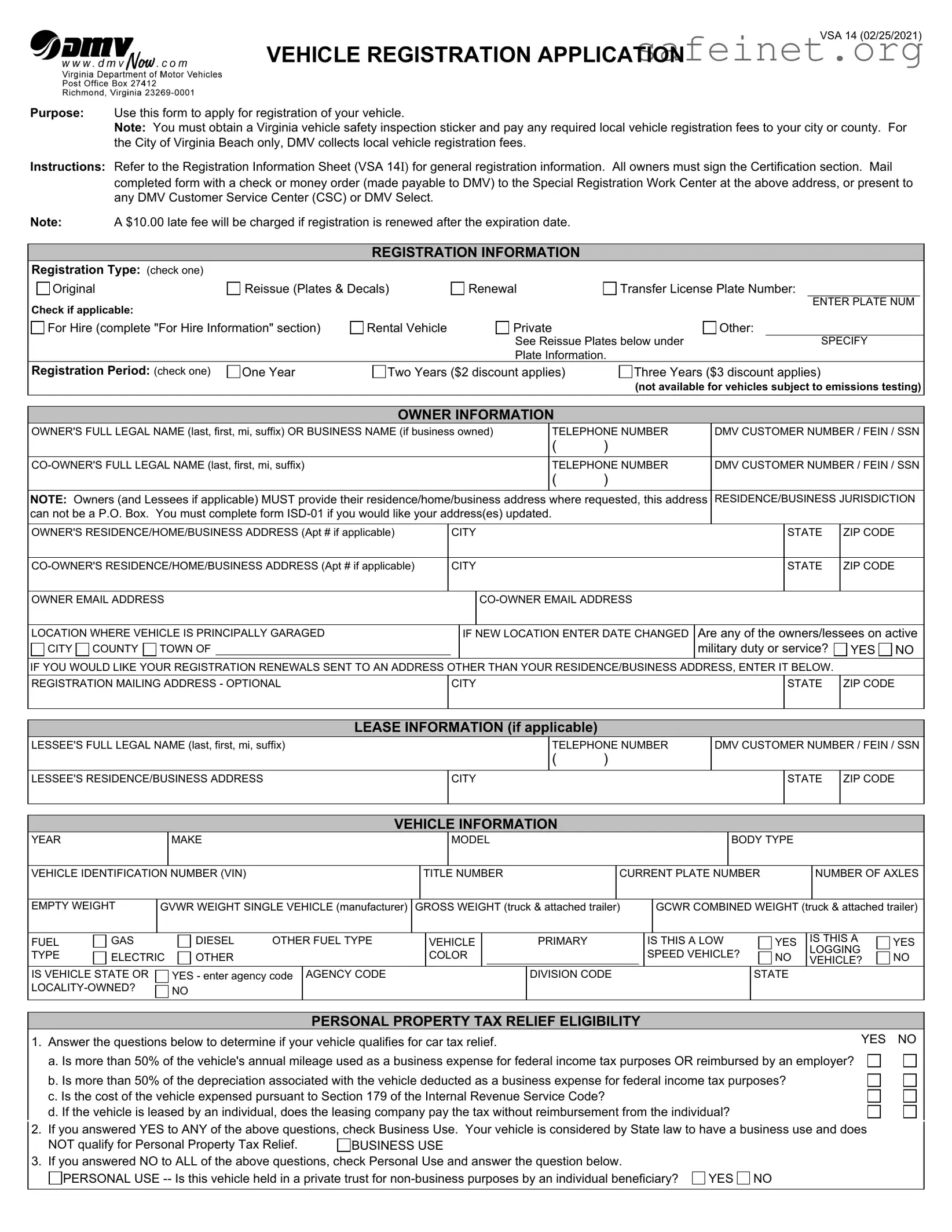
The Virginia DMV Registration form, officially known as VSA-0, serves as a crucial document for vehicle owners in the state. This form captures essential details about the vehicle, including the title number, vehicle identification number (VIN), and the date of issuance. It also specifies the plate number, plate type, and sticker expiration date, which are vital for maintaining legal registration. Vehicle specifics such as make, model, year, color, and fuel type are documented, along with the intended use and the number of axles. Additionally, the form requires information about the purchase date and the odometer reading at the time of titling. A lienholder's information may also be included if applicable. Virginia law mandates that vehicle owners notify the DMV of any changes, such as selling or trading the vehicle, or updating their address. Failure to comply can lead to serious consequences, including the suspension of a driver's license and cancellation of license plates. Furthermore, the form emphasizes the importance of maintaining valid insurance coverage, as the DMV verifies this for all registered vehicles. Owners must also keep the registration card in the vehicle while it is in operation, although it does not grant permission to drive. The process for notifying the DMV about changes is straightforward, with options for online updates or submitting forms by mail. Overall, the Virginia DMV Registration form plays a vital role in ensuring compliance with state regulations and maintaining accurate vehicle records.
VSA 14 (02/25/2021)
VEHICLE REGISTRATION APPLICATION
Purpose: Use this form to apply for registration of your vehicle.
Note: You must obtain a Virginia vehicle safety inspection sticker and pay any required local vehicle registration fees to your city or county. For the City of Virginia Beach only, DMV collects local vehicle registration fees.
Instructions: Refer to the Registration Information Sheet (VSA 14I) for general registration information. All owners must sign the Certification section. Mail
completed form with a check or money order (made payable to DMV) to the Special Registration Work Center at the above address, or present to any DMV Customer Service Center (CSC) or DMV Select.
Note: A $10.00 late fee will be charged if registration is renewed after the expiration date.
REGISTRATION INFORMATION
|
Registration Type: (check one) |
|
|
|
|
|
|
|
|
|
|
|
|
|
|
|
|
|
|
|
|||
|
|
|
|
Original |
|
Reissue (Plates & Decals) |
|
Renewal |
|
|
Transfer License Plate Number: |
|
|
||||||||||
|
|
|
|
|
|
|
|
||||||||||||||||
|
|
|
|
|
|
|
|
|
|
|
|
|
|
|
|
|
|
|
|
|
|
|
|
|
Check if applicable: |
|
|
|
|
|
|
|
|
|
|
|
|
|
|
|
|
|
ENTER PLATE NUM |
||||
|
|
|
|
|
|
|
|
|
|
|
|
|
|
|
|
|
|
|
|
||||
|
|
|
For Hire (complete "For Hire Information" section) |
|
Rental Vehicle |
|
|
|
Private |
|
|
|
|
Other: |
|
|
|||||||
|
|
|
|
|
|
|
|
||||||||||||||||
|
|
|
|
|
|
|
|
|
|
|
|
|
|
See Reissue Plates below under |
|
|
|
|
|||||
|
|
|
|
|
|
|
|
|
|
|
|
SPECIFY |
|||||||||||
|
|
|
|
|
|
|
|
|
|
|
|
|
|
Plate Information. |
|
|
|
|
|
|
|
|
|
|
Registration Period: (check one) |
|
One Year |
|
|
|
Two Years ($2 discount applies) |
|
|
Three Years ($3 discount applies) |
|||||||||||||
|
|
|
|
|
|
||||||||||||||||||
|
|
|
|
|
|
|
|
|
|
|
|
|
|
|
|
|
|
(not available for vehicles subject to emissions testing) |
|||||
OWNER INFORMATION
|
OWNER'S FULL LEGAL NAME (last, first, mi, suffix) OR BUSINESS NAME (if business owned) |
|
TELEPHONE NUMBER |
|
DMV CUSTOMER NUMBER / FEIN / SSN |
|||||||||||||||||||||||||||||||||||||||||||
|
|
|
|
|
|
|
|
|
|
|
|
|
|
|
|
|
|
|
|
|
|
|
|
( |
) |
|
|
|
|
|
|
|
|
|
|
|
|
|
|
|
|
|
|
|
|
|
|
|
|
|
|
|
|
|
|
|
|
|
|
TELEPHONE NUMBER |
|
DMV CUSTOMER NUMBER / FEIN / SSN |
|||||||||||||||||||||||||||||||||||
|
|
|
|
|
|
|
|
|
|
|
|
|
|
|
|
|
|
|
|
|
|
|
|
( |
) |
|
|
|
|
|
|
|
|
|
|
|
|
|
|
|
|
|
|
|
|
|
|
|
NOTE: Owners (and Lessees if applicable) MUST provide their residence/home/business address where requested, this address |
RESIDENCE/BUSINESS JURISDICTION |
|||||||||||||||||||||||||||||||||||||||||||||||
can not be a P.O. Box. You must complete form |
|
|
|
|
|
|
|
|
|
|
|
|
|
|
|
|
|
|
|
|
|
|
|
|
||||||||||||||||||||||||
|
OWNER'S RESIDENCE/HOME/BUSINESS ADDRESS (Apt # if applicable) |
|
|
|
|
CITY |
|
|
|
|
|
|
|
|
|
|
|
|
|
|
|
STATE |
ZIP CODE |
|||||||||||||||||||||||||
|
|
|
|
|
|
|
|
|
|
|
|
|
|
|
|
|
|
|
|
|
|
|
|
|
|
|
|
|
|
|
|
|
|
|
|
|
|
|||||||||||
|
|
|
|
|
CITY |
|
|
|
|
|
|
|
|
|
|
|
|
|
|
|
STATE |
ZIP CODE |
||||||||||||||||||||||||||
|
|
|
|
|
|
|
|
|
|
|
|
|
|
|
|
|
|
|
|
|
|
|
|
|
|
|
|
|
|
|
|
|
|
|
|
|
|
|
|
|
|
|
||||||
|
OWNER EMAIL ADDRESS |
|
|
|
|
|
|
|
|
|
|
|
|
|
|
|
|
|
|
|
|
|
|
|
|
|
|
|
|
|
|
|
|
|||||||||||||||
|
|
|
|
|
|
|
|
|
|
|
|
|
|
|
|
|
|
|
|
|
|
|
|
|
|
|
|
|
|
|
|
|
|
|
|
|
|
|
|
|
||||||||
|
LOCATION WHERE VEHICLE IS PRINCIPALLY GARAGED |
|
|
|
|
|
IF NEW LOCATION ENTER DATE CHANGED |
Are any of the owners/lessees on active |
||||||||||||||||||||||||||||||||||||||||
|
|
CITY |
|
COUNTY |
|
|
|
TOWN OF |
|
|
|
|
|
|
|
|
|
|
|
|
|
|
|
|
|
|
|
military duty or service? |
|
|
YES |
|
|
NO |
||||||||||||||
|
|
|
|
|
|
|
|
|
|
|
|
|
|
|
|
|
|
|
|
|
|
|
|
|
|
|
|
|||||||||||||||||||||
|
|
|
|
|
|
|
|
|
|
|
|
|
|
|
|
|
|
|
|
|
|
|
|
|
|
|
|
|
|
|
|
|
|
|
|
|
|
|
|
|
|
|
|
|
|
|
|
|
IF YOU WOULD LIKE YOUR REGISTRATION RENEWALS SENT TO AN ADDRESS OTHER THAN YOUR RESIDENCE/BUSINESS ADDRESS, ENTER IT BELOW. |
|
|
|
|
|
|
|
|||||||||||||||||||||||||||||||||||||||||
|
REGISTRATION MAILING ADDRESS - OPTIONAL |
|
|
|
|
CITY |
|
|
|
|
|
|
|
|
|
|
|
|
|
|
|
STATE |
ZIP CODE |
|||||||||||||||||||||||||
|
|
|
|
|
|
|
|
|
|
|
|
|
|
|
|
|
|
|
|
|
|
|
|
|
|
|
|
|
|
|
|
|
|
|
|
|
|
|
|
|
|
|
|
|
|
|
||
|
|
|
|
|
|
|
|
|
|
|
|
|
|
|
|
|
|
|
|
|
|
|
|
|
|
|
|
|
|
|
|
|
|
|
|
|
|
|
|
|
|
|
|
|
|
|
|
|
|
|
|
|
|
|
|
|
|
|
|
|
LEASE INFORMATION (if applicable) |
|
|
|
|
|
|
|
|
|
|
|
|
|
|
|
|
|
|
|
|
|
|
|
|
||||||||||||
|
LESSEE'S FULL LEGAL NAME (last, first, mi, suffix) |
|
|
|
|
|
|
|
|
|
|
TELEPHONE NUMBER |
|
DMV CUSTOMER NUMBER / FEIN / SSN |
||||||||||||||||||||||||||||||||||
|
|
|
|
|
|
|
|
|
|
|
|
|
|
|
|
|
|
|
|
|
|
|
|
( |
) |
|
|
|
|
|
|
|
|
|
|
|
|
|
|
|
|
|
|
|
|
|
|
|
|
LESSEE'S RESIDENCE/BUSINESS ADDRESS |
|
|
|
|
|
|
|
CITY |
|
|
|
|
|
|
|
|
|
|
|
|
|
|
|
STATE |
ZIP CODE |
||||||||||||||||||||||
|
|
|
|
|
|
|
|
|
|
|
|
|
|
|
|
|
|
|
|
|
|
|
|
|
|
|
|
|
|
|
|
|
|
|
|
|
|
|
|
|
|
|
|
|
|
|
|
|
|
|
|
|
|
|
|
|
|
|
|
|
|
|
|
|
|
|
|
|
|
|
|
|
|
|
|
|
|
|
|
|
|
|
|
|
|
|
|
|
|
|
|
|
|
||||
|
|
|
|
|
|
|
|
|
|
|
|
VEHICLE INFORMATION |
|
|
|
|
|
|
|
|
|
|
|
|
|
|
|
|
|
|
|
|
|
|
|
|
||||||||||||
|
YEAR |
|
|
|
|
|
|
MAKE |
|
|
|
|
|
|
|
MODEL |
|
|
|
|
|
|
|
|
|
BODY TYPE |
|
|
|
|
|
|
|
|
|
|
||||||||||||
|
|
|
|
|
|
|
|
|
|
|
|
|
|
|
|
|
|
|||||||||||||||||||||||||||||||
|
VEHICLE IDENTIFICATION NUMBER (VIN) |
|
|
|
|
TITLE NUMBER |
|
|
|
CURRENT PLATE NUMBER |
|
|
|
NUMBER OF AXLES |
||||||||||||||||||||||||||||||||||
|
|
|
|
|
|
|
|
|
|
|
|
|
|
|
|
|
|
|
|
|
|
|
|
|
|
|
|
|||||||||||||||||||||
|
EMPTY WEIGHT |
GVWR WEIGHT SINGLE VEHICLE (manufacturer) |
|
GROSS WEIGHT (truck & attached trailer) |
|
GCWR COMBINED WEIGHT (truck & attached trailer) |
||||||||||||||||||||||||||||||||||||||||||
|
|
|
|
|
|
|
|
|
|
|
|
|
|
|
|
|
|
|
|
|
|
|
|
|
|
|
|
|
|
|
|
|
|
|
||||||||||||||
|
FUEL |
|
GAS |
|
DIESEL |
OTHER FUEL TYPE |
|
|
VEHICLE |
|
|
PRIMARY |
|
|
|
IS THIS A LOW |
|
|
YES |
IS THIS A |
|
|
YES |
|||||||||||||||||||||||||
|
|
|
|
|
|
|
|
|
|
|
|
|
|
|
|
|
|
|
|
|
|
|
|
|
|
|
|
|
|
|
|
|
|
|
|
|
|
|
LOGGING |
|
|
|
|
|||||
|
TYPE |
|
ELECTRIC |
OTHER |
|
|
|
|
|
COLOR |
|
|
|
|
|
|
|
SPEED VEHICLE? |
|
|
NO |
|
|
NO |
||||||||||||||||||||||||
|
|
|
|
|
|
|
|
|
|
|
|
|
|
|
|
VEHICLE? |
|
|
||||||||||||||||||||||||||||||
|
|
|
|
|
|
|
|
|
|
|
|
|
|
|
|
|
|
|
|
|
|
|
|
|
|
|
|
|
|
|
|
|
|
|
|
|
|
|
|
|
|
|
|
|
|
|
|
|
|
IS VEHICLE STATE OR |
|
|
YES - enter agency code |
AGENCY CODE |
|
|
|
|
|
|
|
|
|
DIVISION CODE |
|
|
|
|
|
STATE |
|
|
|
|
|
|
|
|
|
|
|||||||||||||||||
|
|
|
|
NO |
|
|
|
|
|
|
|
|
|
|
|
|
|
|
|
|
|
|
|
|
|
|
|
|
|
|
|
|
|
|
|
|
|
|
|
|
|
|
||||||
|
|
|
|
|
|
|
|
|
|
|
|
|
|
|
|
|
|
|
|
|
|
|
|
|
|
|
|
|
|
|
|
|
|
|
|
|
|
|
|
|
|
|||||||
|
|
|
|
|
|
|
|
|
|
|
|
|
|
|
|
|
|
|
|
|
|
|
|
|
|
|
|
|
|
|
|
|
|
|
|
|
|
|
|
|
||||||||
|
|
|
|
|
|
|
|
|
|
|
|
|
|
|
|
|
|
|
|
|
|
|
|
|
|
|
|
|
|
|
|
|
|
|
|
|
|
|
|
|
|
|
|
|
|
|
|
|
|
|
|
|
|
|
|
|
|
|
|
|
|
|
|
|
|
|
|
|
|
|
|
|
|
|
|
|
|
|
|
|
|
|
|
|
|
|
|
|
|
|
|
|
|
|
|
|
|
|
|
|
|
|
|
|
|
|
|
|
|
PERSONAL PROPERTY TAX RELIEF ELIGIBILITY |
|
|
|
|
|
|
|
|
|
|
|
|
|
|
|
|
|
|
|
|
|
|||||||||||||||
|
1. Answer the questions below to determine if your vehicle qualifies for car tax relief. |
|
|
|
|
|
|
|
|
|
|
|
|
|
|
|
|
|
|
|
|
YES |
NO |
|||||||||||||||||||||||||
a. Is more than 50% of the vehicle's annual mileage used as a business expense for federal income tax purposes OR reimbursed by an employer?
b. Is more than 50% of the depreciation associated with the vehicle deducted as a business expense for federal income tax purposes? c. Is the cost of the vehicle expensed pursuant to Section 179 of the Internal Revenue Service Code?
d. If the vehicle is leased by an individual, does the leasing company pay the tax without reimbursement from the individual?
2. |
If you answered YES to ANY of the above questions, check Business Use. Your vehicle is considered by State law to have a business use and does |
||
|
NOT qualify for Personal Property Tax Relief. |
BUSINESS USE |
|
3. |
If you answered NO to ALL of the above questions, check Personal Use and answer the question below. |
|
|
|
PERSONAL USE |
YES NO |
|
|
|
|
|
| Fact Name | Description |
|---|---|
| Form Title | The official name of the registration form is the Virginia Motor Vehicle Registration VSA-0. |
| Governing Law | This form is governed by Virginia state law regarding vehicle registration and titling. |
| VIN Requirement | Every vehicle must have a Vehicle Identification Number (VIN) listed on the registration form. |
| Insurance Verification | The DMV verifies that all registered vehicles have valid insurance coverage. |
| Notification of Changes | Virginia law requires you to notify the DMV if you sell, trade, or dispose of your vehicle. |
| Address Change Notification | You can notify the DMV of an address change through their website, by submitting a form, or by calling. |
| Plate Return Requirement | If you cancel your insurance, you must return your license plates to the DMV. |
| Odometer Reading | The registration form requires the odometer reading at the time of titling. |
| Form Submission | The completed registration card must be mailed to the DMV's Data Integrity department in Richmond. |
Filling out the Virginia DMV Registration form is a straightforward process. Follow these steps carefully to ensure that you complete the form correctly.
Once you have filled out the form, ensure that you send it to the correct address. This will help you avoid any delays in processing your registration.
What is the Virginia DMV Registration form and what information does it require?
The Virginia DMV Registration form, known as VSA-0, is essential for registering your vehicle in the state of Virginia. It requires various pieces of information, including the title number, vehicle identification number (VIN), and plate number. You'll also need to provide details about your vehicle, such as its make, model, year, color, and fuel type. Additionally, the form asks for your purchase date and the odometer reading at the time of titling. Completing this form accurately is crucial for ensuring your vehicle is properly registered.
How do I notify the DMV if I sell or dispose of my vehicle?
If you sell, trade, or dispose of your vehicle, you must inform the DMV. You can do this by filling out the appropriate section on the registration form. Include the date of the transaction and indicate whether the vehicle was sold to a Virginia resident or business. Once completed, mail the entire registration card to the DMV at the address provided. This step is important to avoid any potential issues with your driver's license or vehicle registration in the future.
What should I do if I change my address?
Changing your address requires notifying the DMV to ensure that all correspondence, including registration renewals, is sent to the correct location. You can update your address in several ways: by visiting the DMV website and completing the online address change transaction, submitting the DMV form ISD-01, or calling the DMV customer service at 1-804-497-7100 for assistance. It’s essential to complete this process promptly to avoid complications with your vehicle registration and driver's license.
What happens if I cancel my vehicle insurance?
Virginia law mandates that you must notify the DMV if you cancel your vehicle insurance. Failing to do so can lead to serious consequences, including the suspension of your driver's license and cancellation of your vehicle's license plates. To avoid these penalties, inform the DMV immediately and return your license plates if you no longer have insurance. Staying proactive about your insurance status is vital for maintaining your driving privileges.
Is there a requirement to carry the registration card in my vehicle?
Yes, you are required to carry the registration card in your vehicle while it is in operation. However, it's important to note that possessing the registration card does not grant you the right to operate a motor vehicle. This card serves as proof of registration and must be presented if requested by law enforcement. Keeping it in your vehicle ensures that you are compliant with Virginia law.
Failing to provide accurate Vehicle Identification Number (VIN). This number is crucial for identifying the vehicle. An incorrect VIN can lead to registration issues.
Not indicating the purchase date of the vehicle. This information is necessary for the DMV to verify ownership and registration timelines.
Omitting the odometer reading at the time of titling. This detail is important for tracking the vehicle's mileage and ensuring compliance with state regulations.
Incorrectly answering questions about insurance coverage. If insurance is not verified, the DMV may suspend the driver's license and cancel vehicle plates.
Neglecting to notify the DMV about a change of address. This can lead to missed communications regarding vehicle registration and renewals, potentially causing further complications.
When registering a vehicle in Virginia, the DMV Registration form is just one part of the process. There are several other forms and documents that you may need to complete or submit to ensure your registration is processed smoothly. Here’s a brief overview of some commonly used documents.
Having these documents ready can help facilitate a smoother registration process at the Virginia DMV. Always check for any updates or changes to requirements, as regulations may evolve over time.
The Virginia DMV Registration form shares similarities with the Vehicle Title Application. Both documents serve crucial roles in the vehicle ownership process. The Vehicle Title Application is used to establish and transfer ownership of a vehicle, much like the registration form. When a vehicle is purchased, the title must be applied for to prove ownership, while the registration form is necessary for legally operating the vehicle on public roads. Each document requires details about the vehicle, such as the Vehicle Identification Number (VIN), make, model, and owner information, ensuring a comprehensive record is maintained for each vehicle in the state.
Another document closely related to the Virginia DMV Registration form is the Insurance Verification Form. This form is essential for confirming that a vehicle owner has the necessary insurance coverage, a requirement for vehicle registration in Virginia. Both documents emphasize the importance of maintaining valid insurance; failure to do so can lead to penalties, including suspension of the driver's license. The Insurance Verification Form collects information about the insurance provider and policy number, similar to how the registration form ensures that all vehicles have active insurance coverage before they can be registered.
The Application for a Virginia Driver's License also parallels the DMV Registration form in its function of establishing legal compliance for vehicle operation. While the registration form is focused on the vehicle itself, the driver’s license application ensures that the individual operating the vehicle is qualified to do so. Both documents require personal information and proof of identity, thus creating a reliable database for the DMV to monitor both vehicles and drivers. This connection between the two forms underscores the state's commitment to road safety and responsible vehicle operation.
Additionally, the Address Change Request Form mirrors the DMV Registration form in its procedural aspects. When a vehicle owner changes their address, they must notify the DMV to keep their registration information current. This form allows individuals to update their address on file, similar to how the registration form requires accurate owner information. Both documents facilitate communication between the DMV and vehicle owners, ensuring that all records reflect the most current and accurate information to prevent issues with registration and licensing.
The Vehicle Bill of Sale is another document that shares similarities with the Virginia DMV Registration form. While the registration form is used for ongoing vehicle operation, the Bill of Sale serves as proof of the transaction when a vehicle is sold or transferred. It includes vital details such as the sale price, vehicle information, and signatures of both the buyer and seller. This document is often required when registering the vehicle in the new owner's name, thereby linking it to the registration process. Both forms are essential for establishing legal ownership and ensuring that all necessary information is documented for future reference.
Lastly, the Emission Inspection Certificate is akin to the DMV Registration form in that it is a requirement for vehicle operation in many jurisdictions, including Virginia. While the registration form is focused on the vehicle's legal status, the Emission Inspection Certificate verifies that the vehicle meets environmental standards. Both documents must be presented to the DMV for registration renewal, highlighting the regulatory framework that governs vehicle operation. This ensures that vehicles on the road are not only legally registered but also compliant with state environmental laws, promoting public health and safety.
When filling out the Virginia DMV Registration form, it’s important to pay attention to detail. Here are some do's and don'ts to keep in mind:
Following these guidelines can help you navigate the registration process smoothly and avoid potential issues down the road.
Understanding the Virginia DMV Registration form can be challenging due to common misconceptions. Here are nine prevalent misunderstandings:
By addressing these misconceptions, individuals can navigate the Virginia DMV registration process more effectively and ensure compliance with state regulations.
When it comes to filling out and using the Virginia DMV Registration form, there are several important points to keep in mind. Here are some key takeaways:
By following these guidelines, you can ensure a smoother experience with your vehicle registration in Virginia. Being proactive about your responsibilities can save you time and potential issues down the road.