When it comes to real estate transactions in Virginia, the Virginia Deed form plays a crucial role in ensuring that property ownership is legally transferred from one party to another. This essential document outlines important details such as the names of the grantor and grantee, a clear description of the property being transferred, and the consideration or payment involved in the transaction. Additionally, the form may include various covenants and warranties that protect the interests of both the seller and the buyer. Whether you are a first-time homebuyer, a seasoned investor, or simply looking to understand the intricacies of property ownership, familiarizing yourself with the Virginia Deed form is vital. It not only serves as a record of the transaction but also helps to clarify the rights and responsibilities associated with the property. Understanding this document can empower you to navigate the complexities of real estate transactions with confidence.
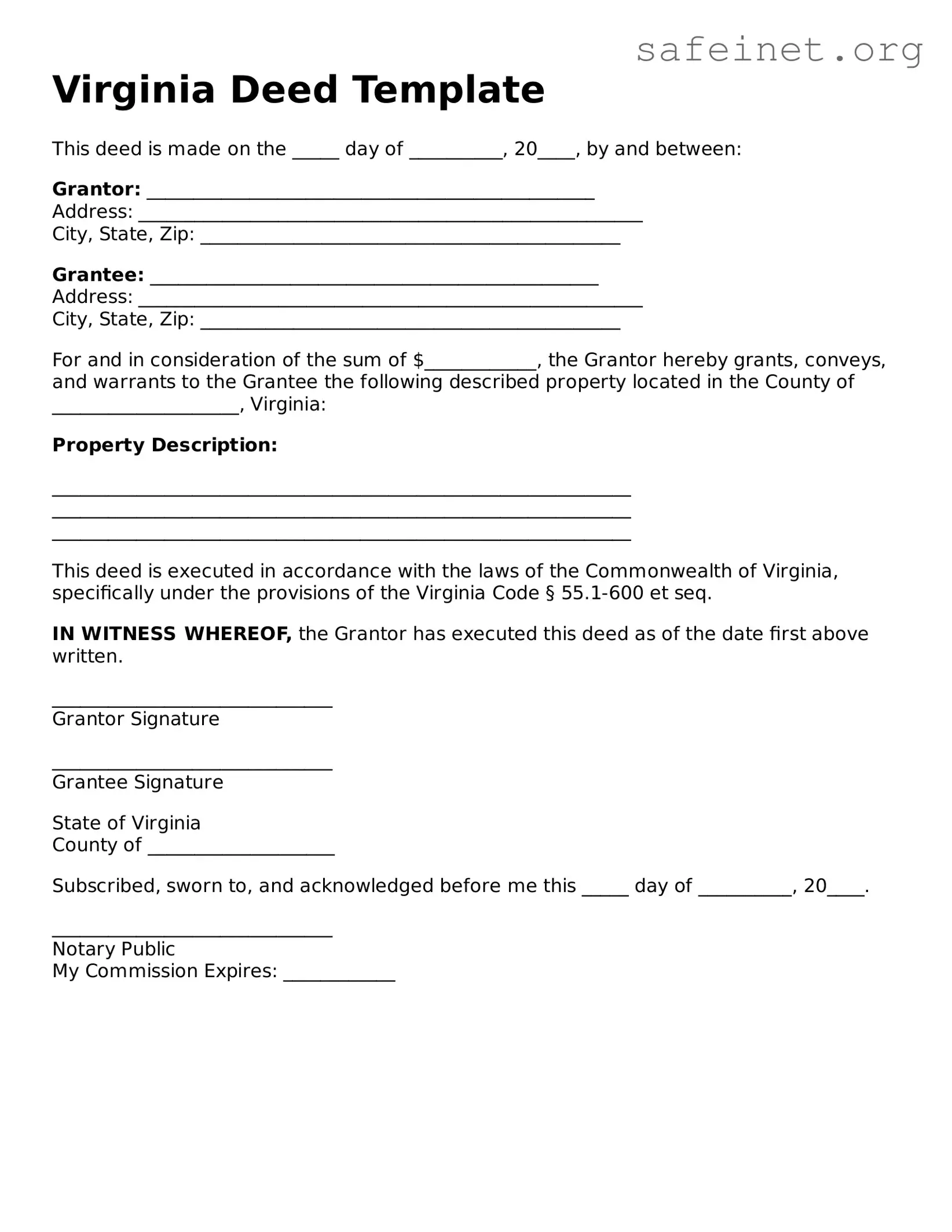
Virginia Deed Template
This deed is made on the _____ day of __________, 20____, by and between:
Grantor: ________________________________________________
Address: ______________________________________________________
City, State, Zip: _____________________________________________
Grantee: ________________________________________________
Address: ______________________________________________________
City, State, Zip: _____________________________________________
For and in consideration of the sum of $____________, the Grantor hereby grants, conveys, and warrants to the Grantee the following described property located in the County of ____________________, Virginia:
Property Description:
______________________________________________________________
______________________________________________________________
______________________________________________________________
This deed is executed in accordance with the laws of the Commonwealth of Virginia, specifically under the provisions of the Virginia Code § 55.1-600 et seq.
IN WITNESS WHEREOF, the Grantor has executed this deed as of the date first above written.
______________________________
Grantor Signature
______________________________
Grantee Signature
State of Virginia
County of ____________________
Subscribed, sworn to, and acknowledged before me this _____ day of __________, 20____.
______________________________
Notary Public
My Commission Expires: ____________
| Fact Name | Description |
|---|---|
| Governing Law | The Virginia Deed form is governed by the laws of the Commonwealth of Virginia, specifically under Title 55.1 of the Code of Virginia. |
| Purpose | This form is used to transfer real property ownership from one party to another, ensuring that the transaction is legally recognized. |
| Types of Deeds | Virginia recognizes several types of deeds, including warranty deeds, quitclaim deeds, and special warranty deeds, each serving different purposes in property transfers. |
| Recording Requirement | To be effective against third parties, the Virginia Deed must be recorded in the local circuit court where the property is located. |
Filling out a Virginia Deed form is an important step in transferring property ownership. After completing the form, it will need to be signed, notarized, and recorded with the local county clerk's office. This ensures that the transfer is legally recognized and protects the rights of both the buyer and the seller.
What is a Virginia Deed form?
A Virginia Deed form is a legal document used to transfer ownership of real estate in Virginia. It outlines the details of the property being transferred, including the names of the parties involved, a description of the property, and any conditions of the transfer. This document is essential for ensuring that the transfer is recognized by the state and is legally binding.
How do I complete a Virginia Deed form?
To complete a Virginia Deed form, start by gathering all necessary information. This includes the names and addresses of the grantor (the person transferring the property) and the grantee (the person receiving the property). Next, provide a clear legal description of the property, which can often be found in previous deeds or property tax records. After filling out the form, both parties must sign it in the presence of a notary public to ensure its validity.
Do I need to file the Virginia Deed form with the county?
Yes, after completing the Virginia Deed form, you must file it with the local county clerk's office where the property is located. This step is crucial because it makes the transfer of ownership a matter of public record. Filing fees may apply, and it’s advisable to check with the local clerk’s office for specific requirements and costs.
What happens if I don’t use a Virginia Deed form?
If you fail to use a Virginia Deed form to transfer property, the transfer may not be legally recognized. This can lead to disputes over ownership, difficulties in selling the property in the future, and potential legal challenges. Always ensure that you use the appropriate deed form to protect your rights and interests in the property.
Incorrect Property Description: One of the most common mistakes is failing to provide a complete and accurate description of the property. Ensure that you include the correct address, parcel number, and any other identifying details.
Missing Signatures: All required parties must sign the deed. Omitting a signature can render the document invalid. Double-check that everyone involved has signed where necessary.
Improper Notarization: Deeds must be notarized to be legally binding. Make sure the notary public is properly licensed and that the notarization is completed correctly. Failing to do this can cause issues during the transfer process.
Incorrect Grantee Information: Providing inaccurate information about the grantee can lead to complications. Ensure that the name is spelled correctly and that it matches the identification documents.
Omitting the Date: Forgetting to include the date of the transaction is a frequent oversight. This detail is crucial for establishing the timeline of ownership.
Ignoring Local Requirements: Different counties may have specific requirements for deed filings. Not being aware of these can lead to delays or rejections. Always check with local authorities to ensure compliance.
When completing a property transaction in Virginia, several forms and documents may accompany the Virginia Deed form. Each of these documents serves a specific purpose in ensuring the legality and clarity of the transaction. Below is a list of common forms that are often used in conjunction with the Virginia Deed form.
Each of these documents plays a crucial role in the property transaction process. They help to protect the interests of all parties involved and ensure compliance with state regulations. It is advisable to review each document carefully and consult with a professional if there are any questions or concerns.
The Virginia Deed form is similar to the Warranty Deed. A Warranty Deed guarantees that the seller has clear title to the property and can transfer ownership without any claims against it. This document protects the buyer from any future disputes regarding ownership. In essence, it assures the buyer that they are receiving full rights to the property without hidden issues.
Another similar document is the Quitclaim Deed. This type of deed transfers whatever interest the seller has in the property without making any promises about the title's validity. If the seller has ownership, the buyer receives it; if not, the buyer gains nothing. This document is often used between family members or in divorce settlements where the parties are familiar with each other’s interests.
The Special Warranty Deed shares some similarities as well. It guarantees that the seller has not done anything to harm the title during their ownership. However, it does not cover any issues that may have existed before the seller acquired the property. This document is often used in commercial real estate transactions.
The Bargain and Sale Deed is another related document. This deed implies that the seller has the right to sell the property but does not guarantee that the title is free of encumbrances. It conveys ownership but leaves the buyer responsible for checking any potential claims against the property.
A Grant Deed is similar, as it conveys property from the seller to the buyer while ensuring that the seller has not transferred the property to anyone else. However, it does not guarantee against any defects in the title that may have existed before the sale. This document is common in many states and offers some level of protection to the buyer.
The Deed of Trust is also noteworthy. This document is used to secure a loan with real estate as collateral. It involves three parties: the borrower, the lender, and a trustee. The trustee holds the title until the loan is paid off. While it serves a different purpose, it involves the transfer of property rights and establishes a legal framework for securing loans.
The Reconveyance Deed is related to the Deed of Trust. Once a borrower pays off their loan, the lender issues a Reconveyance Deed to transfer the title back to the borrower. This document clears the borrower’s obligation and confirms they now own the property free and clear.
The Executor’s Deed is another document that resembles the Virginia Deed form. This deed is used when a property owner passes away, and the executor of the estate transfers the property to the heirs or beneficiaries. It conveys ownership but does not guarantee a clear title, similar to a Quitclaim Deed.
A Trustee’s Deed also fits into this category. This document is executed by a trustee to convey property held in a trust. It serves to transfer ownership from the trust to a beneficiary or buyer. Like other deeds, it may not guarantee a clear title, depending on the circumstances surrounding the trust.
Finally, the Affidavit of Title is relevant. While not a deed itself, it is often used alongside deeds to affirm that the seller holds clear title to the property. This document can provide additional assurance to the buyer about the status of the title and any claims that may exist.
When completing the Virginia Deed form, attention to detail is crucial. The following list outlines essential dos and don'ts to ensure accuracy and compliance.
Taking these steps will help ensure the Virginia Deed form is completed correctly and efficiently.
When it comes to the Virginia Deed form, several misconceptions can lead to confusion for property owners and buyers alike. Understanding the truth behind these myths is essential for anyone involved in real estate transactions in Virginia.
By addressing these misconceptions, individuals can approach the Virginia Deed form with a clearer understanding, ensuring smoother transactions and fewer complications in the future.
When filling out and using the Virginia Deed form, it is essential to keep several key points in mind to ensure the process goes smoothly. Below are some important takeaways that can guide individuals through this task.