A Virginia Cease and Desist Letter serves as a formal request for an individual or organization to stop specific actions that may be harmful or illegal. This letter is often used in disputes involving harassment, copyright infringement, or other forms of unlawful behavior. It outlines the nature of the offending actions and clearly states the recipient's obligation to cease such conduct. The letter typically includes the sender's contact information, a detailed description of the objectionable behavior, and a deadline for compliance. Additionally, it may warn of potential legal action if the recipient fails to comply. Understanding how to properly draft and deliver this letter is crucial for effectively protecting one's rights and interests.
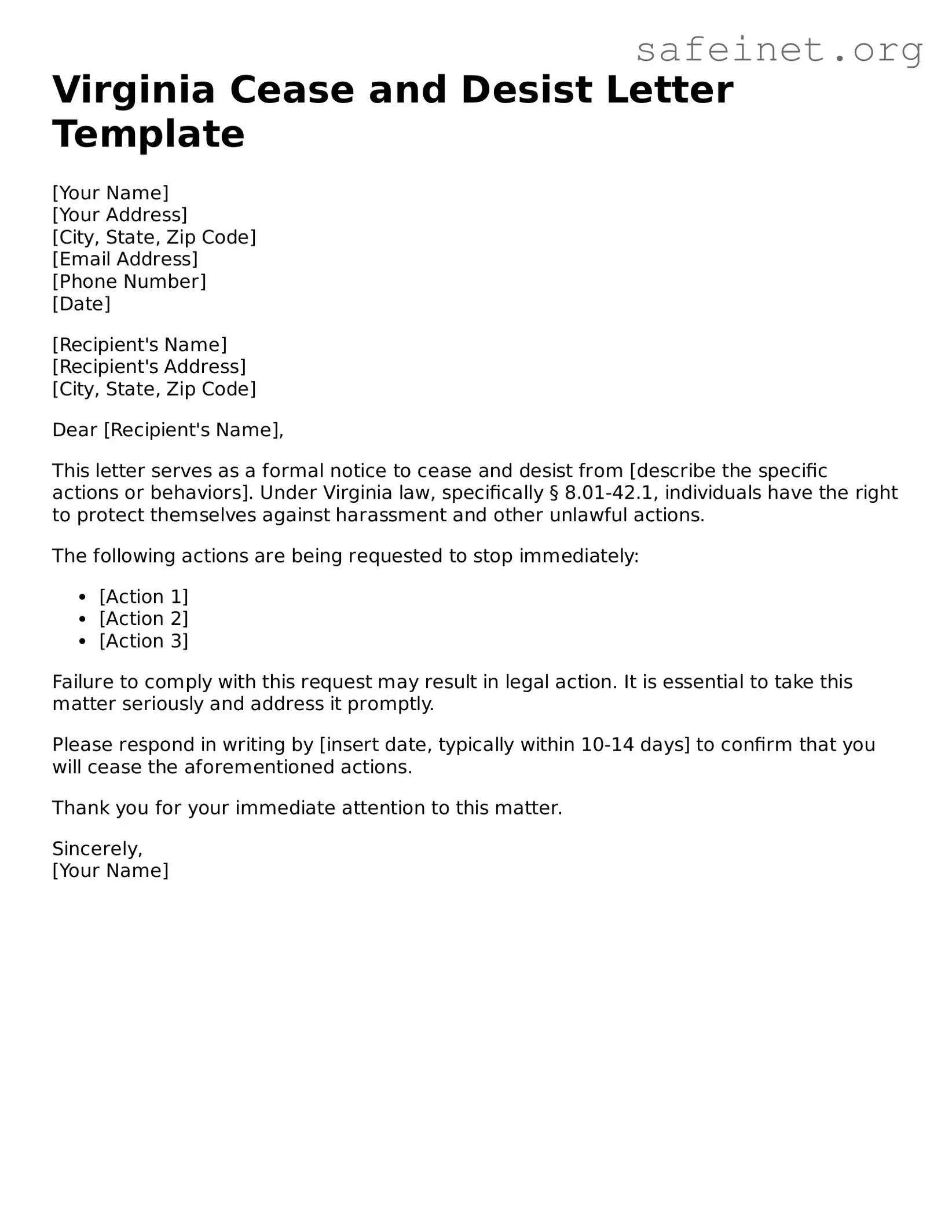
Virginia Cease and Desist Letter Template
[Your Name]
[Your Address]
[City, State, Zip Code]
[Email Address]
[Phone Number]
[Date]
[Recipient's Name]
[Recipient's Address]
[City, State, Zip Code]
Dear [Recipient's Name],
This letter serves as a formal notice to cease and desist from [describe the specific actions or behaviors]. Under Virginia law, specifically § 8.01-42.1, individuals have the right to protect themselves against harassment and other unlawful actions.
The following actions are being requested to stop immediately:
Failure to comply with this request may result in legal action. It is essential to take this matter seriously and address it promptly.
Please respond in writing by [insert date, typically within 10-14 days] to confirm that you will cease the aforementioned actions.
Thank you for your immediate attention to this matter.
Sincerely,
[Your Name]
| Fact Name | Details |
|---|---|
| Purpose | A Virginia Cease and Desist Letter is used to formally request that an individual or organization stop certain actions that may be harmful or illegal. |
| Governing Law | The letter is governed by Virginia state law, particularly under the Virginia Code § 8.01-223.2, which addresses issues related to cease and desist actions. |
| Format | The letter should clearly state the sender's intent, describe the actions to be stopped, and provide a deadline for compliance. |
| Delivery Method | It is recommended to send the letter via certified mail to ensure that there is a record of delivery and receipt. |
After obtaining the Virginia Cease and Desist Letter form, it is important to complete it accurately to ensure your concerns are communicated effectively. Once filled out, the form will need to be sent to the appropriate party to initiate the next steps.
What is a Virginia Cease and Desist Letter?
A Virginia Cease and Desist Letter is a formal document used to request that an individual or organization stop engaging in certain activities that are perceived to be harmful or unlawful. This letter serves as a warning before pursuing legal action. It outlines the specific behavior that needs to cease and may include a deadline for compliance. While it is not a legally binding document, it can play a crucial role in resolving disputes without resorting to litigation.
Who can use a Cease and Desist Letter in Virginia?
Any individual or business in Virginia can use a Cease and Desist Letter to address various issues, such as copyright infringement, harassment, or breach of contract. It is often utilized by those who feel their rights are being violated and wish to formally communicate their concerns. However, it is advisable to consult with a legal professional to ensure that the letter is appropriate for the specific situation.
What should be included in a Virginia Cease and Desist Letter?
A well-crafted Cease and Desist Letter should include several key elements. First, it should clearly identify the sender and the recipient, including their addresses. Next, it should describe the specific actions that are being challenged and the legal grounds for the request. Additionally, the letter should state the desired outcome, such as stopping the harmful behavior, and provide a deadline for compliance. Finally, it should include a warning about potential legal action if the recipient does not comply.
Is a Cease and Desist Letter legally binding?
No, a Cease and Desist Letter is not legally binding. It is primarily a formal request intended to notify the recipient of the issue and encourage them to stop the behavior in question. However, it can serve as evidence in court if the matter escalates to litigation. The letter demonstrates that the sender made a good faith effort to resolve the issue before taking legal action.
What happens if the recipient does not comply with the letter?
If the recipient fails to comply with the demands outlined in the Cease and Desist Letter, the sender may choose to take further action. This could include filing a lawsuit or seeking mediation to resolve the dispute. The next steps will depend on the specific circumstances and the nature of the issue at hand. It is often recommended to consult with a legal professional to determine the best course of action following non-compliance.
Incomplete Information: One common mistake is failing to provide all necessary details. This includes not including your name, address, and contact information, as well as the recipient's information. Without complete information, the letter may not be taken seriously.
Vague Language: Using unclear or ambiguous language can lead to misunderstandings. It's important to be specific about the actions you want the recipient to cease. Clearly outline the behavior or action that is causing concern.
Failure to Include Evidence: Supporting your claims with evidence is crucial. Many individuals neglect to attach relevant documentation or examples that demonstrate the issue. This can weaken your case and reduce the letter's effectiveness.
Not Specifying Consequences: A significant oversight is not outlining the potential consequences if the recipient does not comply. Clearly stating what actions you will take if the behavior continues can add weight to your request.
When dealing with a Virginia Cease and Desist Letter, several other forms and documents may be necessary to support your case or clarify your position. Below is a list of commonly used documents that can accompany the letter.
Each of these documents plays a vital role in the process of addressing disputes and protecting your rights. Consider the appropriate use of these forms to strengthen your position and ensure clarity in communication.
The Virginia Cease and Desist Letter is similar to a Demand Letter. A Demand Letter serves as a formal request for action or remedy regarding a specific issue, often involving a dispute. Like a Cease and Desist Letter, it outlines the sender's grievances and demands a response. However, a Demand Letter typically seeks resolution through negotiation or settlement, while a Cease and Desist Letter demands that the recipient stop a particular action immediately. Both documents aim to resolve conflicts but differ in their urgency and intent.
Another document comparable to the Virginia Cease and Desist Letter is a Notice of Violation. This document is often used in regulatory or compliance contexts to inform an individual or organization that they have breached a law or regulation. Similar to a Cease and Desist Letter, a Notice of Violation outlines the specific behavior that is objectionable. However, a Notice of Violation may also include potential penalties or corrective actions, whereas a Cease and Desist Letter primarily focuses on stopping the behavior in question.
A Third document that shares similarities is a Settlement Agreement. This document is typically created after a dispute has arisen and aims to resolve the issues between parties. While a Cease and Desist Letter demands immediate action, a Settlement Agreement formalizes the terms under which both parties agree to resolve their differences. Both documents serve to protect the interests of the sender but do so at different stages of a conflict.
The Virginia Cease and Desist Letter is also akin to a Non-Disclosure Agreement (NDA). An NDA is used to protect confidential information from being disclosed to unauthorized parties. While the primary purpose of an NDA is to prevent the sharing of sensitive information, it can also serve to stop actions that could harm one party’s interests. Both documents aim to maintain control over certain actions or information, but they do so in different contexts and with different focuses.
Lastly, a Letter of Intent (LOI) can be viewed as similar to a Cease and Desist Letter. An LOI outlines the preliminary understanding between parties before a formal agreement is finalized. While a Cease and Desist Letter seeks to halt specific actions, an LOI signals the intention to negotiate terms for a future agreement. Both documents reflect a desire to establish clear communication and protect interests, albeit at different stages of interaction.
When filling out the Virginia Cease and Desist Letter form, it's important to follow certain guidelines to ensure your letter is effective and legally sound. Here are four things you should and shouldn't do:
Misconceptions about the Virginia Cease and Desist Letter form can lead to confusion and misapplication. Below are nine common misconceptions, along with clarifications for each.
Many believe that a cease and desist letter has the same legal weight as a court order. In reality, it is a formal request to stop a specific action, but it does not have the force of law until a court intervenes.
While legal expertise can be beneficial, individuals can draft their own letters. It is important to clearly state the issue and the desired action.
There is no guarantee that the recipient will comply. The letter serves as a warning and may lead to further legal action if necessary.
These letters can address a variety of issues, including harassment, defamation, and breach of contract, not just copyright matters.
Receiving such a letter does not imply guilt. It is a notification of a complaint and an opportunity to resolve the matter before escalation.
While sending the letter via certified mail can provide proof of delivery, it is not a legal requirement. Other methods of delivery are also acceptable.
Each letter should be tailored to the specific situation. Generic templates may not adequately address the unique aspects of a case.
While the aggrieved party often sends the letter, a representative, such as an attorney, can also send it on their behalf.
Sending the letter is often just the first step in addressing a dispute. Further negotiations or legal actions may still be required to reach a resolution.
When using the Virginia Cease and Desist Letter form, it is crucial to keep several key points in mind. These takeaways can help ensure that your letter is effective and clear.