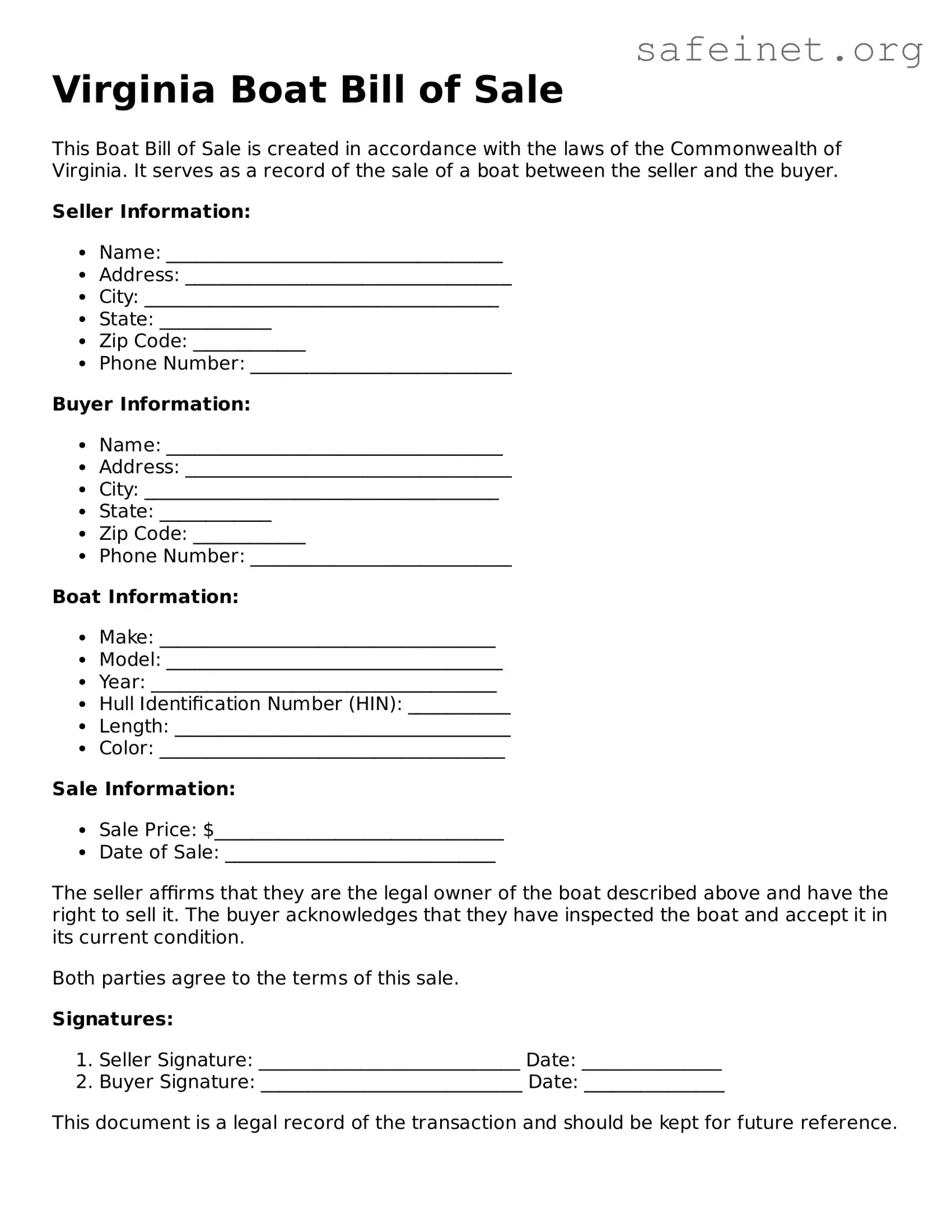
When engaging in the sale or purchase of a boat in Virginia, understanding the Boat Bill of Sale form is essential for both buyers and sellers. This document serves as a legal record of the transaction, providing critical information that protects the interests of both parties involved. Key aspects of the form include the identification of the vessel, which encompasses details such as the boat's make, model, year, and hull identification number. Additionally, the form captures the names and addresses of both the seller and the buyer, ensuring clarity in ownership transfer. The sale price is also prominently noted, along with the date of the transaction, which can be vital for tax purposes and future registration. Furthermore, the Boat Bill of Sale may include a statement regarding any liens or encumbrances on the vessel, thereby safeguarding the buyer from unexpected claims. By using this form, both parties can facilitate a smooth and legally sound transfer of ownership, fostering trust and transparency in the boating community.
Virginia Boat Bill of Sale
This Boat Bill of Sale is created in accordance with the laws of the Commonwealth of Virginia. It serves as a record of the sale of a boat between the seller and the buyer.
Seller Information:
Buyer Information:
Boat Information:
Sale Information:
The seller affirms that they are the legal owner of the boat described above and have the right to sell it. The buyer acknowledges that they have inspected the boat and accept it in its current condition.
Both parties agree to the terms of this sale.
Signatures:
This document is a legal record of the transaction and should be kept for future reference.
| Fact Name | Description |
|---|---|
| Purpose | The Virginia Boat Bill of Sale form serves as a legal document to transfer ownership of a boat from one party to another. |
| Governing Laws | This form is governed by the Virginia Code, specifically Title 29.1, which pertains to the regulation of boats and watercraft. |
| Required Information | The form must include details such as the seller's and buyer's names, addresses, and the boat's identification information. |
| Notarization | While notarization is not mandatory, it is recommended to enhance the document's authenticity and validity. |
| Tax Implications | Completing this form may have tax implications, as it can be used to determine sales tax owed on the transaction. |
| Record Keeping | Both parties should keep a copy of the Bill of Sale for their records, as it serves as proof of the transaction. |
| Transfer of Title | The Bill of Sale is often used in conjunction with the boat title transfer process to ensure proper ownership documentation. |
| Condition of the Boat | The form allows for the seller to disclose the condition of the boat, which can protect both parties in the transaction. |
| Effective Date | The transfer of ownership is effective upon the completion and signing of the Bill of Sale by both parties. |
After obtaining the Virginia Boat Bill of Sale form, you will need to complete it accurately to facilitate the transfer of ownership. This document is essential for ensuring that both the buyer and seller have a clear record of the transaction.
Once the form is completed, both the buyer and seller should keep a copy for their records. This documentation will be useful for any future transactions or registrations related to the boat.
What is a Virginia Boat Bill of Sale?
A Virginia Boat Bill of Sale is a legal document that records the transfer of ownership of a boat from one person to another. This form serves as proof of the transaction and includes essential details such as the buyer's and seller's information, the boat's description, and the sale price. It's important for both parties to have this document to protect their interests and ensure a smooth transfer of ownership.
Why do I need a Boat Bill of Sale in Virginia?
Having a Boat Bill of Sale is crucial for several reasons. Firstly, it provides legal evidence of the sale, which can be important if any disputes arise later. Secondly, it is often required for registering the boat with the Virginia Department of Wildlife Resources. Lastly, it can help in establishing the boat's value for insurance purposes or when reselling in the future.
What information is required on the Virginia Boat Bill of Sale?
The form should include specific information to be valid. This includes the names and addresses of both the seller and the buyer, the boat's make, model, year, and hull identification number (HIN). Additionally, the sale price and the date of the transaction should be clearly stated. Both parties should sign and date the document to finalize the sale.
Is a notary required for the Boat Bill of Sale in Virginia?
No, a notary is not required for the Virginia Boat Bill of Sale to be valid. However, having the document notarized can add an extra layer of security and authenticity. It can also help verify the identities of both parties involved in the transaction, which may be beneficial if any issues arise later.
Can I create my own Boat Bill of Sale?
Yes, you can create your own Boat Bill of Sale as long as it includes all the necessary information required by Virginia law. There are also templates available online that you can use for convenience. Just ensure that all details are accurate and that both parties sign the document to make it legally binding.
What should I do after completing the Boat Bill of Sale?
Once the Boat Bill of Sale is completed and signed, both the buyer and seller should keep a copy for their records. The buyer should then take the completed form to the Virginia Department of Wildlife Resources to register the boat in their name. This step is essential to ensure that the new owner is recognized legally and can operate the boat without any issues.
Incorrect Vessel Information: Many people fail to provide accurate details about the boat, such as the hull identification number (HIN), make, model, and year. This can lead to issues with registration.
Missing Signatures: A common mistake is neglecting to sign the form. Both the seller and buyer must sign to validate the transaction. Without signatures, the document may not hold up legally.
Improper Date Entry: Entering the wrong date or leaving the date blank can create confusion. Always ensure the date reflects when the sale took place.
Failure to Include Payment Details: It's important to specify the purchase price. Omitting this information can lead to disputes later on.
Not Keeping Copies: Some individuals forget to make copies of the completed bill of sale. Retaining a copy is crucial for both parties for future reference.
When purchasing or selling a boat in Virginia, several forms and documents may be necessary to ensure a smooth transaction. Each document serves a specific purpose and can help protect the interests of both the buyer and the seller.
Having these forms and documents ready can facilitate the buying or selling process. It ensures that all legal requirements are met and helps both parties feel secure in their transaction.
The Virginia Boat Bill of Sale form shares similarities with the Vehicle Bill of Sale. Both documents serve as proof of transfer of ownership from one party to another. They typically include details about the item being sold, such as make, model, year, and identification numbers. The Vehicle Bill of Sale may also contain the seller's and buyer's information, ensuring that both parties have a record of the transaction. This document is crucial for registering the vehicle with the state, just as the Boat Bill of Sale is necessary for registering the boat.
Another document akin to the Virginia Boat Bill of Sale is the Motorcycle Bill of Sale. This form functions similarly by documenting the sale of a motorcycle. It includes essential details such as the motorcycle's VIN, model, and year, along with the seller's and buyer's information. Both documents provide legal protection for the buyer and seller, confirming the transaction's legitimacy and helping in the registration process with the relevant authorities.
The RV Bill of Sale is also comparable to the Virginia Boat Bill of Sale. This document outlines the sale of a recreational vehicle and includes similar information, such as the RV's make, model, year, and VIN. Like the Boat Bill of Sale, it serves as a record of ownership transfer and is often required for registration purposes. Both documents help ensure that all parties are clear on the transaction details, protecting their interests.
Additionally, the Trailer Bill of Sale shares common features with the Virginia Boat Bill of Sale. This form records the sale of a trailer, detailing specifications like the trailer's make, model, and identification number. Both documents facilitate the transfer of ownership and are necessary for registration with the state. They provide a clear record for both the buyer and seller, ensuring a smooth transaction process.
The Aircraft Bill of Sale is another document that resembles the Virginia Boat Bill of Sale. It serves as proof of ownership transfer for aircraft, including details such as the aircraft's make, model, and registration number. Both documents are essential for registering the asset with the appropriate authorities and provide legal protection for both parties involved in the transaction.
The Mobile Home Bill of Sale is similar in function to the Virginia Boat Bill of Sale. It documents the sale of a mobile home and includes pertinent information such as the mobile home's make, model, and identification number. Both forms serve to protect the interests of the buyer and seller, providing a clear record of ownership transfer that is often required for registration and title purposes.
The Firearm Bill of Sale also shares characteristics with the Virginia Boat Bill of Sale. This document records the sale of a firearm, detailing the make, model, and serial number. Similar to the Boat Bill of Sale, it provides proof of ownership transfer and is often used to comply with state and federal regulations. Both documents ensure that the transaction is legitimate and protect the rights of both parties involved.
Another comparable document is the Home Bill of Sale, which records the sale of personal property related to a home, such as appliances or furniture. This document includes details about the items sold and the parties involved in the transaction. While it may not pertain to vehicles or vessels, it shares the same purpose of documenting ownership transfer and protecting both buyer and seller.
Finally, the General Bill of Sale can be considered similar to the Virginia Boat Bill of Sale. This document serves as a catch-all for various types of transactions, providing a written record of the sale of personal property. It includes details about the item sold, the seller, and the buyer, similar to the Boat Bill of Sale. Both documents help ensure that ownership is clearly established and can be referenced if disputes arise in the future.
When filling out the Virginia Boat Bill of Sale form, it’s important to follow certain guidelines to ensure everything is completed correctly. Here’s a helpful list of things you should and shouldn’t do:
Following these guidelines can help make your transaction smooth and worry-free. Always double-check your work before submitting the form.
The Virginia Boat Bill of Sale form is an important document for anyone buying or selling a boat in Virginia. However, there are several misconceptions about this form that can lead to confusion. Here are five common misunderstandings:
Many people believe that only larger boats require a Bill of Sale. In reality, a Bill of Sale is recommended for all boat transactions, regardless of size, to provide proof of ownership.
Some individuals think that a verbal agreement is enough to finalize a sale. However, having a written Bill of Sale protects both the buyer and the seller and serves as a legal record of the transaction.
While notarization can add an extra layer of security, it is not a requirement for the Virginia Boat Bill of Sale. A simple signed document is typically sufficient.
Many assume that only registered boats require a Bill of Sale. However, even unregistered boats benefit from having this document to establish ownership and details of the sale.
Some people think they can fill out the Bill of Sale after the transaction is complete. It is best to complete the form at the time of sale to ensure all details are accurate and agreed upon.
Understanding these misconceptions can help ensure that boat transactions go smoothly and that all parties are protected.
When filling out and using the Virginia Boat Bill of Sale form, it is important to keep several key points in mind. This document serves as a legal record of the sale and transfer of ownership of a boat. Here are some essential takeaways:
By following these guidelines, both parties can ensure a smooth transaction and protect their interests in the sale of the boat.