When it comes to purchasing or selling an all-terrain vehicle (ATV) in Virginia, having the right documentation is crucial for both parties involved. The Virginia ATV Bill of Sale form serves as an essential record of the transaction, detailing important information about the vehicle and the individuals involved in the sale. This form typically includes the names and addresses of the buyer and seller, a description of the ATV—such as its make, model, year, and Vehicle Identification Number (VIN)—and the sale price. Additionally, it may outline any warranties or representations made by the seller, ensuring that both parties are clear about the terms of the sale. By using this form, buyers gain peace of mind knowing they have proof of ownership, while sellers can protect themselves from future disputes. Understanding the significance of this document can make the buying and selling process smoother and more transparent for everyone involved.
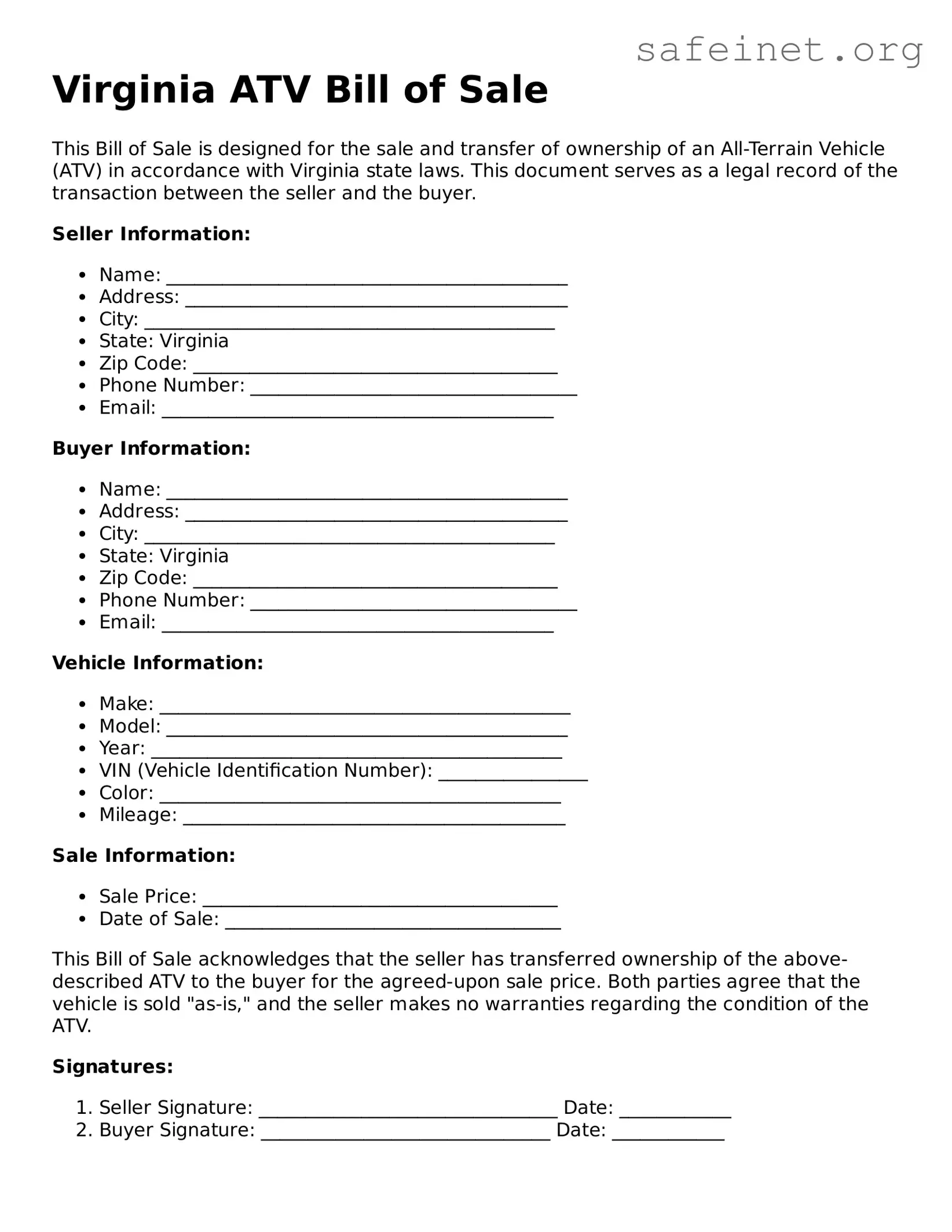
Virginia ATV Bill of Sale
This Bill of Sale is designed for the sale and transfer of ownership of an All-Terrain Vehicle (ATV) in accordance with Virginia state laws. This document serves as a legal record of the transaction between the seller and the buyer.
Seller Information:
Buyer Information:
Vehicle Information:
Sale Information:
This Bill of Sale acknowledges that the seller has transferred ownership of the above-described ATV to the buyer for the agreed-upon sale price. Both parties agree that the vehicle is sold "as-is," and the seller makes no warranties regarding the condition of the ATV.
Signatures:
By signing this document, both parties confirm that they have read and understood the terms of this Bill of Sale.
| Fact Name | Details |
|---|---|
| Purpose | The Virginia ATV Bill of Sale form serves as a legal document to record the sale and transfer of ownership of an all-terrain vehicle. |
| Governing Law | This form is governed by the Virginia Code, specifically Title 46.2, which pertains to motor vehicles. |
| Parties Involved | The form requires the signatures of both the seller and the buyer to validate the transaction. |
| Vehicle Information | Details about the ATV must be included, such as make, model, year, and Vehicle Identification Number (VIN). |
| Purchase Price | The agreed purchase price must be clearly stated in the form to avoid disputes later on. |
| Date of Sale | The date on which the sale occurs should be documented to establish a timeline for ownership transfer. |
| Condition of Vehicle | The seller should disclose the condition of the ATV, including any known defects or issues. |
| Notarization | While notarization is not always required, it can add an extra layer of authenticity to the document. |
| Retention of Copy | Both parties should retain a copy of the Bill of Sale for their records, which can be useful for future reference. |
Filling out the Virginia ATV Bill of Sale form is an important step in transferring ownership of an all-terrain vehicle. After completing this form, both the buyer and seller will have a clear record of the transaction, which is essential for registration and legal purposes.
What is the purpose of the Virginia ATV Bill of Sale form?
The Virginia ATV Bill of Sale form serves as a legal document that records the sale and transfer of ownership of an all-terrain vehicle (ATV) in the state of Virginia. This form protects both the buyer and the seller by providing a clear record of the transaction, including details about the vehicle, the parties involved, and the terms of the sale. It can also be useful for future reference, especially if any disputes arise regarding the sale.
What information is typically included in the ATV Bill of Sale?
Typically, the ATV Bill of Sale includes essential information such as the names and addresses of both the buyer and seller, the date of the transaction, the make, model, and year of the ATV, the Vehicle Identification Number (VIN), and the sale price. Additionally, any terms and conditions related to the sale, such as warranties or disclosures about the vehicle's condition, may also be included.
Is the ATV Bill of Sale required in Virginia?
While the ATV Bill of Sale is not a legal requirement in Virginia, it is highly recommended. Having a written record of the transaction can help prevent misunderstandings and provide proof of ownership for the buyer. Furthermore, when registering the ATV with the Virginia Department of Game and Inland Fisheries, having a Bill of Sale can facilitate the registration process.
Can I create my own ATV Bill of Sale?
Yes, you can create your own ATV Bill of Sale. However, it is important to ensure that all necessary information is included to make the document valid and enforceable. Many templates are available online that can guide you in drafting a comprehensive Bill of Sale. Alternatively, you may choose to use a standard form provided by a local DMV or legal office.
Do I need to have the Bill of Sale notarized?
No, notarization is not a requirement for the ATV Bill of Sale in Virginia. However, having the document notarized can add an extra layer of authenticity and may be beneficial if there are any disputes in the future. Both parties should keep a signed copy for their records, regardless of notarization.
What should I do after completing the ATV Bill of Sale?
After completing the ATV Bill of Sale, both the buyer and seller should sign and date the document. The buyer should then take the Bill of Sale to the Virginia Department of Game and Inland Fisheries to register the ATV in their name. It is advisable for both parties to retain copies of the signed document for their records, as it serves as proof of the transaction.
Not including the date of sale. This is essential for record-keeping and verification purposes.
Failing to provide the full names of both the buyer and seller. Ensure that all names are spelled correctly.
Omitting the vehicle identification number (VIN). This unique identifier is crucial for tracking the ATV.
Not specifying the purchase price. Clearly state the amount to avoid confusion later.
Forgetting to include the description of the ATV. Details like make, model, and year are important for identification.
Neglecting to sign the document. Both parties must sign to validate the sale.
Not providing contact information for both parties. This can be important for future communication.
Using incorrect or outdated forms. Always ensure you have the latest version of the Virginia ATV Bill of Sale form.
The Virginia ATV Bill of Sale form is an important document for transferring ownership of an all-terrain vehicle. However, several other forms and documents may also be necessary to complete the transaction properly. Below is a list of additional documents commonly used in conjunction with the ATV Bill of Sale.
Gathering these documents can help ensure a smooth transfer of ownership and compliance with Virginia laws. Always verify the specific requirements with local authorities or legal advisors to avoid any issues during the transaction.
The Virginia Vehicle Bill of Sale is similar to the ATV Bill of Sale in that both documents serve as proof of transfer of ownership for a vehicle. Just like the ATV Bill of Sale, this document includes essential details such as the names and addresses of the buyer and seller, the vehicle's identification number (VIN), and the sale price. Both documents protect the interests of both parties by providing a legal record of the transaction, which can be crucial for future registration or in case of disputes.
The Motorcycle Bill of Sale also shares similarities with the ATV Bill of Sale. It documents the sale of a motorcycle, ensuring that the transfer of ownership is clear and legally binding. Like the ATV Bill of Sale, it includes important information such as the buyer's and seller's details, the motorcycle's VIN, and the agreed-upon sale price. This document is essential for registering the motorcycle with the state and can serve as evidence if any issues arise post-sale.
An Equipment Bill of Sale is another document that resembles the ATV Bill of Sale. This form is used when selling or buying equipment, which may include items like tractors or construction machinery. Both documents outline the transaction details, including the parties involved, the equipment's specifications, and the purchase price. They provide a legal framework that helps prevent misunderstandings and ensures that the sale is recognized by both parties.
The Trailer Bill of Sale also aligns closely with the ATV Bill of Sale. This document is used when a trailer is bought or sold, providing a written record of the transaction. It includes the buyer's and seller's information, the trailer's identification details, and the sale price. Both documents serve to protect the interests of both parties and are essential for ensuring that ownership is legally recognized, especially when it comes to registration and potential liabilities.
Finally, the General Bill of Sale is a versatile document that can apply to various types of personal property, including ATVs. It outlines the transaction details, such as the buyer's and seller's names, a description of the item, and the sale price. While it is broader in scope than the ATV Bill of Sale, both documents fulfill the same fundamental purpose of providing proof of ownership transfer and protecting the rights of both parties involved in the transaction.
When completing the Virginia ATV Bill of Sale form, it's essential to ensure that all information is accurate and complete. Here are some key dos and don'ts to guide you through the process:
Understanding the Virginia ATV Bill of Sale form can be challenging due to various misconceptions. Here are five common misunderstandings that people often have:
All ATVs require a bill of sale. Many believe that every ATV purchase must have a bill of sale. While it is recommended to have one for documentation purposes, it is not legally required for all transactions in Virginia. However, having a bill of sale can help prove ownership and protect both parties involved.
The bill of sale must be notarized. Some people think that a notary public must witness the signing of the bill of sale for it to be valid. In Virginia, notarization is not a requirement for the bill of sale. However, having it notarized can add an extra layer of security and authenticity to the document.
Only the seller needs to sign the bill of sale. It is a common misconception that only the seller's signature is necessary. In fact, both the buyer and seller should sign the bill of sale to confirm the transaction. This mutual agreement helps prevent disputes in the future.
The bill of sale serves as the title. Some individuals believe that a bill of sale can replace the title of the ATV. While the bill of sale is an important document, it does not serve as the official title. The title must be transferred separately to ensure proper ownership records with the state.
There is a specific format for the bill of sale. Many assume that the bill of sale must follow a strict format. While certain information is required, there is flexibility in how the document is presented. As long as it includes the necessary details, such as the names of the buyer and seller, the description of the ATV, and the sale price, it can be considered valid.
By clarifying these misconceptions, individuals can better navigate the process of buying or selling an ATV in Virginia.
When dealing with the Virginia ATV Bill of Sale form, there are several important aspects to keep in mind. Below are key takeaways that can help ensure a smooth transaction.
By following these key points, individuals can navigate the process of buying or selling an ATV in Virginia more effectively.