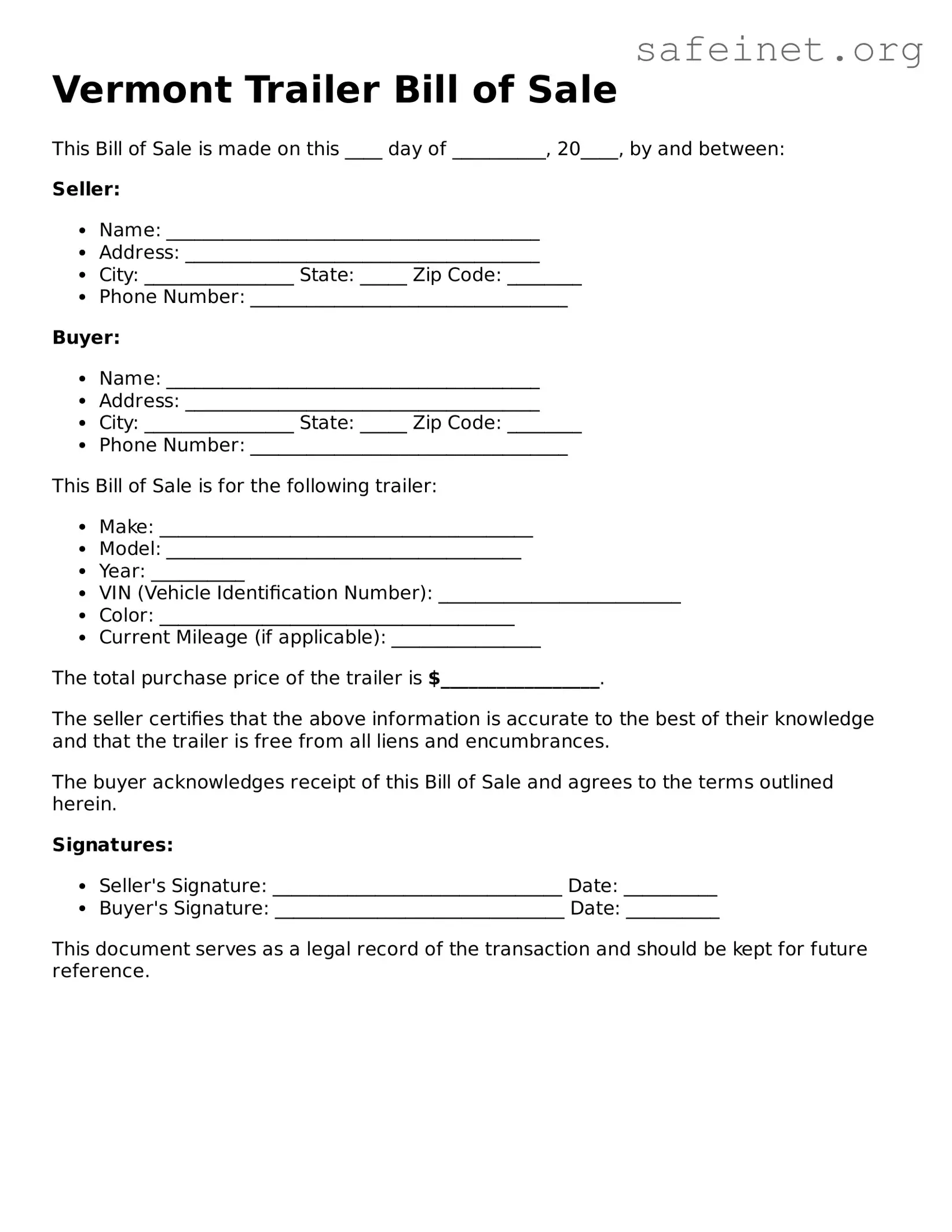
The Vermont Trailer Bill of Sale form serves as a crucial document for individuals involved in the buying or selling of trailers within the state. This form not only facilitates the transfer of ownership but also provides essential details such as the names and addresses of both the seller and the buyer, a description of the trailer, and the purchase price. By documenting the transaction, it helps protect the interests of both parties and serves as a legal record should any disputes arise in the future. Additionally, the form may require the seller to disclose any liens or encumbrances on the trailer, ensuring that the buyer is fully informed before completing the purchase. Properly filling out this form is vital for ensuring compliance with state regulations and for the smooth registration of the trailer with the Vermont Department of Motor Vehicles. Understanding the significance of this document can help both buyers and sellers navigate the complexities of trailer ownership and ensure a hassle-free transaction.
Vermont Trailer Bill of Sale
This Bill of Sale is made on this ____ day of __________, 20____, by and between:
Seller:
Buyer:
This Bill of Sale is for the following trailer:
The total purchase price of the trailer is $_________________.
The seller certifies that the above information is accurate to the best of their knowledge and that the trailer is free from all liens and encumbrances.
The buyer acknowledges receipt of this Bill of Sale and agrees to the terms outlined herein.
Signatures:
This document serves as a legal record of the transaction and should be kept for future reference.
| Fact Name | Details |
|---|---|
| Purpose | The Vermont Trailer Bill of Sale form is used to document the sale of a trailer in Vermont. |
| Governing Law | This form is governed by the laws of the State of Vermont. |
| Parties Involved | The form includes spaces for both the seller and buyer's information. |
| Vehicle Information | It requires details about the trailer, including make, model, year, and VIN. |
| Sale Price | The sale price must be clearly stated on the form. |
| Date of Sale | The date when the transaction takes place is a necessary entry. |
| Signatures | Both the seller and buyer must sign the form to validate the sale. |
| Record Keeping | It is advisable for both parties to keep a copy of the signed bill of sale for their records. |
| Transfer of Ownership | This form facilitates the legal transfer of ownership from the seller to the buyer. |
Once you have your Vermont Trailer Bill of Sale form ready, it’s time to fill it out accurately. This document is essential for the transfer of ownership of a trailer, ensuring that both the seller and buyer have a record of the transaction. Follow these steps to complete the form properly.
After completing the form, both parties should keep a copy for their records. This documentation will be important for any future transactions or registrations related to the trailer.
What is a Vermont Trailer Bill of Sale form?
The Vermont Trailer Bill of Sale form is a legal document that records the sale of a trailer between a buyer and a seller. It serves as proof of the transaction and includes essential details about the trailer, such as its make, model, year, and Vehicle Identification Number (VIN). This document is crucial for both parties to ensure a smooth transfer of ownership.
Why do I need a Bill of Sale for my trailer?
A Bill of Sale is important for several reasons. It provides a written record of the transaction, which can protect both the buyer and seller in case of disputes. For the buyer, it serves as proof of ownership and is often required when registering the trailer with the Department of Motor Vehicles (DMV). For the seller, it helps confirm that they are no longer responsible for the trailer after the sale.
What information is required on the form?
The Vermont Trailer Bill of Sale form typically requires information such as the names and addresses of both the buyer and seller, the trailer's details (make, model, year, VIN), the sale price, and the date of the transaction. Both parties should sign the document to validate the sale.
Do I need to have the form notarized?
In Vermont, notarization is not required for the Bill of Sale to be valid. However, having the document notarized can add an extra layer of authenticity and may be beneficial if there are any future disputes regarding the sale.
Can I use a generic Bill of Sale form for my trailer?
While you can use a generic Bill of Sale form, it's advisable to use the specific Vermont Trailer Bill of Sale form to ensure that all necessary information is included. This form is tailored to meet Vermont's requirements and can help avoid any potential issues during the registration process.
What if the trailer has a lien on it?
If there is a lien on the trailer, it's essential to address it before completing the sale. The seller should either pay off the lien or ensure that the lienholder provides a release at the time of sale. Failing to do so could lead to complications for the buyer, who may find themselves responsible for the debt associated with the trailer.
How do I register the trailer after the sale?
To register the trailer after the sale, the buyer will need to take the completed Bill of Sale to their local DMV office. They should also bring any other required documents, such as proof of identity and payment for registration fees. The DMV will then process the registration and issue a new title in the buyer's name.
What should I do if I lose the Bill of Sale?
If you lose the Bill of Sale, it can be problematic, especially for the buyer. It's recommended to keep a copy of the document in a safe place. If a copy is lost, the seller can provide a duplicate if they still have their records. In some cases, you may need to contact a legal professional for guidance on how to proceed.
Incomplete Information: One common mistake is leaving out essential details. Ensure that all fields are filled in completely, including the names of both the buyer and seller, the trailer's identification number, and the sale price.
Incorrect Trailer Identification Number: The Vehicle Identification Number (VIN) must be accurate. Double-check this number against the trailer’s title or registration to avoid future complications.
Failure to Sign: Both the buyer and seller must sign the form. Forgetting to sign can render the document invalid, leading to disputes down the line.
Not Including the Date of Sale: It’s crucial to include the date when the transaction occurs. This helps establish a timeline for ownership and any potential liabilities.
Omitting Payment Method: Clearly state how the payment was made. Whether it was cash, check, or another method, documenting this can protect both parties in case of disputes.
Not Keeping Copies: After filling out the form, both parties should keep copies. This can be vital for future reference, especially if questions arise about the sale.
When buying or selling a trailer in Vermont, the Trailer Bill of Sale form is an essential document. However, several other forms and documents may be necessary to ensure a smooth transaction. Here’s a list of related documents that you might encounter.
Understanding these documents can make the buying or selling process much easier. Always ensure that you have the necessary paperwork to avoid any legal complications down the road.
The Vermont Trailer Bill of Sale form is similar to a Vehicle Bill of Sale. Both documents serve as proof of transfer of ownership for a vehicle or trailer. They typically include details such as the buyer's and seller's names, addresses, and signatures. Additionally, both forms often require information about the vehicle or trailer, including the make, model, year, and Vehicle Identification Number (VIN). This ensures that the transaction is clear and legally binding for both parties.
Another document akin to the Vermont Trailer Bill of Sale is the Boat Bill of Sale. Like the trailer bill of sale, this document is used to record the sale of a watercraft. It includes essential information about the boat, such as its registration number and hull identification number. Both documents aim to protect the interests of the buyer and seller by providing a written record of the transaction, which can be important for future registration or titling purposes.
The Motorcycle Bill of Sale is also similar to the Vermont Trailer Bill of Sale. This document is specifically designed for the sale of motorcycles. It contains information about the motorcycle, including its make, model, and VIN. Just like the trailer bill of sale, it requires the signatures of both the buyer and seller, ensuring that ownership is officially transferred. This helps prevent disputes and provides a clear record of the transaction.
A Mobile Home Bill of Sale shares similarities with the Vermont Trailer Bill of Sale as well. This document is used when selling a mobile home, which is often considered personal property. It includes details about the mobile home, such as its serial number and dimensions. Both forms require the parties involved to provide their names and signatures, establishing a formal agreement on the transfer of ownership.
The ATV Bill of Sale is another document that parallels the Vermont Trailer Bill of Sale. This form is specifically for the sale of all-terrain vehicles. It includes pertinent information about the ATV, such as its make, model, and VIN. Both documents serve the same purpose: to provide a written record of the sale and to protect the rights of both the buyer and seller during the transaction.
In addition, the Snowmobile Bill of Sale is similar to the Vermont Trailer Bill of Sale. This document is used when transferring ownership of a snowmobile. It contains details about the snowmobile, including its registration number and VIN. Like the trailer bill of sale, it requires both parties' signatures, ensuring that the transaction is legally recognized and documented.
Lastly, the General Bill of Sale can also be compared to the Vermont Trailer Bill of Sale. This document is broader and can be used for various types of personal property sales, including trailers. It typically includes the names of the buyer and seller, a description of the item being sold, and the sale price. While it may not be specific to trailers, it serves the same fundamental purpose of documenting a sale and transferring ownership.
When filling out the Vermont Trailer Bill of Sale form, attention to detail is crucial. Here are five important do's and don'ts to ensure a smooth process:
Following these guidelines will help ensure that your trailer sale proceeds without any hitches. Be diligent and thorough in your completion of the form.
Understanding the Vermont Trailer Bill of Sale form is essential for anyone involved in buying or selling a trailer in the state. However, several misconceptions can lead to confusion. Here are four common misunderstandings:
By addressing these misconceptions, individuals can ensure a smoother transaction process when buying or selling a trailer in Vermont.
When filling out and using the Vermont Trailer Bill of Sale form, keep these key takeaways in mind: