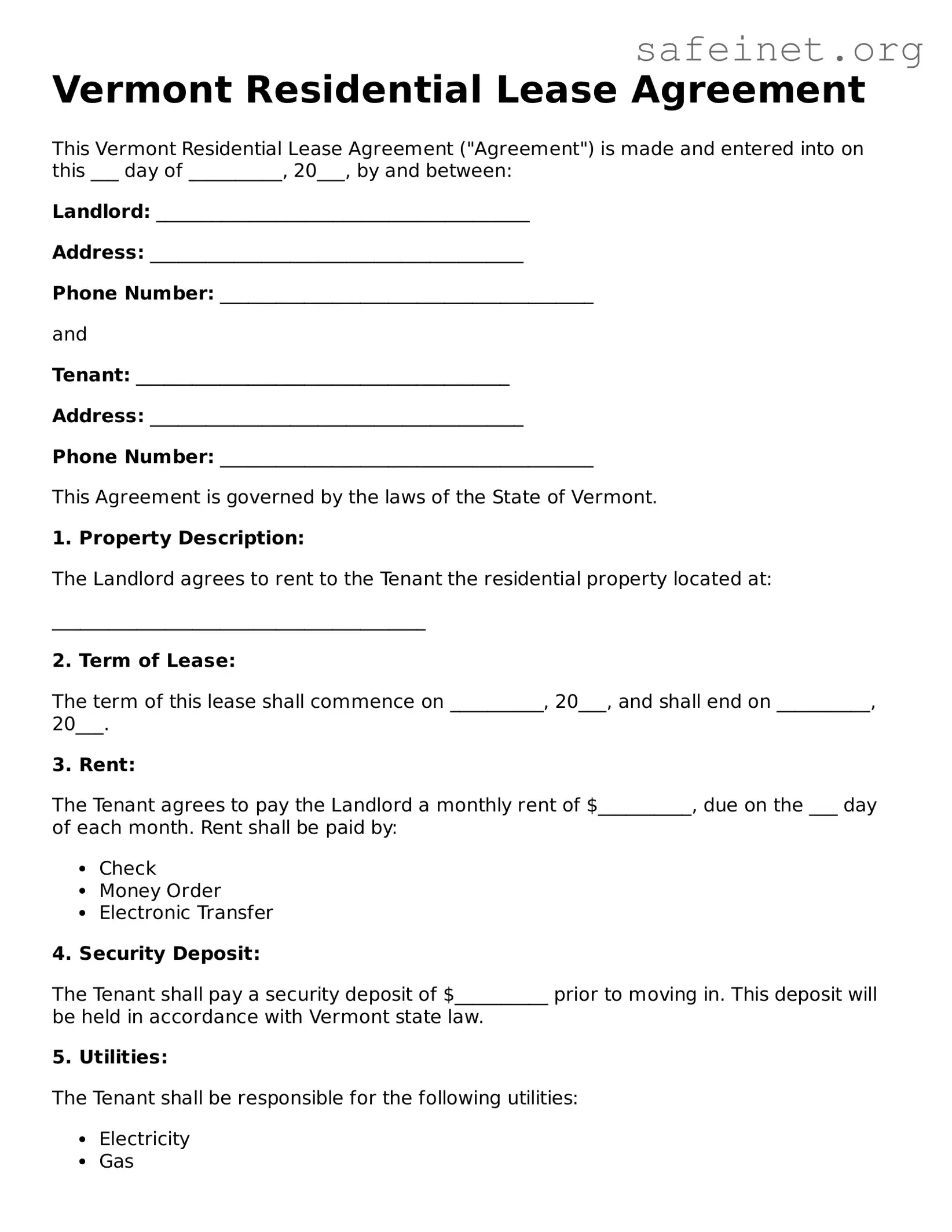
The Vermont Residential Lease Agreement form serves as a crucial document for both landlords and tenants, outlining the terms and conditions of a rental arrangement. This form typically includes essential details such as the names of the parties involved, the rental property's address, and the duration of the lease. It specifies the amount of rent due, payment methods, and due dates, ensuring that both parties are clear on financial obligations. Additionally, the agreement addresses security deposits, maintenance responsibilities, and rules regarding pets or alterations to the property. By establishing guidelines for termination and renewal, the form helps to protect the rights of both landlords and tenants, fostering a clear understanding of expectations throughout the lease period. Overall, this document is designed to facilitate a smooth rental experience while minimizing potential disputes.
Vermont Residential Lease Agreement
This Vermont Residential Lease Agreement ("Agreement") is made and entered into on this ___ day of __________, 20___, by and between:
Landlord: ________________________________________
Address: ________________________________________
Phone Number: ________________________________________
and
Tenant: ________________________________________
Address: ________________________________________
Phone Number: ________________________________________
This Agreement is governed by the laws of the State of Vermont.
1. Property Description:
The Landlord agrees to rent to the Tenant the residential property located at:
________________________________________
2. Term of Lease:
The term of this lease shall commence on __________, 20___, and shall end on __________, 20___.
3. Rent:
The Tenant agrees to pay the Landlord a monthly rent of $__________, due on the ___ day of each month. Rent shall be paid by:
4. Security Deposit:
The Tenant shall pay a security deposit of $__________ prior to moving in. This deposit will be held in accordance with Vermont state law.
5. Utilities:
The Tenant shall be responsible for the following utilities:
6. Maintenance and Repairs:
The Landlord shall be responsible for maintaining the premises in a habitable condition. The Tenant agrees to notify the Landlord promptly of any maintenance issues.
7. Termination:
Either party may terminate this Agreement by providing a written notice of ___ days prior to the intended termination date.
8. Governing Law:
This Agreement shall be governed by the laws of the State of Vermont. Any disputes arising under this Agreement shall be resolved in the appropriate court in Vermont.
IN WITNESS WHEREOF, the parties hereto have executed this Agreement as of the day and year first above written.
Landlord Signature: ___________________________
Date: ___________________________
Tenant Signature: ___________________________
Date: ___________________________
| Fact Name | Details |
|---|---|
| Governing Law | The Vermont Residential Lease Agreement is governed by Vermont state law. |
| Lease Duration | Leases can be for a fixed term or month-to-month, as agreed upon by both parties. |
| Security Deposit | Landlords may require a security deposit, typically not exceeding one month's rent. |
| Notice Period | For month-to-month leases, a 30-day notice is generally required for termination. |
| Repairs and Maintenance | Landlords are responsible for maintaining the property in a habitable condition. |
| Tenant Rights | Tenants have the right to privacy and must be notified before a landlord enters the property. |
| Utilities | The lease should specify which utilities are the responsibility of the tenant and which are covered by the landlord. |
| Discrimination Laws | The lease must comply with federal and state fair housing laws, prohibiting discrimination. |
Completing the Vermont Residential Lease Agreement form requires careful attention to detail. Each section of the form must be filled out accurately to ensure clarity and compliance with state regulations. Below are the steps to guide you through the process of filling out the form.
What is a Vermont Residential Lease Agreement?
A Vermont Residential Lease Agreement is a legally binding contract between a landlord and a tenant. This document outlines the terms and conditions under which a tenant agrees to rent a residential property. It typically includes details such as the rental amount, lease duration, security deposit requirements, maintenance responsibilities, and rules regarding the use of the property. By signing this agreement, both parties acknowledge their rights and obligations, ensuring a clear understanding of the rental arrangement.
What are the essential components of the Vermont Residential Lease Agreement?
Several key components are crucial for a comprehensive Vermont Residential Lease Agreement. These include the names of the parties involved, the address of the rental property, the lease term (whether it is month-to-month or for a fixed period), the amount of rent due, and the payment schedule. Additionally, the agreement should specify the security deposit amount, the conditions under which it may be withheld, and the responsibilities for repairs and maintenance. Other important aspects might include rules regarding pets, smoking, and alterations to the property, as well as the process for terminating the lease.
How can a tenant terminate a Vermont Residential Lease Agreement?
Terminating a Vermont Residential Lease Agreement requires adherence to specific procedures outlined in the lease itself and state law. Generally, tenants must provide written notice to the landlord, typically 30 days in advance, unless otherwise specified in the lease. If the lease is for a fixed term, the tenant may need to wait until the end of that term unless there are valid reasons for early termination, such as a breach of contract by the landlord. It is essential for tenants to review their lease for any specific termination clauses to ensure compliance with the agreed-upon terms.
What happens if a tenant does not pay rent on time?
If a tenant fails to pay rent on time, the landlord may initiate certain actions as outlined in the lease agreement and Vermont law. Typically, landlords will provide a grace period, which is often specified in the lease. If rent remains unpaid beyond this period, the landlord may issue a notice to the tenant, demanding payment. Should the tenant continue to neglect their rent obligations, the landlord may have grounds to begin eviction proceedings. It is advisable for tenants to communicate with their landlord if they anticipate payment issues, as many landlords may be willing to negotiate a payment plan or offer temporary relief.
Failing to include all tenant names. Every adult who will live in the rental unit should be listed on the lease. Missing names can lead to confusion and potential legal issues.
Not specifying the rental term clearly. Whether it’s a month-to-month lease or a fixed-term lease, clarity is essential. Ambiguity can cause disputes later on.
Overlooking the security deposit details. It's crucial to state the amount, the purpose, and the conditions for its return. This helps prevent misunderstandings.
Ignoring maintenance responsibilities. Clearly outline who is responsible for repairs and maintenance. This prevents conflicts over property upkeep.
Not including rules about pets. If pets are allowed, specify any restrictions or additional fees. This avoids surprises for both parties.
Missing the late payment policy. Clearly state the consequences of late rent payments, including any fees. This helps tenants understand their obligations.
Failing to include termination notice requirements. Both landlords and tenants should know how much notice is needed to end the lease. This ensures a smooth transition when moving out.
Not providing a clear description of the rental property. Include the address and any specific details about the unit. This helps avoid disputes about the rental space.
Overlooking the inclusion of utilities. Specify which utilities are covered by the landlord and which are the tenant's responsibility. This clarity helps in budgeting.
Not reviewing the lease with all parties present. It’s important that everyone understands the terms before signing. This prevents future disagreements.
When entering into a rental agreement in Vermont, several additional forms and documents can complement the Residential Lease Agreement. These documents help clarify responsibilities, outline terms, and ensure a smooth landlord-tenant relationship. Below are five commonly used forms that may accompany the lease agreement.
Using these documents alongside the Vermont Residential Lease Agreement can help ensure that both landlords and tenants have a clear understanding of their rights and obligations. This proactive approach fosters a positive rental experience for everyone involved.
The Vermont Residential Lease Agreement shares similarities with the standard Residential Lease Agreement commonly used across the United States. Both documents outline the terms of renting a residential property, detailing the responsibilities of both landlords and tenants. They typically cover essential aspects such as rental amount, duration of the lease, security deposits, and maintenance responsibilities. This agreement serves as a foundational document in establishing a legal relationship between the tenant and the landlord, ensuring both parties understand their rights and obligations.
Another document that mirrors the Vermont Residential Lease Agreement is the Month-to-Month Rental Agreement. This type of agreement allows tenants to rent a property on a monthly basis without a long-term commitment. Similar to the Vermont lease, it specifies rental terms, payment schedules, and termination clauses. However, it offers more flexibility, as either party can typically terminate the agreement with proper notice, making it ideal for those who may need to relocate frequently.
The Commercial Lease Agreement is another document that shares structural similarities with the Vermont Residential Lease Agreement. While it is tailored for commercial properties, both agreements outline the terms of occupancy, including rent, duration, and maintenance responsibilities. The commercial lease may include additional clauses related to business operations, zoning laws, and liability, reflecting the unique needs of business tenants compared to residential ones.
The Sublease Agreement also has commonalities with the Vermont Residential Lease Agreement. This document allows a tenant to rent out their leased space to another individual, known as a subtenant. Both agreements detail the rights and responsibilities of the parties involved. However, a sublease must adhere to the original lease terms, and the primary tenant remains responsible to the landlord for the rent and property conditions, creating a layered relationship.
The Lease Option Agreement is similar in that it provides tenants with the option to purchase the property at the end of the lease term. This document outlines the rental terms while also specifying the purchase price and conditions under which the tenant may buy the property. Like the Vermont Residential Lease Agreement, it establishes clear expectations for both parties, but it also introduces an element of potential ownership for the tenant.
The Rent-to-Own Agreement is akin to the Lease Option Agreement but typically involves a more structured path toward ownership. This document combines elements of leasing and purchasing, allowing tenants to build equity in the property over time. Both agreements require clear terms regarding rent payments, purchase price, and responsibilities, making them vital for tenants interested in homeownership without an immediate purchase.
The Roommate Agreement is another related document, particularly for shared living situations. It outlines the responsibilities of each roommate, including rent contributions, utilities, and household chores. While the Vermont Residential Lease Agreement focuses on the landlord-tenant relationship, the Roommate Agreement emphasizes the dynamics between individuals sharing a rental space, ensuring that all parties are on the same page regarding expectations.
The Lease Renewal Agreement shares similarities with the Vermont Residential Lease Agreement, as it extends the terms of an existing lease for another period. This document typically reiterates the original lease terms, including rent and responsibilities, while also allowing for any adjustments agreed upon by both parties. It serves as a way to formalize the continuation of the rental relationship without the need for a new lease from scratch.
Finally, the Property Management Agreement is relevant in the context of rental properties. While it primarily focuses on the relationship between property owners and management companies, it often includes aspects similar to those found in the Vermont Residential Lease Agreement. Both documents outline responsibilities related to property maintenance, tenant management, and financial arrangements, ensuring that the property is managed effectively and in compliance with local laws.
When filling out the Vermont Residential Lease Agreement form, it's important to be thorough and accurate. Here are ten guidelines to follow:
Understanding the Vermont Residential Lease Agreement form is essential for both landlords and tenants. However, several misconceptions can lead to confusion. Here are five common misconceptions:
This is not true. Each lease agreement can vary based on the specific terms negotiated between the landlord and tenant. The Vermont Residential Lease Agreement has its own unique provisions that must be adhered to.
Breaking a lease can lead to financial penalties and legal repercussions. Tenants should understand their obligations and the potential impact of breaking the lease early.
Landlords must provide notice before entering a tenant's unit, except in emergencies. The Vermont Residential Lease Agreement outlines the required notice period, which is typically 24 hours.
This is a misconception. Security deposits can be refunded, provided the tenant meets the conditions set forth in the lease agreement. Deductions can only be made for specific reasons, such as damages beyond normal wear and tear.
While verbal agreements may seem convenient, they are often difficult to enforce. Written agreements, like the Vermont Residential Lease Agreement, provide clarity and legal protection for both parties.
When filling out and using the Vermont Residential Lease Agreement form, it’s important to understand several key aspects. Here are some essential takeaways:
By keeping these points in mind, both landlords and tenants can create a clear and effective lease agreement that protects their rights and responsibilities.