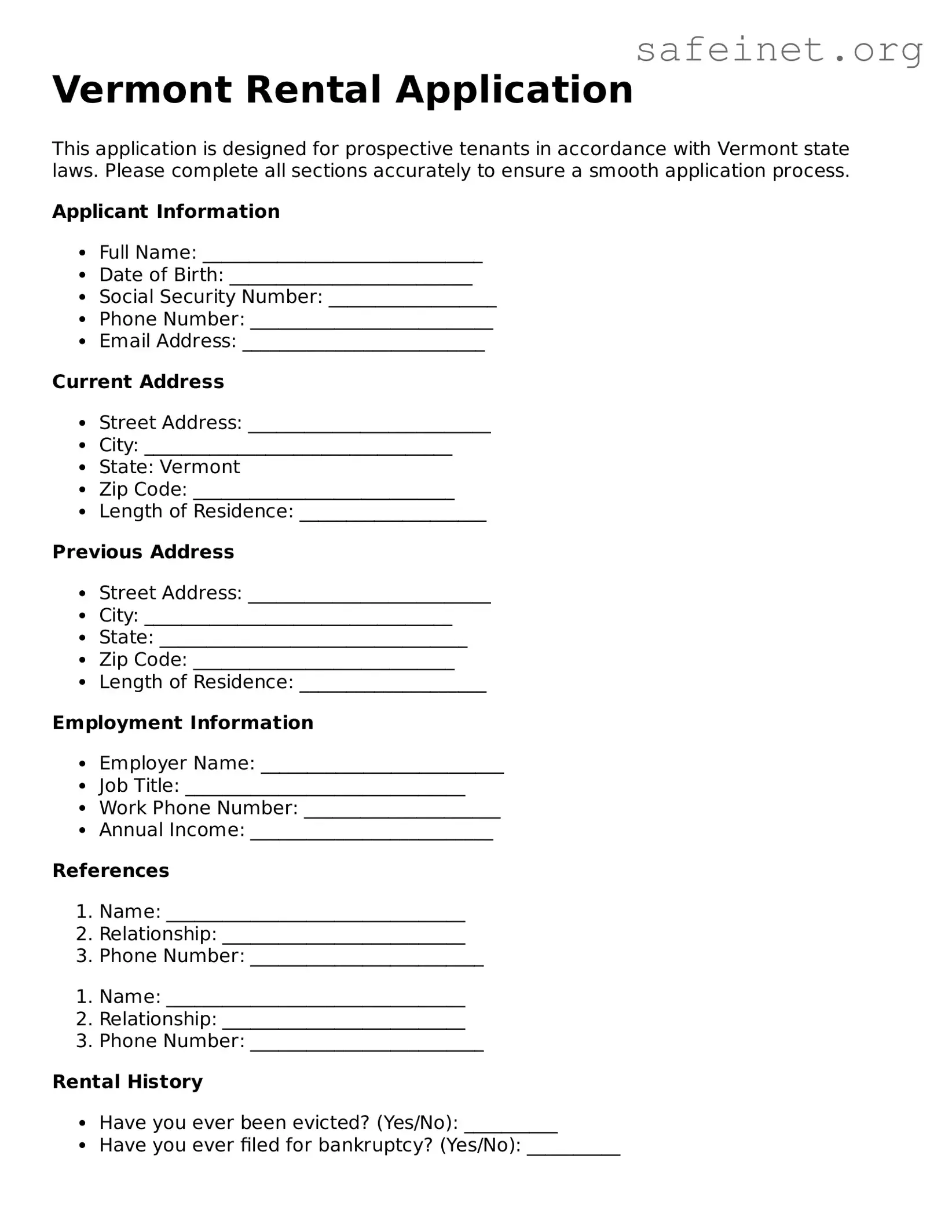
The Vermont Rental Application form serves as a crucial tool for both landlords and prospective tenants in the rental process. This form collects essential information, including the applicant's personal details, rental history, and employment information. It typically requires individuals to provide references, credit history, and income verification to assess their suitability as tenants. Additionally, the application may include questions about the applicant's pets, smoking habits, and any previous evictions, allowing landlords to make informed decisions. Understanding the components of this form can streamline the rental experience and ensure compliance with state regulations, ultimately fostering a transparent and fair leasing process.
Vermont Rental Application
This application is designed for prospective tenants in accordance with Vermont state laws. Please complete all sections accurately to ensure a smooth application process.
Applicant Information
Current Address
Previous Address
Employment Information
References
Rental History
Additional Information
Authorization
By signing below, you authorize the landlord to conduct a background check and verify the information provided in this application.
Signature: _______________________________
Date: ___________________________________
| Fact Name | Description |
|---|---|
| Purpose | The Vermont Rental Application form is used by landlords to screen potential tenants before signing a lease agreement. |
| Required Information | Applicants must provide personal details, including their name, contact information, and rental history. |
| Background Check | Landlords often use the information provided to conduct background checks, which may include credit history and criminal records. |
| Application Fee | Landlords in Vermont can charge a non-refundable application fee to cover the costs of screening applicants. |
| Fair Housing Laws | The application process must comply with federal and state fair housing laws, ensuring no discrimination based on protected classes. |
| Governing Laws | The Vermont Rental Application is governed by Vermont Statutes Title 9, Chapter 145, which addresses rental agreements and tenant rights. |
| Signature Requirement | Applicants are typically required to sign the application, confirming that the information provided is accurate to the best of their knowledge. |
| Retention of Records | Landlords must retain rental application records for a certain period, often at least one year, for legal compliance. |
Once you have the Vermont Rental Application form in hand, it's time to fill it out. Completing this form accurately will help you present yourself as a strong candidate for the rental property you desire. Follow these steps to ensure you provide all necessary information clearly.
Once you have completed the form, you can submit it to the landlord or property manager. Be sure to follow any specific instructions they may have for submission, such as including a deposit or additional documents.
What is a Vermont Rental Application form?
The Vermont Rental Application form is a document that potential tenants fill out when they wish to rent a property. This form collects essential information about the applicant, such as personal details, rental history, employment information, and references. Landlords use this information to assess the suitability of applicants for their rental properties.
What information do I need to provide on the application?
When completing the Vermont Rental Application, you typically need to provide your full name, contact information, social security number, and date of birth. Additionally, you may need to include details about your current and previous residences, employment history, and income. References from previous landlords or employers may also be requested.
Is there a fee for submitting the application?
Many landlords charge a non-refundable application fee to cover the cost of background and credit checks. This fee can vary by landlord or property management company. It’s important to ask about any fees upfront to avoid surprises later in the process.
How long does it take to process the application?
The processing time for a rental application can vary widely. Generally, it takes anywhere from a few hours to a few days. Factors that influence this timeframe include the landlord's policies, the completeness of your application, and the time it takes to conduct background checks. Staying in touch with the landlord can help you get updates on your application status.
What happens if my application is denied?
If your application is denied, the landlord is typically required to inform you of the decision. They may also need to provide a reason for the denial, especially if it relates to information from a credit report. You have the right to request a copy of the report if it was used in the decision-making process. Understanding the reason for denial can help you address any issues in future applications.
Can I appeal a denial of my application?
While there is no formal process for appealing a denial, you can communicate with the landlord or property manager. If there were misunderstandings or errors in your application, providing additional documentation or clarification might help. Some landlords may reconsider their decision if they receive new information.
What should I do if I find incorrect information on my application?
If you notice any incorrect information on your application, it is crucial to address it immediately. Contact the landlord or property manager to explain the error and provide the correct information. Being proactive about inaccuracies can demonstrate your responsibility and integrity as a potential tenant.
Incomplete Information: Many applicants forget to fill out all required sections. Leaving out key details can delay the application process.
Incorrect Contact Information: Providing wrong phone numbers or email addresses can make it difficult for landlords to reach you.
Not Disclosing Rental History: Omitting past rental experiences may raise red flags. It's important to be transparent about where you've lived.
Neglecting to Sign: Forgetting to sign the application is a common oversight. An unsigned application is typically considered invalid.
Failure to Provide References: Not listing references can weaken your application. Landlords often want to hear from previous landlords or employers.
Inaccurate Financial Information: Misstating your income or employment status can lead to disqualification. Always ensure your financial details are truthful and up to date.
Skipping the Background Check Consent: Many applications require consent for a background check. Failing to agree can halt the process.
Using Inappropriate Language: The tone of your application matters. Using slang or informal language may not leave a positive impression.
Not Following Instructions: Each rental application may have specific guidelines. Ignoring these can lead to rejection.
Submitting Without Proof of Income: Many landlords require proof of income. Not including this can raise concerns about your ability to pay rent.
When applying for a rental property in Vermont, several documents may be required alongside the Vermont Rental Application form. These additional forms help landlords assess potential tenants more thoroughly. Below is a list of commonly used documents that often accompany the rental application.
Gathering these documents can streamline the rental application process. Being prepared with the necessary paperwork can help applicants present themselves as reliable and responsible tenants.
The Vermont Rental Application form shares similarities with the standard Employment Application form. Both documents serve as a means for the respective parties—landlords and employers—to evaluate the suitability of applicants. Just as a rental application collects personal information, employment history, and references, an employment application does the same for job candidates. Both forms often require applicants to disclose their financial stability, such as income or credit history, to assess their reliability and ability to fulfill obligations, whether in paying rent or salary expectations.
Another document akin to the Vermont Rental Application is the Credit Application form. This form is utilized by lenders and financial institutions to assess an individual’s creditworthiness before extending loans or credit. Similar to the rental application, the credit application collects personal information, financial history, and sometimes references. Both documents aim to evaluate the risk associated with entering into a financial agreement, whether it be a lease or a loan, and often require the same type of documentation to verify the applicant's claims.
The Lease Agreement is another document that parallels the Vermont Rental Application. While the rental application is primarily for screening potential tenants, the lease agreement formalizes the relationship once a tenant is accepted. Both documents contain essential information about the parties involved, property details, and terms of the agreement. The lease also often references the information provided in the rental application, linking the two documents in the tenant selection process and outlining the obligations each party has toward the other.
The Background Check Authorization form also bears resemblance to the Vermont Rental Application. This form allows landlords to obtain a tenant's criminal and credit history, which is crucial for making informed decisions. Just as the rental application requires consent to verify information, the background check authorization form requests permission to conduct these checks. Both documents aim to ensure that landlords can assess the reliability and safety of prospective tenants.
The Guarantor Application is similar in purpose to the Vermont Rental Application, particularly when a tenant's financial history may not meet the landlord's criteria. This document is completed by a third party who agrees to take financial responsibility for the lease if the tenant fails to meet their obligations. Like the rental application, the guarantor application collects personal and financial information to evaluate the guarantor's ability to fulfill these responsibilities.
The Rental History Verification form serves a similar function to the Vermont Rental Application by providing landlords with insights into a prospective tenant's past rental experiences. This document often requires previous landlords to confirm the tenant's payment history and behavior during their tenancy. Both forms aim to assess the reliability of the applicant, with the rental history verification focusing specifically on prior rental behavior as a predictor of future performance.
The Tenant Screening Report is closely related to the Vermont Rental Application as it summarizes the findings from various checks conducted on the applicant. This report typically includes credit scores, criminal history, and rental history. While the rental application gathers initial information, the tenant screening report compiles and analyzes that information to give landlords a comprehensive view of the applicant's suitability as a tenant.
Lastly, the Pet Application form can be considered similar to the Vermont Rental Application in cases where tenants wish to bring pets into a rental property. This document collects information about the pet, including breed, size, and vaccination status, while also requiring the tenant to agree to specific pet-related terms. Both applications serve to protect the interests of the landlord while ensuring that the tenant's needs are considered, creating a balanced approach to the rental agreement.
When filling out the Vermont Rental Application form, there are several important guidelines to keep in mind. Following these tips can help ensure your application is complete and increases your chances of securing your desired rental. Below is a list of what you should and shouldn't do.
By following these guidelines, you can present a strong rental application that reflects your reliability as a tenant. Good luck!
When it comes to renting in Vermont, there are several misconceptions surrounding the rental application form that can lead to confusion for potential tenants. Understanding these misconceptions can help you navigate the rental process more smoothly.
Many people believe that once they pay the application fee, they cannot get it back, regardless of the outcome. In Vermont, while application fees are common, they may be refundable under certain circumstances, especially if the landlord fails to process the application in a timely manner.
Not all rental applications are created equal. Each landlord may have different requirements for what information they need. Some may ask for credit history, while others might focus more on income verification or rental history. It’s essential to read the specific application carefully.
While a low credit score can be a red flag for landlords, it does not necessarily mean you will be denied. Many landlords consider other factors, such as rental history, income stability, and personal references. Open communication about your situation can sometimes lead to a more favorable outcome.
Some applicants think they have to provide their social security number on the rental application. While many landlords request this information for background checks, you can ask if there are alternatives available, such as providing proof of identity through other means.
When filling out and using the Vermont Rental Application form, consider the following key takeaways: