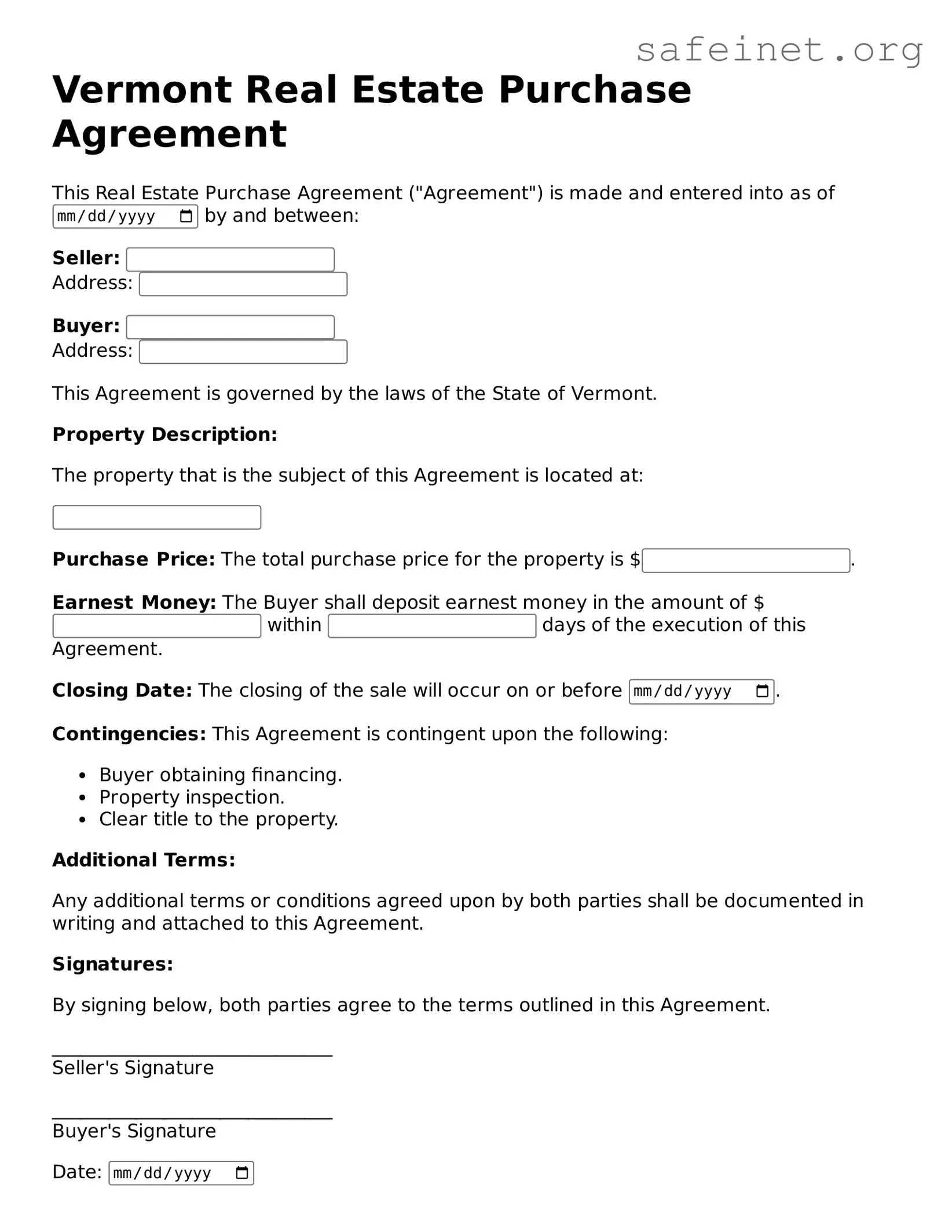
When embarking on the journey of buying or selling property in Vermont, understanding the Real Estate Purchase Agreement form is essential. This document serves as the backbone of any real estate transaction, outlining the terms and conditions agreed upon by both the buyer and the seller. Key elements include the purchase price, the property description, and the closing date, all of which play a critical role in ensuring a smooth transaction. Additionally, the agreement addresses contingencies, such as financing and inspections, which protect both parties by allowing for certain conditions to be met before the sale is finalized. Furthermore, it details the responsibilities of each party, including any disclosures that must be made, ensuring transparency throughout the process. By grasping the nuances of this form, individuals can navigate the complexities of real estate transactions with confidence and clarity.
Vermont Real Estate Purchase Agreement
This Real Estate Purchase Agreement ("Agreement") is made and entered into as of by and between:
Seller:
Address:
Buyer:
Address:
This Agreement is governed by the laws of the State of Vermont.
Property Description:
The property that is the subject of this Agreement is located at:
Purchase Price: The total purchase price for the property is $.
Earnest Money: The Buyer shall deposit earnest money in the amount of $ within days of the execution of this Agreement.
Closing Date: The closing of the sale will occur on or before .
Contingencies: This Agreement is contingent upon the following:
Additional Terms:
Any additional terms or conditions agreed upon by both parties shall be documented in writing and attached to this Agreement.
Signatures:
By signing below, both parties agree to the terms outlined in this Agreement.
______________________________
Seller's Signature
______________________________
Buyer's Signature
Date:
| Fact Name | Details |
|---|---|
| Governing Law | The Vermont Real Estate Purchase Agreement is governed by the laws of the State of Vermont. |
| Purpose | This form outlines the terms and conditions of a real estate transaction between a buyer and a seller. |
| Key Components | The agreement typically includes the purchase price, property description, and closing date. |
| Contingencies | Common contingencies may include financing, inspections, and appraisal conditions. |
| Signatures Required | Both the buyer and seller must sign the agreement for it to be legally binding. |
| Amendments | Any changes to the agreement must be documented in writing and signed by both parties. |
Completing the Vermont Real Estate Purchase Agreement form requires careful attention to detail. The following steps will guide you through the process of filling out the form accurately and efficiently.
After completing the form, it is advisable to review all entries for accuracy. Ensure that both parties retain a copy for their records, and consider consulting with a real estate professional to address any questions that may arise.
What is a Vermont Real Estate Purchase Agreement?
The Vermont Real Estate Purchase Agreement is a legally binding document that outlines the terms and conditions under which a buyer agrees to purchase real estate from a seller. This form serves as a foundation for the transaction, detailing important elements such as the purchase price, property description, and closing date.
Who should use the Vermont Real Estate Purchase Agreement?
This agreement is designed for anyone involved in buying or selling real estate in Vermont. Whether you are a first-time homebuyer, a seasoned investor, or a seller looking to transfer ownership, this form is essential for ensuring that all parties understand their rights and obligations.
What key components are included in the agreement?
The Vermont Real Estate Purchase Agreement typically includes several critical components: the names of the buyer and seller, a detailed description of the property, the agreed-upon purchase price, financing details, contingencies (like home inspections), and the closing timeline. Each section plays a vital role in clarifying expectations for both parties.
Is the agreement negotiable?
Yes, the terms outlined in the Vermont Real Estate Purchase Agreement are negotiable. Buyers and sellers can discuss and modify specific terms to better fit their needs before finalizing the agreement. Open communication is key to ensuring that both parties are satisfied with the terms.
What happens if a buyer or seller wants to back out?
If either party wishes to withdraw from the agreement, the consequences depend on the terms outlined within the document. Many agreements include contingencies that allow a party to back out without penalty under certain conditions. However, if the buyer or seller attempts to withdraw without a valid reason, they may face legal repercussions or financial penalties.
How does earnest money work in this agreement?
Earnest money is a deposit made by the buyer to demonstrate their commitment to purchasing the property. This amount is typically held in escrow and is credited toward the purchase price at closing. If the buyer backs out without a valid reason, the seller may keep the earnest money as compensation for the time the property was off the market.
Can I use this agreement for commercial properties?
While the Vermont Real Estate Purchase Agreement is primarily designed for residential transactions, it can also be adapted for commercial properties. However, it is essential to ensure that all relevant commercial considerations are included, as the complexities of commercial real estate transactions often differ from residential ones.
Do I need a lawyer to complete the agreement?
While it is not legally required to have a lawyer when completing a Vermont Real Estate Purchase Agreement, it is highly recommended. A real estate attorney can provide valuable guidance, ensuring that the agreement complies with state laws and protecting your interests throughout the transaction.
How do I submit the completed agreement?
Once the Vermont Real Estate Purchase Agreement is completed and signed by both parties, it should be submitted to the appropriate parties involved in the transaction, such as real estate agents, lenders, and attorneys. Ensuring that all parties receive a copy is crucial for maintaining transparency and clear communication throughout the process.
What should I do if I have more questions about the agreement?
If you have additional questions about the Vermont Real Estate Purchase Agreement, consider reaching out to a real estate professional or attorney. They can provide personalized advice and clarify any uncertainties you may have, ensuring that you feel confident moving forward with your real estate transaction.
Failing to provide accurate property information. Buyers and sellers often overlook details such as the correct address, parcel number, or legal description of the property. This can lead to confusion and potential disputes.
Neglecting to specify the purchase price clearly. It is essential to state the exact amount being offered. Ambiguities can create misunderstandings between the parties involved.
Not including contingencies. Buyers should consider including contingencies related to financing, inspections, and appraisals. Omitting these can result in unfavorable outcomes.
Forgetting to sign and date the agreement. All parties must sign and date the document for it to be legally binding. An unsigned agreement may lead to complications.
Ignoring deadlines. Each step in the purchase agreement has specific timelines. Missing these deadlines can jeopardize the transaction.
Overlooking the inclusion of personal property. Items such as appliances, fixtures, or furniture should be explicitly listed if they are part of the sale. Otherwise, there may be disputes over ownership.
Not consulting with a real estate professional. Many individuals attempt to fill out the agreement without seeking guidance. This can result in errors that could have been avoided with expert advice.
Failing to review the final document carefully. Before submission, all parties should thoroughly review the agreement for accuracy. Errors may not be caught until it is too late.
When entering into a real estate transaction in Vermont, several important documents may accompany the Vermont Real Estate Purchase Agreement. Each of these documents plays a crucial role in the process, ensuring that both parties are protected and informed. Below is a list of commonly used forms that can enhance the clarity and legality of the agreement.
Understanding these documents can significantly aid in navigating the complexities of real estate transactions. Each form serves a specific purpose and contributes to a smoother process for both buyers and sellers.
The Vermont Real Estate Purchase Agreement is similar to the Purchase and Sale Agreement commonly used in various states. Both documents serve as a binding contract between a buyer and seller for the transfer of real property. They outline the terms of the sale, including the purchase price, financing arrangements, and contingencies. Each agreement requires signatures from both parties to become enforceable, ensuring that both the buyer and seller are committed to the transaction.
Another document similar to the Vermont Real Estate Purchase Agreement is the Residential Real Estate Purchase Agreement. This document is specifically tailored for residential properties and includes provisions that address unique aspects of home sales. It often contains clauses related to inspections, disclosures, and the condition of the property, making it a comprehensive tool for residential transactions. Like the Vermont agreement, it aims to protect the interests of both parties while facilitating a smooth transfer of ownership.
The Commercial Real Estate Purchase Agreement also shares similarities with the Vermont Real Estate Purchase Agreement. This document is designed for commercial properties and includes specific terms that reflect the complexities of commercial transactions. It typically addresses zoning laws, lease agreements, and potential business implications of the property. Both agreements require clear communication of terms and conditions to ensure that all parties understand their obligations.
The Option to Purchase Agreement is another related document. This agreement gives a potential buyer the right, but not the obligation, to purchase a property within a specified timeframe. While the Vermont Real Estate Purchase Agreement is a commitment to buy, the Option to Purchase Agreement allows for flexibility. It typically includes terms regarding the option fee and the purchase price, providing both parties with a clear understanding of their rights and responsibilities.
Lastly, the Lease with Option to Purchase Agreement combines elements of a lease and a purchase agreement. This document allows a tenant to lease a property with the option to buy it later. It shares characteristics with the Vermont Real Estate Purchase Agreement in that it outlines terms for the eventual sale, including the purchase price and conditions. This type of agreement is beneficial for buyers who may need time to secure financing while still expressing interest in purchasing the property.
When filling out the Vermont Real Estate Purchase Agreement form, it is crucial to approach the task with care and attention to detail. Here are some important dos and don'ts to keep in mind:
By following these guidelines, you can ensure that your Vermont Real Estate Purchase Agreement is filled out correctly, paving the way for a smoother transaction.
When it comes to real estate transactions in Vermont, many individuals have misconceptions about the Real Estate Purchase Agreement (REPA) form. Understanding the truth behind these misconceptions can empower buyers and sellers, ensuring they make informed decisions. Here are nine common misconceptions:
By clarifying these misconceptions, individuals can navigate the Vermont real estate market with greater confidence. Always seek professional guidance when entering into a real estate transaction to ensure your rights and interests are protected.
When filling out and using the Vermont Real Estate Purchase Agreement form, several key considerations can enhance the process for all parties involved. The following takeaways can provide guidance: