The Vermont Notice to Quit form serves as a crucial tool in the landlord-tenant relationship, particularly when it comes to the termination of a rental agreement. This form is typically utilized by landlords to formally notify tenants of their intent to end a tenancy, providing a clear outline of the reasons for eviction and the time frame within which the tenant must vacate the premises. Essential elements of the form include the identification of both parties, a detailed description of the rental property, and the specific grounds for eviction, whether it be for non-payment of rent, lease violations, or other lawful reasons. Additionally, the Notice to Quit must adhere to Vermont's legal requirements regarding notice periods, which vary depending on the circumstances surrounding the eviction. Understanding this form is vital for both landlords and tenants, as it not only ensures compliance with state laws but also promotes a fair and transparent process in resolving disputes. By grasping the nuances of the Vermont Notice to Quit, individuals can navigate the complexities of tenancy and protect their rights effectively.
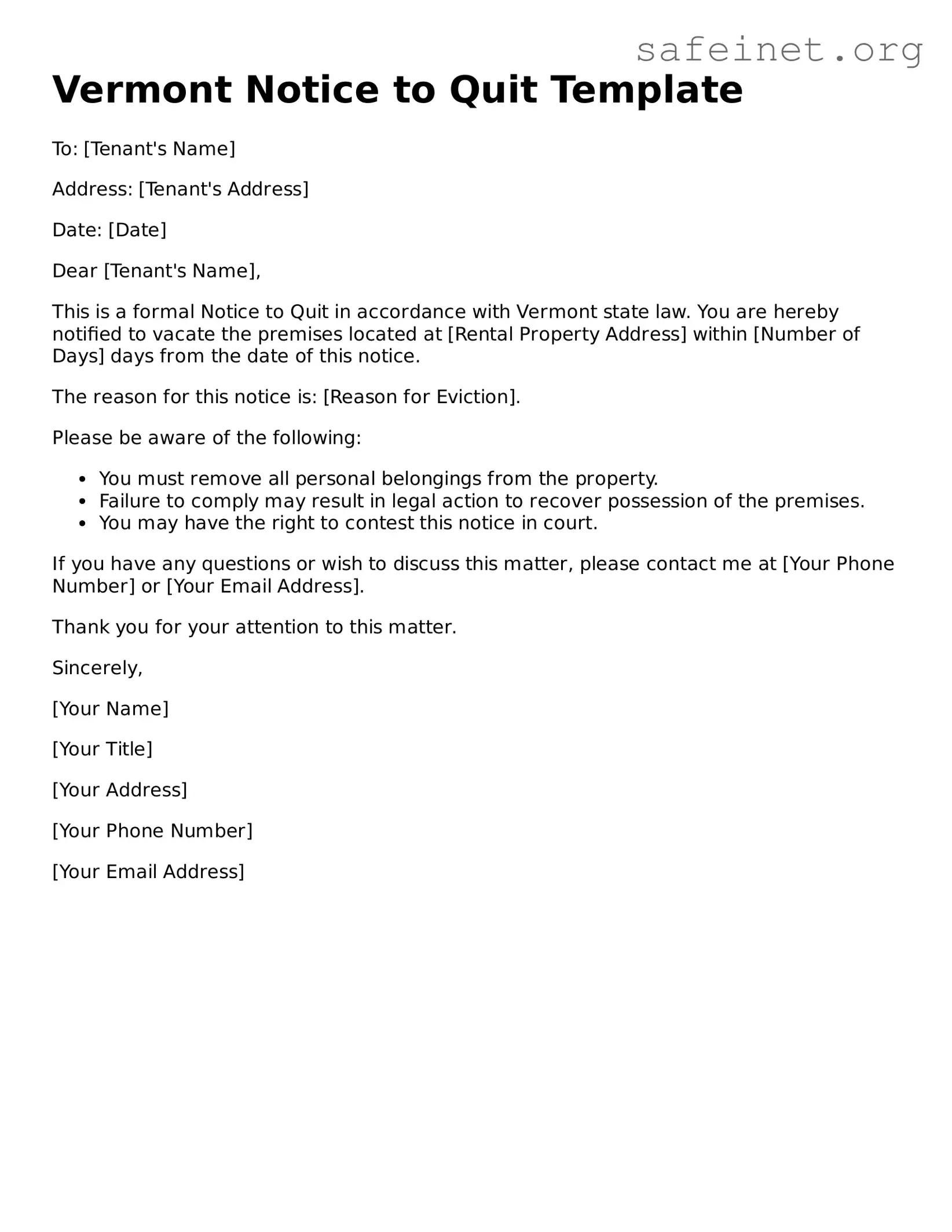
Vermont Notice to Quit Template
To: [Tenant's Name]
Address: [Tenant's Address]
Date: [Date]
Dear [Tenant's Name],
This is a formal Notice to Quit in accordance with Vermont state law. You are hereby notified to vacate the premises located at [Rental Property Address] within [Number of Days] days from the date of this notice.
The reason for this notice is: [Reason for Eviction].
Please be aware of the following:
If you have any questions or wish to discuss this matter, please contact me at [Your Phone Number] or [Your Email Address].
Thank you for your attention to this matter.
Sincerely,
[Your Name]
[Your Title]
[Your Address]
[Your Phone Number]
[Your Email Address]
| Fact Name | Details |
|---|---|
| Purpose | The Vermont Notice to Quit form is used by landlords to notify tenants of the termination of their lease or rental agreement. |
| Governing Law | This form is governed by Vermont Statutes Title 9, Chapter 137, which covers landlord-tenant relationships. |
| Notice Period | Landlords must provide a notice period of at least 30 days for month-to-month leases. |
| Delivery Methods | The notice can be delivered in person, by mail, or through a process server. |
| Content Requirements | The notice must clearly state the reason for termination and the date by which the tenant must vacate. |
| Tenant Rights | Tenants have the right to contest the notice in court if they believe it is unjust or improperly served. |
Once the Vermont Notice to Quit form is completed, it should be delivered to the tenant. This action initiates the process of terminating the lease agreement. Ensure that all details are accurate and that the form is served in accordance with Vermont law.
What is a Vermont Notice to Quit form?
The Vermont Notice to Quit form is a legal document that a landlord uses to inform a tenant that they must vacate the rental property. This notice is typically issued when a tenant has violated the lease agreement or failed to pay rent. It serves as an official communication to initiate the eviction process if necessary.
How much notice is required in Vermont?
In Vermont, the amount of notice required depends on the reason for the eviction. For non-payment of rent, a landlord must provide a 14-day notice. For lease violations, a 30-day notice is generally required. If the tenant has been a month-to-month renter, a 60-day notice may be necessary. Always ensure that the notice is delivered properly to avoid complications.
Can a tenant contest a Notice to Quit?
Yes, a tenant has the right to contest a Notice to Quit. If a tenant believes the notice is unjust or incorrect, they can respond to the landlord and may choose to take legal action. It is advisable to seek legal assistance to understand the options available and to ensure proper procedures are followed.
What happens if a tenant does not leave after receiving a Notice to Quit?
If a tenant does not vacate the property by the deadline specified in the Notice to Quit, the landlord can begin eviction proceedings. This typically involves filing a complaint in court. The tenant will have the opportunity to present their case in court, and a judge will ultimately decide whether the eviction will proceed.
Is a Notice to Quit required for all evictions in Vermont?
Yes, in Vermont, a Notice to Quit is generally required before a landlord can proceed with eviction. This notice serves as a formal warning and gives the tenant an opportunity to remedy the situation, such as paying overdue rent or correcting lease violations. Skipping this step can lead to legal complications for the landlord.
Not including the correct date. It's essential to indicate the date the notice is being served. Omitting this can lead to confusion about the timeline.
Failing to provide tenant's full name. Make sure to list the tenant's complete legal name. This helps avoid disputes over identity.
Leaving out the rental address. Clearly state the address of the rental property. This ensures the tenant knows exactly which property the notice pertains to.
Not specifying the reason for the notice. Vermont law requires that you provide a reason for the Notice to Quit. Be clear and concise about the grounds for eviction.
Using vague language. Avoid ambiguous terms. Specificity helps in making your intentions clear and can prevent misunderstandings.
Not signing the form. A signature is crucial. Without it, the notice lacks validity and may not hold up in court.
Neglecting to keep a copy. Always retain a copy of the completed Notice to Quit for your records. This can be important for future reference.
Failing to deliver the notice properly. Ensure that the notice is served according to Vermont's legal requirements. This may include personal delivery or sending it via certified mail.
Not providing adequate notice period. Be aware of the required notice period based on the reason for eviction. Failing to comply can invalidate the notice.
Ignoring local laws and regulations. Familiarize yourself with any local ordinances that may affect the eviction process. Local rules can differ from state laws.
When dealing with tenant evictions in Vermont, the Notice to Quit form is a critical document. However, several other forms and documents often accompany it to ensure the process is thorough and legally sound. Below are some of the key documents that landlords and property managers might use alongside the Notice to Quit.
Understanding these documents is essential for both landlords and tenants. Each serves a specific purpose in the eviction process, ensuring that all parties are informed and that legal requirements are met. This careful approach can help avoid misunderstandings and foster a smoother transition during a challenging time.
The Vermont Notice to Quit form shares similarities with the eviction notice, commonly used in various states across the U.S. An eviction notice serves as a formal communication from a landlord to a tenant, indicating that the tenant must vacate the premises by a specified date. Like the Notice to Quit, it typically outlines the reasons for the eviction, whether due to non-payment of rent or lease violations. Both documents aim to provide tenants with a clear understanding of their obligations and the timeline for vacating the property, ensuring that the process adheres to legal requirements.
Another document comparable to the Vermont Notice to Quit is the lease termination letter. This letter is often used by landlords to inform tenants that their lease will not be renewed at the end of its term. Similar to the Notice to Quit, the lease termination letter must clearly state the reasons for non-renewal and provide a timeline for the tenant to vacate. Both documents serve the purpose of communicating the end of the tenancy, ensuring that tenants are adequately informed about their housing situation and the next steps they need to take.
The demand for possession is another document that resembles the Vermont Notice to Quit. This legal notice is issued to tenants who have violated the terms of their lease agreement, often due to non-payment of rent or other breaches. It specifies the actions that must be taken by the tenant to remedy the situation or face eviction. Like the Notice to Quit, the demand for possession serves as a formal warning, emphasizing the seriousness of the tenant's situation while providing a clear course of action to resolve the matter.
Additionally, the notice of lease violation is akin to the Vermont Notice to Quit. This document is issued when a tenant breaches specific terms of their lease, such as keeping unauthorized pets or causing damage to the property. The notice outlines the nature of the violation and often provides a timeframe for the tenant to correct the issue. Both the notice of lease violation and the Notice to Quit aim to address non-compliance and encourage tenants to adhere to their lease agreements, thereby maintaining the integrity of the rental relationship.
Lastly, the written notice of non-renewal is another document that bears similarity to the Vermont Notice to Quit. This notice is typically provided to tenants when a landlord decides not to extend their lease. It outlines the reasons for non-renewal and specifies the date by which the tenant must vacate the property. Like the Notice to Quit, this document ensures that tenants have adequate notice and time to make alternative housing arrangements, fostering transparency in the landlord-tenant relationship.
When filling out the Vermont Notice to Quit form, it’s important to be thorough and accurate. Here are some things you should and shouldn't do:
Understanding the Vermont Notice to Quit form is crucial for both landlords and tenants. However, several misconceptions can lead to confusion and missteps. Here are seven common misunderstandings:
Many people believe that a Notice to Quit is the same as an eviction notice. In reality, it is a preliminary step that informs a tenant that they must vacate the property. It does not mean that eviction has already occurred.
Landlords cannot issue a Notice to Quit for arbitrary reasons. There must be a legitimate basis, such as non-payment of rent or violation of lease terms, to justify this action.
Receiving a Notice to Quit does not strip tenants of their rights. They still have the opportunity to respond, negotiate, or contest the notice in court.
While personal delivery is one method, the Notice to Quit can also be sent via certified mail. This provides a paper trail and ensures that the tenant receives the notice.
The Vermont Notice to Quit must adhere to certain legal requirements. It should clearly state the reason for termination and provide the necessary details about the tenancy.
The Notice to Quit is just the beginning of the process. If the tenant does not vacate, the landlord must still file for eviction in court to legally remove the tenant.
Each situation is unique. Factors such as the type of lease, the reason for the notice, and local laws can all influence how a Notice to Quit is applied and enforced.
When dealing with the Vermont Notice to Quit form, it's important to understand its purpose and how to use it correctly. Here are some key takeaways to keep in mind:
Understanding these points can help ensure a smoother process when using the Vermont Notice to Quit form.