In the realm of legal agreements, the Vermont Hold Harmless Agreement stands out as a vital tool for protecting individuals and organizations from liability. This form serves as a mutual understanding between parties, where one party agrees to assume the risk of certain liabilities that may arise during a specified activity or event. By signing this agreement, individuals can safeguard themselves against potential claims or legal actions stemming from accidents or damages that occur as a result of their participation. The Hold Harmless Agreement typically outlines the responsibilities of each party, clarifying the extent of liability that is being waived. It is commonly used in various contexts, such as recreational activities, construction projects, and rental agreements, ensuring that all parties are aware of their rights and obligations. Understanding the nuances of this form is essential for anyone looking to navigate potential risks in a responsible manner.
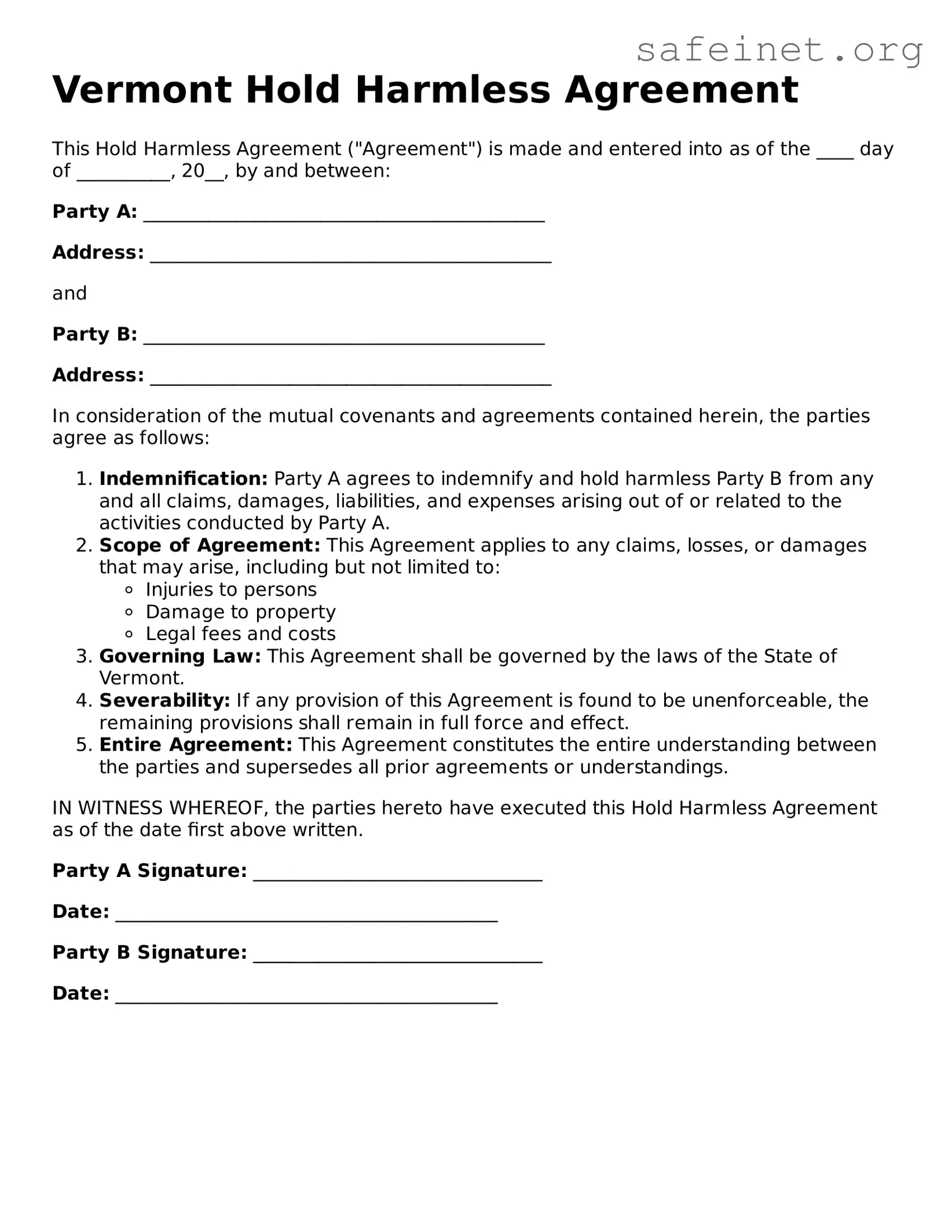
Vermont Hold Harmless Agreement
This Hold Harmless Agreement ("Agreement") is made and entered into as of the ____ day of __________, 20__, by and between:
Party A: ___________________________________________
Address: ___________________________________________
and
Party B: ___________________________________________
Address: ___________________________________________
In consideration of the mutual covenants and agreements contained herein, the parties agree as follows:
IN WITNESS WHEREOF, the parties hereto have executed this Hold Harmless Agreement as of the date first above written.
Party A Signature: _______________________________
Date: _________________________________________
Party B Signature: _______________________________
Date: _________________________________________
| Fact Name | Details |
|---|---|
| Purpose | The Vermont Hold Harmless Agreement is designed to protect one party from liability for any damages or injuries that may occur during a specific activity or event. |
| Governing Law | This agreement is governed by the laws of the State of Vermont. |
| Parties Involved | Typically, the agreement involves at least two parties: the indemnitor (the party agreeing to hold harmless) and the indemnitee (the party being protected). |
| Key Components | Essential elements include clear language outlining the scope of the agreement, the activities covered, and any limitations on liability. |
Completing the Vermont Hold Harmless Agreement form is a straightforward process that requires attention to detail. By following the steps outlined below, you will ensure that all necessary information is accurately provided, setting the stage for the agreement to be valid and effective.
What is a Vermont Hold Harmless Agreement?
A Vermont Hold Harmless Agreement is a legal document that protects one party from liability for any damages or injuries that may occur during an event or activity. It is commonly used in various situations, such as rental agreements, events, and activities involving physical risks.
Who typically uses a Hold Harmless Agreement?
This agreement is often used by organizations, event planners, property owners, and individuals who want to mitigate their risk of being held responsible for accidents or injuries that occur during their events or on their property.
What are the key components of a Hold Harmless Agreement?
A typical Hold Harmless Agreement includes the names of the parties involved, a description of the activity or event, a statement of indemnification, and the signatures of both parties. It may also specify any limitations or exclusions regarding liability.
Is a Hold Harmless Agreement legally binding in Vermont?
Yes, a Hold Harmless Agreement can be legally binding in Vermont, provided it is properly drafted and executed. However, certain legal standards must be met, and the agreement should not violate public policy or contain unconscionable terms.
Can a Hold Harmless Agreement protect against all types of liability?
No, while a Hold Harmless Agreement can provide significant protection, it cannot shield a party from liability for gross negligence, willful misconduct, or illegal activities. Courts may not enforce provisions that attempt to waive liability for these actions.
How does one create a Hold Harmless Agreement in Vermont?
To create a Hold Harmless Agreement, one should clearly outline the terms and conditions, including the scope of the agreement and the responsibilities of each party. It is advisable to consult with a legal professional to ensure that the document complies with Vermont laws.
Do I need a lawyer to draft a Hold Harmless Agreement?
While it is not legally required to have a lawyer draft a Hold Harmless Agreement, it is highly recommended. A legal professional can help ensure that the document is comprehensive, enforceable, and tailored to your specific situation.
What should I consider before signing a Hold Harmless Agreement?
Before signing, carefully read the agreement and understand the risks involved. Consider the nature of the activity, the potential for injury, and whether the terms are fair. If anything is unclear, seek clarification or legal advice.
Can a Hold Harmless Agreement be revoked?
In general, a Hold Harmless Agreement can be revoked if both parties agree to the revocation in writing. However, the terms of the original agreement may specify conditions under which it can be terminated, so it is essential to review those details.
What happens if there is a dispute regarding the Hold Harmless Agreement?
If a dispute arises, the parties may need to resolve it through negotiation, mediation, or legal proceedings. The terms of the agreement will play a significant role in determining the outcome, so it is crucial to have a well-drafted document.
Not reading the entire form before filling it out. It’s crucial to understand all sections to avoid missing important details.
Failing to provide accurate personal information. Double-check names, addresses, and contact details for accuracy.
Omitting signatures. Ensure that all required parties sign the agreement where indicated.
Not dating the form. Always include the date to establish when the agreement was made.
Ignoring specific clauses. Pay attention to any clauses that may require additional information or conditions.
Using unclear language. Be straightforward and precise in any explanations or additional notes.
Not keeping a copy. Always retain a copy of the signed agreement for your records.
Assuming the form is one-size-fits-all. Different situations may require tailored agreements; consider consulting with a professional if unsure.
Neglecting to verify witness requirements. Some agreements may need a witness signature; check if this applies to your situation.
A Vermont Hold Harmless Agreement is a useful document for protecting parties from liability. When using this agreement, you might also find it helpful to consider several other forms and documents that often accompany it. Here’s a list of related documents that can provide additional clarity and protection.
Each of these documents plays a unique role in managing risk and clarifying responsibilities. When used together with a Vermont Hold Harmless Agreement, they can help ensure that all parties understand their rights and obligations, providing peace of mind in various situations.
The Vermont Hold Harmless Agreement is similar to a Liability Waiver. A Liability Waiver is a document that releases one party from liability for certain actions or events. Like the Hold Harmless Agreement, it is often used in situations involving recreational activities, events, or services where there is a risk of injury. Both documents require participants to acknowledge the risks involved and agree not to hold the other party responsible for any injuries or damages that may occur.
Another document comparable to the Vermont Hold Harmless Agreement is the Indemnity Agreement. An Indemnity Agreement is designed to protect one party from financial loss or damage caused by another party's actions. This document often includes provisions that require one party to compensate the other for losses incurred. Similar to the Hold Harmless Agreement, it emphasizes the transfer of risk and the responsibilities of each party in the event of a claim.
The Release of Liability form also shares similarities with the Vermont Hold Harmless Agreement. This document is commonly used to release a party from legal claims related to injuries or damages that may occur during an activity. Both forms require individuals to acknowledge the risks involved and voluntarily relinquish their right to sue. The primary purpose is to protect the organization or individual providing the activity from legal repercussions.
Lastly, the Consent to Treat form can be seen as related to the Hold Harmless Agreement. While primarily used in medical settings, it serves to inform individuals about the risks associated with medical treatments or procedures. By signing this document, individuals agree to accept the risks and not hold the healthcare provider liable for potential complications. Both documents aim to ensure that individuals are aware of risks and accept responsibility for their choices.
When filling out the Vermont Hold Harmless Agreement form, it’s essential to approach the task with care. Here’s a list of things you should and shouldn’t do to ensure the process goes smoothly.
By following these guidelines, you can fill out the Vermont Hold Harmless Agreement form with confidence and clarity.
The Vermont Hold Harmless Agreement form is often misunderstood. Here are nine common misconceptions:
When filling out and using the Vermont Hold Harmless Agreement form, consider the following key takeaways: