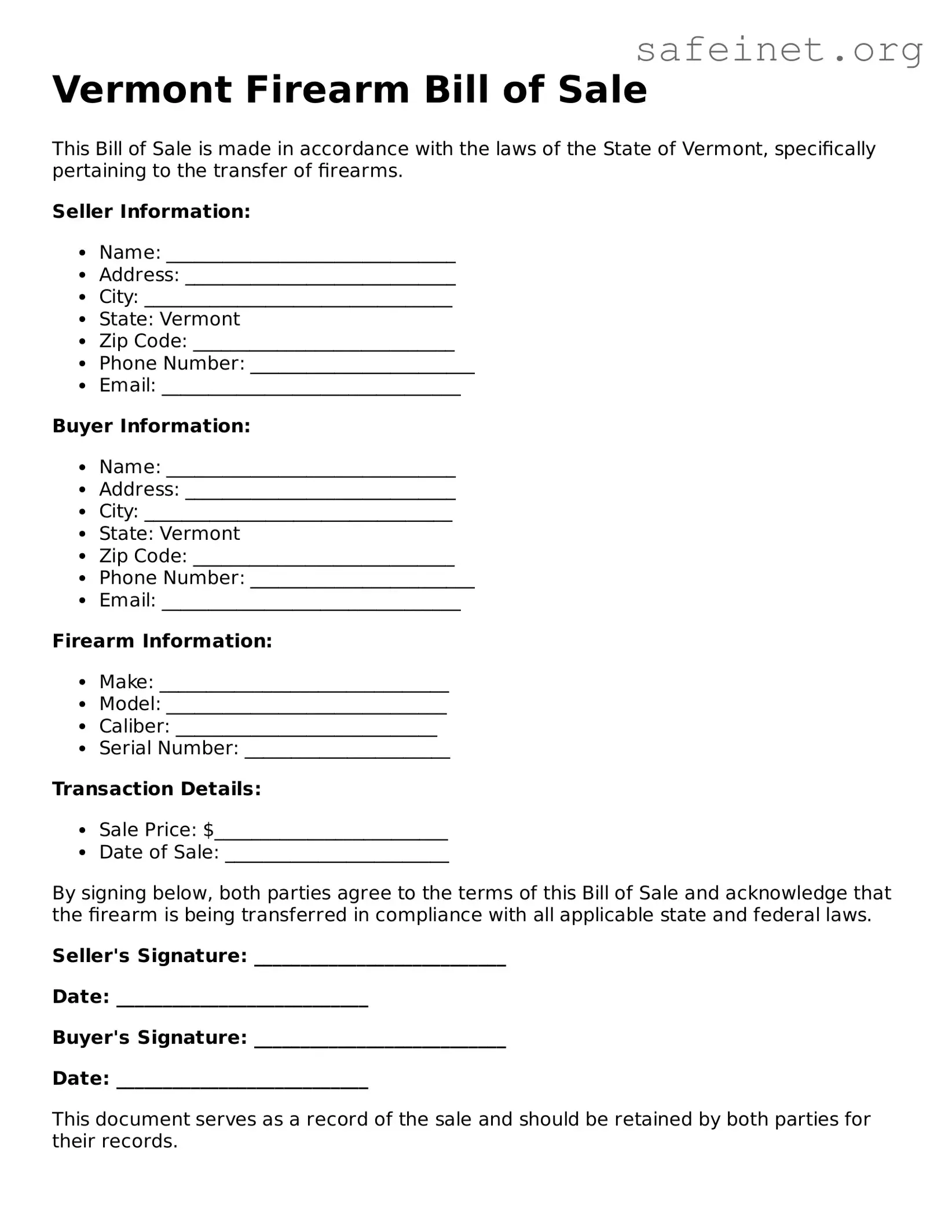
In Vermont, the process of transferring ownership of a firearm is formalized through the Firearm Bill of Sale form, a crucial document that ensures both parties involved in the transaction are protected. This form serves as a written record of the sale, detailing essential information such as the buyer and seller's names, addresses, and signatures. Additionally, it includes specifics about the firearm being sold, including its make, model, and serial number. By documenting the transaction, this form helps to establish a clear chain of ownership, which is important for legal and safety reasons. It is also a useful tool for buyers, providing them with proof of purchase should they ever need to demonstrate ownership. Understanding the nuances of this form is vital for anyone looking to buy or sell a firearm in Vermont, as it not only fulfills legal requirements but also fosters responsible gun ownership and accountability within the community.
Vermont Firearm Bill of Sale
This Bill of Sale is made in accordance with the laws of the State of Vermont, specifically pertaining to the transfer of firearms.
Seller Information:
Buyer Information:
Firearm Information:
Transaction Details:
By signing below, both parties agree to the terms of this Bill of Sale and acknowledge that the firearm is being transferred in compliance with all applicable state and federal laws.
Seller's Signature: ___________________________
Date: ___________________________
Buyer's Signature: ___________________________
Date: ___________________________
This document serves as a record of the sale and should be retained by both parties for their records.
| Fact Name | Description |
|---|---|
| Purpose | The Vermont Firearm Bill of Sale form is used to document the sale or transfer of a firearm between private parties. |
| Governing Law | This form is governed by Vermont state laws, particularly 13 V.S.A. § 4017 regarding the sale and transfer of firearms. |
| Parties Involved | The form requires the names and addresses of both the seller and the buyer to ensure clear identification. |
| Firearm Description | A detailed description of the firearm being sold, including make, model, and serial number, must be included. |
| Payment Information | The form should specify the amount paid for the firearm, which serves as proof of the transaction. |
| Signatures | Both the seller and buyer must sign the form to validate the transfer of ownership. |
| Witness Requirement | While not mandatory, having a witness sign the form can provide additional verification of the transaction. |
| Record Keeping | It is advisable for both parties to keep a copy of the completed form for their records. |
| Legal Age | Both the buyer and seller must be of legal age to own a firearm, which is 18 years in Vermont. |
After obtaining the Vermont Firearm Bill of Sale form, you will need to fill it out carefully. This document serves as a record of the sale and includes important information about both the buyer and seller. Make sure to have all necessary information ready before you start.
What is a Firearm Bill of Sale in Vermont?
A Firearm Bill of Sale is a legal document that records the transfer of ownership of a firearm from one person to another. In Vermont, this form serves as proof that a sale occurred and outlines the details of the transaction, including the make, model, and serial number of the firearm, as well as the names and addresses of both the buyer and the seller.
Is a Firearm Bill of Sale required in Vermont?
While Vermont does not require a Bill of Sale for private firearm transactions, it is highly recommended. Having a written record can help protect both the buyer and the seller in case of future disputes or legal issues. It also serves as a useful reference if the firearm is ever lost or stolen.
What information should be included in a Firearm Bill of Sale?
A comprehensive Firearm Bill of Sale should include several key pieces of information. This includes the date of the sale, the names and addresses of both parties, a detailed description of the firearm (including make, model, and serial number), and the purchase price. Additionally, both parties should sign and date the document to validate the transaction.
Can I create my own Firearm Bill of Sale?
Yes, you can create your own Firearm Bill of Sale. There are templates available online that can guide you in drafting your document. However, ensure that your version includes all necessary details to make it legally sound. It's essential that both parties understand and agree to the terms outlined in the document.
Is a Firearm Bill of Sale legally binding?
Yes, a Firearm Bill of Sale is a legally binding contract once both parties have signed it. This means that it can be used in court to prove ownership or to resolve disputes. However, it is important to ensure that the form is filled out correctly and that both parties are in agreement about the terms of the sale.
Do I need to have the Bill of Sale notarized?
No, notarization is not required for a Firearm Bill of Sale in Vermont. However, having the document notarized can add an extra layer of authenticity and may be beneficial in case of any future disputes. It can help verify the identities of the parties involved and the legitimacy of the transaction.
What should I do with the Firearm Bill of Sale after the transaction?
After completing the transaction, both the buyer and the seller should keep a copy of the Firearm Bill of Sale for their records. This document may be needed for future reference, especially if there are any questions regarding ownership or if the firearm is involved in a legal matter.
Are there any restrictions on who can buy or sell firearms in Vermont?
Yes, there are restrictions. While Vermont has relatively permissive gun laws, federal regulations still apply. Individuals who are prohibited from owning firearms, such as convicted felons or those with certain mental health issues, cannot legally buy or sell firearms. It is important for both buyers and sellers to be aware of these regulations to ensure compliance.
What happens if I lose my Firearm Bill of Sale?
If you lose your Firearm Bill of Sale, it can be difficult to prove ownership of the firearm. It is advisable to keep a secure copy in a safe place. If the original is lost, consider creating a new Bill of Sale with the same details and having both parties sign it again. This can help establish ownership if needed in the future.
Incomplete Information: Failing to fill out all required fields can lead to delays or issues. Ensure that both the buyer's and seller's information is fully provided, including names, addresses, and contact details.
Incorrect Firearm Details: Entering the wrong make, model, or serial number of the firearm can cause problems. Double-check these details before submitting the form.
Missing Signatures: Both parties must sign the form. Omitting a signature can invalidate the sale. Make sure to have all necessary signatures before finalizing the transaction.
Not Keeping a Copy: Failing to retain a copy of the completed form can lead to complications later. Both the buyer and seller should keep a signed copy for their records.
Ignoring Local Laws: Not being aware of local regulations regarding firearm sales can result in legal issues. Always check the specific laws in your area before completing the transaction.
When engaging in the sale or transfer of firearms in Vermont, several other forms and documents may be useful or required. These documents help ensure compliance with state laws and facilitate a smooth transaction. Below is a list of common forms often used alongside the Vermont Firearm Bill of Sale form.
Using these documents alongside the Vermont Firearm Bill of Sale form can help ensure a lawful and transparent transaction. Always verify which forms are necessary for your specific situation to comply with local laws.
The Vermont Firearm Bill of Sale form shares similarities with a general Bill of Sale. A general Bill of Sale is a document that records the transfer of ownership of personal property from one person to another. Like the firearm-specific version, it includes details such as the names of the buyer and seller, a description of the item being sold, and the date of the transaction. Both documents serve as proof of ownership transfer and can protect the interests of both parties involved.
Another document that is similar is the Vehicle Bill of Sale. This form is used when transferring ownership of a vehicle. It contains information about the buyer and seller, vehicle details like make, model, and VIN, as well as the sale price. Both the Vehicle Bill of Sale and the Firearm Bill of Sale provide legal documentation of the transaction, ensuring clarity in ownership and reducing potential disputes.
The Boat Bill of Sale also resembles the Firearm Bill of Sale. This document is utilized when a boat is sold and includes the seller’s and buyer’s information, a description of the boat, and the sale price. Just like the Firearm Bill of Sale, it serves as proof of ownership transfer and can be important for registration purposes, ensuring that the new owner has legal rights to the boat.
A Lease Agreement is another document that shares some characteristics with the Firearm Bill of Sale. While it is not a sale document, it outlines the terms under which one party may use property owned by another. Both documents involve the transfer of rights, whether for a limited time in the case of a lease or permanently in the case of a sale. Each document helps clarify the responsibilities and rights of the parties involved.
The Personal Property Bill of Sale is similar in function to the Firearm Bill of Sale as it documents the sale of various types of personal property, not just firearms. It includes the names of the buyer and seller, a description of the item, and the sale price. Both documents serve to provide proof of ownership transfer and can be used for legal purposes if disputes arise.
The Real Estate Purchase Agreement is another document that, while more complex, shares some foundational elements with the Firearm Bill of Sale. It outlines the terms of the sale of real property, including the buyer and seller’s information, property description, and sale price. Both documents formalize a transaction and protect the interests of both parties, although the Real Estate Purchase Agreement typically involves more detailed legal considerations.
A Rental Agreement also has similarities to the Firearm Bill of Sale in that it establishes terms for the use of property. While a Rental Agreement is not a sale document, it does outline the rights and responsibilities of both the landlord and tenant. Both types of documents help clarify expectations and protect the interests of the parties involved.
The Equipment Bill of Sale is another document akin to the Firearm Bill of Sale. It is used when transferring ownership of specific equipment, such as machinery or tools. This document includes the names of both parties, a description of the equipment, and the sale price. Both documents serve as proof of ownership transfer and help prevent misunderstandings regarding the sale.
Lastly, the Mobile Home Bill of Sale is similar to the Firearm Bill of Sale in that it documents the sale of a mobile home. This document includes necessary details such as the buyer and seller’s names, the mobile home’s description, and the sale price. Both serve to legally confirm the transfer of ownership and can be important for registration and legal purposes.
When filling out the Vermont Firearm Bill of Sale form, it's essential to follow certain guidelines to ensure everything is accurate and legal. Here’s a helpful list of dos and don’ts:
By following these tips, you can help ensure a smooth and lawful transaction when selling or buying a firearm in Vermont.
The Vermont Firearm Bill of Sale form is often surrounded by misunderstandings. These misconceptions can lead to confusion about the legal requirements and implications of buying or selling firearms in the state. Here are nine common misconceptions clarified:
All firearm sales require a background check. Many people believe that every private sale of a firearm in Vermont necessitates a background check. However, Vermont does not require background checks for private sales, making it different from many other states.
A Bill of Sale is not necessary for firearm transactions. Some individuals think that a Bill of Sale is optional. In reality, having a Bill of Sale is a good practice as it provides a record of the transaction and can protect both parties in case of future disputes.
Only licensed dealers can sell firearms. There is a misconception that only licensed dealers can sell firearms. In Vermont, private citizens are allowed to sell firearms without a license, as long as they comply with state laws.
Firearms must be registered in Vermont. Some people assume that all firearms must be registered with the state. Vermont does not require registration of firearms, which is a significant distinction from many other states.
All firearms transactions are subject to state sales tax. It is a common belief that sales tax applies to all firearm transactions. In Vermont, however, private sales of firearms are generally not subject to sales tax.
Buyers must provide a photo ID for all transactions. While it is prudent for sellers to verify the identity of buyers, Vermont law does not mandate that buyers present a photo ID for private sales.
Firearm Bill of Sale forms are standardized across the state. Many assume that there is a single, official Bill of Sale form for the entire state. In fact, while there may be recommended templates, sellers and buyers can create their own Bill of Sale as long as it includes essential information.
Once a Bill of Sale is signed, the seller is liable for the firearm. Some sellers worry that they remain liable for the firearm after the sale is completed. Once a Bill of Sale is signed, the transaction is generally considered complete, and the seller is not liable for future actions involving the firearm.
All firearms sales are final and cannot be returned. There is a belief that all sales are final. While this is often the case, it is wise for buyers and sellers to discuss return policies before completing the transaction, as they can agree on terms that suit both parties.
Understanding these misconceptions can help individuals navigate the process of buying and selling firearms in Vermont with greater confidence and clarity. Always consult legal resources or professionals if you have specific questions about firearm laws in your area.
When filling out and using the Vermont Firearm Bill of Sale form, there are several important points to keep in mind. This document serves as proof of the transfer of ownership of a firearm and ensures that both parties are protected in the transaction.
By following these guidelines, individuals can ensure a smooth and legally compliant transfer of firearm ownership in Vermont.