Creating a comprehensive employee handbook is an essential step for any business operating in Vermont. This document serves as a vital resource for both employers and employees, outlining workplace policies, procedures, and expectations. It typically includes important information on company culture, employee rights, and responsibilities. Key topics often covered are workplace conduct, attendance policies, benefits, and procedures for addressing grievances. Additionally, the handbook may address compliance with state and federal laws, ensuring that employees are aware of their rights regarding discrimination, harassment, and safety regulations. By providing clear guidelines and fostering open communication, a well-crafted employee handbook can enhance workplace morale and promote a positive organizational environment.
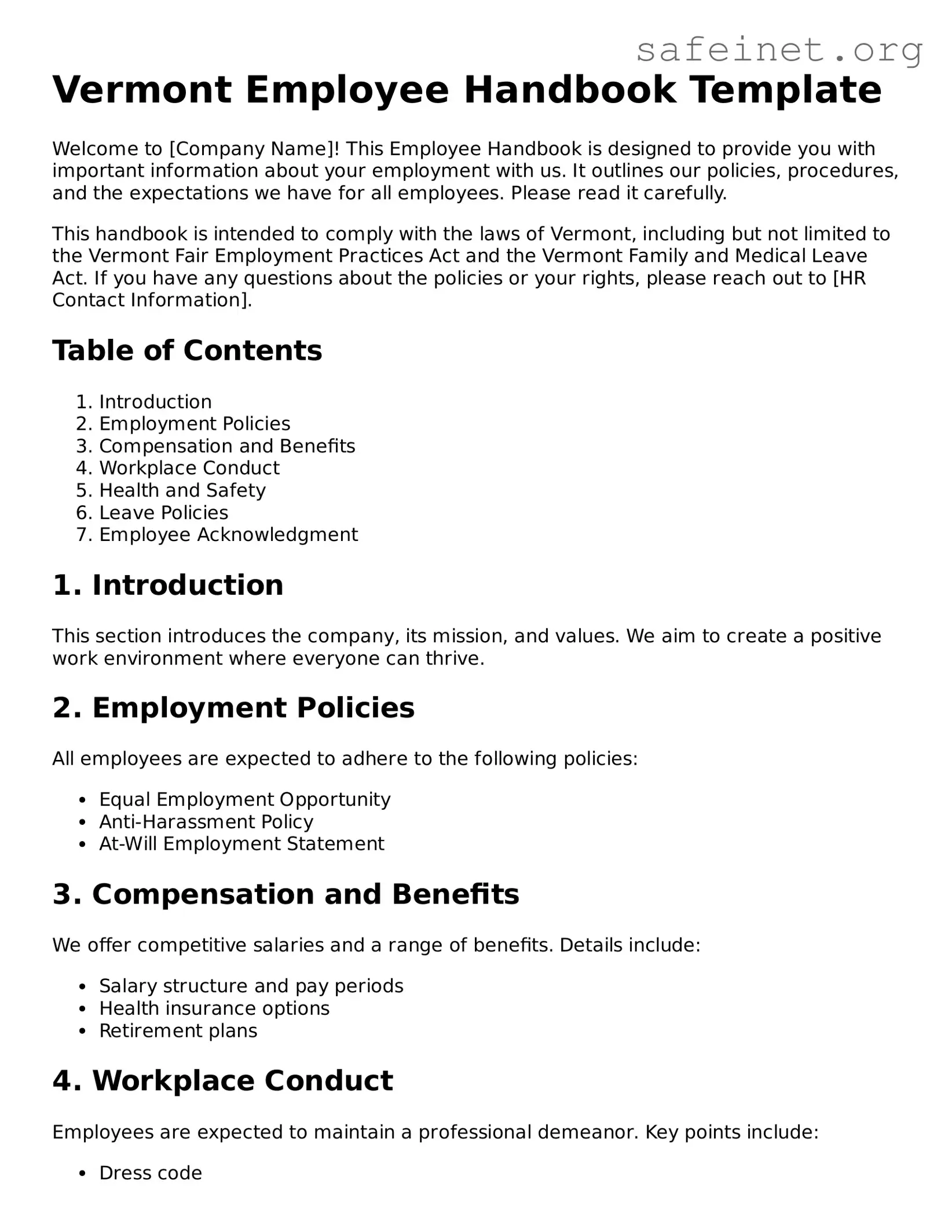
Vermont Employee Handbook Template
Welcome to [Company Name]! This Employee Handbook is designed to provide you with important information about your employment with us. It outlines our policies, procedures, and the expectations we have for all employees. Please read it carefully.
This handbook is intended to comply with the laws of Vermont, including but not limited to the Vermont Fair Employment Practices Act and the Vermont Family and Medical Leave Act. If you have any questions about the policies or your rights, please reach out to [HR Contact Information].
Table of Contents
1. Introduction
This section introduces the company, its mission, and values. We aim to create a positive work environment where everyone can thrive.
2. Employment Policies
All employees are expected to adhere to the following policies:
3. Compensation and Benefits
We offer competitive salaries and a range of benefits. Details include:
4. Workplace Conduct
Employees are expected to maintain a professional demeanor. Key points include:
5. Health and Safety
Your safety is our priority. We adhere to all Vermont health and safety regulations. Employees should:
6. Leave Policies
We provide various leave options, including:
7. Employee Acknowledgment
Please sign and return the acknowledgment form at the end of this handbook. Your signature confirms that you have read and understood the policies outlined.
Thank you for being a part of [Company Name]. We are excited to have you on our team!
| Fact Name | Description |
|---|---|
| Purpose | The Vermont Employee Handbook serves as a guide for employees, outlining workplace policies and expectations. |
| Content Requirements | The handbook should include policies on anti-discrimination, harassment, and workplace safety. |
| Governing Laws | Vermont labor laws, including the Vermont Fair Employment Practices Act, govern the content of employee handbooks. |
| Employee Rights | Employees must be informed of their rights, including the right to a safe workplace and protection from discrimination. |
| Updates | Handbooks should be reviewed and updated regularly to reflect changes in laws or company policies. |
| Distribution | Employers are encouraged to provide a copy of the handbook to each employee upon hire. |
| Acknowledgment | Employees should sign an acknowledgment form confirming they have received and understood the handbook. |
| Legal Protection | A well-crafted handbook can protect employers by clarifying expectations and reducing the risk of legal disputes. |
Completing the Vermont Employee Handbook form is an important step in ensuring that you understand the policies and procedures of your workplace. After filling out this form, you will have a clearer understanding of your rights and responsibilities as an employee. The next steps will guide you through the process of filling out the form accurately and thoroughly.
What is the Vermont Employee Handbook form?
The Vermont Employee Handbook form is a document designed to outline the policies, procedures, and expectations for employees within a Vermont-based organization. It serves as a guide for both employers and employees, ensuring that all parties understand their rights and responsibilities in the workplace. This form may include information on topics such as workplace conduct, benefits, and grievance procedures.
Who needs to complete the Vermont Employee Handbook form?
Typically, employers in Vermont are responsible for creating and distributing the Employee Handbook form to their employees. It is important for all employees to receive a copy of the handbook, as it contains essential information about company policies and procedures. New hires should receive the handbook during their onboarding process, while existing employees should be provided with updates whenever changes are made.
What are the key components of the Vermont Employee Handbook?
The Vermont Employee Handbook generally includes several key components. These may encompass an introduction to the company, an overview of employment policies, descriptions of employee benefits, guidelines for workplace behavior, and procedures for reporting issues or grievances. Additionally, it may cover topics such as leave policies, anti-discrimination measures, and health and safety regulations.
How often should the Vermont Employee Handbook be updated?
Employers should review and update the Vermont Employee Handbook regularly. Changes in state or federal laws, company policies, or workplace practices may necessitate revisions. It is advisable to conduct a thorough review at least once a year or whenever significant changes occur. Employers should also communicate any updates to employees promptly to ensure everyone is informed of current policies.
What should employees do if they have questions about the Employee Handbook?
If employees have questions regarding the Employee Handbook, they should first refer to the handbook itself for guidance. If the information is unclear or if further clarification is needed, employees are encouraged to reach out to their supervisor or the human resources department. Open communication is essential for resolving any uncertainties and ensuring a clear understanding of workplace policies.
Failing to read the entire handbook before filling out the form. Understanding the policies is crucial.
Not providing accurate personal information. Double-check names, addresses, and contact details.
Overlooking the signature requirement. A missing signature can delay processing.
Ignoring the deadline for submission. Late submissions may not be accepted.
Using incorrect or outdated forms. Always ensure you have the latest version.
Neglecting to ask questions about unclear sections. Clarification can prevent mistakes.
Not keeping a copy of the submitted form. It’s essential to have a record for future reference.
Forgetting to update information when circumstances change. Keep your details current to avoid issues.
When creating a comprehensive employee handbook in Vermont, several other forms and documents can complement it. These documents help clarify policies, ensure compliance with state and federal laws, and foster a positive work environment. Below is a list of commonly used forms that often accompany an employee handbook.
These documents work together to create a robust framework for managing employee relations and maintaining a compliant workplace. Each form plays a unique role, contributing to a clear understanding of policies and expectations within the organization.
The Vermont Employee Handbook form shares similarities with the Employee Manual, which serves as a comprehensive guide for employees about company policies and procedures. Like the handbook, the manual outlines expectations for behavior, performance standards, and benefits. Both documents aim to foster a clear understanding of the workplace environment and promote a positive culture among employees.
Another document that resembles the Vermont Employee Handbook is the Orientation Guide. This guide typically provides new hires with essential information about the company, including its mission, values, and organizational structure. Both documents are crucial for onboarding, helping employees acclimate to their new roles and understand the resources available to them.
The Policy and Procedures Document is also similar to the Employee Handbook. This document details specific policies regarding workplace conduct, safety protocols, and compliance regulations. While the handbook may provide a broader overview, the policy document dives deeper into the rules that govern employee behavior and the consequences of violations.
Job Descriptions are another related document. Each job description outlines the responsibilities, required qualifications, and performance expectations for a specific role. Both the job description and the handbook work together to clarify what is expected from employees, ensuring everyone understands their individual contributions to the organization.
The Code of Conduct is closely aligned with the Vermont Employee Handbook as well. This document establishes the ethical standards and behavioral expectations for employees. It complements the handbook by providing specific guidelines on how to handle conflicts, maintain professionalism, and uphold the company’s values in everyday interactions.
Performance Evaluation Forms are similar in that they outline the criteria for assessing employee performance. These forms often reference the policies and expectations set forth in the Employee Handbook. Both documents aim to ensure that employees receive fair and constructive feedback, helping them grow in their roles.
Lastly, the Benefits Overview Document parallels the Employee Handbook by detailing the benefits available to employees, such as health insurance, retirement plans, and paid time off. While the handbook may touch on these topics, the benefits document provides a more focused look at employee entitlements, ensuring that staff members are well-informed about their options.
When filling out the Vermont Employee Handbook form, it's important to follow certain guidelines to ensure accuracy and compliance. Here are some dos and don'ts to consider:
When it comes to the Vermont Employee Handbook form, many misunderstandings can lead to confusion for employers and employees alike. Here are six common misconceptions:
While it's true that Vermont law does not mandate every employer to have an employee handbook, having one is highly recommended. A well-crafted handbook can clarify policies and expectations, helping to prevent disputes.
Each handbook should reflect the specific culture and needs of a company. Although there are standard elements that are often included, such as policies on harassment and leave, customization is key to effectively communicating with employees.
Employers can and should update their handbooks regularly to reflect changes in laws, company policies, or employee feedback. Regular reviews ensure that the handbook remains relevant and effective.
An employee handbook is not a legally binding contract unless explicitly stated. It serves as a guide for company policies, but employers typically retain the right to modify policies as needed.
While it is a good practice to have employees acknowledge receipt of the handbook, a signature is not legally required. However, this acknowledgment can help protect the employer by demonstrating that employees were informed of policies.
Small businesses can greatly benefit from having an employee handbook as well. It helps establish a professional workplace and sets clear expectations, which can be especially important in smaller teams.
When filling out and using the Vermont Employee Handbook form, consider the following key takeaways:
Taking these steps can help create a comprehensive and effective employee handbook that benefits both the employer and the employees.