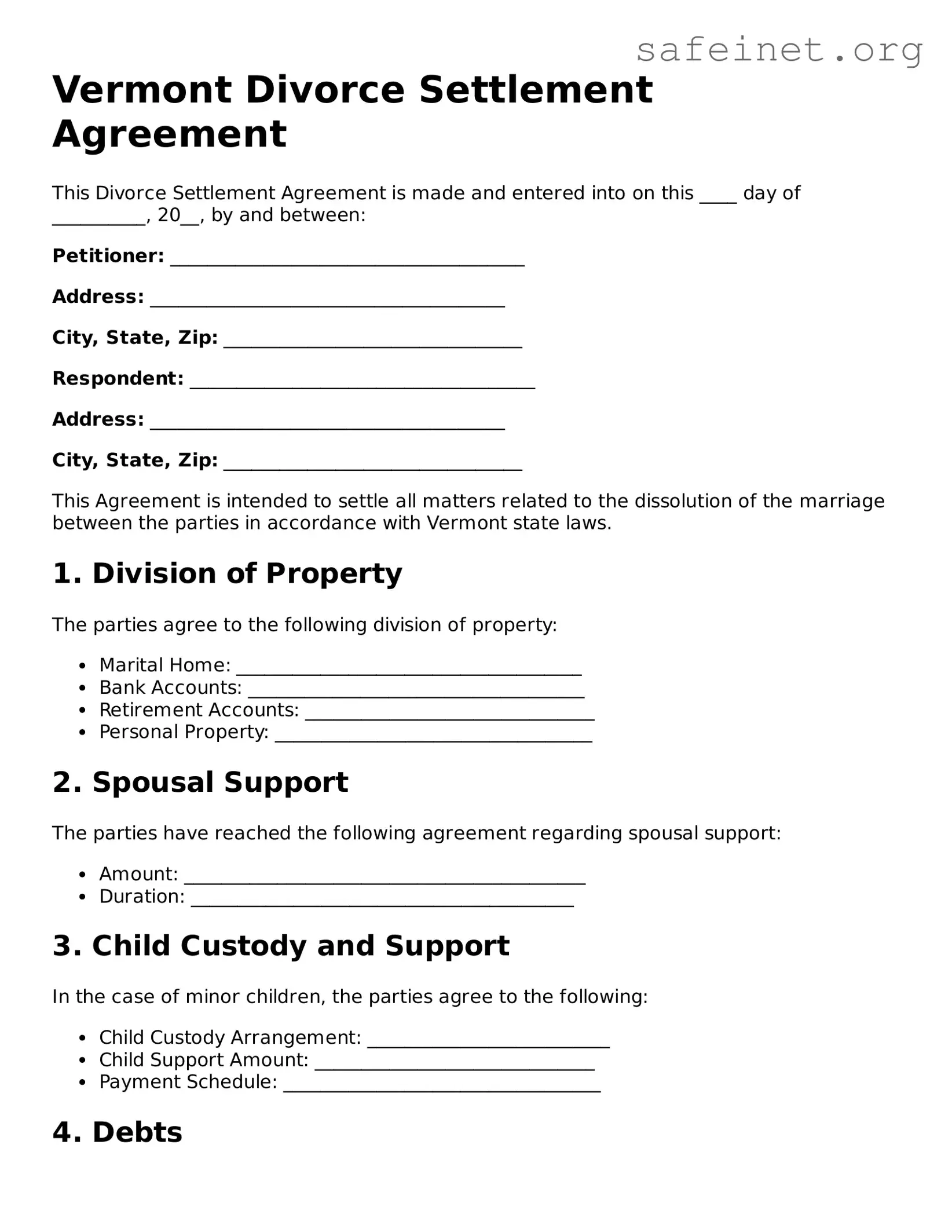
When navigating the complexities of divorce in Vermont, the Divorce Settlement Agreement form emerges as a critical tool for couples seeking to amicably resolve their differences. This form serves as a comprehensive document that outlines the terms agreed upon by both parties, covering essential aspects such as the division of property, spousal support, child custody, and visitation rights. It is designed to ensure that all agreements are documented clearly, providing a framework for the future and minimizing potential disputes. By detailing financial responsibilities, asset distribution, and parental arrangements, the form helps both individuals transition into their new lives with clarity and mutual understanding. Completing this agreement is not merely a procedural step; it is a significant milestone that reflects the couple's commitment to reaching a fair and respectful resolution. Understanding the nuances of this form can empower individuals to advocate for their interests while fostering a cooperative environment during a challenging time.
Vermont Divorce Settlement Agreement
This Divorce Settlement Agreement is made and entered into on this ____ day of __________, 20__, by and between:
Petitioner: ______________________________________
Address: ______________________________________
City, State, Zip: ________________________________
Respondent: _____________________________________
Address: ______________________________________
City, State, Zip: ________________________________
This Agreement is intended to settle all matters related to the dissolution of the marriage between the parties in accordance with Vermont state laws.
1. Division of Property
The parties agree to the following division of property:
2. Spousal Support
The parties have reached the following agreement regarding spousal support:
3. Child Custody and Support
In the case of minor children, the parties agree to the following:
4. Debts
The parties acknowledge the following debts and their division:
5. Miscellaneous Provisions
Other agreements made by the parties include:
6. Governing Law
This Agreement shall be governed by and construed in accordance with the laws of the State of Vermont.
IN WITNESS WHEREOF, the parties have executed this Divorce Settlement Agreement as of the date first above written.
Petitioner Signature: ___________________________
Date: _________________________________________
Respondent Signature: __________________________
Date: _________________________________________
| Fact Name | Description |
|---|---|
| Governing Law | The Vermont Divorce Settlement Agreement is governed by Vermont state law, specifically Title 15 of the Vermont Statutes Annotated. |
| Purpose | This form is used to outline the terms of a divorce settlement between spouses, covering issues such as property division, alimony, and child custody. |
| Filing Requirement | The completed agreement must be filed with the court as part of the divorce proceedings to be legally recognized. |
| Mutual Agreement | Both parties must agree to the terms outlined in the settlement for it to be valid and enforceable. |
| Child Support | If children are involved, the agreement must include provisions for child support, which must comply with Vermont's child support guidelines. |
| Modification | Once finalized, the agreement can be modified only under certain circumstances, such as significant changes in financial status or the needs of the children. |
| Legal Representation | While it is not required, it is highly recommended that both parties seek legal advice before signing the agreement to ensure their rights are protected. |
| Notarization | The agreement may need to be notarized to verify the identities of the parties and their willingness to enter into the agreement. |
| Enforcement | If one party fails to comply with the terms of the agreement, the other party may seek enforcement through the court system. |
Once you have gathered all necessary information and documents, you’re ready to fill out the Vermont Divorce Settlement Agreement form. This process is crucial for clearly outlining the terms of your divorce, ensuring both parties understand their rights and responsibilities moving forward.
What is a Vermont Divorce Settlement Agreement?
A Vermont Divorce Settlement Agreement is a legal document that outlines the terms of a divorce between two parties. It includes important details such as the division of assets, child custody arrangements, and spousal support. This agreement serves to ensure that both parties are in agreement on these issues before finalizing the divorce.
Who should use the Divorce Settlement Agreement form?
This form is intended for couples who are going through a divorce in Vermont and have reached an agreement on the terms of their separation. It is suitable for both contested and uncontested divorces, provided that both parties can communicate effectively and agree on the settlement terms.
What information is required to complete the form?
To complete the Vermont Divorce Settlement Agreement form, you will need to provide personal information about both parties, including names, addresses, and any children involved. Additionally, details regarding the division of property, debts, and any arrangements for child custody and support must be included.
Can the agreement be modified after it is signed?
Yes, the Divorce Settlement Agreement can be modified after it is signed, but both parties must agree to the changes. It is advisable to document any modifications in writing and, if necessary, file them with the court to ensure they are enforceable.
Is legal representation necessary to complete the form?
While it is not mandatory to have legal representation to complete the Divorce Settlement Agreement form, it is highly recommended. Having a lawyer can help ensure that both parties understand their rights and obligations, and can assist in negotiating terms that are fair and equitable.
What happens if one party does not comply with the agreement?
If one party fails to comply with the terms of the Divorce Settlement Agreement, the other party may seek enforcement through the court. The court can take various actions, including ordering compliance or modifying the agreement if circumstances have changed.
How long does it take to finalize a divorce after submitting the agreement?
The time it takes to finalize a divorce after submitting the Divorce Settlement Agreement can vary. Generally, once the agreement is filed with the court, a judge will review it. If everything is in order, the divorce can be finalized within a few weeks to a few months, depending on the court's schedule.
Where can I obtain the Vermont Divorce Settlement Agreement form?
The Vermont Divorce Settlement Agreement form can be obtained from the Vermont Judiciary website or at your local courthouse. It is important to ensure that you are using the most current version of the form to avoid any issues during the filing process.
Incomplete Information: Many individuals fail to provide all necessary details. Omitting critical information can lead to delays or complications in the divorce process.
Incorrect Financial Disclosures: Accurately reporting income, assets, and debts is crucial. Misrepresenting financial information, whether intentional or accidental, can have serious legal repercussions.
Neglecting to Address Child Custody: For couples with children, it’s essential to outline custody arrangements. Failing to do so can result in disputes later on.
Ignoring State Guidelines: Each state has specific rules regarding divorce settlements. Not adhering to Vermont’s regulations can invalidate parts of the agreement.
Failure to Include Future Considerations: Some overlook the importance of addressing future financial responsibilities, such as child support or alimony. These should be clearly articulated to avoid misunderstandings.
Not Seeking Legal Advice: Many individuals assume they can navigate the process without professional help. However, consulting with a legal expert can provide valuable insights and prevent costly mistakes.
Rushing the Process: The emotional toll of divorce can lead to hasty decisions. Taking the time to carefully review the agreement is crucial for long-term peace of mind.
Overlooking Tax Implications: Divorce settlements can have significant tax consequences. Failing to consider these can result in unexpected financial burdens.
Not Keeping Copies: After submitting the agreement, individuals often forget to keep copies for their records. Having documentation is essential for future reference and potential disputes.
When navigating the divorce process in Vermont, several key documents may accompany the Divorce Settlement Agreement. Each of these forms serves a specific purpose and helps ensure that all aspects of the divorce are addressed properly. Below is a list of commonly used forms that you might encounter.
Understanding these documents can significantly ease the divorce process. Each plays a crucial role in ensuring that both parties' rights and responsibilities are clearly defined and legally recognized. Being informed can help you navigate this challenging time more effectively.
The Marital Settlement Agreement is a document that outlines the terms agreed upon by both spouses regarding the division of assets, debts, and child custody arrangements. Similar to the Vermont Divorce Settlement Agreement, it serves as a comprehensive framework for the dissolution of marriage. Both documents aim to provide clarity and prevent future disputes by detailing each party's responsibilities and rights post-divorce.
A Parenting Plan is another document that shares similarities with the Vermont Divorce Settlement Agreement, particularly when children are involved. This plan specifies the custody and visitation arrangements for the children, ensuring that both parents understand their roles and responsibilities. Like the Divorce Settlement Agreement, it seeks to prioritize the well-being of the children while providing a structured approach to co-parenting.
The Separation Agreement is often used by couples who wish to live apart but are not yet ready to divorce. This document outlines the terms of the separation, including financial responsibilities and living arrangements. Much like the Vermont Divorce Settlement Agreement, it aims to resolve issues amicably and can serve as a precursor to divorce proceedings.
A Child Support Agreement is a legal document that details the financial support one parent will provide for their child after a divorce. This agreement is similar to the Vermont Divorce Settlement Agreement in that it focuses on the welfare of the children and establishes clear financial obligations. Both documents work together to ensure that the needs of the child are met during and after the divorce process.
The Property Settlement Agreement focuses specifically on the division of marital property. It outlines how assets and debts will be divided between the spouses. This document parallels the Vermont Divorce Settlement Agreement by emphasizing the fair distribution of property, which is a critical aspect of any divorce settlement.
The Alimony Agreement details the terms under which one spouse will provide financial support to the other after the divorce. This document is akin to the Vermont Divorce Settlement Agreement, as it addresses financial responsibilities and aims to ensure that both parties can maintain a reasonable standard of living post-divorce.
The Financial Affidavit is a document that provides a detailed account of each spouse’s income, expenses, assets, and debts. It is similar to the Vermont Divorce Settlement Agreement in that it lays the groundwork for financial negotiations. Both documents are essential for understanding the financial landscape of the marriage and for making informed decisions during the divorce process.
The Child Custody Agreement is a specific type of parenting plan that focuses solely on custody arrangements. Like the Vermont Divorce Settlement Agreement, it aims to provide a clear understanding of how custody will be shared or divided. Both documents prioritize the children's best interests and seek to minimize conflict between parents.
The Mediation Agreement is created when couples engage in mediation to resolve their divorce issues. This document outlines the terms that both parties have agreed upon during mediation sessions. Similar to the Vermont Divorce Settlement Agreement, it reflects a mutual understanding and commitment to resolving disputes amicably, thus reducing the need for court intervention.
Finally, the Divorce Decree is the official court order that finalizes the divorce. It incorporates many aspects found in the Vermont Divorce Settlement Agreement, including custody, support, and property division. The Divorce Decree serves as the legal confirmation of the terms agreed upon by both parties, making it a crucial document in the divorce process.
When filling out the Vermont Divorce Settlement Agreement form, it is essential to approach the process with care. Here are some dos and don'ts to keep in mind:
Divorce can be a complex and emotional process, and many people have misconceptions about the Vermont Divorce Settlement Agreement form. Understanding the truth behind these misconceptions can help individuals navigate their divorce more effectively. Here are ten common misconceptions:
By dispelling these misconceptions, individuals can approach the Vermont Divorce Settlement Agreement with a clearer understanding, leading to a more informed and equitable divorce process.
Filling out the Vermont Divorce Settlement Agreement form is an important step in the divorce process. Here are some key takeaways to keep in mind:
By keeping these points in mind, individuals can navigate the divorce settlement process more effectively.