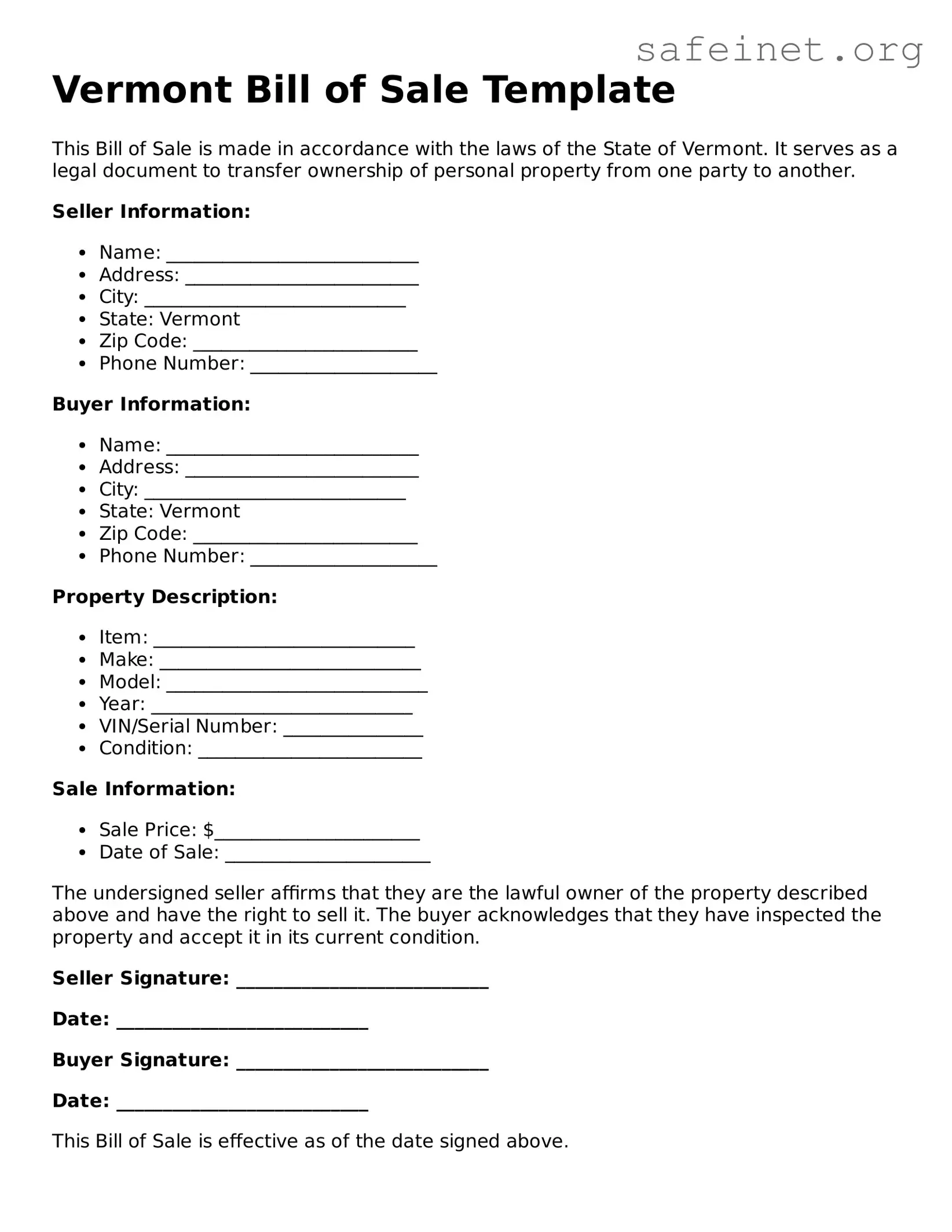
The Vermont Bill of Sale form serves as a crucial document in various transactions, particularly those involving the sale of personal property. This form not only provides a written record of the sale but also outlines essential details such as the names and addresses of both the buyer and seller, a clear description of the item being sold, and the sale price. Additionally, it often includes the date of the transaction, ensuring that both parties have a mutual understanding of when the sale took place. By documenting the transfer of ownership, the Bill of Sale protects both parties in the event of disputes or misunderstandings. Furthermore, in Vermont, this form can be particularly important for vehicles, as it may be required for registration purposes. Buyers can feel secure knowing they have proof of purchase, while sellers can confirm that they have relinquished ownership of the property. Overall, the Vermont Bill of Sale form is a practical tool that facilitates smooth transactions and fosters transparency between parties involved in the sale.
Vermont Bill of Sale Template
This Bill of Sale is made in accordance with the laws of the State of Vermont. It serves as a legal document to transfer ownership of personal property from one party to another.
Seller Information:
Buyer Information:
Property Description:
Sale Information:
The undersigned seller affirms that they are the lawful owner of the property described above and have the right to sell it. The buyer acknowledges that they have inspected the property and accept it in its current condition.
Seller Signature: ___________________________
Date: ___________________________
Buyer Signature: ___________________________
Date: ___________________________
This Bill of Sale is effective as of the date signed above.
| Fact Name | Description |
|---|---|
| Purpose | The Vermont Bill of Sale form serves as a legal document that records the transfer of ownership of personal property from one party to another. |
| Governing Law | This form is governed by Vermont Statutes, Title 9, Chapter 104, which outlines the requirements for sales and transfers of personal property. |
| Types of Property | The form can be used for various types of personal property, including vehicles, equipment, and other tangible items. |
| Notarization | While notarization is not mandatory, having the document notarized can provide additional legal protection and verification. |
| Buyer and Seller Information | Both the buyer's and seller's names, addresses, and contact information must be clearly stated in the form. |
| Sale Price | The agreed-upon sale price must be included, ensuring clarity on the transaction's financial terms. |
| Condition of Property | The form allows for a description of the property's condition, which can protect both parties in case of disputes. |
| Signatures | Both parties must sign the document to validate the sale, indicating their agreement to the terms outlined. |
| Record Keeping | It is advisable for both the buyer and seller to keep a copy of the Bill of Sale for their records, as it serves as proof of the transaction. |
Once you have the Vermont Bill of Sale form in hand, it's time to fill it out carefully. Ensure that all information is accurate and complete to facilitate a smooth transaction. Follow the steps outlined below to fill out the form correctly.
After completing the form, both parties should retain a copy for their records. This document serves as proof of the transaction and may be necessary for future reference.
What is a Vermont Bill of Sale form?
A Vermont Bill of Sale form is a legal document used to transfer ownership of personal property from one party to another. This form serves as proof of the transaction and includes important details such as the names of the buyer and seller, a description of the item being sold, the sale price, and the date of the transaction. Having this document helps protect both parties in the event of any disputes regarding ownership or payment.
When do I need a Bill of Sale in Vermont?
You need a Bill of Sale when you are buying or selling personal property, such as vehicles, boats, or equipment. It is especially important for transactions involving significant value. In Vermont, a Bill of Sale is often required for registering a vehicle with the Department of Motor Vehicles (DMV). Even if it’s not legally required for smaller transactions, having a Bill of Sale is a good practice to ensure clarity and accountability.
What information should be included in a Vermont Bill of Sale?
A complete Vermont Bill of Sale should include the following information: the full names and addresses of both the buyer and seller, a detailed description of the item being sold (including make, model, and VIN for vehicles), the sale price, and the date of the transaction. It’s also advisable to include any warranties or conditions of the sale. Both parties should sign the document to validate the transaction.
Is a Bill of Sale legally binding in Vermont?
Yes, a Bill of Sale is legally binding in Vermont as long as it is properly completed and signed by both parties. It serves as evidence of the transaction and can be used in court if necessary. However, it is important to ensure that the information is accurate and that both parties understand the terms of the sale. Always keep a copy of the Bill of Sale for your records.
Incomplete Information: Failing to provide all required details, such as the names and addresses of both the buyer and seller, can lead to complications later.
Incorrect Item Description: Not accurately describing the item being sold, including its make, model, year, and condition, can create disputes.
Omitting Signatures: Both parties must sign the document. Not obtaining the necessary signatures can render the Bill of Sale invalid.
Not Including the Date: Failing to date the Bill of Sale can lead to confusion regarding when the transaction took place.
Forgetting to Include Payment Details: Not specifying the purchase price or payment method can lead to misunderstandings about the transaction.
Neglecting to Keep Copies: Not making copies for both the buyer and seller can result in a lack of documentation if disputes arise later.
Ignoring State-Specific Requirements: Each state may have unique requirements for a Bill of Sale. Not adhering to Vermont's specific regulations can cause issues.
The Vermont Bill of Sale form is an essential document for individuals engaged in the sale or transfer of personal property. It serves to provide a clear record of the transaction and protects the rights of both the buyer and the seller. However, there are several other forms and documents that may accompany the Bill of Sale to ensure a smooth and legally sound transaction. Below is a list of these documents, each serving a specific purpose in the process.
Understanding these accompanying documents can greatly enhance the security and clarity of a transaction. Each form serves a unique role, and together they help establish a comprehensive record of the sale, protecting the interests of all parties involved. It is advisable to consider these documents carefully to ensure a smooth transaction process.
The Vermont Bill of Sale form is similar to a Vehicle Bill of Sale. This document is specifically used for the transfer of ownership of a vehicle from one party to another. Like the Vermont Bill of Sale, it includes essential details such as the names and addresses of the buyer and seller, a description of the vehicle, and the sale price. Both documents serve as proof of the transaction and protect the interests of both parties involved.
Another document that shares similarities with the Vermont Bill of Sale is the Personal Property Bill of Sale. This form is utilized for the sale of personal items, such as furniture or electronics. It includes relevant information about the item being sold, including its condition and any warranties. Just like the Vermont Bill of Sale, it serves as a legal record of the transaction, ensuring that both the buyer and seller have a clear understanding of the terms agreed upon.
The Equipment Bill of Sale is another document that functions similarly to the Vermont Bill of Sale. This form is used for the sale of heavy machinery or equipment. It outlines the specifics of the equipment, including its make, model, and serial number. Both documents provide a written record of the sale, which can be crucial for future reference, especially if any disputes arise regarding the transaction.
A Boat Bill of Sale is also comparable to the Vermont Bill of Sale. This document is specifically designed for the sale of watercraft. It includes details such as the boat's identification number, registration information, and the terms of the sale. Like the Vermont Bill of Sale, it serves to document the transfer of ownership and protect the rights of both the buyer and seller.
The Firearm Bill of Sale is another relevant document. This form is used for the transfer of ownership of firearms between individuals. It includes information about the firearm, such as its make, model, and serial number, along with the buyer's and seller's details. Both this document and the Vermont Bill of Sale act as proof of ownership transfer and can be important for legal compliance.
Lastly, the Real Estate Bill of Sale is similar in that it facilitates the transfer of ownership, but it pertains to real property rather than personal property. This document outlines the sale of real estate and includes details such as the property description, sale price, and terms of the agreement. Both documents serve to formalize the transaction and provide a record that can be referenced in the future.
When filling out the Vermont Bill of Sale form, it is important to follow certain guidelines to ensure the document is valid and effective. Here is a list of things you should and shouldn't do:
The Vermont Bill of Sale form is a crucial document for various transactions, particularly those involving the sale of personal property. However, several misconceptions surround its use and requirements. Below is a list of common misunderstandings:
Understanding these misconceptions can help individuals navigate the process of buying or selling personal property in Vermont more effectively.
The Vermont Bill of Sale form is an important document used in transactions involving the sale of personal property. Here are some key takeaways to consider when filling out and using this form:
Using the Vermont Bill of Sale form correctly can facilitate a smooth transaction and protect the interests of both the buyer and seller.