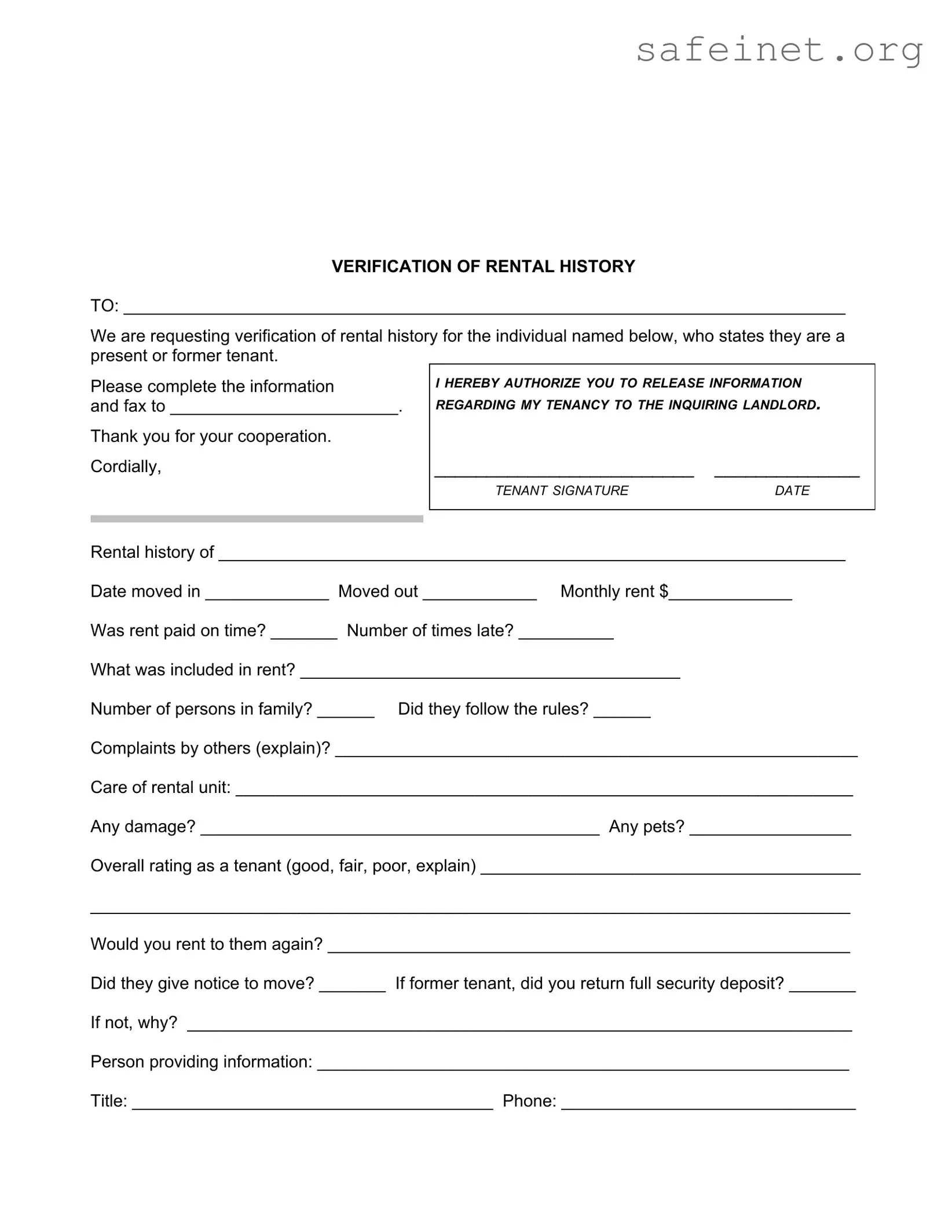
The Verification Rental form serves as a crucial tool for landlords and property managers to assess the rental history of potential tenants. This form is designed to collect comprehensive information regarding a tenant's past and present rental experiences. It includes essential details such as the tenant's move-in and move-out dates, monthly rent amount, and payment history. Additionally, the form prompts the verifier to provide insights into the tenant's adherence to rules, the condition of the rental unit, and any complaints from neighbors. Important questions about the number of occupants and whether pets were present help landlords gauge the suitability of the tenant for their property. Furthermore, the form addresses the tenant's overall rating and whether the landlord would consider renting to them again. By filling out this form, landlords can make informed decisions based on factual data, ultimately leading to better tenant-landlord relationships.
VERIFICATION OF RENTAL HISTORY
TO: ____________________________________________________________________________
We are requesting verification of rental history for the individual named below, who states they are a present or former tenant.
Please complete the information |
|
I HEREBY AUTHORIZE YOU TO RELEASE INFORMATION |
|
|
|
|
|
and fax to ________________________. |
|
REGARDING MY TENANCY TO THE INQUIRING LANDLORD. |
|
Thank you for your cooperation. |
|
|
|
Cordially, |
|
_________________________ |
______________ |
|
|
TENANT SIGNATURE |
DATE |
|
|
|
|
|
|
|
|
|
|
|
|
Rental history of __________________________________________________________________
Date moved in _____________ Moved out ____________ Monthly rent $_____________
Was rent paid on time? _______ Number of times late? __________
What was included in rent? ________________________________________
Number of persons in family? ______ Did they follow the rules? ______
Complaints by others (explain)? _______________________________________________________
Care of rental unit: _________________________________________________________________
Any damage? __________________________________________ Any pets? _________________
Overall rating as a tenant (good, fair, poor, explain) ________________________________________
________________________________________________________________________________
Would you rent to them again? _______________________________________________________
Did they give notice to move? _______ If former tenant, did you return full security deposit? _______
If not, why? ______________________________________________________________________
Person providing information: ________________________________________________________
Title: ______________________________________ Phone: _______________________________
| Fact Name | Description |
|---|---|
| Purpose | The Verification of Rental History form is used to confirm the rental history of a tenant. |
| Authorization | The tenant must authorize the release of their rental information to the inquiring landlord. |
| Information Required | Details such as move-in and move-out dates, monthly rent, and payment history are requested. |
| Payment History | The form asks whether rent was paid on time and how many times it was late. |
| Included Amenities | Landlords must specify what was included in the rent, such as utilities or maintenance services. |
| Family Size | The number of persons living in the rental unit is to be noted on the form. |
| Tenant Behavior | Questions about rule adherence and complaints from others are included to assess tenant behavior. |
| Unit Condition | The care of the rental unit and any damages must be reported by the landlord. |
| Security Deposit | If the tenant moved out, the form asks whether the full security deposit was returned. |
| State-Specific Laws | Different states may have specific laws governing the use of rental verification forms. |
After you have gathered all necessary information, you can begin filling out the Verification Rental form. This form helps to confirm the rental history of a tenant. Follow these steps to complete the form accurately.
What is the purpose of the Verification Rental form?
The Verification Rental form is designed to gather essential information about a tenant's rental history. It allows landlords to verify claims made by a prospective tenant regarding their past rental experiences. By completing this form, current or former landlords can provide insights into a tenant’s reliability, payment history, and adherence to rental agreements. This information is crucial for landlords to make informed decisions about potential tenants.
Who should fill out the Verification Rental form?
The form should be filled out by a current or former landlord of the tenant in question. This could be a property manager, a leasing agent, or the owner of the rental property. The person completing the form should have firsthand knowledge of the tenant’s rental history to provide accurate and relevant information. This helps ensure that the data shared is trustworthy and beneficial for the landlord seeking verification.
What kind of information is requested on the form?
The Verification Rental form requests a variety of information about the tenant’s rental history. This includes the dates of tenancy, monthly rent amount, payment punctuality, and any complaints from neighbors. It also asks about the care of the rental unit, any damages, and whether pets were kept on the property. Additionally, the form seeks an overall rating of the tenant and whether the landlord would rent to them again. All these details help paint a comprehensive picture of the tenant's behavior and reliability.
How is the information from the Verification Rental form used?
The information collected through the Verification Rental form is used by landlords to assess the suitability of a prospective tenant. By reviewing the rental history, landlords can identify patterns in behavior, such as timely payments and adherence to rules. This helps them determine if the applicant is likely to be a responsible tenant. Ultimately, the insights gained from this form contribute to making informed decisions that benefit both the landlord and the tenant.
What happens if a landlord refuses to complete the Verification Rental form?
If a landlord refuses to complete the Verification Rental form, it can pose a challenge for the prospective tenant. However, it is important to remember that not all landlords may feel comfortable providing this information for various reasons, including privacy concerns or company policies. In such cases, the tenant may need to seek alternative references, such as previous landlords or other individuals who can vouch for their reliability. Open communication with the landlord can also help clarify any concerns they may have about completing the form.
Incomplete Information: Failing to fill out all required fields can lead to delays in processing. Ensure every section is completed, especially names and dates.
Incorrect Dates: Providing wrong move-in or move-out dates can create confusion. Double-check these dates for accuracy.
Ambiguous Answers: Offering vague responses, such as “sometimes” for rent payment timeliness, can lead to misunderstandings. Be specific in your answers.
Missing Authorization Signature: Forgetting to sign the form can result in the landlord being unable to release information. Always include your signature.
Neglecting to Include Contact Information: Omitting your contact details can hinder follow-up questions. Ensure your phone number is clearly listed.
Ignoring the Rental History Section: Skipping details about the rental unit’s care or any damages can affect the overall assessment. Provide thorough explanations.
Not Specifying Pets: Failing to mention pets can lead to assumptions. Clearly indicate whether pets were present and any related rules.
Omitting Previous Landlord’s Information: Not providing the name or title of the person filling out the form can cause verification issues. Always include this information.
When renting a property, various forms and documents are essential for both landlords and tenants. These documents help facilitate the rental process, ensuring transparency and clarity for all parties involved. Below is a list of common forms used alongside the Verification Rental form, each serving a specific purpose.
Understanding these documents can greatly enhance the rental experience for both landlords and tenants. Each form plays a vital role in establishing a clear and respectful relationship, ensuring that all parties are aware of their rights and responsibilities. Being informed about these documents can lead to a smoother and more positive rental journey.
The Verification of Rental History form is similar to a Tenant Reference form. Both documents aim to gather information about a tenant's past rental experiences. A Tenant Reference form typically requests details about the tenant's reliability, payment history, and adherence to lease terms. Like the Verification of Rental History form, it seeks to confirm the tenant's claims and provide potential landlords with a clearer picture of the tenant's background.
Another document that shares similarities is the Rental Application form. This form collects comprehensive information from prospective tenants, including employment history, income, and personal references. While the Rental Application focuses on the tenant's current situation, the Verification of Rental History form emphasizes past rental behavior. Both are essential tools for landlords to assess the suitability of applicants.
The Lease Agreement serves as another comparable document. While primarily a contract outlining the terms of rental, it includes sections that detail tenant responsibilities and expectations. Both the Lease Agreement and the Verification of Rental History form address the tenant's conduct during their residency. They help ensure that landlords and tenants have a mutual understanding of obligations and standards.
The Eviction Record form is also related, as it provides information about any past eviction proceedings involving the tenant. This document can reveal critical insights into a tenant's rental history, similar to the Verification of Rental History form, which asks for details about complaints and rule adherence. Both forms aim to protect landlords from potential risks associated with unreliable tenants.
A Credit Report can be compared to the Verification of Rental History form in that it offers insights into a tenant's financial behavior. While the Verification form focuses on rental payments and tenant conduct, a Credit Report provides a broader view of an individual's financial responsibility. Both documents play a role in helping landlords make informed decisions about prospective tenants.
The Background Check form is another document that shares a purpose with the Verification of Rental History form. A Background Check examines a tenant's criminal history and other relevant factors, while the Verification form focuses on rental history. Both are used by landlords to assess the overall risk associated with renting to a particular individual.
The Security Deposit Receipt is similar in that it provides a record of the financial transaction between the landlord and tenant. While the Verification of Rental History form may inquire about the return of the security deposit, the Security Deposit Receipt serves as proof of payment. Both documents are essential in ensuring transparency in the landlord-tenant relationship.
The Move-In/Move-Out Inspection Checklist is another related document. This checklist details the condition of the rental unit at the beginning and end of a tenancy. Similar to the Verification of Rental History form, it assesses the tenant's care of the property and any potential damages. Both documents help landlords evaluate the tenant's responsibility and the overall condition of the rental unit.
Lastly, the Tenant Agreement Addendum can be compared to the Verification of Rental History form. An Addendum outlines specific terms or conditions added to the original lease. While the Verification form focuses on past behaviors, the Addendum may include clauses that reflect expectations for future conduct. Both documents are crucial for maintaining clarity and accountability in the rental relationship.
When filling out the Verification Rental form, it is important to follow certain guidelines to ensure accuracy and clarity. Here are ten things to consider:
By following these dos and don’ts, you can help ensure that the verification process runs smoothly and that the information provided is useful for evaluating the tenant's history.
Misconceptions about the Verification Rental form can lead to confusion. Here are ten common misunderstandings:
When using the Verification Rental form, it is essential to follow certain guidelines to ensure accurate and efficient processing. Here are some key takeaways:
By adhering to these points, the Verification Rental form can serve as an effective tool in evaluating a tenant's history and reliability.