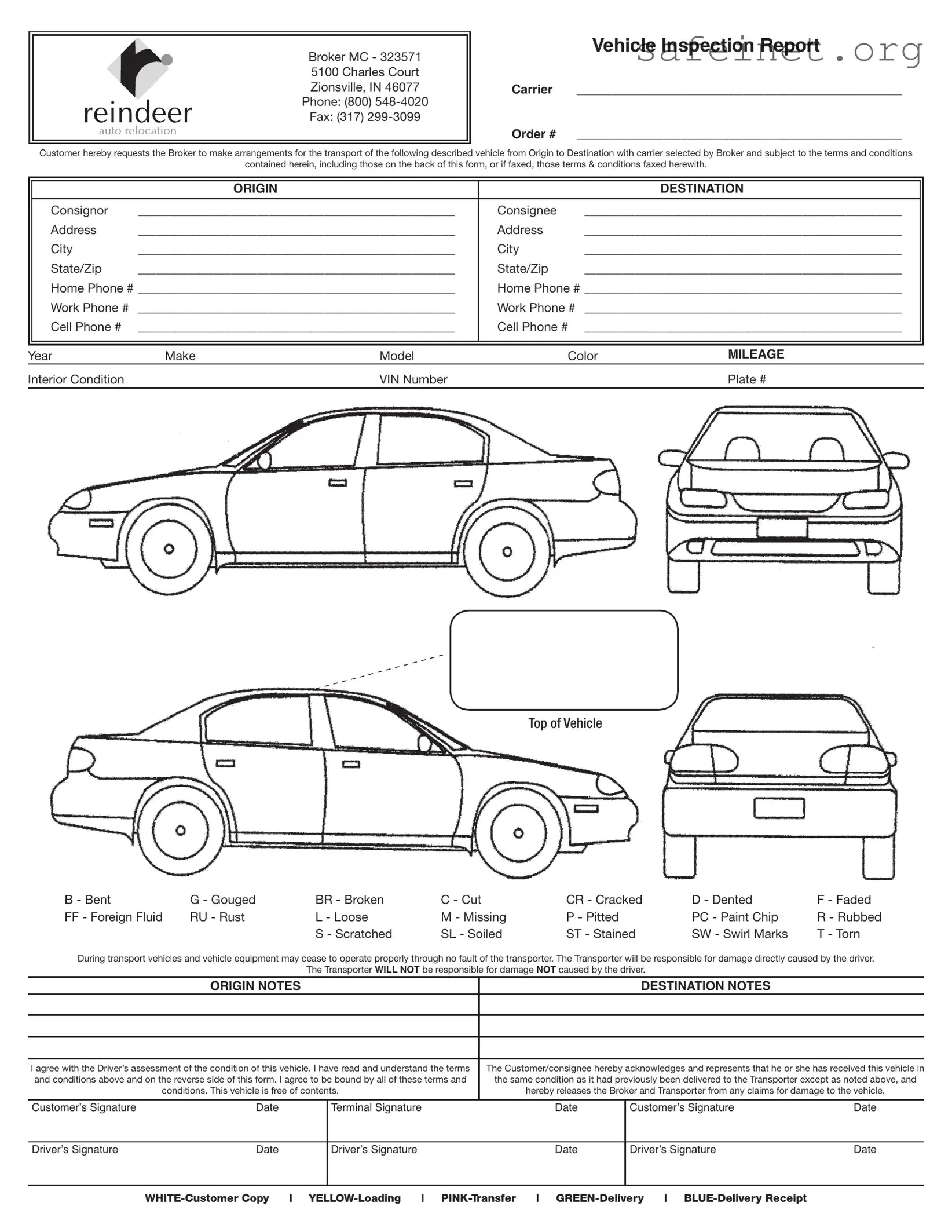
The Vehicle Inspection Sheet form serves as a crucial document in the transportation of vehicles, ensuring that all parties involved have a clear understanding of the vehicle's condition before and after transport. It begins by detailing essential information such as the broker's contact details, order number, and the origin and destination of the vehicle. The form requires the identification of both the consignor and consignee, along with their respective contact information. A comprehensive section outlines the vehicle's specifics, including year, make, model, color, and VIN number, as well as a checklist for assessing the vehicle's exterior condition. This checklist uses a series of codes to describe any damage or imperfections, providing a standardized way to communicate the vehicle's state. The form also includes important terms and conditions that outline the responsibilities of the broker and transporter, particularly regarding liability for damages that may occur during transport. Notably, it emphasizes the need for the customer to ensure the vehicle is roadworthy and properly serviced before transport. By signing the form, customers acknowledge their understanding of these terms and release the broker and transporter from claims related to the vehicle's condition, unless specified otherwise. Overall, the Vehicle Inspection Sheet is designed to protect both the customer and the transporter, facilitating a smoother transport process and minimizing disputes over vehicle condition.
Broker MC - 323571
5100 Charles Court
Zionsville, IN 46077
Phone: (800)
Fax: (317)
Vehicle Inspection Report
Carrier _______________________________________________
Order # _______________________________________________
Customer hereby requests the Broker to make arrangements for the transport of the following described vehicle from Origin to Destination with carrier selected by Broker and subject to the terms and conditions
contained herein, including those on the back of this form, or if faxed, those terms & conditions faxed herewith.
|
|
|
|
|
|
|
|
|
|
|
ORIGIN |
|
|
DESTINATION |
|
|
Consignor |
___________________________________________________ |
Consignee |
___________________________________________________ |
|
||
|
Address |
___________________________________________________ |
Address |
___________________________________________________ |
|
||
|
City |
___________________________________________________ |
City |
___________________________________________________ |
|
||
|
State/Zip |
___________________________________________________ |
State/Zip |
___________________________________________________ |
|
||
|
Home Phone # ___________________________________________________ |
Home Phone # ___________________________________________________ |
|
||||
|
Work Phone # |
___________________________________________________ |
Work Phone # |
___________________________________________________ |
|
||
|
Cell Phone # |
___________________________________________________ |
Cell Phone # |
___________________________________________________ |
|
||
|
|
|
|
|
|
|
|
|
|
|
|
|
|
|
|
Year |
Make |
Model |
Color |
MILEAGE |
|||
Interior Condition |
|
VIN Number |
|
|
Plate # |
||
Top of Vehicle
B - Bent |
G - Gouged |
BR - Broken |
C - Cut |
CR - Cracked |
D - Dented |
F - Faded |
FF - Foreign Fluid |
RU - Rust |
L - Loose |
M - Missing |
P - Pitted |
PC - Paint Chip |
R - Rubbed |
|
|
S - Scratched |
SL - Soiled |
ST - Stained |
SW - Swirl Marks |
T - Torn |
During transport vehicles and vehicle equipment may cease to operate properly through no fault of the transporter. The Transporter will be responsible for damage directly caused by the driver.
The Transporter WILL NOT be responsible for damage NOT caused by the driver.
ORIGIN NOTES |
DESTINATION NOTES |
I agree with the Driver’s assessment of the condition of this vehicle. I have read and understand the terms |
The Customer/consignee hereby acknowledges and represents that he or she has received this vehicle in |
||||
and conditions above and on the reverse side of this form. I agree to be bound by all of these terms and |
the same condition as it had previously been delivered to the Transporter except as noted above, and |
||||
|
conditions. This vehicle is free of contents. |
hereby releases the Broker and Transporter from any claims for damage to the vehicle. |
|||
|
|
|
|
|
|
Customer’s Signature |
Date |
Terminal Signature |
Date |
Customer’s Signature |
Date |
|
|
|
|
|
|
Driver’s Signature |
Date |
Driver’s Signature |
Date |
Driver’s Signature |
Date |
|
|
|
|
|
|

Reindeer Auto Relocation (Reindeer) General Terms & Conditions
1.Customer represents that he or she is the owner or the agent for the owner of the vehicle to be transported and by his or her signature on the other side hereof, hereby authorizes Reindeer to act as the “Broker” (as that term is defined under the Interstate Commerce Act) for arranging for the transportation of the vehicle from origin to destination as the shipper under a contract with the transporter. You will be known as the consignor and/or consignee. Customer authorizes Reindeer to enter into any contract or bill of lading with a Transporter for the purpose of providing the services requested by the customer, subject to the terms and conditions herein.
2.Customer understands and agrees that the broker is acting on behalf of the customer and that any transporter providing service requested of the broker shall be solely liable for any and all damages to the vehicle subject to the terms herein. Customer therefore agrees that upon Reindeer obtaining the transporter to provide such services, customer releases Reindeer from any further obligation herein and shall hold it harmless and blameless from any and all claims from damages.
3.Owner/customer is obligated to ensure that the vehicle being transported has been serviced properly and completely in anticipation of the elements involved in the transportation, that it is roadworthy, that it is filled with antifreeze and other necessary fluids, and that it is equipped with properly inflated tires. Customer shall be liable for any special charges incurred by transporter for loading, unloading, or storing the vehicle until delivery caused by any failure of owner/customer to comply with its obligations herein or for otherwise not having the vehicle prepared for transport.
4.Signing the transporter’s bill of lading/inspection report and/or the other side of this receipt at destination without noting any damage shall be evidence of satisfactory delivery of the vehicle free of any damage. Inspect your vehicle front and back, top to bottom, before signing your name when receiving your vehicle. Any undocumented but well substantiated damage must be reported to our office within 24 hours (1 business day) from the day of delivery.
5.Reindeer, as a broker, is not liable for damages caused by or occurring during the possession of the vehicle by the transporter. Broker shall arrange for the transporter to be liable for any damages occurring to the vehicle while in its possession subject to the specific exceptions noted below. *If damages occur during transport for which the transporter is liable, Reindeer will assist you in processing your claim against the transporter provided that you advise Reindeer within 24 hours of delivery of your vehicle at destination. Notwithstanding the foregoing at Reindeer’s sole discretion, Reindeer may settle any claim with the customer subject to the customer transferring all rights and title to any claims, which it might have, to Reindeer and granting Reindeer the sole right of subrogation against the transporter and/or other party causing said damages.
6.As a condition of recovery, any claim must be made to the transported with a copy to Reindeer Auto Relocation within nine (9) months after either the day you accept the delivery or if the vehicle is not delivered for any reason, then from the delivery date which had been scheduled. No Lawsuit may be brought after two years and one day from the date when notice is given in writing to the customer that the claim or any part of it has been disallowed.
*TRANSPORTER WILL NOT BE LIABLE FOR ANY OF THE FOLLOWING:
A. External damage to your vehicle caused by leaking fluids, either from your vehicle or any other vehicle on the transporter including but not limited to the cooling system, transmission fluid, battery acid or oil or for any industrial fall out.
B. Antennas that do not retract to less than three (3) inches above the hood or fender of the vehicle being transported or any accessories attached to the outside of the vehicle, such as but not limited to spoilers, luggage racks, etc.
C. Loss, theft, or damage to any items left in the vehicle. Since the interior of the vehicle is not inspected by the carrier, the carrier is not responsible for reported interior damage.
D. Any mechanical damage including but not limited to GPS systems, tape players, CD players, DVD players, radio or other sound or video reproducing, transmitting, or receiving equipment.
E. Mechanical functions involving and including but not limited to the engine, electrical system, exhaust assembly, alignment, suspension, brakes, transmission, frame, tires or tuning of vehicle being transported.
F. Damage which is undetectable due to vehicle’s dirty condition at the time of pickup.
G. Damage caused by road pebbles or other road objects such as but not limited to glass damage or paint chips.
H. Prior normal wear and road use such as but not limited to small scratches, paint chips, scuffs, abrasions, and parking or curb barrier damage. This also includes the under body of the vehicle.
| Fact Name | Details |
|---|---|
| Broker Information | The form is associated with Reindeer Auto Relocation, a broker with MC number 323571, located at 5100 Charles Court, Zionsville, IN 46077. |
| Purpose of the Form | This Vehicle Inspection Sheet is used to document the condition of a vehicle before transport, ensuring that both the customer and transporter have a clear understanding of its state. |
| Liability Clauses | The form outlines that the transporter is not liable for damages not caused by the driver, and the customer must report any damage within 24 hours of delivery. |
| Customer Responsibilities | Customers must ensure that their vehicle is roadworthy and properly serviced before transport, including having necessary fluids and inflated tires. |
| Governing Laws | This form is governed by the Interstate Commerce Act, which regulates the transportation of vehicles across state lines. |
Filling out the Vehicle Inspection Sheet form is a straightforward process that helps ensure all necessary details about the vehicle are accurately recorded. By following the steps below, you can complete the form efficiently and ensure that both the customer and the transporter are on the same page regarding the vehicle's condition.
Once the form is completed, it should be submitted as part of the vehicle transport process. This documentation will help clarify the vehicle's condition before and after transport, ensuring that all parties understand their responsibilities and any potential liabilities involved.
What is the purpose of the Vehicle Inspection Sheet form?
The Vehicle Inspection Sheet form serves as a critical document for the transport of vehicles. It allows customers to document the condition of their vehicle before and after transport. This ensures that both the customer and the transporter have a clear understanding of the vehicle's state, helping to prevent disputes over damages that may occur during transit.
How should I fill out the Vehicle Inspection Sheet?
When filling out the Vehicle Inspection Sheet, start by providing your personal information as the consignor and consignee, including names, addresses, and contact numbers. Next, accurately describe the vehicle by including details such as the year, make, model, color, and VIN number. Pay special attention to the condition of the vehicle, using the designated codes to indicate any existing damage or issues. This thorough documentation is essential for a smooth transport process.
What happens if I notice damage after the vehicle has been delivered?
If you discover damage after delivery, it is crucial to report it within 24 hours. Document any undocumented damage and contact the office immediately. The Vehicle Inspection Sheet serves as evidence of the vehicle's condition at the time of delivery, so having it on hand will help support your claim. Timely communication is key to resolving any issues effectively.
Am I responsible for preparing my vehicle for transport?
Yes, as the owner or customer, you are responsible for ensuring that your vehicle is roadworthy and properly serviced before transport. This includes checking fluid levels, ensuring tires are inflated, and that the vehicle is free of personal items. Failure to prepare your vehicle may result in additional charges or complications during the transport process.
What should I do if the transporter claims damage that I believe was not caused by them?
If a transporter claims damage that you believe was not their fault, it is important to review the Vehicle Inspection Sheet and any other documentation carefully. Keep all records and communicate with the broker to discuss your concerns. The broker may assist you in processing your claim against the transporter if necessary, provided you notify them within the required timeframe.
Are there any limitations on what the transporter is liable for?
Yes, the transporter has specific limitations on liability. They are not responsible for damages caused by leaking fluids, damage to non-retractable antennas, or any personal items left in the vehicle. Additionally, they are not liable for mechanical issues or damage that is undetectable due to the vehicle's condition at the time of pickup. Understanding these limitations can help set realistic expectations.
What should I do if I have a claim against the transporter?
If you have a claim against the transporter, you must file it within nine months of delivery. This includes sending a copy of the claim to the broker. Make sure to keep all relevant documentation, including the Vehicle Inspection Sheet, as it will support your case. Remember, any legal action must be initiated within two years and one day from the date you were notified that your claim was disallowed.
Inadequate Vehicle Description: Failing to provide complete details about the vehicle, such as the make, model, year, and VIN number, can lead to confusion and issues during transport. Ensure all fields are filled out accurately to avoid potential disputes.
Ignoring Condition Assessment: Not properly assessing the vehicle's condition before signing the form can result in unforeseen liabilities. Take time to inspect the vehicle thoroughly and note any existing damages to protect yourself from future claims.
Missing Signatures: Omitting necessary signatures from the customer, driver, or terminal staff can invalidate the inspection report. Ensure that all required parties have signed the document before proceeding.
Neglecting to Read Terms and Conditions: Overlooking the terms and conditions on the back of the form can lead to misunderstandings about liability and responsibilities. It is crucial to read and understand these terms to avoid surprises later.
Failure to Document Notes: Not taking the time to write down any specific notes regarding the vehicle's condition or transport instructions can create complications. Always include any pertinent information that may assist in the transportation process.
When transporting a vehicle, several forms and documents are essential to ensure a smooth process. Each of these documents serves a specific purpose and helps clarify responsibilities and conditions for all parties involved.
Having these documents in place can help avoid misunderstandings and protect the interests of everyone involved in the vehicle transport process. Proper documentation ensures clarity and accountability, making for a more efficient experience.
The Bill of Lading is a critical document in the transportation industry, similar to the Vehicle Inspection Sheet. It serves as a receipt for the goods being transported and outlines the terms of the shipment. Just like the Vehicle Inspection Sheet, it includes details about the consignor, consignee, and the condition of the vehicle at the time of pickup. Both documents require signatures from involved parties to acknowledge receipt and condition, ensuring that all parties are aware of the vehicle's state before and after transport.
The Freight Bill is another document that shares similarities with the Vehicle Inspection Sheet. It acts as an invoice for the transportation services provided. Like the Vehicle Inspection Sheet, it includes essential information about the origin and destination of the vehicle, as well as details about the vehicle itself. Both documents serve to confirm the agreement between the broker and the customer, ensuring clarity on the services rendered and the condition of the vehicle throughout the process.
The Condition Report is often used in conjunction with vehicle transport, making it similar to the Vehicle Inspection Sheet. This document details the state of the vehicle before transport, noting any existing damage or issues. Just as the Vehicle Inspection Sheet does, the Condition Report requires signatures from both the customer and the transporter to validate the assessment of the vehicle's condition. This helps protect both parties in case of disputes regarding damage during transport.
The Delivery Receipt is another document that functions similarly to the Vehicle Inspection Sheet. It confirms that the vehicle has been delivered to the customer and outlines any discrepancies noted at the time of delivery. Both documents require the customer to acknowledge the condition of the vehicle upon receipt, ensuring that any issues are documented immediately. This helps prevent misunderstandings about the vehicle's condition after transport.
The Transport Agreement is a formal contract that outlines the terms and conditions of the vehicle transport service. Like the Vehicle Inspection Sheet, it includes information about the parties involved and the vehicle being transported. Both documents serve to protect the interests of the broker and the customer, ensuring that all parties are aware of their responsibilities and liabilities during the transport process.
The Insurance Certificate is another important document related to vehicle transport, akin to the Vehicle Inspection Sheet. It provides proof of insurance coverage for the vehicle during transport. While the Vehicle Inspection Sheet details the condition of the vehicle, the Insurance Certificate ensures that there is financial protection in case of damage. Both documents work together to offer peace of mind to the customer throughout the transport process.
The Release of Liability form is similar to the Vehicle Inspection Sheet in that it outlines the responsibilities of each party involved in the transport. It releases the broker and transporter from claims related to damage not caused by them. Just like the Vehicle Inspection Sheet, it requires signatures from both the customer and the transporter, reinforcing the understanding that the customer accepts the vehicle's condition as noted before transport.
The Pre-Transport Checklist is a document that shares similarities with the Vehicle Inspection Sheet by ensuring that the vehicle is ready for transport. It includes a list of items to verify, such as fluid levels and tire conditions. Both documents emphasize the importance of the vehicle's condition before transport, helping to prevent issues that may arise during the process. This proactive approach benefits both the customer and the transporter.
Finally, the Vehicle Release Form is akin to the Vehicle Inspection Sheet as it authorizes the release of the vehicle from the transporter to the customer. It includes details about the vehicle and requires signatures from both parties to confirm that the vehicle is being returned in the same condition as it was received. This document, like the Vehicle Inspection Sheet, plays a crucial role in protecting the interests of both the customer and the transporter during the vehicle transport process.
When filling out the Vehicle Inspection Sheet form, it is essential to approach the task with care and attention to detail. The following list outlines key actions to take and avoid during this process:
By following these guidelines, you can help ensure a smooth process and safeguard your vehicle's condition during transport.
Here are some common misconceptions about the Vehicle Inspection Sheet form:
In reality, the form outlines that the transporter is only responsible for damage caused directly by the driver. Other factors may lead to damage that the transporter is not liable for.
While it is essential to document visible damage, any undocumented damage must be reported within 24 hours of delivery. This allows for a timely response to claims.
The broker, in this case, acts on behalf of the customer but is not liable for damages. The transporter is the one who holds responsibility for any damage that occurs while in possession of the vehicle.
Customers must ensure that their vehicle is roadworthy and has been properly serviced. Failure to do so may result in additional charges.
Claims must be filed within nine months of delivery. This timeframe is crucial for processing any damage claims effectively.
This form is also important for the customer. It serves as a record of the vehicle's condition at the time of pickup and delivery, protecting both parties.
The inspection typically does not include the interior. Therefore, any damage to the interior may not be the transporter’s responsibility, as it is not inspected.
When filling out and using the Vehicle Inspection Sheet form, there are several important points to keep in mind to ensure a smooth process and protect your interests. Here are the key takeaways:
By following these guidelines, you can navigate the vehicle transport process more effectively and protect your interests throughout. Always remember that clear communication and thorough documentation are your best tools in this endeavor.