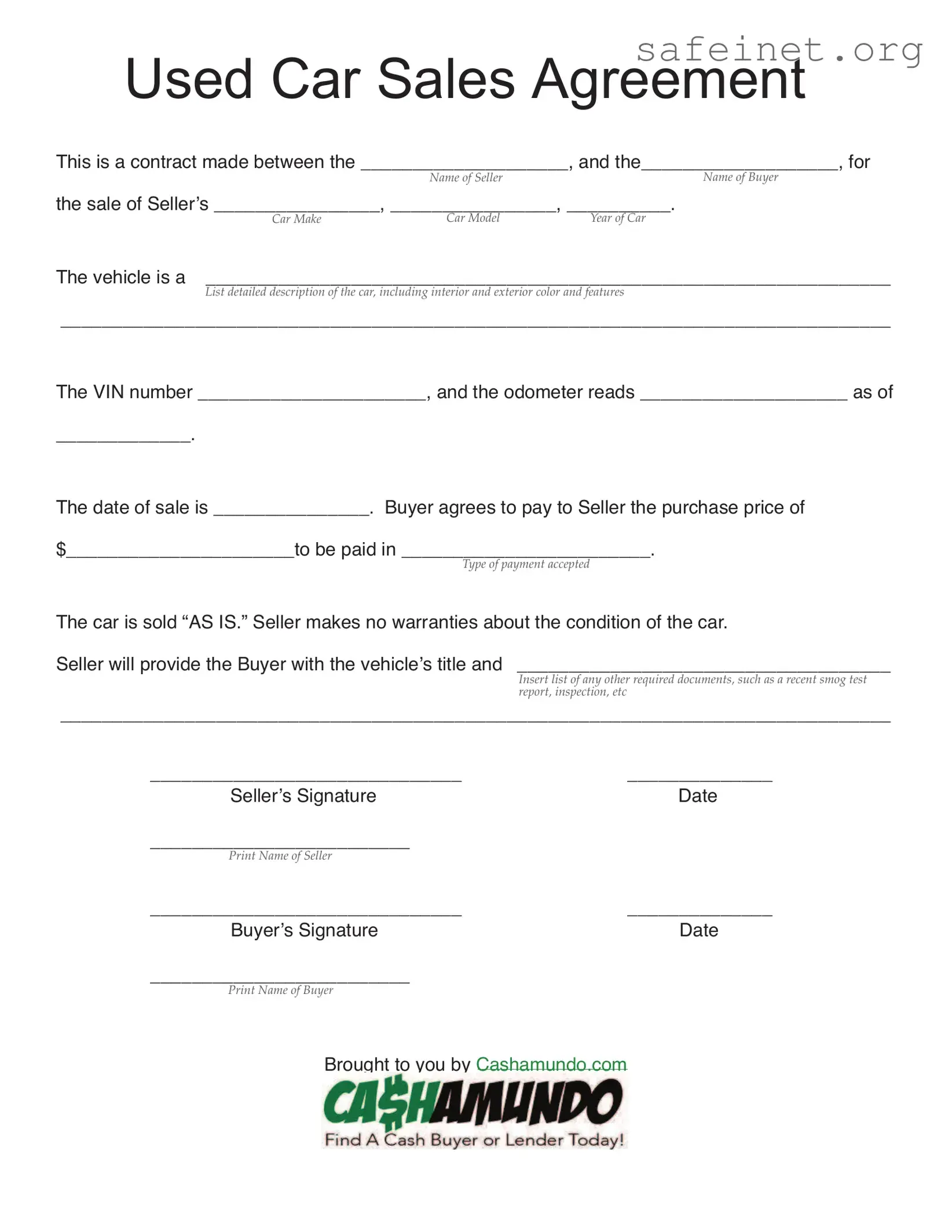
When considering the purchase of a used car, it is crucial to understand the importance of a Used Car Agreement form. This document serves as a formal contract between the seller and the buyer, outlining the specific details of the transaction. It includes essential information such as the names of both parties involved, the make, model, and year of the vehicle, as well as a detailed description that covers both the interior and exterior features. The form also specifies the vehicle identification number (VIN) and the current odometer reading, providing a clear record of the car's history. Additionally, the date of sale and the agreed-upon purchase price are documented, along with the payment method to be used. Importantly, the agreement states that the car is sold “AS IS,” meaning the seller does not offer any warranties regarding the vehicle's condition. To ensure a smooth transaction, the seller is responsible for providing the buyer with the vehicle's title and any other necessary documents, such as a recent smog test report or inspection certificate. This form not only protects the interests of both parties but also helps facilitate a transparent exchange of ownership.

Used Car Sales Agreement
This is a contract made between the ____________________, and the___________________, for
the sale of Seller’s ________________, ________________, __________.
Car MakeCar ModelYear of Car
The vehicle is a __________________________________________________________________
List detailed description of the car, including interior and exterior color and features
________________________________________________________________________________
The VIN number ______________________, and the odometer reads ____________________ as of
_____________.
The date of sale is _______________. Buyer agrees to pay to Seller the purchase price of
$______________________to be paid in ________________________.
Type of payment accepted
The car is sold “AS IS.” Seller makes no warranties about the condition of the car.
Seller will provide the Buyer with the vehicle’s title and ____________________________________
Insert list of any other required documents, such as a recent smog test report, inspection, etc
________________________________________________________________________________
______________________________ |
______________ |
Seller’s Signature |
Date |
_________________________ |
|
Print Name of Seller |
|
______________________________ |
______________ |
Buyer’s Signature |
Date |
_________________________ |
|
Print Name of Buyer |
|
Brought to you by Cashamundo.com
| Fact Name | Details |
|---|---|
| Parties Involved | The agreement is made between the seller and the buyer, both of whom must be clearly identified. |
| Vehicle Information | Details about the car must be included, such as make, model, and year. |
| VIN and Odometer | The Vehicle Identification Number (VIN) and the current odometer reading must be documented. |
| AS IS Clause | The car is sold “AS IS,” meaning the seller does not guarantee its condition. |
| Payment Terms | The agreement specifies the purchase price and the method of payment accepted. |
| Additional Documents | Any required documents, such as a title or inspection report, must be listed in the agreement. |
| Signatures Required | Both the seller and buyer must sign and date the agreement to make it legally binding. |
| Governing Law | State-specific laws govern the agreement, which may vary by jurisdiction. |
Filling out the Used Car Agreement form is an important step in completing the sale of a vehicle. This form ensures that both the seller and buyer have a clear understanding of the terms of the sale. Follow the steps below to accurately fill out the form and facilitate a smooth transaction.
Once the form is completed, both parties should retain a copy for their records. This documentation will serve as proof of the transaction and the agreed-upon terms.
What is a Used Car Agreement form?
A Used Car Agreement form is a legal document that outlines the terms and conditions of the sale of a used vehicle. It includes details about the seller, buyer, vehicle description, payment terms, and any other necessary information related to the sale.
Who are the parties involved in the agreement?
The parties involved in the agreement are the seller, who is selling the car, and the buyer, who is purchasing the car. Both parties need to provide their names and signatures to make the agreement valid.
What details about the vehicle are included in the form?
The form requires specific details about the vehicle, such as the make, model, year, VIN (Vehicle Identification Number), and the current odometer reading. Additionally, a detailed description of the car's features and colors is also included.
What does "AS IS" mean in the context of the agreement?
When a car is sold "AS IS," it means that the seller is not providing any warranties about the car's condition. The buyer accepts the vehicle in its current state, and any future repairs or issues are the buyer's responsibility.
What payment methods are accepted?
The form allows the seller to specify the type of payment accepted, such as cash, check, or bank transfer. It is important for the buyer to understand the payment method before finalizing the sale.
What documents will the seller provide to the buyer?
The seller must provide the buyer with the vehicle's title, which proves ownership. Additionally, any other required documents, such as a recent smog test report or inspection certificate, should be listed in the agreement.
When does the sale take place?
The date of sale is an important part of the agreement. This date indicates when the transaction is finalized and ownership of the vehicle is transferred from the seller to the buyer.
What happens if there are issues with the car after the sale?
Since the car is sold "AS IS," the seller is not responsible for any problems that arise after the sale. Buyers should thoroughly inspect the vehicle and consider having a mechanic check it before completing the purchase.
Do both parties need to sign the agreement?
Yes, both the seller and the buyer must sign the agreement for it to be legally binding. Their signatures confirm that they agree to the terms outlined in the document.
Where can I find a Used Car Agreement form?
You can find a Used Car Agreement form online through various legal document websites or templates. It’s important to ensure that the form you use complies with your state’s laws and regulations regarding vehicle sales.
Incomplete Seller and Buyer Information: Failing to fill in the names of both the seller and buyer can lead to confusion. Ensure that both parties' names are clearly stated at the beginning of the agreement.
Missing Vehicle Details: Omitting important information about the vehicle, such as the make, model, and year, can cause issues. All fields related to the vehicle's description should be filled out completely.
Incorrect VIN Number: Entering an incorrect Vehicle Identification Number (VIN) can result in legal complications. Double-check the VIN to confirm it matches the vehicle being sold.
Payment Terms Not Specified: Not clearly stating the payment method or terms can lead to misunderstandings. Specify how the payment will be made and whether it is in cash, check, or another form.
Neglecting to Include Required Documents: Failing to list all necessary documents, such as the title or inspection report, may delay the sale. Make sure to include any additional documents required for the transaction.
When completing a Used Car Agreement form, several other documents may also be necessary to ensure a smooth transaction. These documents help clarify the sale and protect both the buyer and seller. Below is a list of commonly used forms that complement the Used Car Agreement.
Having these documents ready can facilitate a smoother transaction and ensure that both parties are well-informed. Always check local regulations, as requirements may vary by state.
The Bill of Sale is a document that serves as proof of the transfer of ownership from the seller to the buyer. Similar to the Used Car Agreement, it outlines key details such as the names of both parties, a description of the vehicle, and the sale price. The Bill of Sale typically includes the vehicle identification number (VIN) and may also specify any conditions of the sale. While the Used Car Agreement focuses more on the terms of the sale, the Bill of Sale acts as a formal record that can be used for registration and title transfer purposes.
The Purchase Agreement is another document that closely resembles the Used Car Agreement. This document details the terms and conditions of a sale, including the purchase price, payment method, and any contingencies that may apply. It serves to protect both the buyer and seller by clearly outlining their rights and responsibilities. Like the Used Car Agreement, the Purchase Agreement can include clauses about the condition of the vehicle, but it may also extend to other items being sold, making it more versatile in various transaction contexts.
The Vehicle Title is a legal document that proves ownership of a vehicle. While it is not a sales contract like the Used Car Agreement, it is often required to complete the sale process. The title contains essential information such as the VIN, make, model, and year of the vehicle. When the Used Car Agreement is executed, the seller typically provides the buyer with the vehicle title, which is crucial for the buyer to register the vehicle in their name. Thus, both documents work together to facilitate the transfer of ownership.
The Odometer Disclosure Statement is a document that provides information about the vehicle's mileage at the time of sale. This statement is often required by law to prevent odometer fraud. Like the Used Car Agreement, it includes details about the vehicle and must be signed by both the buyer and the seller. This document serves to protect the buyer by ensuring they are aware of the vehicle's mileage, which can affect its value and condition. The odometer reading is also mentioned in the Used Car Agreement, reinforcing the importance of accurate disclosure.
The Warranty Deed is a document that conveys real property ownership but shares similarities with the Used Car Agreement in terms of outlining the transfer of ownership. Both documents require the signatures of the parties involved and include descriptions of the property being transferred. While a Warranty Deed pertains to real estate, the principles of ownership transfer and the necessity for clear terms are common to both types of agreements. Each document aims to protect the rights of the parties and ensure a smooth transaction.
The Lease Agreement is a contract that outlines the terms under which one party agrees to rent property from another party. Although it pertains to rental rather than sale, it shares structural similarities with the Used Car Agreement. Both documents specify the parties involved, the item being rented or sold, and the financial terms of the arrangement. The Lease Agreement may include conditions regarding maintenance and repairs, much like the "AS IS" clause in the Used Car Agreement, which indicates that the buyer accepts the vehicle's current condition without warranties.
The Sales Contract is a broad term that encompasses various agreements for the sale of goods or services. It shares many features with the Used Car Agreement, including the identification of the parties, a description of the item being sold, and the terms of payment. Sales Contracts can apply to a wide range of transactions, but when it comes to used cars, they often incorporate specific clauses about the vehicle's condition and any warranties. This document serves to protect both parties by ensuring that the terms of the sale are clearly defined and agreed upon.
When filling out the Used Car Agreement form, it’s important to ensure accuracy and clarity. Here are some essential do's and don'ts:
Many people have misunderstandings about the Used Car Agreement form. Here are six common misconceptions:
When filling out and using the Used Car Agreement form, keep these key takeaways in mind: