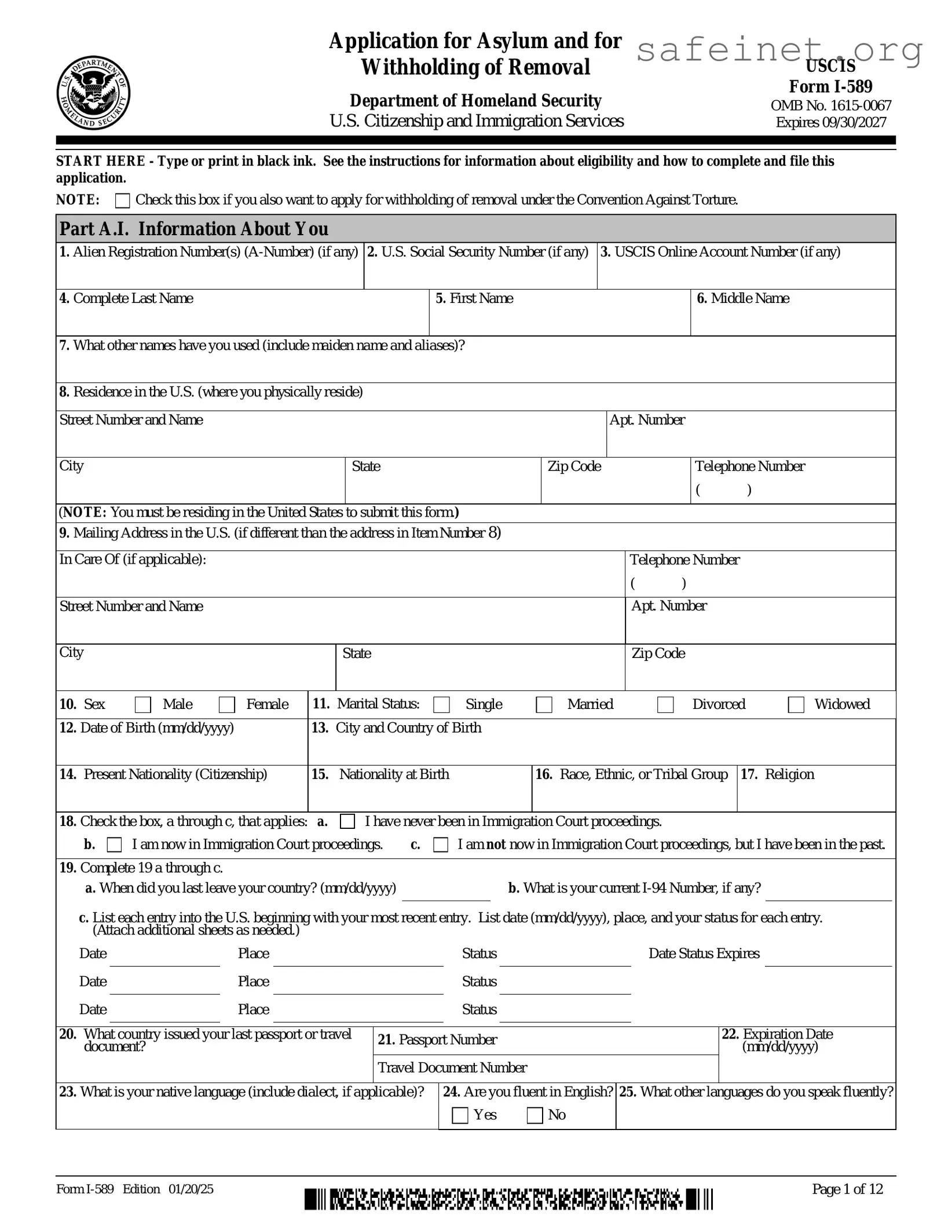
The USCIS I-589 form plays a crucial role in the asylum application process for individuals seeking protection in the United States. This form is specifically designed for those who fear persecution in their home country due to factors such as race, religion, nationality, political opinion, or membership in a particular social group. By submitting the I-589, applicants formally express their intent to seek asylum and provide detailed information about their experiences and fears. The form requires personal data, including biographical information and a thorough account of the circumstances that led to the asylum claim. Additionally, it serves as a means for applicants to request withholding of removal and protection under the Convention Against Torture. Completing the I-589 accurately and thoroughly is essential, as it can significantly impact the outcome of the application process. Understanding the various sections of the form and the necessary supporting documentation is vital for anyone embarking on this complex journey toward safety and security in the U.S.
|
Application for Asylum and for |
|
|
|
Withholding of Removal |
USCIS |
|
|
Department of Homeland Security |
Form |
|
|
OMB No. |
|
|
|
U.S. Citizenship and Immigration Services |
Expires 09/30/2027 |
|
|
|
|
|
|
|
|
|
START HERE - Type or print in black ink. See the instructions for information about eligibility and how to complete and file this application.
NOTE: |
Check this box if you also want to apply for withholding of removal under the Convention Against Torture. |
Part A.I. Information About You
1. |
Alien Registration Number(s) |
2. U.S. Social Security Number (if any) 3. USCIS Online Account Number (if any) |
|
4. |
Complete Last Name |
5. First Name |
6. Middle Name |
7.What other names have you used (include maiden name and aliases)?
8.Residence in the U.S. (where you physically reside)
Street Number and Name |
|
|
Apt. Number |
|
|||
|
|
|
|
|
|
||
City |
State |
Zip Code |
|
|
Telephone Number |
||
|
|
|
|
|
|
( |
) |
|
|
|
|
|
|
|
|
(NOTE: You must be residing in the United States to submit this form.) |
|
|
|
|
|
|
|
9. Mailing Address in the U.S. (if different than the address in Item Number 8) |
|
|
|
|
|
|
|
|
|
|
|
|
|
||
In Care Of (if applicable): |
|
|
|
Telephone Number |
|
||
|
|
|
|
( |
) |
|
|
|
|
|
|
|
|
||
Street Number and Name |
|
|
|
Apt. Number |
|
||
City
State
Zip Code
10. |
Sex |
|
Male |
Female |
11. |
Marital Status: |
|
|
Single |
|
|
Married |
|
Divorced |
|
|
Widowed |
|||||
|
|
|
|
|
||||||||||||||||||
|
|
|
|
|
|
|
|
|
|
|
|
|
|
|
|
|
|
|
|
|
|
|
12. |
Date of Birth (mm/dd/yyyy) |
|
13. |
City and Country of Birth |
|
|
|
|
|
|
|
|||||||||||
|
|
|
|
|
|
|
|
|
|
|
|
|
||||||||||
14. |
Present Nationality (Citizenship) |
15. |
Nationality at Birth |
|
16. |
Race, Ethnic, or Tribal Group |
17. |
Religion |
||||||||||||||
|
|
|
|
|
|
|
|
|
|
|
|
|
|
|||||||||
18. |
Check the box, a through c, that applies: |
a. |
|
|
I have never been in Immigration Court proceedings. |
|
|
|
|
|
||||||||||||
|
b. |
|
I am now in Immigration Court proceedings. |
c. |
|
|
I am not now in Immigration Court proceedings, but I have been in the past. |
|||||||||||||||
|
|
|
|
|||||||||||||||||||
19.Complete 19 a through c.
a. When did you last leave your country? (mm/dd/yyyy)b. What is your current
c. List each entry into the U.S. beginning with your most recent entry. List date (mm/dd/yyyy), place, and your status for each entry. |
||||||||||||
(Attach additional sheets as needed.) |
|
|
|
|
|
|
|
|
||||
Date |
Place |
|
|
Status |
Date Status Expires |
|||||||
|
|
|
|
|
|
|
|
|
|
|
|
|
Date |
Place |
|
|
Status |
|
|
|
|
||||
|
|
|
|
|
|
|
|
|
|
|
|
|
Date |
Place |
|
|
Status |
|
|
|
|
||||
|
|
|
|
|
|
|
|
|
|
|
|
|
|
|
|
|
|
|
|
|
|
||||
20. What country issued your last passport or travel |
21. |
Passport Number |
|
22. Expiration Date |
||||||||
document? |
|
|
|
|
(mm/dd/yyyy) |
|||||||
|
|
|
|
|
|
|
|
|||||
|
|
|
|
|
Travel Document Number |
|
|
|
|
|||
23.What is your native language (include dialect, if applicable)? 24. Are you fluent in English? 25. What other languages do you speak fluently?
Yes No
Form |
Page 1 of 12 |

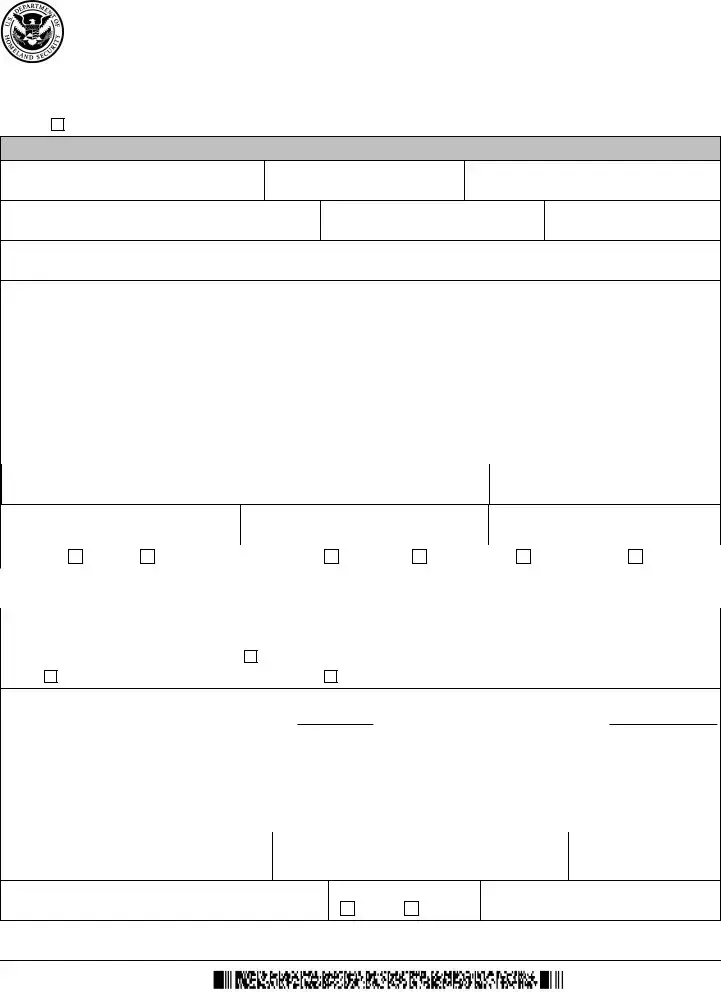
Part A.II. Information About Your Spouse and Children
|
For EOIR use only. |
|
|
|
For |
Action: |
|
|
|
|
Decision: |
|
|
|
||||||||
|
|
|
|
|
USCIS |
Interview Date: |
|
|
|
|
|
Approval Date: |
|
|
|
|
||||||
|
|
|
|
use only. Asylum Officer ID No.: |
|
|
|
|
Denial Date: |
|
|
|
|
|||||||||
|
|
|
|
|
|
|
|
|
|
|
|
|
|
Referral Date: |
|
|
|
|||||
|
|
|
|
|
|
|
|
|
|
|
|
|
|
|
|
|
|
|
|
|
|
|
Your spouse |
I am not married. (Skip to Your Children below.) |
|
|
|
|
|
|
|
|
|
||||||||||||
|
|
|
|
|
|
|
|
|
|
|
|
|
|
|
||||||||
1. |
Alien Registration Number |
|
2. |
|
Passport/ID Card Number |
3. |
Date of Birth (mm/dd/yyyy) |
4. U.S. Social Security Number |
||||||||||||||
|
(if any) |
|
|
|
|
(if any) |
|
|
|
|
|
|
|
|
(if any) |
|
|
|
||||
|
|
|
|
|
|
|
|
|
|
|
|
|
|
|
|
|
|
|
|
|
|
|
5. |
Complete Last Name |
|
|
|
6. |
|
First Name |
7. |
Middle Name |
|
8. Other names used (include |
|||||||||||
|
|
|
|
|
|
|
|
|
|
|
|
|
|
|
|
maiden name and aliases) |
||||||
|
|
|
|
|
|
|
|
|
|
|
|
|
|
|
|
|
|
|
|
|
|
|
9. |
Date of Marriage (mm/dd/yyyy) |
|
|
|
10. |
Place of Marriage |
|
|
11. City and Country of Birth |
|
|
|
||||||||||
|
|
|
|
|
|
|
|
|
|
|
|
|
|
|
|
|
|
|
|
|||
12. Nationality (Citizenship) |
|
|
|
|
|
|
13. Race, Ethnic, or Tribal Group |
14. Sex |
|
|
|
|||||||||||
|
|
|
|
|
|
|
|
|
|
|
|
|
|
|
|
|
Male |
|
Female |
|||
|
|
|
|
|
|
|
|
|
|
|
|
|
|
|
|
|
|
|||||
|
|
|
|
|
|
|
|
|
|
|
|
|
|
|
|
|
|
|
|
|
|
|
15.Is this person in the U.S.?
|
Yes (Complete Blocks 16 to 24.) |
No (Specify location): |
|
|
|
|
|
|
|
|||
|
|
|
|
|
|
|
|
|
|
|
||
|
|
|
|
|
|
|
|
|
|
|||
16. |
Place of last entry into the |
17. |
Date of last entry into the |
18. |
19. Status when last admitted |
|
||||||
|
U.S. |
|
U.S. |
(mm/dd/yyyy) |
|
|
|
|
|
(Visa type, if any) |
|
|
|
|
|
|
|
|
|
|
|
|
|||
20. |
What is your spouse's |
21. |
What is the expiration date of his/her |
22. Is your spouse in Immigration |
23. If previously in the U.S., date of |
|
||||||
|
current status? |
|
authorized stay, if any? (mm/dd/yyyy) |
|
Court proceedings? |
previous arrival (mm/dd/yyyy) |
|
|||||
|
|
|
|
|
|
|
|
Yes |
|
No |
|
|
|
|
|
|
|
|
|
|
|
|
|
||
24.If in the U.S., is your spouse to be included in this application? (Check the appropriate box.) Yes
No
Your Children. List all of your children, regardless of age, location, or marital status.
I do not have any children. (Skip to Part A.III., Information about your background.)
I have children. Total number of children:.
(NOTE: Use Form
1. Alien Registration Number |
2. |
Passport/ID Card Number |
|
3. Marital Status (Married, Single, |
4. |
|
U.S. Social Security Number |
|||||||||||||
(if any) |
|
|
(if any) |
|
Divorced, Widowed) |
|
(if any) |
|
|
|
||||||||||
|
|
|
|
|
|
|
|
|
|
|
|
|
|
|
|
|
|
|
||
5. Complete Last Name |
|
6. |
First Name |
|
7. Middle Name |
|
|
|
|
8. |
|
Date of Birth (mm/dd/yyyy) |
||||||||
|
|
|
|
|
|
|
|
|
|
|
|
|
|
|
|
|
|
|
||
9. City and Country of Birth |
|
10. Nationality (Citizenship) |
|
11. Race, Ethnic, or Tribal Group |
12. Sex |
|
|
|
||||||||||||
|
|
|
|
|
|
|
|
|
|
|
|
|
|
|
|
|
Male |
|
Female |
|
|
|
|
|
|
|
|
|
|
|
|
|
|
|
|
|
|
|
|||
|
|
|
|
|
|
|
|
|
|
|
|
|
|
|
|
|
|
|
|
|
13. Is this child in the U.S. ? |
|
|
Yes (Complete Blocks 14 to 21.) |
|
No (Specify location): |
|
|
|
|
|
|
|
||||||||
|
|
|
|
|
|
|
|
|
||||||||||||
|
|
|
|
|
|
|
|
|
|
|
|
|
|
|
|
|
|
|
|
|
|
|
|
|
|
|
|
|
|
|
|
|
|
|
|
|
|
|
|
|
|
14. Place of last entry into the U.S. |
|
15. Date of last entry into the |
|
16. |
17. Status when last admitted |
|||||||||||||||
|
|
|
|
|
U.S. (mm/dd/yyyy) |
|
|
|
|
|
|
|
|
(Visa type, if any) |
||||||
|
|
|
|
|
|
|
|
|
|
|
|
|
|
|
|
|
||||
18. What is your child's current status? |
|
|
19. What is the expiration |
date of his/her |
20. Is your child in |
Immigration Court proceedings? |
||||||||||||||
|
|
|
|
|
|
authorized stay, if any? (mm/dd/yyyy) |
|
|
|
Yes |
|
|
|
No |
|
|
|
|||
|
|
|
|
|
|
|
|
|
|
|
|
|
|
|
||||||
|
|
|
|
|
|
|
|
|
|
|
|
|
|
|
|
|
|
|
||
|
|
|
|
|
|
|
|
|
|
|
|
|
|
|
|
|
|
|
|
|
21. If in the U.S., is this child to be included in this application? (Check the appropriate box.) |
|
|
|
|
|
|
|
|
|
|
|
|||||||||
Yes |
|
|
|
|
|
|
|
|
|
|
|
|
|
|
|
|
|
|
||
No |
|
|
|
|
|
|
|
|
|
|
|
|
|
|
|
|
|
|
||
|
|
|
|
|
|
|
|
|
|
|
|
|
|
|
|
|
|
|
|
|
|
|
|
|
|
|
|
|
|
|
|
|
|
|
|
|
|
||||
Form |
|
|
|
|
|
|
|
|
|
|
|
|
|
|
|
Page 2 of 12 |
||||
| Fact Name | Description |
|---|---|
| Purpose | The I-589 form is used to apply for asylum in the United States, allowing individuals to seek protection from persecution. |
| Eligibility | Individuals must demonstrate a well-founded fear of persecution based on race, religion, nationality, membership in a particular social group, or political opinion. |
| Filing Deadline | Applicants generally must file the I-589 form within one year of arriving in the U.S., with some exceptions available. |
| Where to File | The form can be filed with the USCIS, either online or by mail, depending on the applicant's situation. |
| Supporting Documents | Applicants should include documents that support their claim, such as personal statements, witness statements, and country condition reports. |
| Interview Requirement | After filing, applicants typically attend an interview where they explain their claim for asylum to an immigration officer. |
| Legal Representation | Applicants have the right to be represented by an attorney during the asylum process, although they must pay for this service. |
| Decision Timeline | USCIS aims to make a decision on the I-589 application within 180 days, but this can vary based on individual circumstances. |
| Governing Law | The I-589 form is governed by U.S. immigration laws, particularly the Immigration and Nationality Act (INA), Sections 208 and 235. |
| Appeal Process | If denied, applicants can appeal the decision to the Board of Immigration Appeals (BIA) within 30 days. |
Once you have the USCIS I-589 form in hand, you'll need to complete it accurately to ensure your application is processed without delays. Follow these steps to fill it out correctly.
What is the USCIS I-589 form?
The USCIS I-589 form is an application for asylum in the United States. It allows individuals who are already in the U.S. to request protection from persecution in their home country. This form is crucial for those seeking refuge due to fear of harm based on race, religion, nationality, political opinion, or membership in a particular social group.
Who should file the I-589 form?
The I-589 form should be filed by individuals who are physically present in the United States and believe they qualify for asylum. It is intended for those who have experienced persecution or have a well-founded fear of future persecution if they return to their home country. This form can be filed by individuals, including families, who are seeking asylum based on these grounds.
What is the deadline for filing the I-589 form?
Generally, you must file the I-589 form within one year of your arrival in the United States. However, there are exceptions to this rule. If you can demonstrate changed circumstances in your home country or personal circumstances that affect your eligibility for asylum, you may still file after the one-year deadline.
What documents do I need to submit with the I-589 form?
You should include any supporting documents that can substantiate your claims of persecution. This may include personal statements, affidavits from witnesses, country condition reports, and any relevant medical or police records. Providing thorough and credible evidence is essential to strengthen your application.
Can I include my family members on the I-589 form?
Yes, you can include your spouse and children under 21 years of age on your I-589 application. It is important to list them in the appropriate sections of the form. If they are not included in your initial application, they may not be eligible for asylum benefits later on.
What happens after I file the I-589 form?
Once you submit your I-589 form, USCIS will schedule an interview with you. During this interview, an asylum officer will review your case, ask questions, and assess your eligibility for asylum. You will receive a decision in writing after the interview. If your application is denied, you may have the option to appeal the decision.
Is there a fee to file the I-589 form?
No, there is no filing fee for the I-589 form. This is beneficial for applicants who may be facing financial hardships. However, you should be aware that there may be costs associated with gathering supporting documents or legal assistance, if needed.
Can I work while my I-589 application is pending?
Yes, you may apply for work authorization while your I-589 application is pending. You must wait at least 150 days after filing your application to submit your work permit application. It is important to note that you cannot work until you receive your work authorization card.
What if my I-589 application is denied?
If your I-589 application is denied, you may have the option to appeal the decision to the Board of Immigration Appeals (BIA). Alternatively, you may be placed in removal proceedings, where you can present your case before an immigration judge. Seeking legal assistance at this stage is highly advisable to explore your options.
Where can I find more information about the I-589 form?
For more detailed information about the I-589 form, you can visit the official USCIS website. The site provides instructions, resources, and updates regarding the asylum process. Additionally, consulting with an immigration attorney can offer personalized guidance tailored to your situation.
One common mistake is failing to provide complete information. When filling out the I-589 form, applicants often leave sections blank or provide vague answers. Every question is important, and incomplete responses can lead to delays or denials.
Another frequent error is not signing the form. It may seem simple, but many people forget to sign their application. A missing signature can cause the application to be rejected outright.
Applicants sometimes submit the form without proper documentation. Supporting documents are crucial. Failing to include evidence, such as identification or proof of persecution, can weaken a case significantly.
Lastly, not keeping copies of the submitted form is a mistake many make. It’s essential to retain a copy for personal records. This can be useful for future reference or if any issues arise during the application process.
The USCIS I-589 form is used to apply for asylum in the United States. When submitting this form, applicants often need to include additional documents to support their case. Below is a list of other forms and documents that are commonly used alongside the I-589 form.
Submitting these documents along with the I-589 form can significantly enhance an applicant's chances of a successful asylum claim. Proper preparation and organization of these materials are crucial for a thorough review by immigration authorities.
The USCIS I-589 form is the application for asylum and withholding of removal. It allows individuals in the U.S. to seek protection from persecution in their home countries. Similar to the I-589, the I-130 form is used by U.S. citizens and lawful permanent residents to petition for family members to join them in the U.S. Both forms require detailed personal information and a demonstration of eligibility, though the I-130 focuses on family ties rather than persecution.
The I-140 form, or Immigrant Petition for Alien Worker, is another document that shares similarities with the I-589. It is used by employers to sponsor foreign workers for permanent residency. Both forms involve a rigorous review process, but while the I-589 addresses safety concerns, the I-140 emphasizes employment qualifications and labor market needs.
The I-730 form, which is the Refugee/Asylee Relative Petition, also aligns with the I-589 in purpose. It allows individuals granted asylum to bring their spouses and children to the U.S. Both forms require proof of the applicant's status, but the I-730 focuses on family reunification rather than individual persecution claims.
The I-485 form, Application to Register Permanent Residence or Adjust Status, is another related document. It allows individuals to apply for a green card after being granted asylum. While the I-589 is the initial step in seeking asylum, the I-485 represents the transition to permanent residency, highlighting the progression from seeking protection to establishing a new life in the U.S.
The N-400 form, or Application for Naturalization, is also somewhat similar. This form is used by lawful permanent residents to apply for U.S. citizenship. Both the N-400 and the I-589 require extensive personal history and background checks, but the N-400 focuses on demonstrating good moral character and knowledge of U.S. civics, while the I-589 centers on the threat of persecution.
The I-601 form, Application for Waiver of Grounds of Inadmissibility, shares some similarities with the I-589 in that both address barriers to immigration. The I-601 is used to request a waiver for certain inadmissibility issues, while the I-589 seeks protection from persecution. Both forms require a compelling narrative to support the applicant's case.
The I-212 form, Application for Permission to Reapply for Admission into the United States After Deportation or Removal, also has parallels with the I-589. It allows individuals who have been previously removed from the U.S. to seek permission to return. Both forms involve complex legal considerations, but the I-212 is focused on reentry after removal, while the I-589 aims to prevent removal in the first place.
The I-131 form, Application for Travel Document, is another document that relates to the I-589. Asylum seekers may use the I-131 to apply for a Refugee Travel Document, allowing them to travel outside the U.S. Both forms are essential for individuals seeking protection, but the I-131 focuses on travel rights after asylum has been granted.
Lastly, the I-864 form, Affidavit of Support, is relevant in the context of immigration applications. While the I-589 does not require a financial sponsor, the I-864 is necessary for family-based immigration petitions. Both documents aim to ensure that individuals can successfully navigate the immigration process, albeit for different purposes.
When filling out the USCIS I-589 form, it is important to follow certain guidelines to ensure accuracy and completeness. Below is a list of things you should and shouldn't do during this process.
The USCIS I-589 form is essential for individuals seeking asylum in the United States. However, several misconceptions about this form can lead to confusion. Here are nine common misunderstandings:
While it is important to file for asylum as soon as possible, there is a one-year deadline. However, there are exceptions to this rule.
Submitting the form does not guarantee that an application will be approved. Each case is reviewed on its own merits.
While individuals can file the form without an attorney, having legal assistance can significantly improve the chances of success.
While the information is generally kept private, it may be shared in certain circumstances, such as during security checks.
Filing the form does not automatically stop deportation proceedings. It is crucial to understand the specific legal protections available.
Asylum is available to anyone facing persecution, regardless of their country of origin, as long as they meet the eligibility criteria.
While the form is primarily for those in the U.S., there are provisions for individuals seeking asylum at the border.
Applicants should stay informed about their case status and respond to any requests from USCIS promptly.
Processing times can vary widely. Some cases may take months or even years to resolve.
Understanding these misconceptions can help individuals navigate the asylum process more effectively and increase their chances of a successful outcome.
When filling out and using the USCIS I-589 form, it's important to keep several key points in mind: