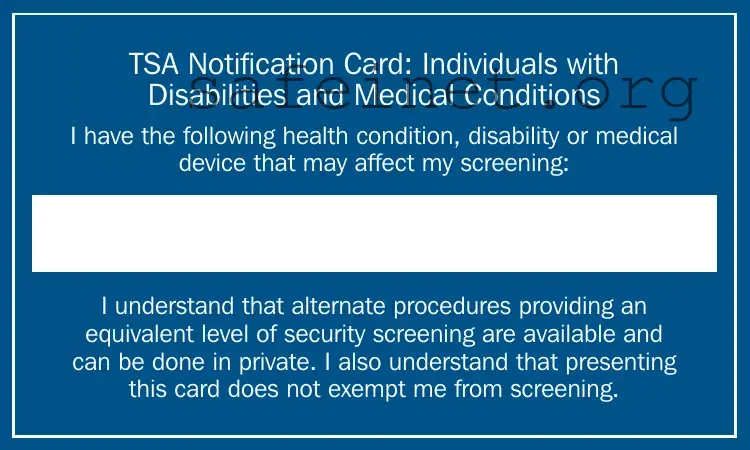
The TSA Notification Card is an essential tool for individuals with disabilities and medical conditions who are preparing to travel. This form serves as a means to communicate specific health concerns or medical devices that may impact the security screening process. By presenting the card, travelers can inform TSA personnel about their unique needs, ensuring that appropriate accommodations are made. It’s important to note that while the card facilitates alternate procedures that maintain a high level of security, it does not exempt anyone from undergoing screening. The TSA provides various resources to assist travelers, including a dedicated helpline, TSA Cares, available weekdays and weekends for inquiries and support. Travelers are encouraged to reach out at least 72 hours prior to their journey to request the assistance of a Passenger Support Specialist at the checkpoint. If such assistance is unavailable, they can ask for a Supervisory TSA Officer for further help. The TSA is committed to ensuring a smooth and respectful travel experience for all passengers, regardless of their health status.

TSA Notification Card: Individuals with Disabilities and Medical Conditions
I have the following health condition, disability or medical
device that may affect my screening:
I understand that alternate procedures providing an equivalent level of security screening are available and can be done in private. I also understand that presenting this card does not exempt me from screening.

Information • Assistance Requests • Compliments • Complaints
TSA Cares
Weekdays: 8 a.m. to 11 p.m. ET
Weekends/Holidays: 9 a.m. to 8 p.m. ET
Hablamos Español
Automated information offered in 12 languages
Call 72 hours prior to traveling to request the assistance of a
Passenger Support Specialist (PSS) at the checkpoint. If a PSS is not available, you may ask for a Supervisory TSA Officer at the checkpoint.
| Fact Name | Description |
|---|---|
| Purpose of the Card | The TSA Notification Card is designed for individuals with disabilities and medical conditions to inform TSA agents about their specific needs during the screening process. |
| Alternate Procedures | Individuals presenting the card can request alternate procedures that provide an equivalent level of security screening, which can be conducted in private. |
| No Exemption from Screening | Presenting the TSA Notification Card does not exempt individuals from the standard screening process required by the TSA. |
| Contact Information | For assistance, individuals can contact TSA Cares at 1-855-787-2227 or via email at [email protected] during specified hours. |
| Language Support | Automated information is available in 12 languages, ensuring accessibility for a diverse range of travelers. |
| Requesting Assistance | Travelers are encouraged to call 72 hours prior to traveling to request the assistance of a Passenger Support Specialist at the checkpoint. |
After completing the TSA Notification Card form, individuals with disabilities or medical conditions can present it during the screening process. This card serves to inform TSA personnel of specific needs while ensuring that security protocols remain intact. It is important to remember that having this card does not exempt anyone from the screening process.
If you require assistance, consider calling TSA Cares at 1-855-787-2227 at least 72 hours prior to your travel. This can help ensure that a Passenger Support Specialist is available to assist you during the screening process.
What is the TSA Notification Card?
The TSA Notification Card is a tool designed for individuals with disabilities or medical conditions. It helps inform TSA agents about specific health issues or medical devices that may affect the screening process. The card aims to facilitate a smoother travel experience by ensuring that appropriate accommodations are made during security checks.
Who should use the TSA Notification Card?
This card is intended for travelers who have disabilities, medical conditions, or medical devices that could impact their screening. If you believe your health condition may require special attention during the security process, using this card can be beneficial.
Does presenting the card exempt me from screening?
No, presenting the TSA Notification Card does not exempt you from security screening. All travelers must go through the screening process, but the card can help ensure that your needs are understood and accommodated.
How can I obtain a TSA Notification Card?
You can obtain a TSA Notification Card from the TSA website or at your local airport. It is advisable to fill out the card before your travel date, so you are prepared when you arrive at the security checkpoint.
What should I do if I need assistance at the checkpoint?
If you require assistance, you can call TSA Cares at 1-855-787-2227 at least 72 hours before your travel date. This allows you to request the help of a Passenger Support Specialist (PSS) at the checkpoint. If a PSS is not available, you can ask for a Supervisory TSA Officer for assistance.
What are the hours of operation for TSA Cares?
TSA Cares operates on weekdays from 8 a.m. to 11 p.m. ET and on weekends and holidays from 9 a.m. to 8 p.m. ET. You can reach them by phone or email for any questions or concerns regarding your travel needs.
Is there a way to communicate in other languages?
Yes, TSA offers automated information in 12 languages. If you need assistance in a language other than English, you can inquire about this when you call TSA Cares.
Can I provide feedback about my experience?
Yes, the TSA encourages travelers to provide feedback. You can share compliments or complaints about your experience with TSA services. This feedback helps improve the travel experience for everyone.
What if I have additional questions about the TSA Notification Card?
If you have more questions, you can reach out to TSA Cares via phone or email. They are available to assist you with any inquiries related to the TSA Notification Card and the screening process.
Are there alternative screening procedures available?
Yes, the TSA offers alternate screening procedures that provide an equivalent level of security. These procedures can be conducted in private if needed. If you have concerns about the standard screening process, be sure to communicate them to the TSA agents.
Not clearly stating the health condition or disability. It’s important to provide a detailed description to help TSA staff understand your needs.
Failing to check the box indicating you have a medical condition. This simple step can ensure you receive the appropriate assistance.
Neglecting to mention any medical devices you may have. Devices like pacemakers or insulin pumps can affect screening procedures.
Overlooking the instruction about alternate procedures. Understanding that these options exist can make your screening experience smoother.
Assuming that the card exempts you from screening. Remember, this card does not replace the need for screening.
Not contacting TSA Cares ahead of time. Calling at least 72 hours before traveling can help ensure you receive the necessary support.
Forgetting to ask for a Passenger Support Specialist (PSS) at the checkpoint. If you need assistance, don’t hesitate to request help.
Ignoring the option to ask for a Supervisory TSA Officer if a PSS is unavailable. They can provide additional support when needed.
Not utilizing the contact information provided. If you have questions or concerns, reach out to TSA Cares at 1-855-787-2227.
The TSA Notification Card is an important tool for individuals with disabilities and medical conditions. However, there are several other forms and documents that may be used in conjunction with it to ensure a smooth travel experience. Below is a list of these documents, each serving a specific purpose.
Having these documents ready can greatly enhance the travel experience for individuals with disabilities or medical conditions. Being prepared helps ensure that the screening process is as smooth and accommodating as possible.
The TSA Notification Card is similar to the Medical Alert Card, which serves to inform first responders and medical personnel about an individual's medical conditions. Like the TSA card, the Medical Alert Card provides crucial information that can help in emergency situations. Both cards are designed to ensure that individuals receive appropriate care and consideration, especially when their health conditions may impact their treatment or screening processes.
Another document akin to the TSA Notification Card is the Disability Identification Card. This card is often used to identify individuals with disabilities and facilitate access to necessary accommodations. Similar to the TSA card, it communicates important information to service providers, ensuring that individuals receive the support they need during various interactions, including travel.
The Autism Identification Card is also comparable to the TSA Notification Card. This card is specifically designed for individuals on the autism spectrum, providing essential details about their condition. Just as the TSA card aims to enhance the screening experience for those with disabilities, the Autism Identification Card helps ensure that individuals receive understanding and appropriate assistance in various settings.
The Health Condition Disclosure Form is another document that shares similarities with the TSA Notification Card. This form allows individuals to disclose specific health conditions to relevant authorities or service providers. Both documents aim to improve communication and understanding, ensuring that individuals receive necessary accommodations during screenings or other interactions.
The Service Animal Identification Card serves a similar purpose as the TSA Notification Card. It identifies individuals who require the assistance of a service animal, providing essential information to those who may need to accommodate them. Both cards aim to facilitate smoother experiences for individuals with specific needs, ensuring that their rights and requirements are acknowledged.
The Travel Companion Card is also relevant in this context. This card is used to identify companions who assist individuals with disabilities during travel. Like the TSA Notification Card, it helps clarify roles and responsibilities, ensuring that individuals receive the necessary support throughout their journey.
The Medical Conditions Notification Card can be likened to the TSA Notification Card as well. This card informs authorities about specific medical conditions that may affect an individual's experience in public spaces. Both documents prioritize the health and safety of individuals, ensuring that their needs are met while maintaining security protocols.
Lastly, the Emergency Contact Card shares similarities with the TSA Notification Card. This card provides essential contact information in case of emergencies. Like the TSA card, it ensures that individuals' needs are communicated effectively, allowing for prompt assistance when necessary. Both documents aim to enhance safety and support for individuals during critical situations.
Filling out the TSA Notification Card form is an important step for individuals with disabilities and medical conditions. Here are some helpful tips on what to do and what to avoid:
By following these guidelines, you can help ensure a smoother screening process at the airport.
Misconceptions about the TSA Notification Card can lead to confusion and frustration. Here are nine common misunderstandings explained clearly.
Understanding these points can help individuals navigate the airport screening process with greater ease and confidence.
Here are some key takeaways about filling out and using the TSA Notification Card form:
Remember, the TSA is committed to providing support and ensuring a smooth travel experience for all passengers.