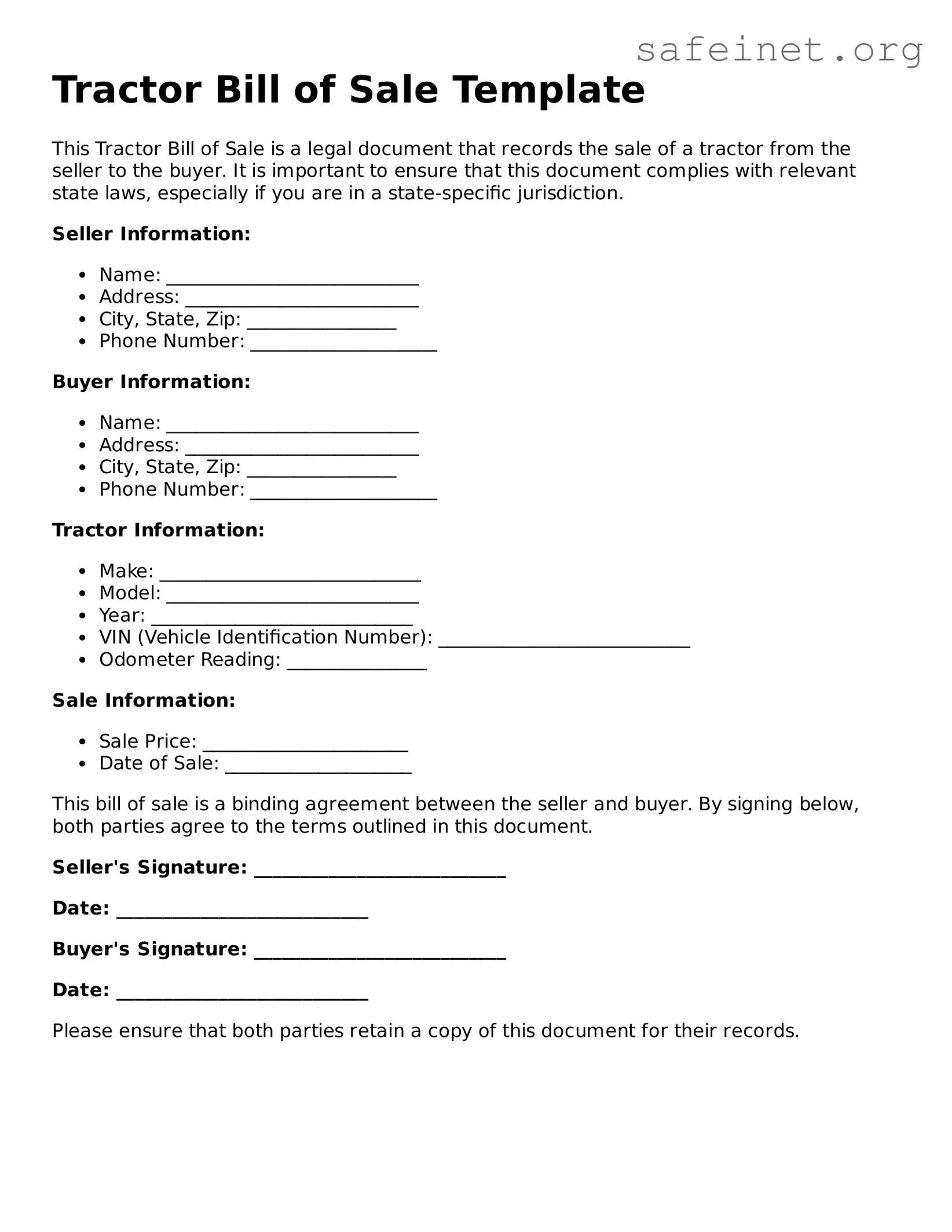
When it comes to buying or selling a tractor, having the right documentation is essential for a smooth transaction. The Tractor Bill of Sale form serves as a vital tool in this process, providing both the buyer and seller with a clear record of the exchange. This form typically includes key details such as the names and addresses of both parties, a description of the tractor, including its make, model, and year, as well as the Vehicle Identification Number (VIN). Additionally, it outlines the sale price and any terms of the sale, ensuring that both parties are on the same page. By using this form, individuals can protect themselves from potential disputes and misunderstandings in the future. It not only acts as proof of ownership transfer but also serves as a legal record that can be referred to if any issues arise later on. Understanding the importance of the Tractor Bill of Sale form can help facilitate a seamless transaction and provide peace of mind for everyone involved.
Tractor Bill of Sale Template
This Tractor Bill of Sale is a legal document that records the sale of a tractor from the seller to the buyer. It is important to ensure that this document complies with relevant state laws, especially if you are in a state-specific jurisdiction.
Seller Information:
Buyer Information:
Tractor Information:
Sale Information:
This bill of sale is a binding agreement between the seller and buyer. By signing below, both parties agree to the terms outlined in this document.
Seller's Signature: ___________________________
Date: ___________________________
Buyer's Signature: ___________________________
Date: ___________________________
Please ensure that both parties retain a copy of this document for their records.
| Fact Name | Description |
|---|---|
| Purpose | The Tractor Bill of Sale form is used to document the sale and transfer of ownership of a tractor between a buyer and a seller. |
| Essential Information | This form typically includes details such as the buyer's and seller's names, contact information, tractor make and model, VIN, and sale price. |
| State-Specific Forms | Each state may have its own version of the Tractor Bill of Sale form, which must comply with local laws and regulations. |
| Governing Laws | In most states, the sale of personal property, including tractors, is governed by the Uniform Commercial Code (UCC). |
| Notarization | Some states require the Tractor Bill of Sale to be notarized to ensure authenticity and prevent fraud. |
| Record Keeping | Both the buyer and seller should keep a copy of the completed form for their records, as it serves as proof of the transaction. |
| Tax Implications | Sales tax may apply to the transaction, depending on state laws. Buyers should check with their local tax authority. |
Completing a Tractor Bill of Sale form is an essential step in the process of transferring ownership of a tractor. Once the form is accurately filled out, it serves as a legal document that confirms the transaction between the buyer and the seller. Following the steps below will help ensure that all necessary information is captured correctly.
After completing the form, both the buyer and seller should retain a copy for their records. This will provide proof of the transaction and may be needed for future reference, such as registration or insurance purposes.
What is a Tractor Bill of Sale?
A Tractor Bill of Sale is a legal document that records the transfer of ownership of a tractor from one party to another. It includes important details about the transaction, such as the buyer and seller's information, the tractor's specifications, and the sale price. This document serves as proof of ownership and can be essential for registration and tax purposes.
Why do I need a Tractor Bill of Sale?
This document is crucial for both the buyer and the seller. For the buyer, it provides proof of ownership and can help in registering the tractor with the state. For the seller, it protects against future claims regarding ownership. Having a bill of sale can also help clarify the terms of the sale, making the transaction smoother for everyone involved.
What information should be included in a Tractor Bill of Sale?
A complete Tractor Bill of Sale should include the following information: the names and addresses of both the buyer and seller, the date of the sale, a detailed description of the tractor (including make, model, year, and VIN), the sale price, and any warranties or conditions of the sale. Both parties should sign the document to make it legally binding.
Is a Tractor Bill of Sale required by law?
While not every state requires a bill of sale for the purchase of a tractor, it is highly recommended. Some states may require it for registration purposes, while others may not. Always check your local laws to ensure compliance and to protect your interests in the transaction.
Can I create my own Tractor Bill of Sale?
Yes, you can create your own Tractor Bill of Sale. Just make sure to include all the necessary information and have both parties sign it. However, using a template can help ensure that you don’t miss any important details. Many online resources provide templates that are easy to fill out.
What if the tractor has a loan or lien on it?
If there is a loan or lien on the tractor, it’s essential to disclose this information in the bill of sale. The seller should ensure that the loan is paid off before the sale or make arrangements for the buyer to take over the loan. Failing to disclose this can lead to legal issues down the line.
How should I handle payment when selling a tractor?
When selling a tractor, it’s best to agree on a payment method that works for both parties. Cash is often the simplest option, but checks or bank transfers are also acceptable. Just make sure to wait for checks to clear before handing over the tractor and the bill of sale. Consider using a secure payment method to protect yourself.
Do I need to notarize the Tractor Bill of Sale?
Notarization is not always required for a Tractor Bill of Sale, but it can add an extra layer of protection. Having the document notarized can help verify the identities of both parties and ensure that the signatures are authentic. If you’re concerned about potential disputes, notarization is a good idea.
What should I do after completing the Tractor Bill of Sale?
Once the Tractor Bill of Sale is completed and signed by both parties, each should keep a copy for their records. The buyer should also take care of registering the tractor with the appropriate state agency, if required. Keeping all documentation organized will make future transactions easier and help in case of any disputes.
Not including complete contact information for both the buyer and seller. Ensure that names, addresses, and phone numbers are clearly stated.
Forgetting to specify the tractor's identification number (VIN). This number is crucial for identifying the specific tractor being sold.
Leaving out the sale price. Clearly state the amount the buyer is paying to avoid any confusion later on.
Not indicating the date of the sale. This helps establish when the transaction took place and can be important for legal purposes.
Failing to sign the document. Both parties should sign the bill of sale to make it legally binding.
Neglecting to keep copies of the bill of sale. Each party should retain a copy for their records, ensuring proof of the transaction.
When purchasing or selling a tractor, several important documents may accompany the Tractor Bill of Sale form. Each of these documents serves a specific purpose in ensuring a smooth transaction and protecting the interests of both parties involved.
Having these documents prepared and organized can facilitate a smoother transaction when buying or selling a tractor. Each document plays a crucial role in ensuring that both parties are protected and that the sale complies with relevant laws and regulations.
The Vehicle Bill of Sale is similar to the Tractor Bill of Sale in that both documents serve as proof of transfer of ownership. When a vehicle changes hands, this document outlines the details of the transaction, including the buyer, seller, and vehicle information. Both forms help protect the interests of both parties and provide a clear record of the sale for future reference.
A Boat Bill of Sale functions similarly to the Tractor Bill of Sale, as it documents the sale of a watercraft. This form includes essential details such as the boat's make, model, and hull identification number. Just like with tractors, a boat bill of sale helps establish legal ownership and can be useful for registration purposes with state authorities.
Lastly, the Real Estate Bill of Sale is akin to the Tractor Bill of Sale in that it formalizes the sale of personal property associated with real estate transactions. This document details items such as appliances or fixtures included in the sale. It ensures both parties understand what is being transferred alongside the property itself.
When filling out a Tractor Bill of Sale form, it’s essential to ensure that all information is accurate and complete. Here’s a list of things you should and shouldn’t do:
By following these guidelines, you can help ensure a smooth and legally sound transaction.
When it comes to the Tractor Bill of Sale form, several misconceptions can lead to confusion among buyers and sellers. Understanding these misconceptions can help ensure a smooth transaction. Here are five common misunderstandings:
By addressing these misconceptions, individuals can navigate the process of buying or selling a tractor with greater confidence and clarity. A well-prepared bill of sale can serve as a vital tool in protecting the interests of both buyers and sellers.
When filling out and using a Tractor Bill of Sale form, it's essential to keep several key points in mind. This document serves as a legal record of the sale, ensuring both parties are protected. Here are the main takeaways:
By following these guidelines, you can ensure a smooth transaction and protect your interests in the sale of a tractor.