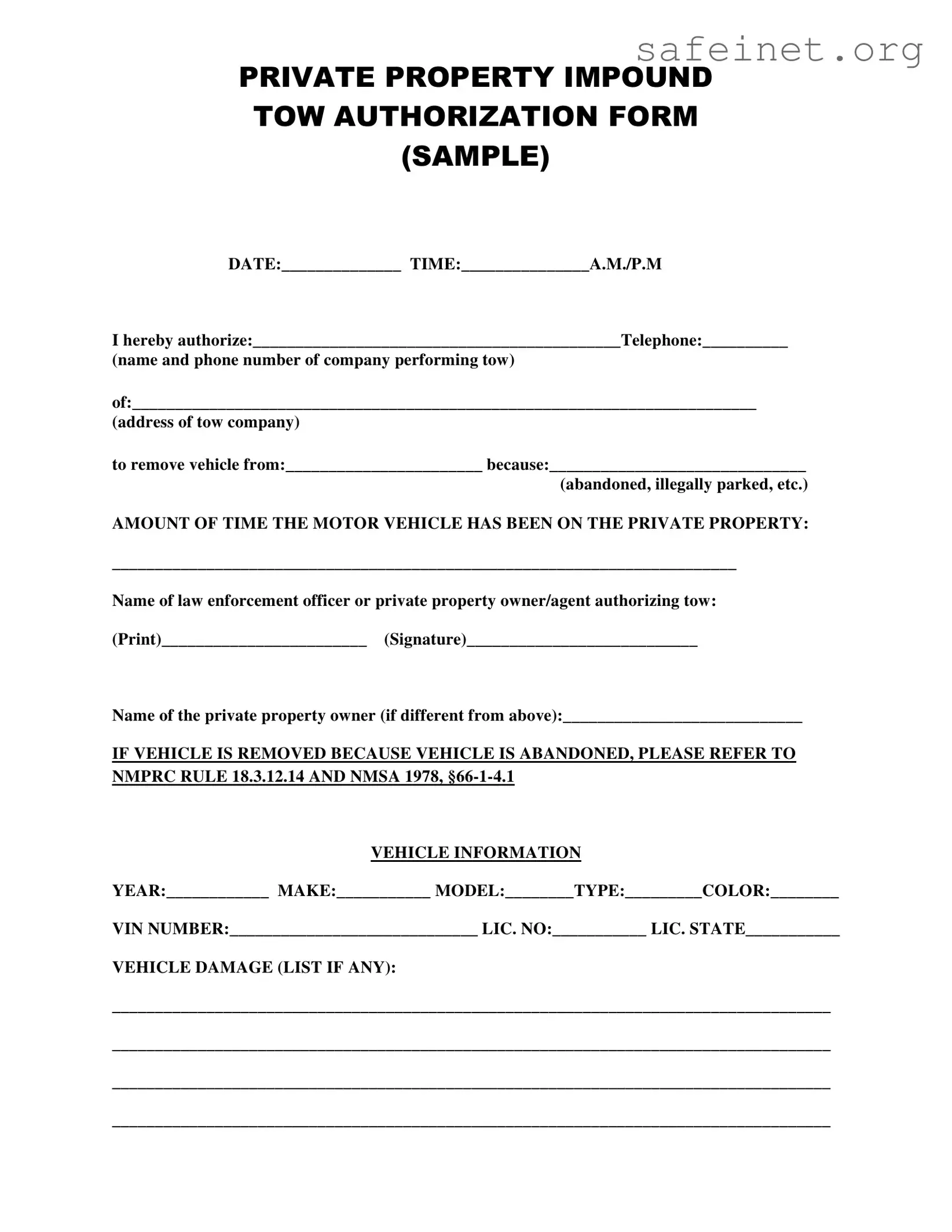
The Tow Authorization form is a crucial document that allows property owners or authorized agents to formally request the removal of vehicles from private property. This form captures essential information, such as the date and time of the tow request, and identifies the towing company responsible for the removal. It requires the name and contact details of the towing company, ensuring clear communication throughout the process. The form also specifies the location from which the vehicle is to be removed and the reason for the tow, whether it be due to abandonment, illegal parking, or other violations. Additionally, it asks for the amount of time the vehicle has been on the property, which is vital for justifying the tow. To ensure compliance with local regulations, it includes a section for the name and signature of the law enforcement officer or property owner authorizing the tow. Furthermore, if the vehicle is classified as abandoned, the form directs users to specific legal references that must be adhered to. Finally, the form collects detailed vehicle information, including year, make, model, color, VIN number, and license plate details, along with any noted damage to the vehicle. This comprehensive approach helps protect the rights of property owners while providing a clear framework for the towing process.
PRIVATE PROPERTY IMPOUND TOW AUTHORIZATION FORM (SAMPLE)
DATE:______________ TIME:_______________A.M./P.M
Ihereby authorize:___________________________________________Telephone:__________
(name and phone number of company performing tow)
of:_________________________________________________________________________
(address of tow company)
to remove vehicle from:_______________________ because:______________________________
(abandoned, illegally parked, etc.)
AMOUNT OF TIME THE MOTOR VEHICLE HAS BEEN ON THE PRIVATE PROPERTY:
_________________________________________________________________________
Name of law enforcement officer or private property owner/agent authorizing tow:
(Print)________________________ (Signature)___________________________
Name of the private property owner (if different from above):____________________________
IF VEHICLE IS REMOVED BECAUSE VEHICLE IS ABANDONED, PLEASE REFER TO NMPRC RULE 18.3.12.14 AND NMSA 1978,
VEHICLE INFORMATION
YEAR:____________ MAKE:___________ MODEL:________TYPE:_________COLOR:________
VIN NUMBER:_____________________________ LIC. NO:___________ LIC. STATE___________
VEHICLE DAMAGE (LIST IF ANY):
____________________________________________________________________________________
____________________________________________________________________________________
____________________________________________________________________________________
____________________________________________________________________________________
| Fact Name | Details |
|---|---|
| Date and Time | The form requires the date and time of the tow authorization to be filled in. |
| Tow Company Information | The form must include the name and telephone number of the towing company performing the tow. |
| Property Address | The address of the towing company must be provided on the form. |
| Reason for Tow | The form requires the reason for the tow, such as abandonment or illegal parking. |
| Time on Property | It is necessary to indicate how long the vehicle has been on the private property. |
| Authorization Signature | The form must be signed by the law enforcement officer or the private property owner/agent authorizing the tow. |
| Abandonment Reference | If the vehicle is abandoned, the form references NMPRC Rule 18.3.12.14 and NMSA 1978, §66-1-4.1. |
| Vehicle Information | Detailed vehicle information, including year, make, model, color, VIN, and license details, must be provided. |
Completing the Tow Authorization form requires careful attention to detail. This form is essential for authorizing the removal of a vehicle from private property. Ensure all information is accurate and complete to avoid any potential issues.
What is a Tow Authorization form?
A Tow Authorization form is a document that allows a tow company to remove a vehicle from private property. It includes essential details such as the reason for the tow, the vehicle information, and the authorization from the property owner or their agent.
When should I use a Tow Authorization form?
You should use a Tow Authorization form when you need to remove a vehicle that is abandoned, illegally parked, or otherwise violating your property rights. This form ensures that the tow is legally authorized and documented.
What information do I need to provide on the form?
The form requires several pieces of information. You will need to provide the date and time of the authorization, the name and contact details of the towing company, the address of the towing company, and the location of the vehicle. Additionally, you must specify the reason for the tow and how long the vehicle has been on your property.
Do I need to sign the form?
Yes, the form must be signed by the property owner or their authorized agent. This signature confirms that you give permission for the vehicle to be towed. If the vehicle is being removed due to abandonment, you should also include the name of the law enforcement officer involved, if applicable.
What details about the vehicle are required?
You will need to provide specific information about the vehicle being towed. This includes the year, make, model, type, color, VIN number, license plate number, and the state of registration. If there is any damage to the vehicle, it should also be noted on the form.
Is there a specific time frame for how long a vehicle must be on the property before it can be towed?
While the form asks for the amount of time the vehicle has been on the property, specific regulations may vary by state or locality. It is essential to check local laws to ensure compliance with any time requirements before towing a vehicle.
What happens if the vehicle is towed without proper authorization?
Towing a vehicle without proper authorization can lead to legal issues for the property owner or towing company. The vehicle owner may have grounds to dispute the tow, and fines or penalties could be imposed. Proper documentation is crucial to avoid such complications.
Can I authorize a tow company if I am not the property owner?
If you are not the property owner, you can still authorize a tow if you have been given explicit permission by the property owner to act on their behalf. In this case, it is advisable to have written confirmation from the property owner to avoid any disputes.
What should I do if I believe my vehicle was towed improperly?
If you believe your vehicle was towed without proper authorization, you should first contact the towing company to inquire about the tow. If you still believe the tow was unjustified, you may want to consult local law enforcement or seek legal advice to understand your rights and options for recovery.
When filling out the Tow Authorization form, it's important to be thorough and accurate. Here are nine common mistakes to avoid:
By avoiding these common mistakes, the process of authorizing a tow can go much more smoothly. Take your time to review the form before submitting it.
When dealing with vehicle towing and impoundment, several documents may accompany the Tow Authorization form to ensure compliance with regulations and to facilitate the towing process. Each of these documents serves a specific purpose, providing clarity and legal backing to the actions taken.
Each of these documents plays a vital role in the towing process, ensuring that all parties involved understand their rights and responsibilities. Proper documentation not only helps maintain order but also protects the interests of vehicle owners and property managers alike.
The Vehicle Release Form is similar to the Tow Authorization Form in that both documents involve the removal and retrieval of vehicles. This form is used by vehicle owners to reclaim their vehicles after they have been towed. It typically requires the owner to provide identification and proof of ownership, ensuring that only authorized individuals can retrieve the vehicle. Like the Tow Authorization Form, it includes details about the vehicle and the circumstances surrounding its removal.
The Abandoned Vehicle Report serves a similar purpose in documenting the status of a vehicle that has been left unattended for an extended period. This report is often filed by property owners or law enforcement when they identify a vehicle that appears to be abandoned. It outlines the vehicle's condition and location, and it may lead to a tow authorization if the vehicle is not claimed. Both documents aim to address issues related to vehicles that are not being properly maintained or are obstructing property use.
The Consent to Tow Form is another document that shares similarities with the Tow Authorization Form. This form is used when a vehicle owner gives explicit permission for a tow company to remove their vehicle. It often includes details such as the reason for the tow and the vehicle's location. Both forms require the owner's acknowledgment and signature, ensuring that the tow is conducted legally and with consent.
The Parking Violation Notice is also comparable, as it addresses unauthorized parking situations. This notice is typically issued by property owners or law enforcement to inform vehicle owners that their vehicle is parked in violation of regulations. While it does not authorize a tow on its own, it often precedes a tow authorization if the vehicle is not moved. Both documents aim to enforce property rules and maintain order in parking areas.
The Impoundment Notice is similar in that it informs vehicle owners that their vehicle has been impounded. This notice is often issued by law enforcement or towing companies and provides details about the impoundment location and fees. Like the Tow Authorization Form, it serves to notify the owner of the vehicle's status and the steps needed to retrieve it, ensuring transparency in the towing process.
Finally, the Vehicle Identification Card is related in that it provides essential information about a vehicle, including its make, model, and identification number. While this card is primarily used for identification purposes, it can be relevant in tow situations. When a vehicle is towed, having accurate identification helps ensure that the correct vehicle is being addressed in the Tow Authorization Form, reinforcing the importance of clear documentation in vehicle management.
When filling out the Tow Authorization form, it’s important to be careful and thorough. Here are some do's and don'ts to keep in mind:
When it comes to the Tow Authorization form, several misconceptions can lead to confusion. Understanding these can help property owners and vehicle owners navigate the towing process more effectively. Here are six common misconceptions:
By clarifying these misconceptions, property owners can better understand their rights and responsibilities when it comes to towing vehicles from private property.
When filling out and using the Tow Authorization form, several important aspects should be kept in mind. Here are key takeaways to ensure a smooth process:
By following these guidelines, you can ensure that the Tow Authorization form is filled out correctly and used effectively.