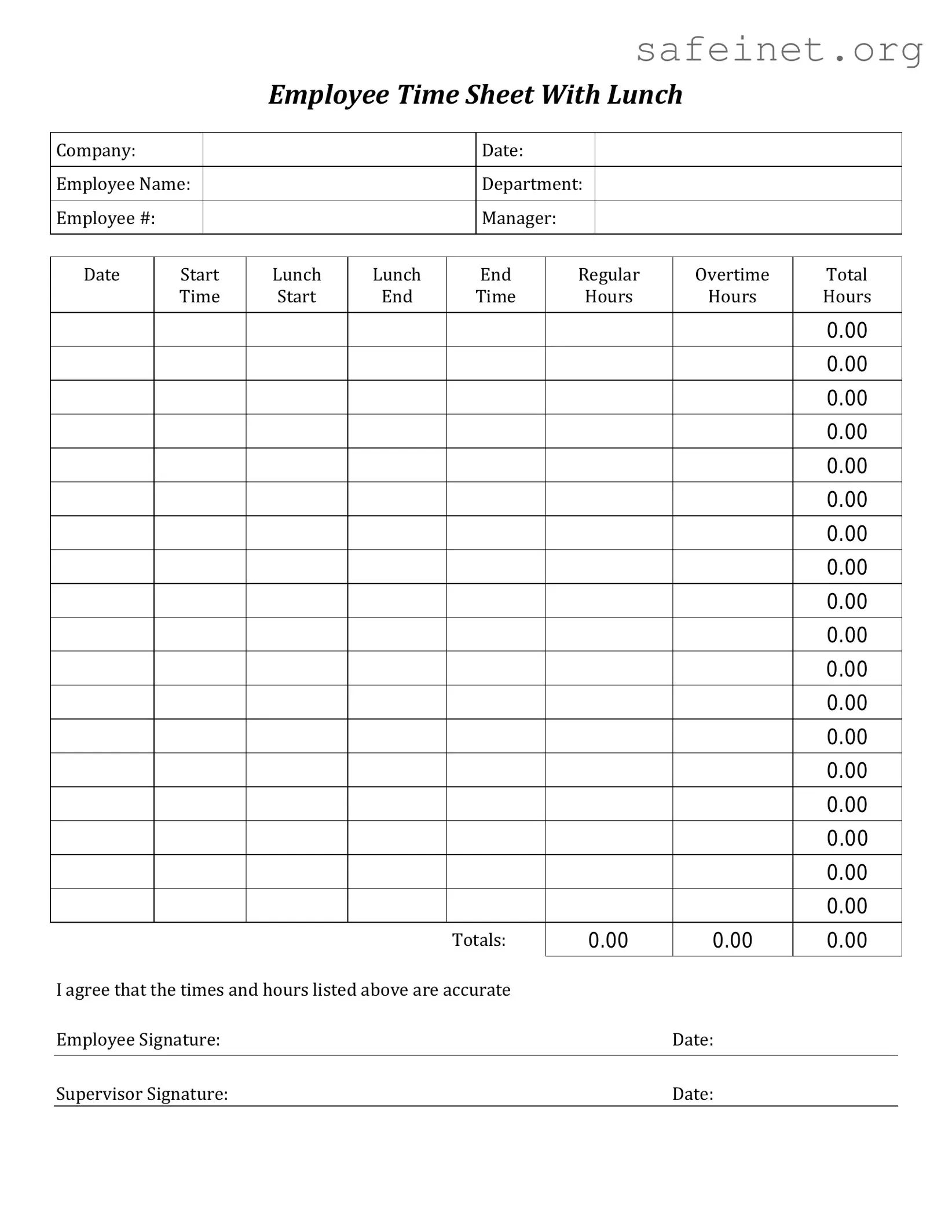
The Time Card form is an essential tool for tracking employee hours worked, ensuring accurate payroll processing, and maintaining compliance with labor regulations. This form typically includes fields for the employee's name, identification number, and department, as well as sections for recording daily hours, breaks, and overtime. By capturing this information, employers can effectively monitor attendance and productivity while providing a clear record for both employees and management. In addition, the Time Card form often incorporates spaces for signatures, confirming that both the employee and supervisor have reviewed and approved the recorded hours. Understanding how to properly fill out and manage this form can help streamline payroll operations and prevent disputes over hours worked, making it a vital component of workplace efficiency.

Employee Time Sheet With Lunch
Company:
Employee Name:
Employee #:
Date:
Department:
Manager:
Date |
Start |
Lunch |
Lunch |
End |
Regular |
Overtime |
Total |
|
Time |
Start |
End |
Time |
Hours |
Hours |
Hours |
|
|
|
|
|
|
|
|
|
|
|
|
|
|
|
0.00 |
|
|
|
|
|
|
|
|
|
|
|
|
|
|
|
0.00 |
|
|
|
|
|
|
|
|
|
|
|
|
|
|
|
0.00 |
|
|
|
|
|
|
|
|
|
|
|
|
|
|
|
0.00 |
|
|
|
|
|
|
|
|
|
|
|
|
|
|
|
0.00 |
|
|
|
|
|
|
|
|
|
|
|
|
|
|
|
0.00 |
|
|
|
|
|
|
|
|
|
|
|
|
|
|
|
0.00 |
|
|
|
|
|
|
|
|
|
|
|
|
|
|
|
0.00 |
|
|
|
|
|
|
|
|
|
|
|
|
|
|
|
0.00 |
|
|
|
|
|
|
|
|
|
|
|
|
|
|
|
0.00 |
|
|
|
|
|
|
|
|
|
|
|
|
|
|
|
0.00 |
|
|
|
|
|
|
|
|
|
|
|
|
|
|
|
0.00 |
|
|
|
|
|
|
|
|
|
|
|
|
|
|
|
0.00 |
|
|
|
|
|
|
|
|
|
|
|
|
|
|
|
0.00 |
|
|
|
|
|
|
|
|
|
|
|
|
|
|
|
0.00 |
|
|
|
|
|
|
|
|
|
|
|
|
|
|
|
0.00 |
|
|
|
|
|
|
|
|
|
|
|
|
|
|
|
0.00 |
|
|
|
|
|
|
|
|
|
|
|
|
|
|
|
0.00 |
|
|
|
|
|
|
|
|
|
|
|
|
Totals: |
0.00 |
0.00 |
0.00 |
|
|
|
|
|
|
|
|
I agree that the times and hours listed above are accurate |
|
Employee Signature: |
Date: |
|
|
Supervisor Signature: |
Date: |
|
|
| Fact Name | Description | Governing Law |
|---|---|---|
| Purpose | The Time Card form is used to track employee hours worked and ensure accurate payroll processing. | N/A |
| Frequency of Use | Employees typically submit Time Card forms weekly or bi-weekly, depending on the employer's payroll schedule. | N/A |
| State-Specific Requirements | Some states may have specific requirements for time tracking, including meal breaks and overtime calculations. | California Labor Code Section 226 |
| Record Keeping | Employers are generally required to keep Time Card records for a certain period, often three to four years. | Fair Labor Standards Act (FLSA) |
| Employee Rights | Employees have the right to review their Time Card entries and dispute any inaccuracies. | N/A |
Filling out the Time Card form is an important step in ensuring accurate tracking of your work hours. Once completed, this form will help streamline the payroll process and ensure you are compensated correctly for your time. Follow these simple steps to fill it out accurately.
What is a Time Card form?
A Time Card form is a document used to track the hours an employee works during a specific pay period. It records the start and end times of each workday, along with any breaks taken. This form is essential for calculating payroll accurately.
How do I fill out the Time Card form?
To fill out the Time Card form, enter your name, employee ID, and the pay period dates at the top. For each day worked, record the date, start time, end time, and any breaks taken. Be sure to total your hours at the end of the week or pay period. Review your entries for accuracy before submitting.
When is the Time Card form due?
The Time Card form is typically due at the end of each pay period. Check with your supervisor or HR department for specific deadlines. Late submissions may result in delayed payment, so it’s important to submit on time.
What should I do if I made a mistake on my Time Card?
If you notice an error after submitting your Time Card, contact your supervisor or HR as soon as possible. They can guide you on how to correct the mistake. It may involve filling out a new form or making adjustments in the payroll system.
Can I submit my Time Card electronically?
Many companies allow electronic submissions of the Time Card form. Check with your employer for their specific process. If electronic submission is permitted, ensure you follow the correct procedures to avoid any issues with payroll.
What happens if I forget to submit my Time Card?
If you forget to submit your Time Card, notify your supervisor immediately. Depending on company policy, you may still be able to submit it late. However, be aware that this could affect your paycheck for that period. It’s always best to set reminders to avoid forgetting.
Failing to record hours accurately. Many individuals either underestimate or overestimate their working hours, which can lead to payroll discrepancies.
Neglecting to include breaks. Some employees forget to deduct their lunch or other breaks, resulting in inflated hours.
Not signing the form. A signature is often required to validate the time card, and omitting it can delay processing.
Using incorrect dates. Entering the wrong date range can cause confusion and misalignment with pay periods.
Failing to report overtime. Employees may forget to note any overtime hours worked, which affects their compensation.
Not following the correct format. Each organization may have specific requirements for how to fill out the time card, and deviations can lead to errors.
Overlooking required notes. Some employers require additional information for specific days or shifts, and failing to provide these notes can cause issues.
Submitting late. Time cards often have deadlines, and late submissions can result in delayed payments or payroll issues.
Miscommunication with supervisors. Not confirming hours with a supervisor before submission can lead to discrepancies later.
Not keeping a personal record. Failing to maintain a copy of the submitted time card can complicate matters if disputes arise.
When managing employee hours and payroll, the Time Card form is just one piece of the puzzle. Several other forms and documents complement it to ensure accurate record-keeping and compliance with labor laws. Understanding these documents can help streamline the payroll process and maintain clear communication between employers and employees.
By utilizing these forms alongside the Time Card, employers can create a comprehensive system for managing employee hours and payroll. This not only enhances efficiency but also fosters a transparent and organized workplace environment.
The Time Card form is similar to the Employee Attendance Record, which tracks an employee's presence at work. Both documents serve to document hours worked, ensuring accurate payroll processing. The Attendance Record may include additional details such as reasons for absences or tardiness, providing a comprehensive view of an employee's work habits.
Another comparable document is the Payroll Register. This register consolidates all employee payment information for a specific pay period, including hours worked, overtime, and deductions. The Time Card feeds directly into this register, as it provides the necessary data to calculate wages accurately, making them essential companions in payroll management.
Next, consider the Work Schedule. This document outlines when employees are expected to work, detailing shifts and days off. The Time Card reflects the actual hours worked against this schedule, allowing managers to assess attendance and punctuality effectively. Together, they help maintain operational efficiency and workforce planning.
The Leave Request Form also shares similarities with the Time Card. While the Time Card records hours worked, the Leave Request Form captures time not worked due to approved leave. Both documents are crucial for tracking employee time, ensuring that payroll reflects only the hours worked and that leave is accounted for appropriately.
In addition, the Overtime Authorization Form is closely related. This document must be completed when an employee works beyond their standard hours. The Time Card then records these extra hours, making it essential for accurate compensation. Both documents ensure compliance with labor laws regarding overtime pay and employee rights.
The Project Time Sheet is another document that aligns with the Time Card. While the Time Card tracks general hours worked, the Project Time Sheet focuses on hours dedicated to specific projects. This distinction helps organizations analyze productivity and allocate resources effectively, providing insights that go beyond simple attendance tracking.
The Daily Log is also akin to the Time Card, as it records daily activities and hours worked. While the Time Card is typically used for payroll purposes, the Daily Log can serve various functions, such as project management or performance evaluation. Together, they offer a detailed view of an employee's contributions over time.
Lastly, the Expense Report can be considered similar to the Time Card in that it documents time and financial resources spent on work-related activities. While the Time Card tracks hours worked, the Expense Report captures the costs incurred during those hours. Both documents are essential for maintaining accurate records and ensuring that employees are reimbursed appropriately for their time and expenses.
When filling out a Time Card form, attention to detail is crucial. Here are some guidelines to consider:
Understanding the Time Card form is crucial for accurate record-keeping. However, several misconceptions can lead to confusion. Here are six common misunderstandings:
Some believe that submitting a time card is not necessary. In reality, time cards are essential for tracking hours worked and ensuring accurate payroll processing.
There is a misconception that all time cards follow the same format. Different organizations may have unique requirements and formats for their time cards.
Many think time cards only record hours worked. In fact, they may also include details about breaks, overtime, and specific project codes.
Some employees believe they can submit time cards at any time. However, late submissions can delay payroll and may lead to discrepancies.
There is a belief that submitted time cards go unchecked. In truth, supervisors or payroll departments often review them for accuracy before processing.
Many assume that mistakes on time cards can be easily corrected after submission. While corrections are possible, they can complicate payroll processing and should be avoided.
Being aware of these misconceptions can help ensure that time card submissions are accurate and timely, leading to a smoother payroll process.
Filling out and using a Time Card form is essential for accurate record-keeping and payroll processing. Here are five key takeaways to keep in mind: