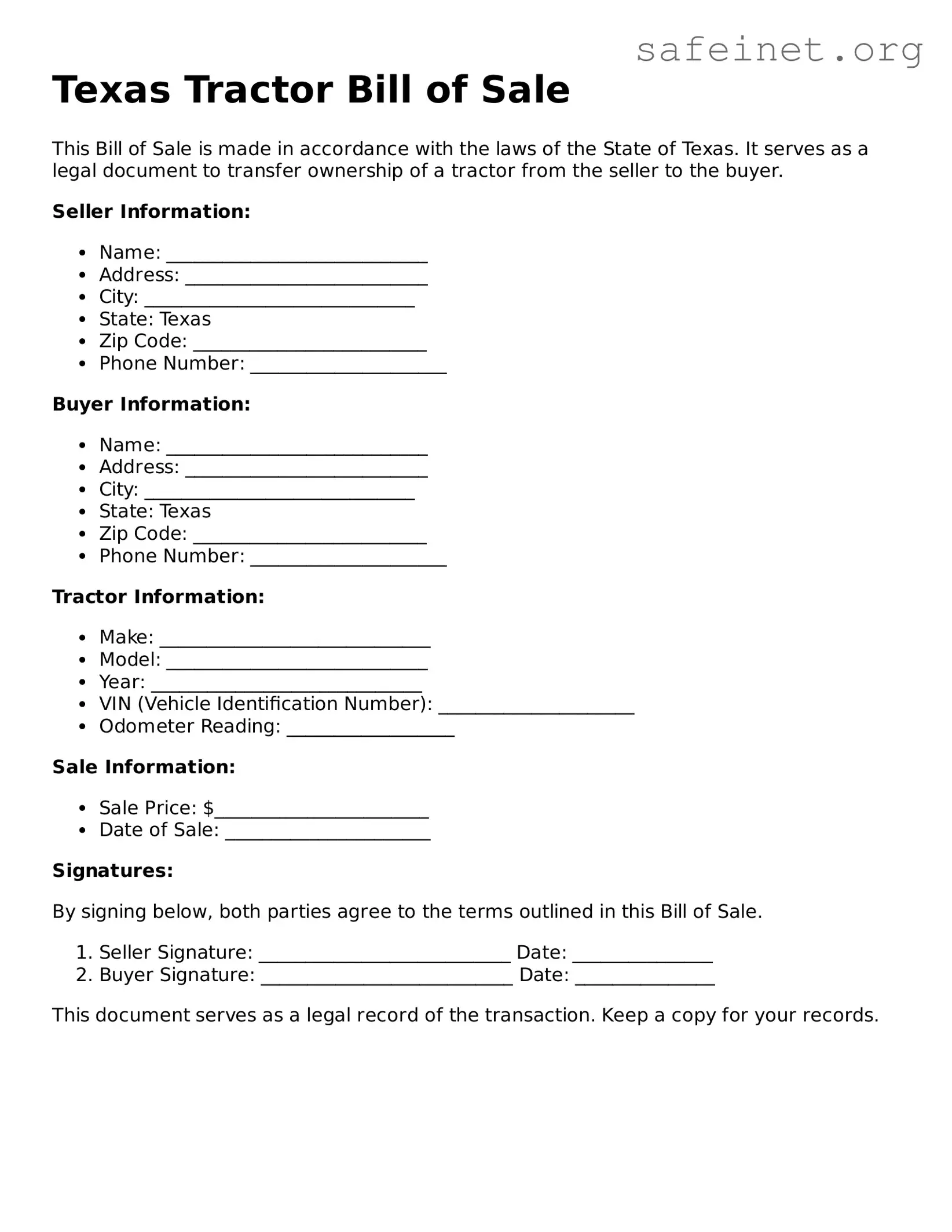
When purchasing or selling a tractor in Texas, a Bill of Sale serves as an essential document that formalizes the transaction between the buyer and the seller. This form not only provides a record of the sale but also outlines important details such as the identification of the tractor, including its make, model, and Vehicle Identification Number (VIN). Additionally, the Bill of Sale captures the sale price and the date of the transaction, ensuring both parties have a clear understanding of the terms. It is also crucial for documenting the condition of the tractor at the time of sale, which can help protect both the buyer and seller in case of future disputes. Furthermore, having a properly completed Bill of Sale can facilitate the transfer of ownership and assist in the registration process with the Texas Department of Motor Vehicles. Overall, this form plays a vital role in ensuring a smooth and transparent transaction in the agricultural machinery market.
Texas Tractor Bill of Sale
This Bill of Sale is made in accordance with the laws of the State of Texas. It serves as a legal document to transfer ownership of a tractor from the seller to the buyer.
Seller Information:
Buyer Information:
Tractor Information:
Sale Information:
Signatures:
By signing below, both parties agree to the terms outlined in this Bill of Sale.
This document serves as a legal record of the transaction. Keep a copy for your records.
| Fact Name | Description |
|---|---|
| Purpose | The Texas Tractor Bill of Sale form is used to document the sale and transfer of ownership of a tractor in Texas. |
| Requirements | The form must include details such as the buyer's and seller's names, contact information, and a description of the tractor, including the VIN. |
| Governing Law | This form is governed by Texas state laws regarding the sale and transfer of personal property. |
| Signatures | Both the buyer and seller must sign the form to validate the transaction and transfer ownership legally. |
After obtaining the Texas Tractor Bill of Sale form, it's essential to fill it out accurately to ensure a smooth transfer of ownership. This document will serve as proof of the sale and should be completed with care.
Once completed, keep copies for both parties. This document may need to be presented for registration or other legal purposes in the future.
What is a Texas Tractor Bill of Sale form?
The Texas Tractor Bill of Sale form is a legal document that facilitates the transfer of ownership of a tractor from one party to another in the state of Texas. This form serves as proof of the transaction and includes essential details such as the names and addresses of the buyer and seller, a description of the tractor, the sale price, and the date of the transaction. It is important for both parties to retain a copy of this document for their records.
Why is it important to use a Bill of Sale when selling a tractor?
Using a Bill of Sale when selling a tractor is crucial for several reasons. First, it provides legal protection for both the buyer and the seller by documenting the terms of the sale. This can help prevent disputes over ownership or payment in the future. Second, it helps establish a clear record of the transaction, which may be required for tax purposes or when registering the tractor with the state. Lastly, a Bill of Sale can serve as a receipt, confirming that the buyer has paid for the tractor.
Are there any specific requirements for completing the Texas Tractor Bill of Sale form?
Yes, certain requirements must be met when completing the Texas Tractor Bill of Sale form. Both the buyer and seller should provide their full names and addresses. A detailed description of the tractor, including the make, model, year, and Vehicle Identification Number (VIN), must be included. The sale price should be clearly stated, and both parties should sign and date the form. While notarization is not required in Texas, it can add an extra layer of authenticity to the document.
Can I use a generic Bill of Sale for a tractor sale in Texas?
While a generic Bill of Sale may suffice in some situations, it is advisable to use a specific Texas Tractor Bill of Sale form. This specialized form includes all necessary elements tailored to tractor transactions in Texas, ensuring compliance with state laws. Using the correct form can prevent potential legal issues and make the transfer process smoother for both parties involved.
Incomplete Information: Many individuals fail to provide all necessary details. This includes the names, addresses, and contact information of both the buyer and seller. Missing this information can lead to confusion or disputes later.
Incorrect Vehicle Identification Number (VIN): A common mistake is entering an incorrect VIN. The VIN is crucial for identifying the tractor and ensuring that the sale is valid. Double-checking this number is essential.
Omitting Sale Price: Some people forget to list the sale price of the tractor. This amount is important for tax purposes and to clarify the transaction between both parties.
Not Signing the Document: Both the buyer and seller must sign the bill of sale. Failing to do so renders the document incomplete and may cause issues in the future.
Neglecting to Date the Form: The date of the transaction is a key detail. Omitting this can create uncertainty about when the sale occurred.
Using Incorrect Form: Some individuals may use an outdated or incorrect version of the bill of sale form. Always ensure you have the most current version to avoid any legal complications.
Not Including Condition of the Tractor: Describing the condition of the tractor is important. Buyers should know if there are any issues or repairs needed. This transparency helps build trust.
Ignoring Local Regulations: Some people overlook local laws regarding vehicle sales. Familiarizing oneself with these regulations can prevent future legal problems.
When buying or selling a tractor in Texas, several forms and documents may accompany the Tractor Bill of Sale. These documents help ensure that the transaction is clear and legally binding. Below is a list of common forms that are often used alongside the Tractor Bill of Sale.
Using these documents alongside the Texas Tractor Bill of Sale can facilitate a smoother transaction process. Each form plays a vital role in ensuring that both parties understand their rights and responsibilities, making the sale as seamless as possible.
The Texas Vehicle Bill of Sale is similar to the Tractor Bill of Sale. Both documents serve as proof of a transaction between a buyer and a seller. They include essential details like the vehicle or tractor's make, model, year, and VIN or serial number. This document is crucial for registering the vehicle or tractor with the state and can help resolve any disputes regarding ownership in the future.
The Texas Boat Bill of Sale is another document that shares similarities with the Tractor Bill of Sale. Like the tractor sale, this form captures important information about the boat being sold, such as its make, model, year, and hull identification number. This document is essential for transferring ownership and registering the boat with the Texas Parks and Wildlife Department.
The Texas Motorcycle Bill of Sale also parallels the Tractor Bill of Sale. Both documents provide proof of ownership transfer and include vital information about the motorcycle, such as its make, model, year, and VIN. This ensures that the buyer can register the motorcycle with the state and protects both parties in case of disputes.
The Texas RV Bill of Sale is similar in function to the Tractor Bill of Sale. This document details the sale of a recreational vehicle, including its make, model, year, and VIN. It serves as proof of the transaction and is necessary for the buyer to register the RV with the state, ensuring a smooth transfer of ownership.
The Texas Mobile Home Bill of Sale shares characteristics with the Tractor Bill of Sale as well. Both documents facilitate the transfer of ownership by documenting key details about the mobile home, such as its make, model, year, and serial number. This is essential for the buyer to establish legal ownership and for any future transactions.
The Texas Firearm Bill of Sale is another document that resembles the Tractor Bill of Sale. Both forms document the sale and transfer of ownership. The Firearm Bill of Sale includes important details about the firearm, such as its make, model, and serial number. This helps ensure compliance with state and federal laws regarding firearm ownership.
Lastly, the Texas Equipment Bill of Sale is similar to the Tractor Bill of Sale in that it documents the sale of heavy machinery or equipment. This document includes details such as the equipment's make, model, and serial number. It serves as proof of ownership transfer and is important for the buyer to register the equipment with the appropriate authorities.
When completing the Texas Tractor Bill of Sale form, it's important to follow certain guidelines to ensure the document is valid and serves its purpose effectively. Here is a list of things to do and avoid:
There are several misconceptions surrounding the Texas Tractor Bill of Sale form. Understanding these can help ensure a smoother transaction process. Here are six common myths:
This is not true. The Texas Tractor Bill of Sale is required for both new and used tractors to document the sale and transfer of ownership.
In Texas, a properly completed and signed bill of sale is legally binding. It serves as proof of the transaction and can be used in legal disputes.
Including the sale price is essential. It helps establish the value of the tractor and can be important for tax purposes.
Both the buyer and seller should sign the Texas Tractor Bill of Sale. This ensures that both parties acknowledge the transaction.
While notarization is not always required, having the bill of sale notarized can add an extra layer of authenticity and protection for both parties.
While there is flexibility, using the official Texas Tractor Bill of Sale form is recommended to ensure all necessary information is included and recognized by authorities.
By addressing these misconceptions, buyers and sellers can navigate the process with greater confidence and clarity.
When it comes to buying or selling a tractor in Texas, using a Bill of Sale is an important step in the process. Here are some key takeaways to keep in mind:
Following these guidelines will help ensure a smooth transaction when dealing with tractors in Texas.