Creating a Texas Employee Handbook is an essential step for any business looking to establish clear guidelines and expectations for its workforce. This comprehensive document serves as a vital resource, outlining company policies, employee rights, and responsibilities. It typically includes sections on workplace conduct, attendance policies, benefits, and procedures for reporting grievances. By providing a structured framework, the handbook helps to foster a positive work environment and ensures that employees understand their roles within the organization. Additionally, it can address legal requirements specific to Texas, such as regulations on workplace safety and anti-discrimination laws. An effective employee handbook not only protects the business but also empowers employees by giving them access to important information about their workplace. Overall, this form is a foundational tool that can contribute to a harmonious and productive workplace culture.
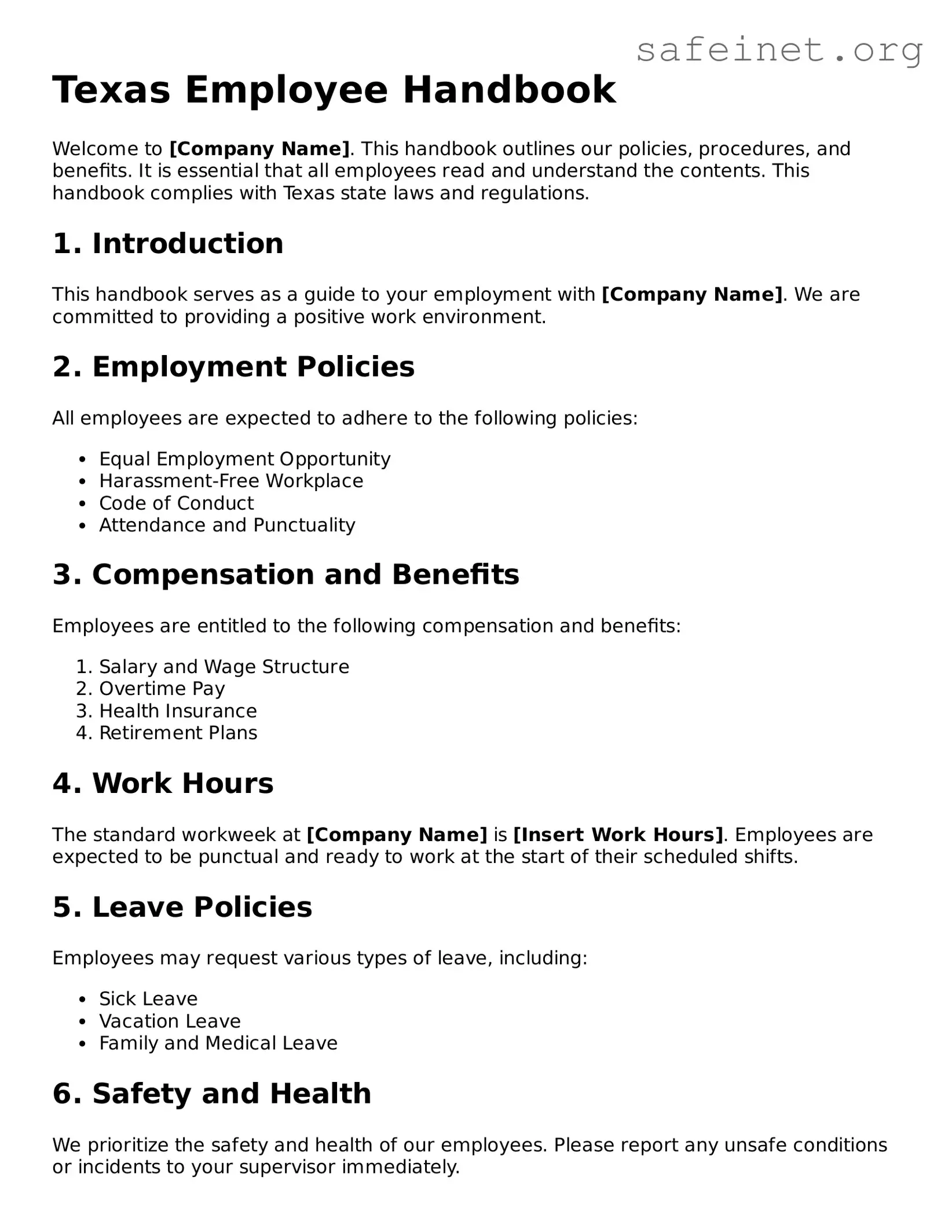
Texas Employee Handbook
Welcome to [Company Name]. This handbook outlines our policies, procedures, and benefits. It is essential that all employees read and understand the contents. This handbook complies with Texas state laws and regulations.
1. Introduction
This handbook serves as a guide to your employment with [Company Name]. We are committed to providing a positive work environment.
2. Employment Policies
All employees are expected to adhere to the following policies:
3. Compensation and Benefits
Employees are entitled to the following compensation and benefits:
4. Work Hours
The standard workweek at [Company Name] is [Insert Work Hours]. Employees are expected to be punctual and ready to work at the start of their scheduled shifts.
5. Leave Policies
Employees may request various types of leave, including:
6. Safety and Health
We prioritize the safety and health of our employees. Please report any unsafe conditions or incidents to your supervisor immediately.
7. Employee Conduct
Employees are expected to maintain professionalism. This includes:
8. Acknowledgment of Receipt
All employees must sign an acknowledgment form to confirm they have received and understood the handbook.
For any questions regarding this handbook, please contact [HR Contact Name] at [HR Contact Information].
Thank you for being a part of [Company Name]. We look forward to working together!
| Fact Name | Description |
|---|---|
| Purpose | The Texas Employee Handbook serves as a guide for employees, outlining company policies, procedures, and expectations. |
| Legal Requirement | While not legally mandated, providing an employee handbook is considered best practice for Texas employers. |
| Governing Laws | The handbook must comply with federal laws such as the Fair Labor Standards Act and the Family and Medical Leave Act, as well as Texas state laws. |
| Content Areas | Typical sections include workplace conduct, benefits, leave policies, and termination procedures. |
| Employee Acknowledgment | Employees should sign an acknowledgment form indicating they have received and understood the handbook. |
| Updates | Employers should regularly update the handbook to reflect changes in laws or company policies. |
| Legal Protection | A well-crafted handbook can help protect the company from legal disputes by clearly communicating policies. |
Filling out the Texas Employee Handbook form is an important step in ensuring that you understand your rights and responsibilities as an employee. Once you have completed the form, it will be reviewed by your employer, and you will receive guidance on the next steps in your employment journey.
What is the Texas Employee Handbook form?
The Texas Employee Handbook form serves as a guide for employers in Texas to outline their workplace policies, procedures, and expectations. It helps establish a clear understanding between the employer and employees regarding workplace rules, benefits, and rights. This document is essential for creating a positive work environment and ensuring compliance with state and federal laws.
Why is it important to have an Employee Handbook?
An Employee Handbook is crucial for several reasons. It sets the tone for company culture, clarifies job expectations, and provides a framework for addressing workplace issues. Additionally, it can help protect the employer from potential legal disputes by documenting policies and procedures. A well-crafted handbook can also enhance employee morale and retention by making employees feel informed and valued.
What should be included in the Texas Employee Handbook?
Essential elements of the Texas Employee Handbook include an introduction to the company, employment policies, code of conduct, compensation and benefits information, leave policies, and procedures for addressing grievances. It should also cover topics like workplace safety, anti-discrimination policies, and confidentiality agreements. Tailoring the handbook to reflect the company’s values and culture is equally important.
How often should the Employee Handbook be updated?
Regular updates to the Employee Handbook are necessary to reflect changes in laws, regulations, and company policies. It’s advisable to review the handbook at least annually or whenever significant changes occur within the organization or the legal landscape. Keeping the handbook current ensures that employees have access to the most accurate and relevant information.
Can employees provide input on the Employee Handbook?
Yes, involving employees in the creation or revision of the Employee Handbook can be beneficial. Gathering input helps ensure that the handbook addresses the concerns and needs of the workforce. Employees may offer valuable insights that can lead to a more effective and inclusive document. Consider conducting surveys or focus groups to collect feedback.
Is it necessary to distribute the Employee Handbook to all employees?
Distributing the Employee Handbook to all employees is highly recommended. This ensures that everyone has access to the same information regarding policies and procedures. Providing a physical or digital copy allows employees to refer back to it as needed. Additionally, obtaining acknowledgment from employees that they have received and understood the handbook can further protect the organization.
What should an employer do if an employee violates a policy in the Handbook?
If an employee violates a policy outlined in the Employee Handbook, the employer should follow the disciplinary procedures specified in the handbook. Consistency in enforcement is key to maintaining fairness and credibility. Depending on the severity of the violation, actions may range from verbal warnings to termination. Documentation of the incident and the response taken is crucial for legal protection.
What are the legal implications of not having an Employee Handbook?
Not having an Employee Handbook can expose employers to various legal risks. Without clear policies in place, misunderstandings may arise, leading to disputes or claims of unfair treatment. Employers may find it difficult to defend themselves against allegations of discrimination or wrongful termination. A comprehensive handbook serves as a vital tool for mitigating these risks and establishing a clear framework for employee relations.
Failing to read the entire handbook thoroughly. Many employees skim through the document, missing important policies and procedures.
Not updating personal information. Employees often forget to provide current addresses, phone numbers, or emergency contacts, which can lead to communication issues.
Overlooking the acknowledgment section. Some individuals neglect to sign or date the acknowledgment form, which confirms they have read and understood the handbook.
Ignoring the code of conduct. Employees may not pay attention to behavioral expectations, which can lead to misunderstandings about acceptable workplace behavior.
Misunderstanding benefits and leave policies. Employees sometimes skip over these sections, missing crucial information about their rights and entitlements.
Failing to ask questions. When employees do not seek clarification on confusing policies, they risk misinterpreting important information.
Not keeping a copy of the handbook. Some individuals forget to save a personal copy, which can make it difficult to reference policies later.
Assuming policies are the same as previous handbooks. Relying on outdated information can lead to compliance issues and misunderstandings about current practices.
When creating or updating a Texas Employee Handbook, several other forms and documents may be useful to ensure compliance and clarity in workplace policies. Below is a list of commonly used documents that complement the Employee Handbook.
These documents are essential for creating a well-rounded employee management system. Having them readily available can enhance communication and ensure a smoother workplace environment.
The Texas Employee Handbook is similar to the Employee Manual, often used by companies across the United States. Both documents serve as a guide for employees, outlining the company's policies, procedures, and expectations. While the Employee Handbook focuses on legal compliance and workplace culture, the Employee Manual may delve deeper into day-to-day operational procedures. Both documents are essential for maintaining a clear understanding of the workplace environment and can help prevent misunderstandings between employees and management.
Another document that shares similarities with the Texas Employee Handbook is the Company Policy Document. This document typically outlines specific policies related to employee conduct, benefits, and disciplinary actions. Like the Employee Handbook, the Company Policy Document aims to provide clarity and consistency in how policies are applied. However, it may not cover as much detail regarding the company's culture or values, making the Employee Handbook a more comprehensive resource for employees.
The Orientation Guide is also akin to the Texas Employee Handbook. This guide is often provided to new employees during their onboarding process. It introduces them to the company’s mission, values, and essential policies. While the Orientation Guide is focused on helping new hires acclimate to their roles, the Employee Handbook serves as a more extensive reference that employees can consult throughout their tenure. Both documents aim to foster a smooth transition into the workplace.
The Code of Conduct document is another similar piece. This document outlines the ethical standards and behaviors expected from employees. It often includes guidelines on integrity, respect, and professionalism. While the Texas Employee Handbook may contain a section on conduct, the Code of Conduct typically provides a more detailed framework for acceptable behavior. Together, they help create a respectful and productive work environment.
The Safety Manual is another important document that bears resemblance to the Texas Employee Handbook. This manual focuses specifically on workplace safety policies and procedures. It outlines the responsibilities of both employees and employers in maintaining a safe work environment. While the Employee Handbook may touch on safety, the Safety Manual provides in-depth guidance on protocols and emergency procedures, ensuring that employees are well-informed about safety measures.
The Benefits Guide is closely related to the Texas Employee Handbook as well. This document details the various benefits offered by the employer, including health insurance, retirement plans, and leave policies. While the Employee Handbook may summarize these benefits, the Benefits Guide typically provides more detailed information, helping employees make informed decisions about their options. Both documents work together to ensure employees understand their entitlements.
Performance Review Guidelines are another set of documents that share similarities with the Texas Employee Handbook. These guidelines outline the processes and criteria used to evaluate employee performance. They provide clarity on how performance is assessed and what employees can expect during review periods. While the Employee Handbook may include general information on performance expectations, the Performance Review Guidelines offer specific details that can help employees prepare for evaluations.
Lastly, the Training Manual can be compared to the Texas Employee Handbook. This document focuses on the training and development opportunities available to employees. It outlines required training sessions, professional development programs, and resources for skill enhancement. While the Employee Handbook may mention training opportunities, the Training Manual provides a more detailed roadmap for employees seeking to advance their skills and careers within the company.
When filling out the Texas Employee Handbook form, it is essential to follow specific guidelines to ensure accuracy and compliance. Here are six things to consider:
Understanding the Texas Employee Handbook can be tricky. Many misconceptions exist that can lead to confusion for both employers and employees. Here are ten common myths, along with clarifications:
While not legally required, having an Employee Handbook is highly recommended. It serves as a vital tool for outlining company policies and expectations.
Each handbook can be tailored to fit the specific needs and culture of a business. There is no one-size-fits-all approach.
In reality, handbooks should be reviewed and updated regularly to reflect changes in laws, company policies, or business practices.
While it is beneficial to have employees acknowledge receipt of the handbook, a signature is not legally required in Texas.
This is incorrect. Handbooks must comply with existing laws. If there’s a conflict, the law takes precedence.
Handbooks do not provide guarantees of employment. Most Texas employment is “at-will,” meaning either party can terminate employment at any time.
Not all policies may be enforceable, especially if they conflict with existing laws or regulations. Legal advice is often necessary to ensure compliance.
A comprehensive handbook should address various topics, including workplace behavior, safety procedures, and grievance processes.
Employees can be disciplined for violations, provided the policies are clearly defined and consistently enforced.
Changes can and should be made as necessary. Open communication about updates helps maintain clarity and trust within the workplace.
By dispelling these misconceptions, both employers and employees can better understand the purpose and importance of the Texas Employee Handbook.
When filling out and using the Texas Employee Handbook form, there are several important points to keep in mind.
By keeping these key takeaways in mind, you can create a useful resource that helps employees navigate their roles and responsibilities effectively.