In the state of Texas, a Cease and Desist Letter serves as a powerful tool for individuals and businesses seeking to halt unwanted actions or behaviors that infringe upon their rights. This formal document communicates a clear demand for the recipient to stop specific activities, which may include harassment, copyright infringement, or defamation. By outlining the nature of the objectionable conduct and providing a timeline for compliance, the letter establishes a basis for potential legal action should the recipient fail to adhere to its demands. It is essential to include pertinent details, such as the sender's contact information, a description of the harmful behavior, and any relevant legal grounds supporting the request. Moreover, a well-crafted Cease and Desist Letter not only serves to inform the recipient of their actions but also demonstrates the sender's seriousness in addressing the issue. Understanding the components and implications of this letter can empower individuals and businesses to protect their interests effectively.
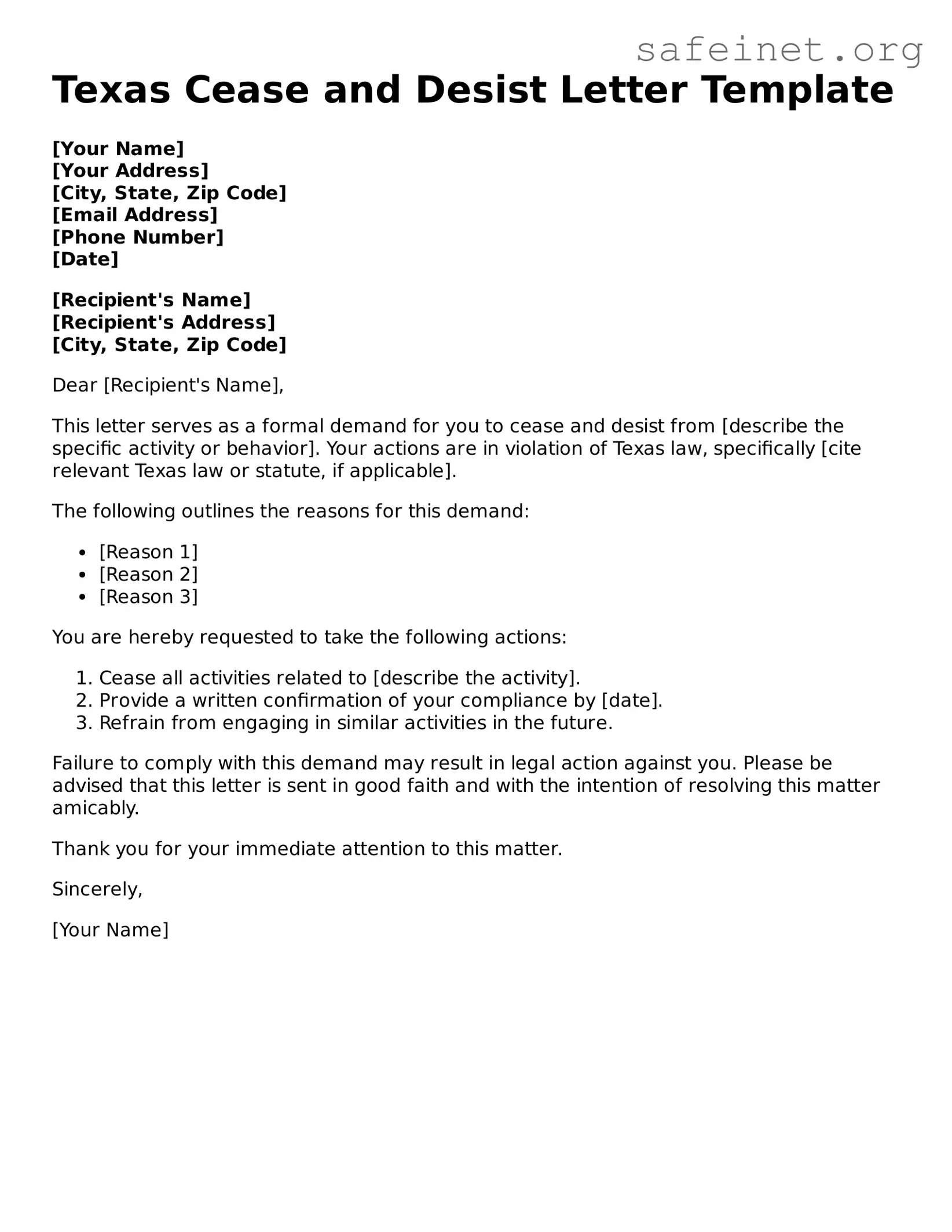
Texas Cease and Desist Letter Template
[Your Name]
[Your Address]
[City, State, Zip Code]
[Email Address]
[Phone Number]
[Date]
[Recipient's Name]
[Recipient's Address]
[City, State, Zip Code]
Dear [Recipient's Name],
This letter serves as a formal demand for you to cease and desist from [describe the specific activity or behavior]. Your actions are in violation of Texas law, specifically [cite relevant Texas law or statute, if applicable].
The following outlines the reasons for this demand:
You are hereby requested to take the following actions:
Failure to comply with this demand may result in legal action against you. Please be advised that this letter is sent in good faith and with the intention of resolving this matter amicably.
Thank you for your immediate attention to this matter.
Sincerely,
[Your Name]
| Fact Name | Description |
|---|---|
| Purpose | A Texas Cease and Desist Letter is used to formally request that an individual or organization stop certain actions that are believed to be harmful or unlawful. |
| Governing Law | The letter is governed by Texas law, particularly under the Texas Business and Commerce Code. |
| Delivery Method | The letter can be delivered via certified mail, email, or personal delivery to ensure the recipient receives it. |
| Response Time | Typically, the recipient is given a specific timeframe, often 10 to 30 days, to respond or cease the disputed actions. |
After you complete the Texas Cease and Desist Letter form, you will need to send it to the individual or organization you are addressing. Make sure to keep a copy for your records. You may also want to send it via certified mail to ensure it is received.
What is a Texas Cease and Desist Letter?
A Texas Cease and Desist Letter is a formal document used to request that an individual or entity stop engaging in certain actions that are believed to be unlawful or harmful. This letter serves as a warning and outlines the specific behavior that needs to cease. It can be used in various situations, including disputes over intellectual property, harassment, or breach of contract. The goal is to resolve the issue without resorting to legal action.
Who can issue a Cease and Desist Letter in Texas?
Any individual or organization can issue a Cease and Desist Letter in Texas. This includes private citizens, businesses, and legal representatives. It is important that the sender has a legitimate reason for the request, as baseless claims can lead to legal repercussions.
What should be included in a Texas Cease and Desist Letter?
A well-crafted Cease and Desist Letter should include several key elements. First, it should clearly identify the sender and the recipient. Next, it must outline the specific actions that are being contested. Providing evidence or examples can strengthen the letter's effectiveness. Additionally, a deadline for compliance should be included, along with a statement regarding potential legal action if the behavior does not cease. Finally, it is advisable to maintain a professional tone throughout the letter.
Is a Cease and Desist Letter legally binding?
While a Cease and Desist Letter itself is not a legally binding document, it serves as an important step in the dispute resolution process. It formally notifies the recipient of the sender's concerns and intentions. If the recipient fails to comply, the sender may then choose to pursue legal action, at which point the letter can be used as evidence of the attempt to resolve the matter amicably.
How should I deliver a Cease and Desist Letter?
Delivery of a Cease and Desist Letter can be done through various methods. Common options include certified mail, email, or personal delivery. Using certified mail provides proof of delivery, which can be beneficial if the situation escalates. Regardless of the method chosen, ensuring that the recipient receives the letter is crucial for establishing that they have been formally notified.
What happens if the recipient ignores the Cease and Desist Letter?
If the recipient ignores the Cease and Desist Letter, the sender may consider pursuing further legal action. This could involve filing a lawsuit or seeking a court order, depending on the nature of the issue. Ignoring the letter may also lead to additional complications for the recipient, as it demonstrates a lack of willingness to resolve the matter outside of court.
Can I use a template for a Texas Cease and Desist Letter?
Using a template for a Cease and Desist Letter can be a practical option, especially for those unfamiliar with legal writing. However, it is essential to customize the template to fit the specific situation. Generic letters may not effectively address the unique circumstances of a dispute, so tailoring the content is advisable to ensure clarity and relevance.
What are the potential consequences of sending a Cease and Desist Letter?
Sending a Cease and Desist Letter can have several consequences. For the recipient, it may prompt immediate compliance or lead to further conflict. For the sender, it establishes a record of the dispute and demonstrates a willingness to resolve the issue before escalating to litigation. However, if the letter is perceived as threatening or unfounded, it could result in counterclaims or damage to the sender's reputation.
Should I consult a lawyer before sending a Cease and Desist Letter?
Consulting a lawyer before sending a Cease and Desist Letter is often a wise decision. Legal professionals can provide valuable insights into the situation, ensuring that the letter is appropriately worded and that the sender's rights are protected. Additionally, they can help assess the strength of the claims and advise on the best course of action moving forward.
Failing to clearly identify the parties involved. It’s crucial to include both the sender and the recipient's full names and addresses.
Not specifying the nature of the complaint. Clearly outline the actions or behaviors that are causing concern.
Using vague language. Be direct and precise to avoid misunderstandings about what is being requested.
Omitting relevant dates. Include specific dates when the offending actions occurred to provide context.
Not providing evidence. Attach any supporting documents or evidence that back up the claims made in the letter.
Ignoring the legal basis for the request. Reference any applicable laws or regulations that support the cease and desist request.
Failing to state the desired outcome. Clearly indicate what actions you want the recipient to take or refrain from taking.
Not including a deadline for compliance. Specify a reasonable timeframe for the recipient to respond or comply with the request.
Neglecting to proofread the letter. Typos or grammatical errors can undermine the seriousness of the request.
Not keeping a copy of the letter. Always retain a copy for your records, as it may be needed for future reference.
A Texas Cease and Desist Letter is a powerful tool used to formally request that an individual or organization stop specific actions that are perceived as harmful or unlawful. Alongside this letter, several other forms and documents may be relevant in addressing disputes or legal matters. Below is a list of commonly used documents that can complement a Cease and Desist Letter.
Understanding these documents can help individuals navigate the complexities of legal disputes more effectively. Each serves a unique purpose and can play a significant role in resolving issues amicably or preparing for further legal action if necessary.
A demand letter is often used to formally request that an individual or organization stop a specific action. Like a cease and desist letter, it outlines the issue at hand and the desired outcome. Both documents serve to notify the recipient of a perceived violation and can be a precursor to legal action. The tone can vary from firm to conciliatory, depending on the situation. A demand letter may also include a timeline for compliance, similar to a cease and desist letter.
An injunction is a court order that requires a person to do or refrain from doing a specific act. While a cease and desist letter is a more informal request, an injunction is legally binding. Both documents aim to prevent harm or further violations. The recipient of an injunction must comply with the court's order, while a cease and desist letter may lead to negotiations or settlements outside of court.
A notice of violation informs an individual or entity that they are in breach of a law or regulation. This document, like a cease and desist letter, serves to alert the recipient to their non-compliance. It typically outlines the specific violations and may include a request for corrective action. Both documents can be used as evidence in legal proceedings if the issue is not resolved.
A settlement agreement is a document that outlines the terms under which parties agree to resolve a dispute. Similar to a cease and desist letter, it can be used to stop certain behaviors and prevent future conflicts. The key difference is that a settlement agreement is often the result of negotiations and is legally binding, while a cease and desist letter is a unilateral request for action.
A warning letter is typically issued to inform someone of potential consequences for their actions. Like a cease and desist letter, it serves as a formal notice that the recipient's behavior is unacceptable. However, a warning letter may not always demand immediate cessation of actions. Instead, it may provide an opportunity for the recipient to change their behavior before further action is taken.
A complaint is a formal document that initiates legal proceedings. It outlines the grievances of the complainant and the relief sought. While a cease and desist letter is a preliminary step, a complaint is filed with the court and requires a legal response. Both documents highlight issues that need addressing, but a complaint escalates the matter into the judicial system.
An affidavit is a sworn statement made under oath. It is often used to provide evidence in legal matters. While not directly similar to a cease and desist letter, both documents can be part of a legal process. An affidavit may support the claims made in a cease and desist letter, providing a factual basis for the request to stop certain actions.
When filling out the Texas Cease and Desist Letter form, it's important to approach the process with care. Here are some key dos and don'ts to keep in mind:
By following these guidelines, you can ensure that your Cease and Desist Letter is effective and respectful.
Understanding the Texas Cease and Desist Letter can be challenging, and several misconceptions often arise. Below is a list of common misunderstandings regarding this important legal document.
Being aware of these misconceptions can help individuals and businesses navigate the complexities of cease and desist letters more effectively. Understanding the true nature of these documents is essential for addressing disputes appropriately.
When filling out and using the Texas Cease and Desist Letter form, it is essential to keep several key points in mind. Understanding these takeaways can help ensure that the letter serves its intended purpose effectively.
By adhering to these guidelines, you can create a Texas Cease and Desist Letter that is clear, effective, and respectful. This approach increases the likelihood of resolving the issue amicably.