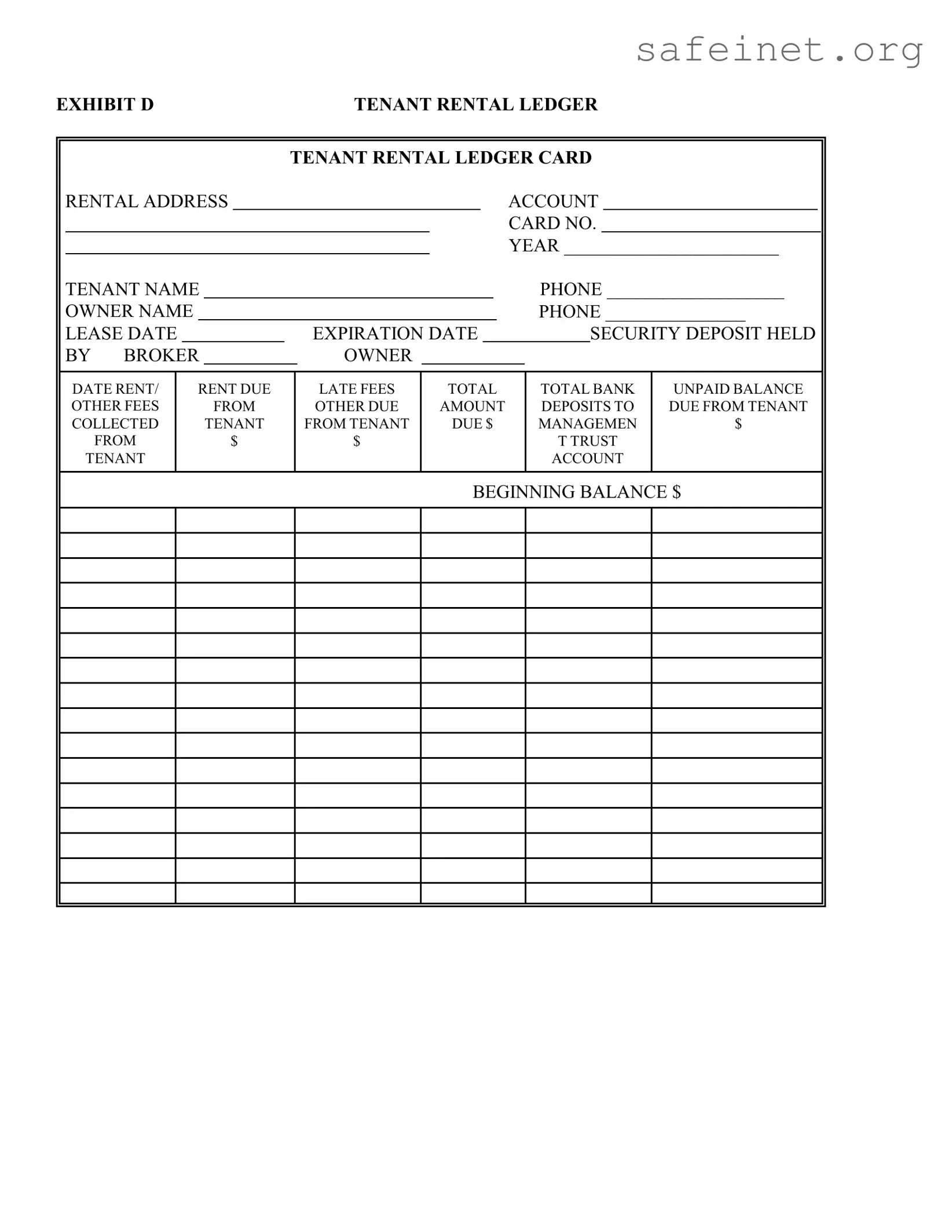
The Tenant Ledger Card form serves as a crucial tool for landlords and property managers to track rental payments and related financial activities for each tenant. This form includes essential details such as the rental address, tenant name, and contact information for both the tenant and the property owner. Key dates, including the lease start and expiration dates, are also recorded. Notably, the security deposit information is documented, indicating who holds the deposit—whether it be the broker or the owner. The form meticulously outlines the financial aspects of the rental agreement, including rent and any other fees collected from the tenant, as well as the total amount due. It also captures late fees, unpaid balances, and any deposits made into the management trust account, ensuring a comprehensive overview of the tenant's financial obligations. By maintaining this ledger, property managers can efficiently monitor payments and resolve any discrepancies that may arise, fostering transparency and accountability in the rental process.
EXHIBIT D |
|
|
TENANT RENTAL LEDGER |
|
|||||||||||||||||
|
|
|
|
|
|
|
|
|
|
|
|
|
|
|
|
|
|
|
|
|
|
|
|
|
|
|
|
|
|
|
|
|
|
|
|
|
|
|
|
|
|
|
|
|
|
|
|
|
|
|
TENANT RENTAL LEDGER CARD |
|
|||||||||||||
|
|
RENTAL ADDRESS |
|
|
|
|
|
|
|
|
ACCOUNT |
|
|
|
|||||||
|
|
|
|
|
|
|
|
|
|
|
|
|
|
CARD NO. |
|
|
|
||||
|
|
|
|
|
|
|
|
|
|
|
|
|
|
YEAR _______________________ |
|
||||||
|
|
TENANT NAME |
|
|
|
|
|
|
|
|
|
|
PHONE ___________________ |
|
|||||||
|
|
OWNER NAME |
|
|
|
|
|
|
|
|
|
|
PHONE _______________ |
|
|||||||
|
|
LEASE DATE |
|
|
|
EXPIRATION DATE |
|
|
|
|
|
SECURITY DEPOSIT HELD |
|
||||||||
|
|
BY BROKER |
|
|
|
OWNER |
|
|
|
|
|
|
|
|
|
|
|
|
|||
DATE RENT/ OTHER FEES COLLECTED FROM TENANT
RENT DUE
FROM
TENANT
$
LATE FEES
OTHER DUE
FROM TENANT
$
TOTAL
AMOUNT
DUE $
TOTAL BANK |
UNPAID BALANCE |
DEPOSITS TO |
DUE FROM TENANT |
MANAGEMEN |
$ |
T TRUST |
|
ACCOUNT |
|
|
|
BEGINNING BALANCE $
| Fact Name | Description |
|---|---|
| Form Purpose | The Tenant Ledger Card tracks rental payments and fees for tenants. |
| Required Information | It includes details such as tenant name, rental address, and lease dates. |
| Account Card Number | An account card number is assigned for tracking purposes. |
| Security Deposit | The form specifies the security deposit amount held by the broker or owner. |
| Fees and Payments | It outlines rent, late fees, and other charges due from the tenant. |
| Total Amount Due | The total amount due from the tenant is clearly stated on the form. |
| Bank Trust Account | The beginning balance of the management trust account is recorded. |
| Governing Laws | This form is subject to state-specific landlord-tenant laws, such as the Uniform Residential Landlord and Tenant Act. |
Filling out the Tenant Ledger Card form requires careful attention to detail. This form helps keep track of rental payments and other financial transactions related to a tenant's lease. Follow the steps below to complete the form accurately.
What is the purpose of the Tenant Ledger Card form?
The Tenant Ledger Card form is designed to provide a clear and organized record of all financial transactions between a tenant and a property owner or management company. It tracks rent payments, late fees, security deposits, and any other fees collected from the tenant, ensuring both parties have an accurate account of their financial obligations.
What information is included on the Tenant Ledger Card?
The Tenant Ledger Card includes essential details such as the rental address, tenant name, owner name, lease dates, security deposit information, and a breakdown of rent and other fees collected. It also shows the total amount due, unpaid balances, and any deposits made to the management trust account.
Who is responsible for maintaining the Tenant Ledger Card?
The property owner or management company is responsible for maintaining the Tenant Ledger Card. It is crucial that they keep this document updated to reflect accurate financial records and to provide transparency to the tenant.
How can tenants access their Tenant Ledger Card?
Tenants can request access to their Tenant Ledger Card from their property owner or management company. Many companies provide this information electronically, while others may offer it in a printed format. It is advisable for tenants to review this card regularly to ensure all transactions are accurately recorded.
What should tenants do if they notice discrepancies in their Tenant Ledger Card?
If a tenant notices any discrepancies, they should promptly contact their property owner or management company. It is important to discuss any concerns and provide documentation to support their claims. Resolving discrepancies quickly helps maintain a positive landlord-tenant relationship.
How does the Tenant Ledger Card help in the event of a dispute?
The Tenant Ledger Card serves as an official record of all financial transactions, which can be crucial in resolving disputes. If disagreements arise regarding unpaid rent or fees, both parties can refer to the ledger to clarify the situation and provide evidence of payments or charges.
Is the Tenant Ledger Card a legal document?
Yes, the Tenant Ledger Card can be considered a legal document, as it reflects the financial relationship between the tenant and the property owner or management company. It may be used in legal proceedings to verify claims related to rent payments and other fees.
What should be done with the Tenant Ledger Card after the lease ends?
After the lease ends, it is advisable to retain the Tenant Ledger Card for record-keeping purposes. Both the tenant and the property owner should keep a copy for their records, as it may be needed for future reference or in case of any disputes that arise after the lease has concluded.
Can the Tenant Ledger Card be modified?
Yes, the Tenant Ledger Card can be modified to reflect accurate information. However, any changes should be documented clearly, and both the tenant and property owner should agree on the modifications. Keeping a transparent and updated ledger helps prevent misunderstandings.
Incomplete Information: Failing to fill out all required fields can lead to confusion later. Ensure you provide details like the tenant's name, phone number, and the rental address.
Incorrect Dates: Entering the wrong lease dates or expiration dates can create misunderstandings about the rental agreement. Double-check these dates for accuracy.
Miscalculating Fees: It's easy to make mistakes when calculating rent, late fees, or other charges. Always double-check your math to avoid discrepancies.
Omitting Security Deposit Information: Not including the security deposit can lead to issues when the tenant moves out. Make sure to document this amount clearly.
Neglecting to Update Records: If payments are made or fees change, it's important to update the ledger promptly. Failing to do so can result in an inaccurate balance.
The Tenant Ledger Card form is an essential document for tracking rental payments and balances. However, several other forms and documents are commonly used alongside it to ensure a comprehensive management of tenant accounts. Below is a list of these related documents.
These documents work together to facilitate effective communication and record-keeping between landlords and tenants. Utilizing them ensures a smoother rental process and helps prevent disputes.
The Tenant Ledger Card form shares similarities with a Rent Receipt. A Rent Receipt is a document that landlords provide to tenants as proof of payment. Like the Tenant Ledger Card, it details the amount of rent paid, the date of payment, and any outstanding balances. Both documents serve as records that can help clarify payment histories and resolve disputes over rent payments.
Another similar document is the Lease Agreement. This formal contract outlines the terms of the rental arrangement, including rent amounts, payment schedules, and security deposit information. While the Lease Agreement establishes the initial terms, the Tenant Ledger Card tracks the ongoing financial transactions throughout the lease period, reflecting changes such as late fees or additional charges.
The Payment History Report is also comparable to the Tenant Ledger Card. This report summarizes all payments made by the tenant over a specific period. It provides a clear view of what has been paid and what remains due, similar to the way the Tenant Ledger Card organizes and presents financial information regarding rent and fees.
Another related document is the Security Deposit Statement. This statement details the amount of the security deposit, how it is held, and any deductions made upon lease termination. Both the Security Deposit Statement and the Tenant Ledger Card help tenants understand their financial obligations and rights concerning their rental payments and deposits.
The Statement of Account is yet another document that resembles the Tenant Ledger Card. This statement provides a comprehensive overview of a tenant's account, including charges, payments, and balances. Like the Tenant Ledger Card, it serves to keep both landlords and tenants informed about the financial status of the rental agreement.
The Monthly Rent Invoice is similar as well. This invoice is issued by the landlord to the tenant each month, detailing the rent due and any additional charges. Both the Monthly Rent Invoice and the Tenant Ledger Card help ensure transparency in financial transactions, allowing tenants to keep track of their obligations.
The Move-In/Move-Out Inspection Report can also be compared to the Tenant Ledger Card. While this report focuses on the condition of the property at the beginning and end of a tenancy, it often references the security deposit and any potential deductions. The Tenant Ledger Card complements this by tracking the financial aspects related to the tenancy.
The Maintenance Request Form is another document that bears similarities. This form allows tenants to request repairs or maintenance on the property. While it does not track financial transactions, it can influence the Tenant Ledger Card by adding costs for repairs that may need to be charged to the tenant, thereby impacting their overall balance.
The Rent Adjustment Notice is also relevant. This notice informs tenants of any changes to their rent amount due to various factors, such as lease renewals or market adjustments. Both documents play a role in managing the financial relationship between landlords and tenants, ensuring that all parties are aware of current obligations.
Lastly, the Utility Bill Statement can be compared to the Tenant Ledger Card. In some rental agreements, tenants are responsible for paying utilities. The Utility Bill Statement details these charges, much like the Tenant Ledger Card tracks rent and fees. Both documents help tenants manage their overall financial responsibilities related to their housing situation.
When filling out the Tenant Ledger Card form, it's important to follow certain guidelines to ensure accuracy and clarity. Here are five things you should and shouldn't do:
Following these tips can help prevent misunderstandings and ensure smooth communication between tenants and property owners.
Understanding the Tenant Ledger Card form is essential for both landlords and tenants. However, several misconceptions can lead to confusion. Here are five common misconceptions:
By addressing these misconceptions, both tenants and landlords can better understand the importance of the Tenant Ledger Card in managing rental agreements.
Understanding the Tenant Ledger Card form is crucial for both tenants and landlords. Here are key takeaways to ensure effective use of this document:
Using the Tenant Ledger Card effectively can foster a positive relationship between tenants and landlords while ensuring financial clarity.