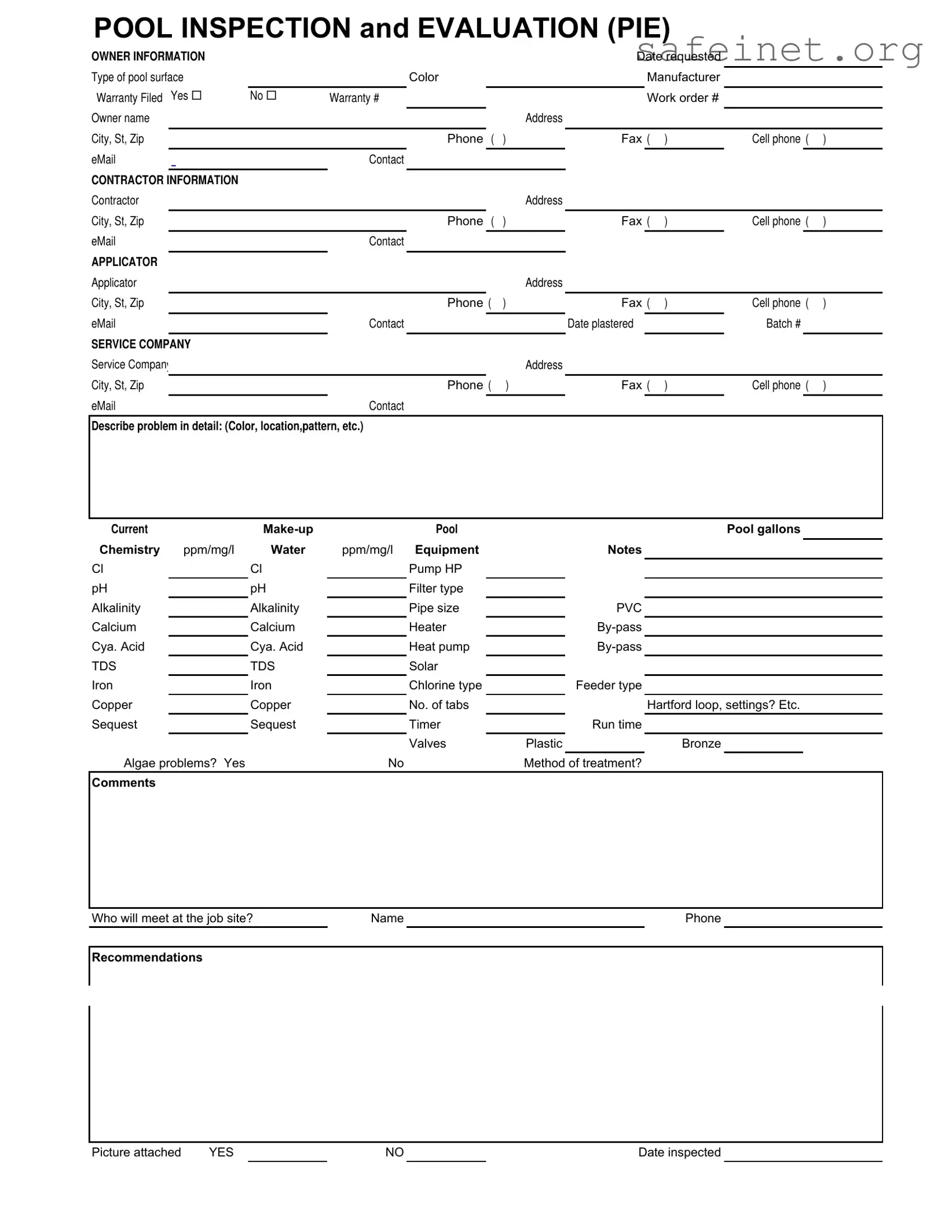
The Swimming Pool Inspection form is a comprehensive document designed to ensure the safety and functionality of swimming pools. It captures essential owner information, including the owner’s name, contact details, and the type of pool surface. Additionally, it notes the pool's color, manufacturer, and warranty status, which are crucial for assessing the pool's condition and service history. The form also gathers contractor and applicator information, allowing for clear communication between all parties involved. Important technical details are included, such as the pool's water chemistry, equipment specifications, and any existing problems that need addressing. Sections dedicated to the service company and their contact information facilitate prompt responses to issues. Furthermore, the form allows for detailed descriptions of any problems, including color and location specifics, ensuring that the inspection process is thorough. Recommendations and comments sections provide space for professional insights, while the inclusion of a photo attachment option enhances the documentation process. Overall, this form serves as a vital tool for maintaining pool safety and performance.
POOL INSPECTION and EVALUATION (PIE)
OWNER INFORMATION |
|
|
|
|
|
|
|
|
|
Date requested |
|
|
|
|||||
Type of pool surface |
|
|
|
|
|
|
|
|
|
|
|
|
|
|
||||
|
|
|
Color |
|
|
|
|
|
Manufacturer |
|
|
|
||||||
|
|
|
|
|
|
|
|
|
|
|
|
|
|
|
|
|
|
|
Warranty Filed Yes |
No |
Warranty # |
|
|
|
|
|
Work order # |
|
|
|
|||||||
Owner name |
|
|
|
|
|
|
|
Address |
|
|
|
|
|
|||||
|
|
|
|
|
|
|
|
|
|
|
|
|
|
|
|
|
||
City, St, Zip |
|
|
|
Phone ( |
) |
|
|
Fax ( |
) |
|
Cell phone ( |
) |
||||||
|
|
|
|
|
|
|
|
|
|
|
|
|
|
|
|
|
||
|
Contact |
|
|
|
|
|
|
|
|
|
|
|
||||||
|
|
|
|
|
|
|
|
|
|
|
|
|
|
|
|
|
|
|
CONTRACTOR INFORMATION |
|
|
|
|
|
|
|
|
|
|
|
|
|
|
|
|
|
|
Contractor |
|
|
|
|
|
|
|
Address |
|
|
|
|
|
|||||
|
|
|
|
|
|
|
|
|
|
|
|
|
|
|
|
|||
City, St, Zip |
|
|
|
Phone ( |
) |
|
|
Fax ( |
) |
|
Cell phone ( |
) |
||||||
|
|
|
|
|
|
|
|
|
|
|
|
|
|
|
|
|
||
|
Contact |
|
|
|
|
|
|
|
|
|
|
|
||||||
|
|
|
|
|
|
|
|
|
|
|
|
|
|
|
|
|
|
|
APPLICATOR |
|
|
|
|
|
|
|
|
|
|
|
|
|
|
|
|
|
|
Applicator |
|
|
|
|
|
|
|
Address |
|
|
|
|
|
|||||
|
|
|
|
|
|
|
|
|
|
|
|
|
|
|
|
|||
City, St, Zip |
|
|
|
Phone ( |
) |
|
|
Fax ( |
) |
|
Cell phone ( |
) |
||||||
|
|
|
|
|
|
|
|
|
|
|
|
|
|
|
||||
|
Contact |
|
|
|
Date plastered |
|
|
Batch # |
|
|||||||||
|
|
|
|
|
|
|
|
|
|
|
|
|
|
|
|
|
|
|
SERVICE COMPANY |
|
|
|
|
|
|
|
|
|
|
|
|
|
|
|
|
|
|
Service Company |
|
|
|
|
|
|
|
Address |
|
|
|
|
|
|||||
|
|
|
|
|
|
|
|
|
|
|
|
|
|
|
|
|||
City, St, Zip |
|
|
|
Phone ( |
) |
|
|
Fax ( |
) |
|
Cell phone ( |
) |
||||||
|
|
|
|
|
|
|
|
|
|
|
|
|
|
|
|
|||
|
Contact |
|
|
|
|
|
|
|
|
|
|
|
||||||
Describe problem in detail: (Color, location,pattern, etc.)
Current |
|
|
Pool |
|
|
|
|
|
Pool gallons |
|||
Chemistry |
ppm/mg/l |
Water |
ppm/mg/l Equipment |
|
|
Notes |
|
|
|
|
||
|
|
|
|
|
|
|||||||
Cl |
|
Cl |
|
Pump HP |
|
|
|
|
|
|
|
|
pH |
|
pH |
|
Filter type |
|
|
|
|
|
|
|
|
Alkalinity |
|
Alkalinity |
|
Pipe size |
|
|
PVC |
|
|
|
|
|
Calcium |
|
Calcium |
|
Heater |
|
|
|
|
|
|
|
|
Cya. Acid |
|
Cya. Acid |
|
Heat pump |
|
|
|
|
|
|
||
TDS |
|
TDS |
|
Solar |
|
|
|
|
|
|
|
|
Iron |
|
Iron |
|
Chlorine type |
|
|
Feeder type |
|
|
|
|
|
Copper |
|
Copper |
|
No. of tabs |
|
|
|
|
Hartford loop, settings? Etc. |
|||
Sequest |
|
Sequest |
|
Timer |
|
|
Run time |
|
|
|
|
|
|
|
|
|
Valves |
Plastic |
|
Bronze |
|
|
|||
Algae problems? Yes |
|
No |
Method of treatment? |
|
|
|
|
|||||
Comments |
|
|
|
|
|
|
|
|
|
|
|
|
|
|
|
|
|
|
|
|
|
|
|
|
|
Who will meet at the job site? |
Name |
|
Phone |
Recommendations
Picture attached |
YES |
|
NO |
|
Date inspected |
| Fact Name | Description |
|---|---|
| Purpose | The Swimming Pool Inspection form is used to evaluate the condition and safety of a swimming pool. |
| Owner Information | The form requires detailed owner information, including name, address, and contact details. |
| Contractor Details | Information about the contractor performing the inspection must be included, such as their contact information. |
| Applicator Information | The form collects details about the applicator, including their address and phone number. |
| Service Company | Information about the service company involved in the pool maintenance is required. |
| Problem Description | Inspectors must describe any problems in detail, including color and location of issues. |
| Water Chemistry | The form includes sections for recording water chemistry, including chlorine and pH levels. |
| Equipment Notes | Inspectors can note equipment specifications, such as pump horsepower and filter type. |
| Recommendations | The inspector can provide recommendations based on their evaluation of the pool's condition. |
| State-Specific Laws | Different states may have specific laws governing pool inspections; for example, California's Health and Safety Code. |
Completing the Swimming Pool Inspection form is an important step in ensuring the safety and quality of your pool. Follow these steps carefully to fill out the form accurately. Once you have filled it out, you can submit it for review.
What is the purpose of the Swimming Pool Inspection form?
The Swimming Pool Inspection form is designed to evaluate the condition of a swimming pool. It collects essential information about the pool, including owner details, contractor information, and specific issues related to the pool's surface and equipment. By documenting these aspects, the form helps ensure that any problems are addressed promptly and effectively, promoting safety and maintenance.
What information is required from the pool owner?
Pool owners must provide several key details on the form. This includes their name, address, and contact information, such as phone numbers and email addresses. Additionally, owners should indicate the type of pool surface, its color, and whether a warranty has been filed. This information helps inspectors understand the context of the pool and any previous maintenance or warranty considerations.
How does the contractor's information contribute to the inspection process?
The contractor's details are crucial for follow-up communication and accountability. By including the contractor's name, address, and contact information, the inspection form ensures that the right professionals can be reached for any necessary repairs or maintenance. This transparency fosters collaboration among all parties involved in the pool's upkeep.
What kind of problems should be described in the inspection form?
When filling out the form, owners should describe any specific issues they have noticed with the pool. This might include discoloration, unusual patterns, or equipment malfunctions. The more detail provided, the better the inspector can assess the situation and recommend appropriate solutions. Clear descriptions help streamline the inspection process and lead to more effective resolutions.
What is the significance of including water chemistry and equipment notes?
Water chemistry and equipment notes are vital for understanding the pool's overall health. The form requires information on various chemical levels, such as chlorine and pH, as well as details about the pool's equipment, like pump horsepower and filter type. This data helps inspectors identify potential issues, ensuring that the pool remains safe and enjoyable for users.
What happens after the inspection is completed?
Once the inspection is completed, the findings will be documented, and any recommendations will be provided. If problems are identified, the inspector may suggest specific repairs or maintenance actions. The form also allows for attaching pictures, which can serve as visual documentation of the pool's condition. This comprehensive approach ensures that all parties have a clear understanding of the next steps required to maintain the pool effectively.
Incomplete Owner Information: Many individuals fail to provide all required details in the owner information section. Missing information such as the owner's name, address, or contact number can lead to delays in processing the inspection.
Neglecting Contractor Details: Some people overlook the importance of filling out the contractor information completely. Omitting critical details like the contractor's address or phone number can hinder communication and coordination during the inspection process.
Insufficient Problem Description: A vague or unclear description of the problem can lead to misunderstandings. It is essential to provide specific details about the issue, including color, location, and pattern, to ensure the inspector understands the situation fully.
Ignoring Chemistry and Equipment Details: Failing to accurately report the pool's chemistry levels or equipment specifications can result in incorrect assessments. It is crucial to include precise measurements for chlorine, pH, and other relevant factors to facilitate a thorough inspection.
When conducting a swimming pool inspection, several other forms and documents may be necessary to ensure a comprehensive evaluation and compliance with local regulations. Below is a list of commonly used documents that often accompany the Swimming Pool Inspection form.
Having these documents on hand can streamline the inspection process and provide valuable information for pool maintenance and safety compliance. Each form plays a vital role in ensuring the pool remains in good condition and meets all necessary regulations.
The Home Inspection Report serves a similar purpose to the Swimming Pool Inspection form by evaluating the overall condition of a property. Home inspectors assess various components, including plumbing, electrical systems, and structural integrity. Like the pool inspection, the home inspection report gathers detailed information about specific features, such as the roof and foundation. Both documents aim to identify issues that may require attention, ensuring safety and compliance for homeowners and prospective buyers.
The HVAC Inspection Checklist is another document that aligns closely with the Swimming Pool Inspection form. It focuses on the heating, ventilation, and air conditioning systems within a property. Inspectors use this checklist to evaluate the functionality and efficiency of HVAC units, similar to how pool inspectors assess the pool's equipment and water chemistry. Both documents require detailed information about components, such as the age and condition of systems, to provide a comprehensive overview of maintenance needs.
The Electrical Safety Inspection Report also shares similarities with the Swimming Pool Inspection form. This document evaluates the electrical systems of a property to ensure they meet safety standards. Just as the pool inspection considers the equipment and safety features of the pool, the electrical report assesses wiring, outlets, and circuit breakers. Both inspections aim to identify potential hazards and recommend necessary repairs or upgrades to ensure the safety of residents.
The Plumbing Inspection Report is another relevant document that parallels the Swimming Pool Inspection form. It focuses on the plumbing systems within a building, examining pipes, fixtures, and drainage systems. Much like the pool inspection evaluates water chemistry and equipment functionality, the plumbing report assesses water flow, leaks, and potential blockages. Both documents are essential for identifying issues that could lead to costly repairs if left unaddressed.
Lastly, the Roof Inspection Report is comparable to the Swimming Pool Inspection form in that it evaluates a critical aspect of a property. Roof inspectors examine shingles, flashing, and drainage systems to determine the roof's condition. Similar to how pool inspectors look for signs of wear or damage, roof inspectors identify potential leaks and structural issues. Both documents serve to inform property owners about necessary maintenance and repairs, promoting safety and longevity.
When filling out the Swimming Pool Inspection form, it’s important to ensure accuracy and clarity. Here’s a list of things you should and shouldn’t do:
By following these guidelines, you can help ensure that the inspection process goes smoothly and efficiently.
Misconceptions about the Swimming Pool Inspection form can lead to confusion and errors. Below are some common misconceptions along with clarifications.
Filling out the Swimming Pool Inspection form is a critical step in ensuring the safety and maintenance of your pool. Here are some key takeaways to keep in mind:
By following these guidelines, the Swimming Pool Inspection form can serve as a valuable tool in maintaining your pool's safety and functionality.