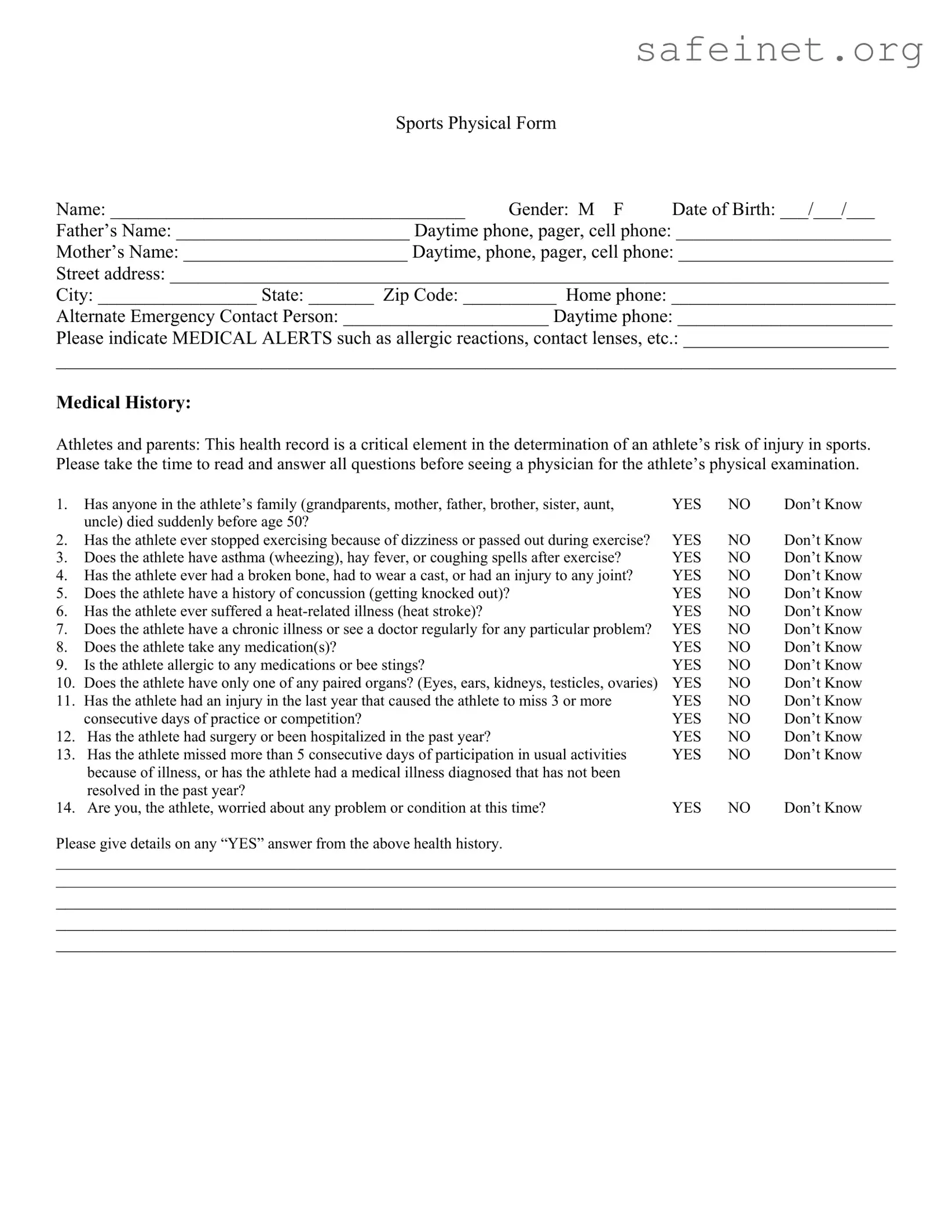
When it comes to ensuring that young athletes are fit for participation in sports, the Sports Physical form plays a crucial role. This form gathers essential information about the athlete's health history, including any medical alerts, family medical history, and past injuries. Parents and athletes are encouraged to carefully complete this form before a physician examination. Key sections of the form include personal details like name, date of birth, and contact information for parents or guardians. It also includes a series of health-related questions that assess the athlete’s risk factors, such as previous concussions, chronic illnesses, or any medications being taken. Additionally, the physician will conduct a physical exam, documenting findings related to various body systems, including cardiovascular health and musculoskeletal strength. The form concludes with the physician's certification of the athlete's fitness to participate in sports, along with any necessary participation restrictions. By thoroughly completing and reviewing this form, parents and athletes can take proactive steps toward a safe and healthy sports experience.
Sports Physical Form
Name: ______________________________________ Gender: M F Date of Birth: ___/___/___
Father’s Name: _________________________ Daytime phone, pager, cell phone: _______________________
Mother’s Name: ________________________ Daytime, phone, pager, cell phone: _______________________
Street address: _____________________________________________________________________________
City: _________________ State: _______ Zip Code: __________ Home phone: ________________________
Alternate Emergency Contact Person: ______________________ Daytime phone: _______________________
Please indicate MEDICAL ALERTS such as allergic reactions, contact lenses, etc.: ______________________
__________________________________________________________________________________________
Medical History:
Athletes and parents: This health record is a critical element in the determination of an athlete’s risk of injury in sports. Please take the time to read and answer all questions before seeing a physician for the athlete’s physical examination.
1. |
Has anyone in the athlete’s family (grandparents, mother, father, brother, sister, aunt, |
YES |
NO |
Don’t Know |
|
uncle) died suddenly before age 50? |
|
|
|
2. |
Has the athlete ever stopped exercising because of dizziness or passed out during exercise? |
YES |
NO |
Don’t Know |
3. |
Does the athlete have asthma (wheezing), hay fever, or coughing spells after exercise? |
YES |
NO |
Don’t Know |
4. |
Has the athlete ever had a broken bone, had to wear a cast, or had an injury to any joint? |
YES |
NO |
Don’t Know |
5. |
Does the athlete have a history of concussion (getting knocked out)? |
YES |
NO |
Don’t Know |
6. |
Has the athlete ever suffered a |
YES |
NO |
Don’t Know |
7. |
Does the athlete have a chronic illness or see a doctor regularly for any particular problem? |
YES |
NO |
Don’t Know |
8. |
Does the athlete take any medication(s)? |
YES |
NO |
Don’t Know |
9. |
Is the athlete allergic to any medications or bee stings? |
YES |
NO |
Don’t Know |
10. |
Does the athlete have only one of any paired organs? (Eyes, ears, kidneys, testicles, ovaries) |
YES |
NO |
Don’t Know |
11. |
Has the athlete had an injury in the last year that caused the athlete to miss 3 or more |
YES |
NO |
Don’t Know |
|
consecutive days of practice or competition? |
YES |
NO |
Don’t Know |
12. Has the athlete had surgery or been hospitalized in the past year? |
YES |
NO |
Don’t Know |
|
13. Has the athlete missed more than 5 consecutive days of participation in usual activities |
YES |
NO |
Don’t Know |
|
|
because of illness, or has the athlete had a medical illness diagnosed that has not been |
|
|
|
|
resolved in the past year? |
|
|
|
14. |
Are you, the athlete, worried about any problem or condition at this time? |
YES |
NO |
Don’t Know |
Please give details on any “YES” answer from the above health history.
____________________________________________________________________________________________________________
____________________________________________________________________________________________________________
__________________________________________________________________________________________
__________________________________________________________________________________________
__________________________________________________________________________________________

PHYSICAL EXAM – TO BE COMPLETED BY PHYSICIAN
Height __________ |
Weight __________ |
Pulse __________ |
Blood Pressure __________ |
Vision: R _____ / _____ uncorrected R _____ / _____ corrected |
L _____ / _____ uncorrected L _____ / _____ corrected |
||
Normal |
Abnormal Findings |
1.Eyes
2.Ears, Nose, Throat
3.Mouth & Teeth
4.Neck
5.Cardiovascular
6.Chest & Lungs
7.Abdomen
8.Skin
9.
10.Muskuloskeletal: ROM, strength, etc.
a.neck
b.spine
c.shoulders
d.arms/ hands
e.hips
f.thighs
g.knees
h.ankles
i.feet
11.Neuromuscular
Initials
Please Print/ Stamp
Physician’s Name ___________________________________________________________________________________
Street Address _____________________________________________________________________________________
City, State, Zip Code ________________________________________________________________________________
Telephone _________________________________________________________________________________________
I certify that I have examined this athlete and found him/her medically qualified to participate in sports. I also certify that I am a licensed medical physician, physician’s assistant, or family nurse practitioner. (Doctor of Chiropractic Medicine is not satisfactory.)
Physician Signature __________________________________________________________ Date __________________
PARTICIPATION RESTRICTIONS: _________________________________________________________________
__________________________________________________________________________________________________
__________________________________________________________________________________________________
| Fact Name | Details |
|---|---|
| Purpose | The Sports Physical form assesses an athlete's health and readiness for participation in sports. |
| Required Information | It collects personal details, medical history, and emergency contact information. |
| Medical Alerts | Parents must indicate any medical alerts, such as allergies or chronic conditions. |
| Physical Examination | A licensed physician must complete the physical exam section, confirming the athlete's fitness. |
| State-Specific Forms | Some states require specific forms. For example, California mandates forms under Education Code Section 49430. |
| Validity | Most states require the form to be completed annually before the athlete can participate in sports. |
Filling out the Sports Physical form is an important step in ensuring that athletes are healthy and ready to participate in sports activities. This form gathers essential information about the athlete's medical history and current health status. Follow these steps to complete the form accurately.
What is a Sports Physical Form?
The Sports Physical Form is a document required for athletes before participating in sports activities. It collects essential information about the athlete's health history, medical alerts, and physical examination results. This form helps ensure that athletes are fit to participate and identifies any potential health risks.
Why is the Sports Physical Form important?
This form is crucial for assessing an athlete's risk of injury. It provides a comprehensive health history that allows healthcare providers to make informed decisions regarding the athlete's participation in sports. Completing the form accurately can help prevent serious health issues during athletic activities.
Who needs to complete the Sports Physical Form?
All athletes, regardless of age or sport, are required to complete the Sports Physical Form before participating in any sports activities. This includes students in school sports programs and those involved in community leagues.
What information is required on the Sports Physical Form?
The form requires personal information such as the athlete's name, date of birth, and contact information for parents or guardians. Additionally, it includes questions about the athlete's medical history, any medications they may be taking, and any existing health conditions.
How should I fill out the medical history section?
When filling out the medical history section, be honest and thorough. Answer all questions to the best of your ability, especially regarding any past injuries, illnesses, or conditions. If you are unsure about an answer, it is better to indicate "Don’t Know" than to leave it blank.
Who performs the physical examination?
A licensed medical professional, such as a physician, physician’s assistant, or family nurse practitioner, must perform the physical examination. It is essential to ensure that the examination is conducted by someone qualified to assess the athlete's health status.
What happens if an athlete has a medical condition?
If an athlete has a medical condition, it is vital to disclose this on the form. The medical professional will review the information and determine if any restrictions are necessary for the athlete's participation in sports. This ensures that the athlete's health is prioritized.
How often do athletes need to submit a new Sports Physical Form?
Typically, athletes are required to submit a new Sports Physical Form annually. However, specific requirements may vary by school or sports organization, so it is essential to check with the relevant authority for their guidelines.
What should I do if my athlete has had a recent injury?
If your athlete has experienced a recent injury, it is crucial to provide detailed information on the form. Indicate the nature of the injury and any treatment received. This information will help the medical professional assess the athlete's readiness to participate safely.
Where can I obtain a Sports Physical Form?
You can typically obtain the Sports Physical Form from your school’s athletic department, healthcare provider, or local sports organization. Many schools also provide downloadable versions on their websites for convenience.
Incomplete Personal Information: One common mistake is failing to fill out all personal details, such as the athlete's name, gender, and date of birth. Ensure every field is completed to avoid delays.
Missing Emergency Contact Information: Another frequent oversight is neglecting to provide complete contact details for emergency contacts. This information is crucial in case of an emergency.
Ignoring Medical Alerts: Some individuals overlook the section for medical alerts. If there are allergies or other significant health issues, these should be clearly noted.
Inaccurate Medical History Responses: Responding inaccurately to medical history questions can have serious implications. Take time to answer each question honestly and thoroughly.
Skipping Details on “YES” Answers: When answering “YES” to any medical history question, it’s vital to provide additional details. This information helps healthcare providers make informed decisions.
Overlooking the Physician’s Section: After the physical exam, forgetting to have the physician complete their section can render the form invalid. Ensure this part is filled out and signed.
Not Keeping a Copy: Finally, failing to keep a copy of the completed form can lead to complications later. Always retain a copy for your records and for future reference.
The Sports Physical form is essential for ensuring the safety and health of athletes participating in sports. However, it is often accompanied by several other forms and documents that provide additional information and support for the athlete's health and participation. Below is a list of commonly used documents.
These documents work together to create a comprehensive health profile for the athlete, ensuring their safety and well-being while participating in sports. It is important for parents, guardians, and athletes to complete these forms accurately and thoroughly.
The Medical History Questionnaire is similar to the Sports Physical form in that it gathers essential health information from an individual. This document typically includes questions about past medical conditions, family health history, and current medications. The goal is to assess any potential health risks before engaging in physical activities. Both forms prioritize the safety of the participant by ensuring that any existing health issues are documented and considered before participation.
The Emergency Contact Form serves a similar purpose by ensuring that vital contact information is readily available in case of an emergency. This document typically includes the names and phone numbers of individuals who can be reached if the participant is injured or becomes ill. Like the Sports Physical form, it emphasizes the importance of having immediate access to someone who can make decisions on behalf of the participant if necessary.
The Consent to Treat Form is another document that parallels the Sports Physical form. This form grants permission for medical professionals to provide treatment in case of an emergency. Both documents require signatures from guardians or parents, ensuring that the participant's health and safety are prioritized. They both aim to provide a clear understanding of the participant's medical needs and the authority to act on them when required.
The Immunization Record is similar in that it provides crucial health information regarding vaccinations. This document typically lists all immunizations the participant has received, which is essential for preventing the spread of infectious diseases in sports settings. Both the Sports Physical form and the Immunization Record help ensure that participants are healthy and protected against preventable illnesses.
The Health Insurance Information Form collects details about the participant's health insurance coverage. This document is important for ensuring that medical expenses can be covered in case of injury or illness during sports activities. Like the Sports Physical form, it focuses on the participant's health and safety, ensuring that financial barriers do not prevent access to necessary medical care.
The Release of Liability Form is another document that shares similarities with the Sports Physical form. This form typically requires participants or their guardians to acknowledge the risks associated with physical activities. Both forms aim to protect organizations from legal claims while emphasizing the importance of understanding the potential dangers involved in sports participation.
The Athlete Code of Conduct is a document that outlines expected behaviors and responsibilities for participants. It shares a common goal with the Sports Physical form: ensuring the safety and well-being of all athletes. Both documents promote a healthy environment where athletes can thrive while minimizing risks associated with misconduct or poor health.
The Injury Report Form is similar in that it documents any injuries sustained during sports activities. This form is crucial for tracking injuries and ensuring appropriate medical attention is provided. Like the Sports Physical form, it emphasizes the importance of monitoring the athlete's health and safety throughout their participation in sports.
The Training Log serves a different but related purpose by tracking an athlete's training regimen and physical condition. This document helps coaches and trainers monitor the athlete's progress and identify any potential issues early on. Both the Training Log and the Sports Physical form focus on maintaining the athlete's health and optimizing performance while minimizing injury risks.
Finally, the Return-to-Play Form is similar to the Sports Physical form in that it assesses an athlete's readiness to resume activities after an injury or illness. This document typically requires a medical professional's clearance, ensuring that the athlete is physically prepared to participate again. Both forms prioritize the athlete's safety and aim to prevent further injury by confirming their health status before returning to sports.
When filling out the Sports Physical form, it is essential to ensure accuracy and completeness. Here are some important guidelines to follow:
Here are some common misconceptions about the Sports Physical form:
Filling out the Sports Physical form is an important step for athletes. Here are some key takeaways to keep in mind:
Completing this form accurately and promptly is essential for the athlete's safety and participation in sports.