When it comes to buying or selling a trailer in South Carolina, having the right documentation is essential to ensure a smooth transaction. One of the key documents involved in this process is the Trailer Bill of Sale form. This form serves as a legal record of the sale and includes important details such as the names and addresses of both the buyer and the seller, a description of the trailer being sold, and the sale price. Additionally, it often contains information about the trailer’s Vehicle Identification Number (VIN), which helps to confirm its identity and ownership history. The form not only protects the interests of both parties but also provides a clear understanding of the terms of the sale. Properly filling out this document can help avoid disputes and provide peace of mind for everyone involved. Whether you’re a seasoned buyer or new to the process, understanding the significance of the Trailer Bill of Sale is crucial for a successful transaction.
South Carolina Trailer Bill of Sale
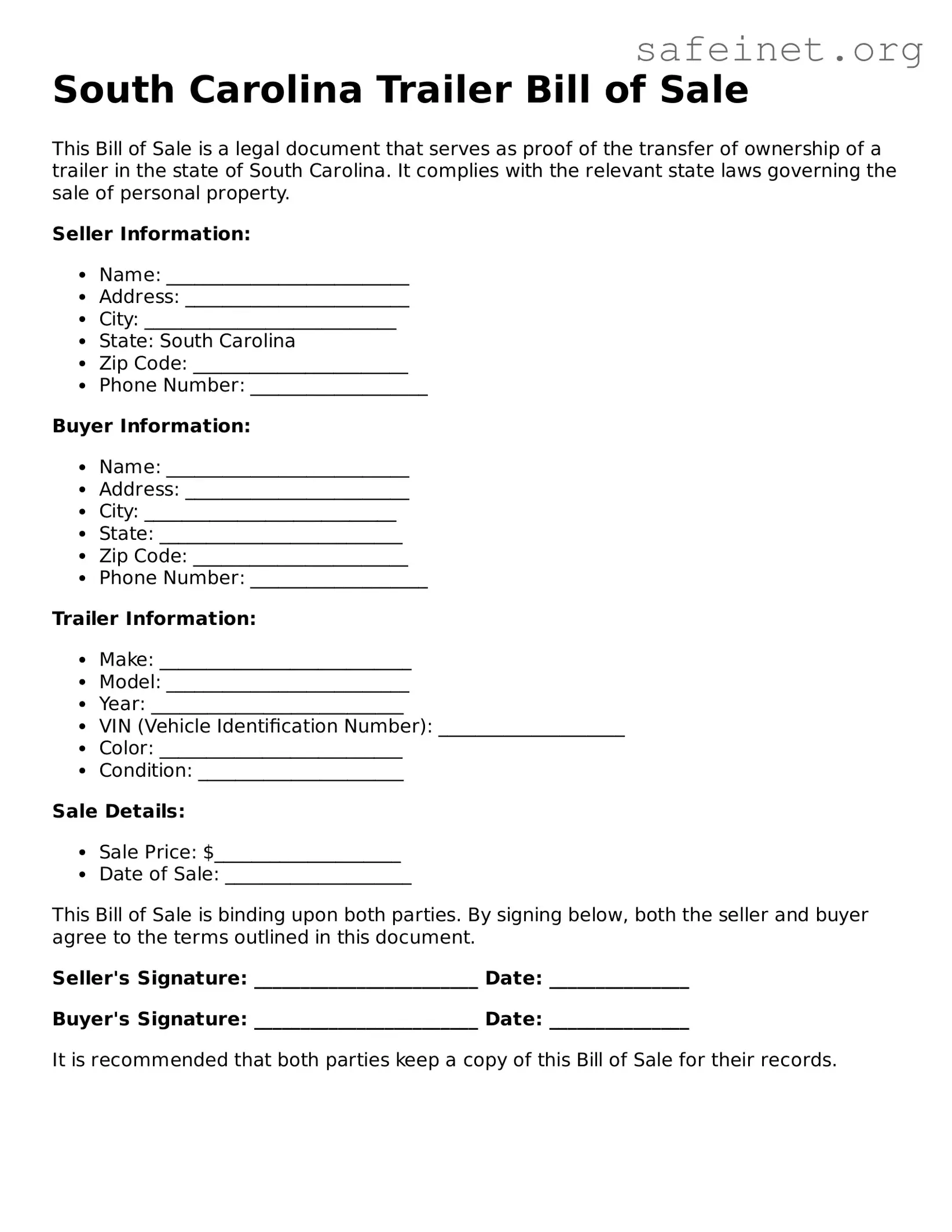
This Bill of Sale is a legal document that serves as proof of the transfer of ownership of a trailer in the state of South Carolina. It complies with the relevant state laws governing the sale of personal property.
Seller Information:
Buyer Information:
Trailer Information:
Sale Details:
This Bill of Sale is binding upon both parties. By signing below, both the seller and buyer agree to the terms outlined in this document.
Seller's Signature: ________________________ Date: _______________
Buyer's Signature: ________________________ Date: _______________
It is recommended that both parties keep a copy of this Bill of Sale for their records.
| Fact Name | Description |
|---|---|
| Purpose | The South Carolina Trailer Bill of Sale form is used to document the sale and transfer of ownership of a trailer between a seller and a buyer. |
| Governing Law | This form is governed by the South Carolina Code of Laws, specifically Title 56, which pertains to motor vehicles. |
| Required Information | The form must include details such as the names and addresses of both the buyer and seller, the trailer's identification number, and the sale price. |
| Notarization | While notarization is not always required, having the bill of sale notarized can provide an extra layer of protection for both parties. |
| Tax Implications | When a trailer is sold, the buyer may be responsible for paying sales tax based on the purchase price, which is often calculated during registration. |
| Record Keeping | Both the buyer and seller should keep a copy of the bill of sale for their records, as it serves as proof of the transaction. |
| Transfer of Title | The bill of sale is often used in conjunction with the trailer's title transfer process, ensuring that ownership is officially recorded. |
Filling out the South Carolina Trailer Bill of Sale form is a straightforward process. After completing the form, you will need to ensure that both parties sign it. This document serves as a record of the sale and can be important for registration and title transfer purposes.
What is a South Carolina Trailer Bill of Sale form?
The South Carolina Trailer Bill of Sale form is a legal document used to record the sale of a trailer from one party to another. This form provides essential details about the transaction, including the buyer and seller's information, the trailer's description, and the sale price. It serves as proof of ownership transfer and can be crucial for registering the trailer with the state.
Why do I need a Trailer Bill of Sale in South Carolina?
A Trailer Bill of Sale is necessary to establish a clear record of the sale. It protects both the buyer and seller by documenting the transaction details. This form can help avoid disputes in the future regarding ownership or payment. Additionally, it is often required when registering the trailer with the South Carolina Department of Motor Vehicles (DMV).
What information is required on the Trailer Bill of Sale form?
The form should include the following information: the full names and addresses of both the buyer and seller, the trailer's make, model, year, Vehicle Identification Number (VIN), and the sale price. Both parties should sign the document to validate the transaction. It may also be helpful to include the date of the sale and any additional terms agreed upon by both parties.
Is the Trailer Bill of Sale form required for all trailer sales in South Carolina?
While it is not legally required for all trailer sales, it is highly recommended. Having a Bill of Sale provides proof of the transaction and can facilitate the registration process. Some dealerships may provide their own documentation, but for private sales, using this form is advisable to protect both parties involved.
How do I complete the Trailer Bill of Sale form?
To complete the form, fill in the required information accurately. Start with the names and addresses of both the buyer and seller. Then, provide the trailer's details, including its make, model, year, and VIN. Finally, indicate the sale price and have both parties sign the document. It’s a good idea to keep a copy for your records.
Where can I obtain a South Carolina Trailer Bill of Sale form?
You can find a South Carolina Trailer Bill of Sale form online through various legal form websites. Additionally, local DMV offices may provide a template or guidance on how to create one. Ensure that the form you use complies with South Carolina laws to avoid any issues during the registration process.
Failing to provide accurate vehicle identification information. It is essential to include the correct VIN (Vehicle Identification Number) to ensure proper registration and ownership transfer.
Not including the sale price. The bill of sale should clearly state the agreed-upon amount for the trailer, which can affect tax assessments.
Neglecting to include the date of the transaction. This date is important for both parties and can impact legal rights and obligations.
Omitting signatures. Both the seller and the buyer must sign the document for it to be legally binding.
Using incorrect or unclear descriptions of the trailer. Providing detailed information about the trailer’s make, model, and year helps avoid disputes later.
Not providing contact information. Including phone numbers or email addresses can facilitate communication if questions arise after the sale.
Failing to mention any liens or outstanding loans. Disclosing this information is crucial to ensure the buyer is aware of any financial obligations attached to the trailer.
Inadequate witness signatures. Some states require a witness to sign the bill of sale, which can add an extra layer of verification.
Not keeping a copy of the completed form. Both parties should retain a copy for their records, which can be useful for future reference or disputes.
When buying or selling a trailer in South Carolina, it’s important to have the right documents in place to ensure a smooth transaction. Along with the Trailer Bill of Sale form, several other forms and documents are commonly used. Here’s a list of those documents, each serving a specific purpose in the process.
Having these documents ready can help facilitate a seamless transaction and provide peace of mind for both buyers and sellers. Always ensure that all paperwork is completed accurately to avoid any future complications.
The South Carolina Trailer Bill of Sale form shares similarities with the Vehicle Bill of Sale. Both documents serve as proof of transfer of ownership from one party to another. They include essential details such as the buyer's and seller's names, addresses, and the vehicle or trailer's identification number. This ensures that both parties have a clear record of the transaction, which can be crucial for future reference or in case of disputes.
Another document that aligns closely with the Trailer Bill of Sale is the Boat Bill of Sale. Like the trailer, a boat is a personal property that requires a formal transfer of ownership. The Boat Bill of Sale captures similar information, including the seller's and buyer's details, the boat's make, model, and identification number. This documentation is vital for registering the boat and proving ownership, just as it is for trailers.
The Motorcycle Bill of Sale is also akin to the South Carolina Trailer Bill of Sale. This document is used when ownership of a motorcycle is transferred. It contains comparable elements such as the names and addresses of both parties and the motorcycle's vehicle identification number (VIN). Just as with trailers, having a Motorcycle Bill of Sale helps protect both the buyer and seller by providing legal evidence of the transaction.
The RV Bill of Sale shares many characteristics with the Trailer Bill of Sale as well. Recreational vehicles, like trailers, require a formal bill of sale to document ownership changes. This document includes pertinent details about the RV, such as its make, model, and VIN, along with the personal information of both the buyer and seller. This ensures clarity and legal protection for both parties involved in the transaction.
The Snowmobile Bill of Sale is another document that mirrors the Trailer Bill of Sale. Snowmobiles are often bought and sold, necessitating a formal record of the transaction. This document includes the same types of information, such as the buyer's and seller's names and addresses, as well as the snowmobile's identification details. This formalization helps to prevent misunderstandings and establishes ownership clearly.
In a similar vein, the ATV (All-Terrain Vehicle) Bill of Sale serves as another comparable document. When an ATV is sold, the transaction is documented using this bill of sale, which includes information about both the buyer and seller, as well as the ATV's identification number. This ensures that ownership is transferred legally and provides both parties with a record of the sale.
The Personal Property Bill of Sale is a broader document that can encompass various types of personal property, including trailers. This document serves a similar purpose in recording the sale of any personal item, detailing the buyer's and seller's information, along with a description of the property being sold. Like the Trailer Bill of Sale, it provides legal proof of the transaction.
Lastly, the General Bill of Sale is a versatile document that can be used for a wide range of transactions, including trailers. It captures the essential details of the sale, such as the parties involved and the item being sold. This document is useful for establishing ownership and can be adapted for various types of personal property transactions, making it similar in function to the Trailer Bill of Sale.
When filling out the South Carolina Trailer Bill of Sale form, it is important to follow specific guidelines to ensure the document is accurate and valid. Below are some essential dos and don’ts to consider:
By adhering to these guidelines, you can help ensure a smooth transaction and avoid potential complications in the future.
Understanding the South Carolina Trailer Bill of Sale form is crucial for anyone involved in buying or selling a trailer. However, several misconceptions can lead to confusion. Here are eight common misconceptions:
Clearing up these misconceptions can help ensure a smoother transaction when dealing with trailers in South Carolina. Always verify the specific requirements for your situation to avoid complications.
When it comes to buying or selling a trailer in South Carolina, a Trailer Bill of Sale form is essential. This document serves as proof of the transaction and helps protect both parties involved. Here are some key takeaways to consider when filling out and using this form:
Filling out the Trailer Bill of Sale form accurately and understanding its importance can make the buying or selling process smoother and more secure. Always approach the transaction with diligence and care.