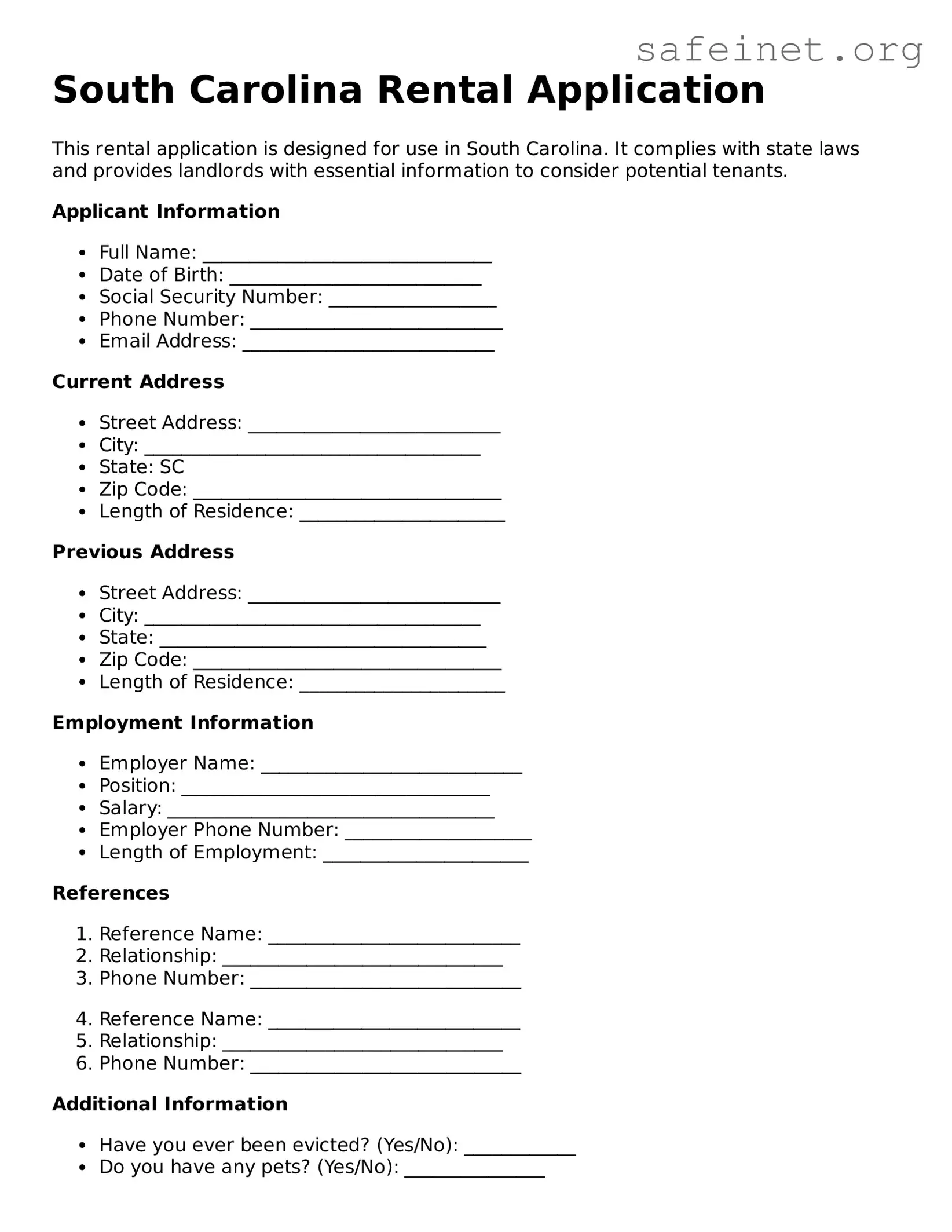
When seeking a rental property in South Carolina, the rental application form plays a crucial role in the leasing process. This document serves as a comprehensive tool for landlords to assess potential tenants, ensuring that they make informed decisions. Key aspects of the form include personal information, such as the applicant’s name, contact details, and social security number, which help establish identity and background. Additionally, the application typically requests employment history and income verification, allowing landlords to gauge financial stability. References from previous landlords or personal contacts may also be required, providing insight into the applicant’s rental history and character. Furthermore, the form often includes consent for background checks, which can encompass credit history and criminal records, thus offering a deeper understanding of the applicant’s reliability. By thoroughly completing the rental application, prospective tenants can enhance their chances of securing their desired living space while landlords can protect their investments by selecting responsible renters.
South Carolina Rental Application
This rental application is designed for use in South Carolina. It complies with state laws and provides landlords with essential information to consider potential tenants.
Applicant Information
Current Address
Previous Address
Employment Information
References
Additional Information
Signature
I hereby certify that the information provided in this application is true and complete to the best of my knowledge. I understand that any false information may result in the denial of my application.
Applicant Signature: ___________________________
Date: ______________________________________
| Fact Name | Details |
|---|---|
| Purpose | The South Carolina Rental Application form is used by landlords to screen potential tenants. |
| Required Information | Applicants must provide personal details, rental history, employment information, and references. |
| Application Fee | Landlords may charge a non-refundable application fee to cover background checks. |
| Fair Housing Compliance | The application process must comply with the Fair Housing Act, prohibiting discrimination. |
| Governing Law | The South Carolina Residential Landlord and Tenant Act governs rental applications. |
| Background Checks | Landlords often conduct credit and criminal background checks as part of the application process. |
| Approval Process | After reviewing applications, landlords will notify applicants of their approval or denial status. |
Completing the South Carolina Rental Application form is an essential step in securing a rental property. The information you provide will help landlords evaluate your suitability as a tenant. Here’s how to fill out the form correctly and efficiently.
Once you have completed the application, review it for any errors or missing information. Submitting a well-filled application can increase your chances of being approved for the rental property you desire.
What is a South Carolina Rental Application form?
The South Carolina Rental Application form is a document that potential tenants fill out when applying to rent a property. It typically collects personal information, employment history, rental history, and references. This information helps landlords assess the suitability of applicants for their rental properties.
What information do I need to provide on the application?
When filling out the application, you will generally need to provide your full name, contact information, Social Security number, employment details, income information, and previous rental history. Some applications may also ask for personal references or information about pets, if applicable.
Is there a fee to submit a rental application?
Many landlords or property management companies charge a fee to process rental applications. This fee can vary widely, typically ranging from $25 to $75. It is important to ask about any fees upfront and understand what they cover, such as background checks or credit reports.
How long does it take to process a rental application?
The processing time for a rental application can vary depending on the landlord or management company. Generally, it may take anywhere from a few hours to several days. Factors that can affect this timeline include the thoroughness of the background check and the responsiveness of your references.
Can I be denied for any reason?
Yes, landlords have the right to deny rental applications for various reasons. Common reasons include a poor credit history, insufficient income, or a negative rental history. However, landlords must comply with fair housing laws, which prohibit discrimination based on race, color, religion, sex, national origin, disability, or familial status.
What should I do if my application is denied?
If your application is denied, the landlord is required to provide you with a notice explaining the reasons for the denial. You can ask for clarification and, if you believe the denial was unjust, you may have the option to appeal the decision or apply for another property.
Can I withdraw my application after submitting it?
Yes, you can usually withdraw your application, but it’s important to notify the landlord or property management as soon as possible. Be aware that some landlords may not refund the application fee if you decide to withdraw, so it’s wise to clarify their policy on this matter before submitting your application.
Incomplete Information: One of the most common mistakes is failing to fill out all required fields. Missing information can lead to delays or even rejection of the application.
Incorrect Contact Details: Applicants sometimes provide outdated or incorrect phone numbers and email addresses. This can hinder communication between the landlord and the applicant.
Failure to Disclose Income: Not listing all sources of income can be a significant oversight. Landlords typically want to see a complete picture of an applicant’s financial situation.
Neglecting to Provide References: Some applicants forget to include personal or professional references. References can support the application and provide additional assurance to the landlord.
Omitting Previous Rental History: Leaving out past addresses or landlords can raise red flags. Landlords often check rental history to assess reliability and responsibility.
Not Signing the Application: An unsigned application is often considered invalid. Applicants must ensure they sign and date the form before submission.
Ignoring Credit History: Some applicants fail to mention any potential issues with their credit history. Being upfront about credit can foster trust and transparency.
Providing Inaccurate Information: Misrepresenting facts, whether intentional or accidental, can lead to disqualification. Honesty is crucial throughout the application process.
Not Following Instructions: Each rental application may have specific instructions. Ignoring these can result in incomplete applications or failure to meet submission requirements.
When renting a property in South Carolina, several documents often accompany the Rental Application form. Each of these documents serves a specific purpose in the rental process, ensuring that both landlords and tenants have the necessary information to make informed decisions.
These documents collectively enhance the rental process, providing clarity and protection for both landlords and tenants. Having them readily available can facilitate smoother transactions and help establish a positive rental relationship.
The South Carolina Rental Application form shares similarities with a standard lease agreement. Both documents serve the purpose of establishing a legal relationship between a landlord and a tenant. A lease agreement outlines the terms of the rental arrangement, including duration, rent amount, and responsibilities of each party. Similarly, the rental application collects essential information to assess a prospective tenant’s suitability, which ultimately influences the decision-making process regarding the lease agreement.
Another document comparable to the South Carolina Rental Application is the tenant screening report. This report often accompanies the rental application and provides a detailed background check on the applicant. It typically includes credit history, rental history, and criminal background information. While the rental application gathers information directly from the applicant, the tenant screening report verifies that information through third-party sources, ensuring that landlords have a comprehensive view of the applicant's reliability.
The South Carolina Rental Application is also similar to a personal reference form. This document is often requested by landlords to gain insights into an applicant’s character and reliability from people who know them. While the rental application focuses on factual data such as employment and income, the personal reference form seeks subjective opinions about the applicant's behavior and responsibility. Together, these documents help landlords make informed decisions about potential tenants.
A credit application is another document that parallels the South Carolina Rental Application. A credit application specifically focuses on an applicant's financial status, including income, debts, and credit score. This information is critical for landlords to assess the financial stability of a prospective tenant. While the rental application may ask for similar financial details, the credit application provides a deeper analysis of the applicant's creditworthiness, which is crucial for evaluating their ability to pay rent consistently.
Lastly, the employment verification form is akin to the South Carolina Rental Application. This document confirms the applicant's employment status and income, which are vital for determining their ability to pay rent. While the rental application requests employment details, the employment verification form provides an official confirmation from the employer. This additional layer of verification can give landlords greater confidence in the applicant's financial stability.
When filling out the South Carolina Rental Application form, it is important to follow certain guidelines to ensure a smooth process. Here are nine things you should and shouldn't do:
There are several misconceptions regarding the South Carolina Rental Application form. Understanding these can help potential renters navigate the application process more effectively.
Filling out a rental application in South Carolina is an important step for both landlords and tenants. Here are some key takeaways to keep in mind:
By keeping these points in mind, you can navigate the rental application process more effectively and increase your chances of securing the rental property you desire.