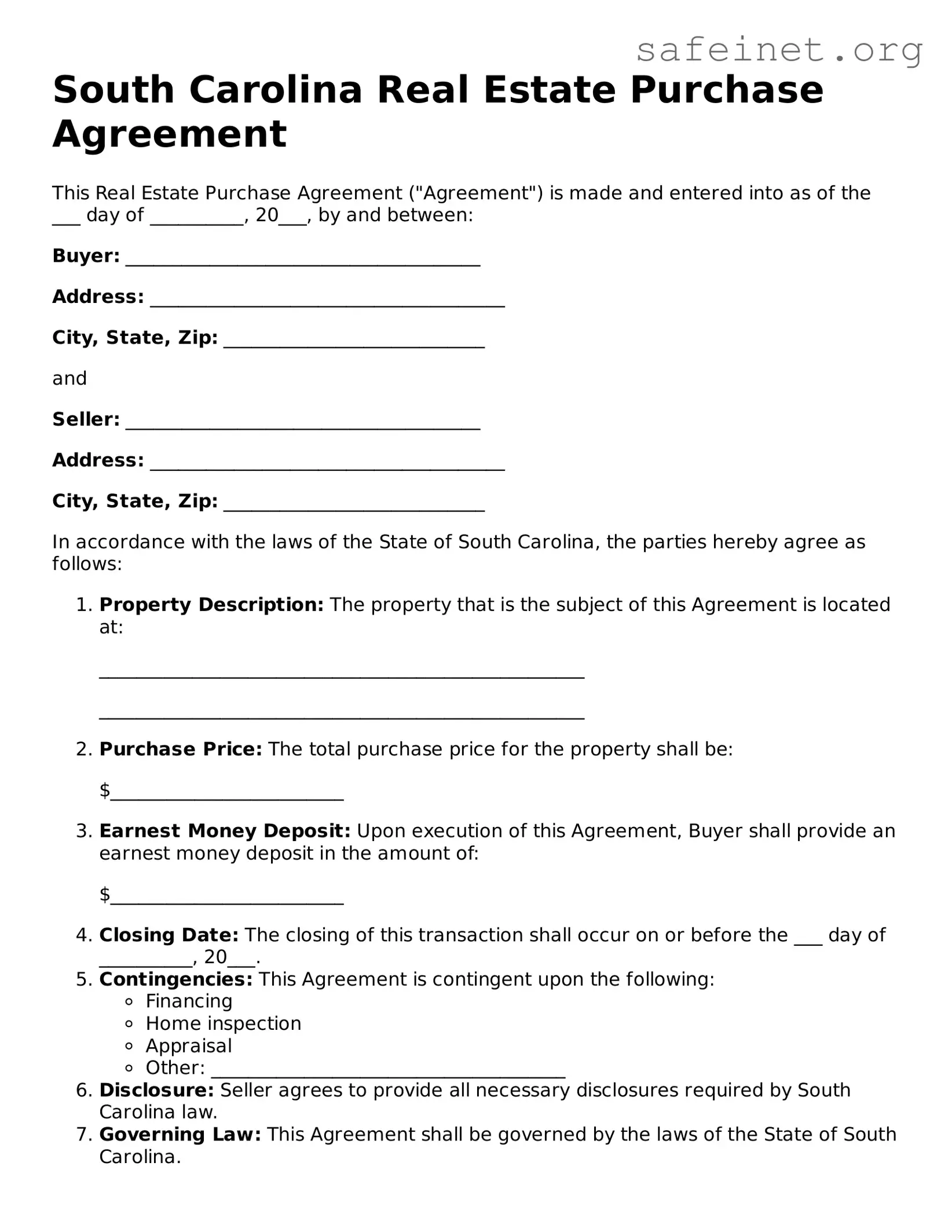
When embarking on the journey of purchasing a home in South Carolina, understanding the Real Estate Purchase Agreement form is essential for both buyers and sellers. This document serves as the foundation for the transaction, outlining the terms and conditions agreed upon by both parties. Key elements include the purchase price, financing details, and contingencies that protect the interests of the buyer. Additionally, the agreement specifies important dates, such as the closing date and any inspection periods. It also addresses the responsibilities of each party, ensuring clarity in the transfer of property ownership. By familiarizing oneself with this form, individuals can navigate the complexities of real estate transactions with greater confidence and peace of mind.
South Carolina Real Estate Purchase Agreement
This Real Estate Purchase Agreement ("Agreement") is made and entered into as of the ___ day of __________, 20___, by and between:
Buyer: ______________________________________
Address: ______________________________________
City, State, Zip: ____________________________
and
Seller: ______________________________________
Address: ______________________________________
City, State, Zip: ____________________________
In accordance with the laws of the State of South Carolina, the parties hereby agree as follows:
____________________________________________________
____________________________________________________
$_________________________
$_________________________
IN WITNESS WHEREOF, the parties hereto have executed this Agreement as of the date first above written.
Buyer Signature: _____________________________
Date: ______________________________________
Seller Signature: _____________________________
Date: ______________________________________
| Fact Name | Details |
|---|---|
| Governing Law | The South Carolina Real Estate Purchase Agreement is governed by South Carolina state law. |
| Purpose | This form outlines the terms and conditions for the sale of real estate in South Carolina. |
| Parties Involved | The agreement includes the buyer and seller, both of whom must be clearly identified. |
| Property Description | A detailed description of the property being sold must be included in the agreement. |
| Purchase Price | The total purchase price and any deposit requirements are specified in the agreement. |
| Contingencies | Common contingencies, such as financing and inspections, are typically included. |
| Closing Date | The agreement should state the anticipated closing date for the transaction. |
| Signatures | Both parties must sign the agreement for it to be legally binding. |
Once you have the South Carolina Real Estate Purchase Agreement form in front of you, it's time to fill it out carefully. This form is essential for outlining the terms of a real estate transaction. Make sure you have all necessary information at hand before you begin.
After filling out the form, review it for accuracy. Once everything is confirmed, you can proceed with the next steps in the real estate transaction process.
What is a South Carolina Real Estate Purchase Agreement?
The South Carolina Real Estate Purchase Agreement is a legally binding document that outlines the terms and conditions under which a buyer agrees to purchase real property from a seller. This agreement includes details such as the purchase price, closing date, and any contingencies that must be met before the sale can proceed.
What key elements are included in the agreement?
Key elements of the agreement typically include the names of the buyer and seller, a description of the property being sold, the purchase price, payment terms, any contingencies (like inspections or financing), and the closing date. Additionally, it may outline responsibilities for repairs and any included fixtures or appliances.
Do I need a lawyer to complete this agreement?
What happens if the buyer or seller backs out of the agreement?
If either party backs out of the agreement without a valid reason, they may be subject to legal consequences. This could include losing their earnest money deposit or facing a lawsuit for breach of contract. It’s important to understand the contingencies outlined in the agreement, as these can provide valid reasons for withdrawing.
Can the agreement be modified after it is signed?
Yes, the agreement can be modified after it is signed, but both parties must agree to the changes. Any modifications should be documented in writing and signed by both the buyer and seller to ensure that they are legally enforceable.
What is an earnest money deposit?
An earnest money deposit is a sum of money that the buyer provides to show their serious intent to purchase the property. This deposit is typically held in escrow and applied toward the purchase price at closing. If the sale falls through due to the buyer's fault, the seller may keep the earnest money as compensation.
Are there any contingencies I should consider including?
Common contingencies include home inspections, financing approval, and appraisal contingencies. These allow the buyer to back out of the agreement without penalty if certain conditions are not met. It's wise to discuss potential contingencies with a real estate professional or attorney to ensure you are adequately protected.
How long does the agreement remain valid?
The validity of the agreement typically lasts until the closing date specified in the document. However, if the conditions of the agreement are not met by that date, the agreement may become void unless extended by mutual consent of both parties.
What should I do if I have questions about the agreement?
If you have questions about the agreement, it's best to consult with a real estate agent or an attorney who specializes in real estate transactions. They can provide clarity on any confusing terms and ensure that you fully understand your rights and obligations under the agreement.
Failing to include all necessary parties: It is crucial to list all buyers and sellers involved in the transaction. Omitting any party can lead to legal complications later.
Not specifying the purchase price: Clearly stating the agreed-upon purchase price is essential. Leaving this blank can result in misunderstandings and disputes.
Ignoring the earnest money deposit: Buyers should indicate the amount of earnest money they are willing to put down. This shows good faith and commitment to the purchase.
Neglecting to include contingencies: Buyers should consider including contingencies such as financing or home inspections. These protect the buyer’s interests and provide an exit strategy if issues arise.
Overlooking deadlines: Important dates, such as the closing date and inspection period, must be clearly stated. Missing these deadlines can jeopardize the transaction.
Failing to review property disclosures: Sellers are required to provide disclosures about the property. Buyers should carefully review these documents to avoid future issues.
Using vague language: Clear and precise language is necessary throughout the agreement. Ambiguities can lead to different interpretations and potential disputes.
Not seeking professional advice: Engaging a real estate agent or attorney can provide valuable guidance. Their expertise can help avoid common pitfalls and ensure a smooth transaction.
When engaging in real estate transactions in South Carolina, several important documents accompany the Real Estate Purchase Agreement. These forms help to clarify terms, protect the interests of both parties, and ensure a smooth transaction process. Here’s a look at some of the key documents you might encounter.
Understanding these forms is essential for anyone involved in a real estate transaction. Each document plays a vital role in ensuring that both buyers and sellers are protected and informed throughout the process. By being aware of these key forms, you can navigate your real estate journey with confidence.
The South Carolina Real Estate Purchase Agreement form shares similarities with the Residential Purchase Agreement commonly used in many states. Both documents outline the terms of sale for residential properties, including purchase price, financing details, and contingencies. They serve to protect the interests of both buyers and sellers while ensuring that all parties are clear on the expectations and obligations involved in the transaction.
Another comparable document is the Commercial Real Estate Purchase Agreement. While it caters specifically to commercial properties, it mirrors the structure of the residential agreement. Both documents detail the purchase price, closing date, and any contingencies, such as inspections or financing. However, the commercial version often includes additional clauses related to zoning laws and business operations.
The Lease Purchase Agreement is also similar, as it allows a tenant to rent a property with the option to buy it later. Like the Real Estate Purchase Agreement, it outlines the terms of the sale, including the purchase price and any conditions that must be met before the purchase can be finalized. This document is particularly beneficial for buyers who may not currently qualify for a mortgage.
The Option to Purchase Agreement is another relevant document. It grants a potential buyer the exclusive right to purchase a property within a specified time frame. This agreement outlines the terms of the option, including the purchase price and duration, similar to how a Real Estate Purchase Agreement details the final sale terms. This document can provide buyers with time to secure financing or conduct further inspections.
The Seller Financing Agreement is akin to the Real Estate Purchase Agreement in that it outlines the terms of a property sale where the seller provides financing to the buyer. Both documents cover purchase price, payment terms, and contingencies. This type of agreement can be particularly useful in situations where traditional financing is not available.
The Counteroffer form is also relevant, as it is often used in conjunction with the Real Estate Purchase Agreement. When a buyer or seller disagrees with terms, a counteroffer can be made to negotiate changes. This document serves to clarify the new terms while maintaining the original intent of the purchase agreement.
The Listing Agreement is another document that bears similarities. This agreement is used by sellers to engage a real estate agent for the sale of their property. It outlines the terms of the listing, including the commission structure and duration of the agreement. Both documents ultimately aim to facilitate a successful transaction, albeit from different perspectives.
The Buyer’s Agency Agreement is closely related, as it establishes a formal relationship between a buyer and a real estate agent. It outlines the agent's duties and the buyer's obligations in the search for a property. While it does not finalize the sale, it prepares the buyer for the process, much like the Real Estate Purchase Agreement prepares both parties for the transaction.
The Closing Disclosure is another important document that aligns with the Real Estate Purchase Agreement. It provides a detailed account of the final terms of the sale, including costs and fees associated with closing. This document ensures that both parties are aware of their financial obligations and serves as a final confirmation of the agreement before the transaction is completed.
Lastly, the Title Report is similar in that it provides crucial information about the property being sold. It outlines any liens, encumbrances, or ownership issues that could affect the sale. This document is essential for ensuring that the buyer receives clear title to the property, aligning with the goals of the Real Estate Purchase Agreement to facilitate a smooth transaction.
When filling out the South Carolina Real Estate Purchase Agreement form, it is essential to follow certain guidelines to ensure accuracy and compliance. Here are nine important dos and don'ts:
Understanding the South Carolina Real Estate Purchase Agreement form is crucial for anyone involved in real estate transactions. However, several misconceptions can lead to confusion. Here are eight common misunderstandings:
Being aware of these misconceptions can help individuals navigate the real estate process more effectively. Always consider seeking professional guidance when dealing with legal documents.
When navigating the South Carolina Real Estate Purchase Agreement form, it is essential to understand its components and implications. Here are seven key takeaways to ensure a smooth process:
Understanding these elements will help facilitate a successful real estate transaction in South Carolina.