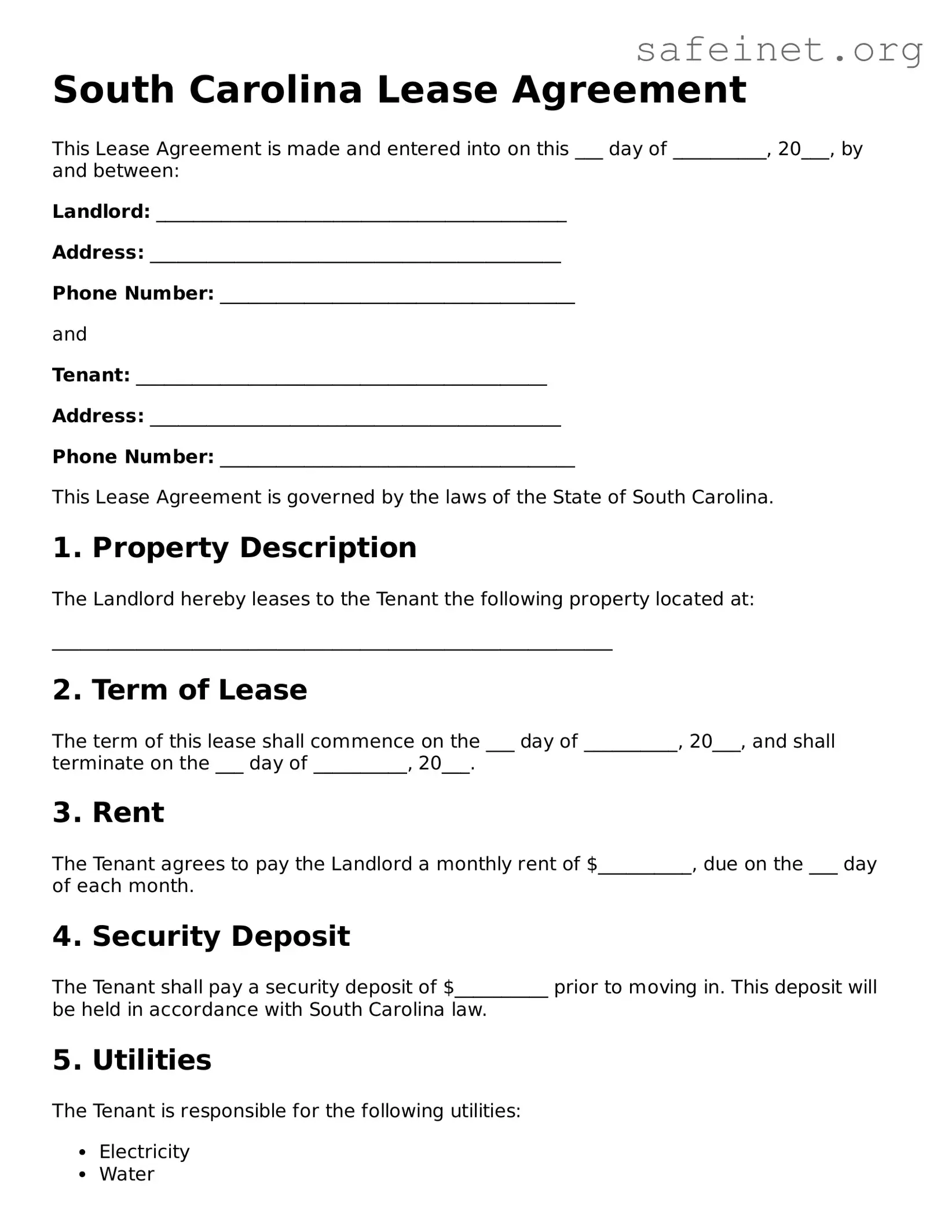
In South Carolina, a Lease Agreement form serves as a crucial document that outlines the terms and conditions between a landlord and a tenant. This form typically includes essential details such as the duration of the lease, the amount of rent due, and the responsibilities of both parties. It covers aspects like security deposits, maintenance obligations, and rules regarding pets or alterations to the property. Additionally, the agreement specifies the procedures for terminating the lease and the notice period required. By clearly defining these elements, the Lease Agreement helps to protect the rights of both landlords and tenants, ensuring a smooth rental experience. Understanding the components of this form is vital for anyone involved in a rental transaction in South Carolina, as it lays the groundwork for a legally binding relationship between the parties involved.
South Carolina Lease Agreement
This Lease Agreement is made and entered into on this ___ day of __________, 20___, by and between:
Landlord: ____________________________________________
Address: ____________________________________________
Phone Number: ______________________________________
and
Tenant: ____________________________________________
Address: ____________________________________________
Phone Number: ______________________________________
This Lease Agreement is governed by the laws of the State of South Carolina.
1. Property Description
The Landlord hereby leases to the Tenant the following property located at:
____________________________________________________________
2. Term of Lease
The term of this lease shall commence on the ___ day of __________, 20___, and shall terminate on the ___ day of __________, 20___.
3. Rent
The Tenant agrees to pay the Landlord a monthly rent of $__________, due on the ___ day of each month.
4. Security Deposit
The Tenant shall pay a security deposit of $__________ prior to moving in. This deposit will be held in accordance with South Carolina law.
5. Utilities
The Tenant is responsible for the following utilities:
6. Maintenance and Repairs
The Tenant agrees to maintain the property in good condition and promptly report any necessary repairs to the Landlord.
7. Termination
Either party may terminate this lease by providing a written notice of ___ days prior to the intended termination date.
8. Governing Law
This Lease Agreement shall be governed by the laws of the State of South Carolina.
9. Signatures
By signing below, both parties agree to the terms and conditions outlined in this Lease Agreement.
Landlord Signature: ____________________________ Date: ___________
Tenant Signature: _____________________________ Date: ___________
| Fact Name | Details |
|---|---|
| Governing Law | The South Carolina Lease Agreement is governed by the South Carolina Code of Laws, Title 27, Chapter 40, which outlines the rights and responsibilities of landlords and tenants. |
| Duration of Lease | Lease agreements in South Carolina can be for a fixed term, typically ranging from six months to one year, or they may be month-to-month, allowing for greater flexibility. |
| Security Deposit Regulations | Landlords in South Carolina can charge a security deposit, but it cannot exceed one month's rent for leases longer than one month. The deposit must be held in a separate account. |
| Notice Requirements | For terminating a lease, South Carolina law requires landlords to provide a written notice of at least 30 days for month-to-month leases, while fixed-term leases typically end automatically without notice. |
Filling out the South Carolina Lease Agreement form is an important step in establishing a rental arrangement. You will need to provide accurate information to ensure that both parties understand their rights and responsibilities. Follow these steps carefully to complete the form correctly.
What is a South Carolina Lease Agreement form?
A South Carolina Lease Agreement form is a legal document that outlines the terms and conditions under which a landlord allows a tenant to occupy a rental property. This agreement typically includes details such as the duration of the lease, rent amount, security deposit, maintenance responsibilities, and rules regarding the use of the property. It serves to protect the rights of both parties and ensures clarity in their obligations.
What should be included in a South Carolina Lease Agreement?
When drafting a South Carolina Lease Agreement, several key elements should be included. These typically encompass the names of the landlord and tenant, the rental property address, the lease term (whether month-to-month or fixed-term), the amount of rent and payment schedule, security deposit details, maintenance responsibilities, and any specific rules regarding pets or alterations to the property. Clear definitions of terms and conditions help prevent misunderstandings down the line.
How long does a lease last in South Carolina?
The duration of a lease in South Carolina can vary significantly. Most commonly, leases are either month-to-month or fixed-term, lasting anywhere from six months to a year. A month-to-month lease automatically renews each month unless either party gives proper notice to terminate. Fixed-term leases, on the other hand, end on a specific date unless renewed. It’s essential for both landlords and tenants to understand the implications of each type of lease duration.
Can a landlord increase rent during a lease in South Carolina?
In South Carolina, landlords cannot increase rent during a fixed-term lease unless the lease agreement specifically allows for such increases. However, for month-to-month leases, landlords can raise the rent, but they must provide proper written notice—typically 30 days in advance. This notice period gives tenants time to prepare for the change or decide if they want to continue renting under the new terms.
What happens if a tenant breaks a lease in South Carolina?
If a tenant breaks a lease in South Carolina, they may face several consequences. Typically, the landlord can retain the security deposit and may seek additional damages if specified in the lease agreement. The landlord has a duty to mitigate damages, meaning they must attempt to re-rent the property as soon as possible. Tenants should carefully review their lease terms to understand any penalties or obligations they may incur if they need to terminate the lease early.
Is it necessary to have a written lease agreement in South Carolina?
While verbal agreements can be legally binding in South Carolina, having a written lease agreement is highly recommended. A written document provides clear evidence of the terms agreed upon and protects both the landlord and tenant in case of disputes. It also helps clarify expectations regarding rent payments, maintenance responsibilities, and other important aspects of the rental relationship. For both parties, a written lease fosters transparency and security.
Failing to include all required tenant information. Each tenant's full name and contact details should be clearly listed.
Not specifying the lease term. Clearly outline the start and end dates of the lease to avoid confusion.
Overlooking the rent amount. Ensure the monthly rent is stated accurately, along with the due date.
Neglecting to include security deposit details. Specify the amount and conditions for its return at the end of the lease.
Using vague language for maintenance responsibilities. Clearly define who is responsible for repairs and upkeep.
Not addressing utilities. Specify which utilities are included in the rent and which are the tenant's responsibility.
Failing to outline pet policies. If pets are allowed, include any restrictions or additional fees.
Not including provisions for termination. Clearly state the process for ending the lease early, if necessary.
Omitting signature lines. Both parties must sign and date the agreement to make it legally binding.
Ignoring local laws and regulations. Ensure that the lease complies with South Carolina rental laws to avoid legal issues.
A South Carolina Lease Agreement is often accompanied by several other documents that help clarify the terms and responsibilities of both landlords and tenants. Here is a list of commonly used forms and documents that may be relevant.
These documents play a crucial role in the leasing process. They help establish clear communication and expectations between landlords and tenants, contributing to a smoother rental experience.
The South Carolina Lease Agreement form shares similarities with a Residential Rental Agreement. Both documents outline the terms under which a landlord rents property to a tenant. They specify essential details such as the rental amount, duration of the lease, and the responsibilities of both parties. This clarity helps prevent misunderstandings and provides a legal framework for resolving disputes.
Another comparable document is the Commercial Lease Agreement. While primarily used for business properties, it includes many of the same elements as a residential lease. Key terms such as rent, duration, and maintenance responsibilities are defined. Both agreements serve to protect the interests of landlords and tenants, ensuring that each party understands their obligations.
The Rental Application form is also similar in purpose. It is typically completed by prospective tenants to provide landlords with information about their rental history and financial situation. While it does not establish the terms of a lease, it plays a crucial role in the leasing process by helping landlords select suitable tenants based on their criteria.
The Move-In Checklist can be likened to the Lease Agreement in that it documents the condition of the property at the beginning of the tenancy. This checklist helps ensure that both parties agree on the state of the property, which can be vital for security deposit disputes when the lease ends.
A Security Deposit Agreement is another related document. It specifies the amount of the security deposit and the conditions under which it may be withheld. This agreement protects both the landlord's property and the tenant's rights, similar to how the Lease Agreement outlines the broader terms of the rental relationship.
In addition, a Sublease Agreement is similar in that it allows a tenant to rent out the property to another party. This document must align with the original Lease Agreement, ensuring that the primary landlord's rights are respected. It highlights the importance of communication and consent between all parties involved.
The Lease Renewal Agreement also bears resemblance to the original Lease Agreement. It outlines the terms for extending the lease period, often including adjustments to rent or other conditions. This document ensures continuity in the landlord-tenant relationship while providing an opportunity to revisit terms that may need updating.
Lastly, the Eviction Notice shares some similarities with the Lease Agreement, particularly regarding the termination of the rental relationship. While the Lease Agreement establishes the terms of occupancy, the Eviction Notice serves as a formal communication to terminate that agreement under specified circumstances. Both documents are crucial in maintaining legal clarity and protecting the rights of both parties.
When filling out the South Carolina Lease Agreement form, attention to detail is crucial. Here are seven important dos and don'ts to keep in mind:
By following these guidelines, you can help ensure a smooth leasing process and protect your rights as a tenant.
Understanding the South Carolina Lease Agreement form is crucial for both landlords and tenants. However, several misconceptions exist that can lead to confusion or legal issues. Below are seven common misconceptions explained.
Being aware of these misconceptions can help both landlords and tenants navigate their agreements more effectively and avoid potential disputes.
When filling out and using the South Carolina Lease Agreement form, it is important to understand several key aspects. The following points provide essential information for both landlords and tenants.
By following these guidelines, both landlords and tenants can create a clear and effective lease agreement that protects their rights and responsibilities.