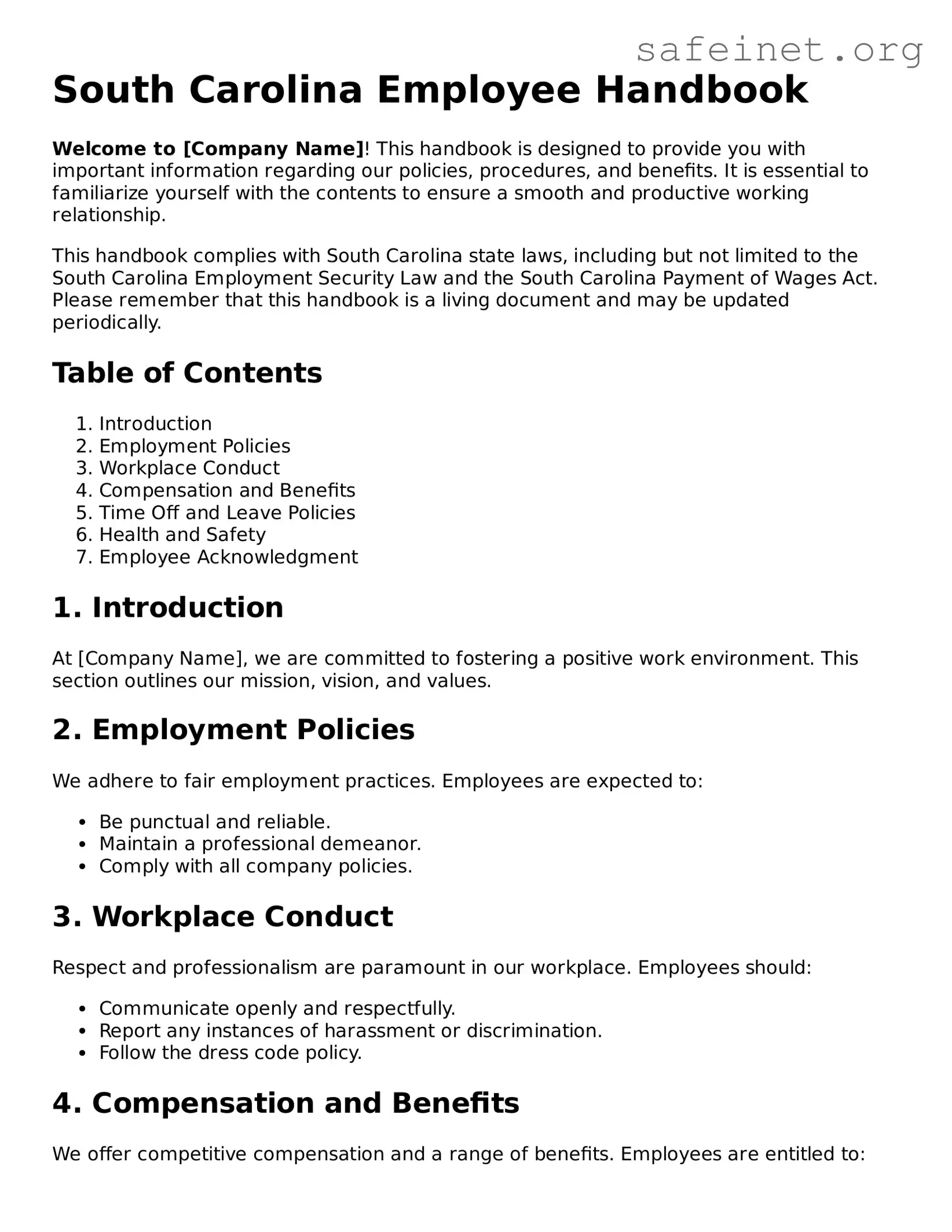
Creating an employee handbook is a vital step for any business in South Carolina, as it establishes clear guidelines and expectations for both employers and employees. This document serves as a comprehensive resource that outlines company policies, workplace rules, and employee rights. It typically includes sections on topics such as employee conduct, attendance policies, compensation, benefits, and safety procedures. Additionally, the handbook may cover anti-discrimination policies, harassment prevention, and disciplinary procedures, ensuring that all employees understand their rights and responsibilities within the workplace. By providing this essential information, the South Carolina Employee Handbook form not only helps to foster a positive work environment but also serves to protect the business from potential legal issues. Properly crafted, this handbook can enhance communication, promote compliance with state and federal laws, and support a culture of respect and accountability among employees.
South Carolina Employee Handbook
Welcome to [Company Name]! This handbook is designed to provide you with important information regarding our policies, procedures, and benefits. It is essential to familiarize yourself with the contents to ensure a smooth and productive working relationship.
This handbook complies with South Carolina state laws, including but not limited to the South Carolina Employment Security Law and the South Carolina Payment of Wages Act. Please remember that this handbook is a living document and may be updated periodically.
Table of Contents
1. Introduction
At [Company Name], we are committed to fostering a positive work environment. This section outlines our mission, vision, and values.
2. Employment Policies
We adhere to fair employment practices. Employees are expected to:
3. Workplace Conduct
Respect and professionalism are paramount in our workplace. Employees should:
4. Compensation and Benefits
We offer competitive compensation and a range of benefits. Employees are entitled to:
5. Time Off and Leave Policies
Understanding time off is crucial for work-life balance. Our policies include:
6. Health and Safety
Your safety is our priority. We encourage employees to:
7. Employee Acknowledgment
By signing below, you acknowledge that you have received, read, and understood the South Carolina Employee Handbook.
Employee Name: ___________________________
Employee Signature: ______________________
Date: ___________________________________
| Fact Name | Details |
|---|---|
| Purpose | The South Carolina Employee Handbook serves as a guide for employees regarding company policies and procedures. |
| Legal Requirement | While not legally required, having an employee handbook is highly recommended to clarify expectations. |
| Governing Law | The handbook should comply with South Carolina employment laws, including the South Carolina Employment Security Law. |
| Content Recommendations | It should include sections on workplace conduct, attendance, and benefits. |
| At-Will Employment | South Carolina is an at-will employment state, meaning employees can be terminated for any reason not prohibited by law. |
| Updates | The handbook should be regularly updated to reflect changes in laws and company policies. |
| Employee Acknowledgment | Employees should sign an acknowledgment form indicating they have received and understood the handbook. |
| Non-Discrimination Policies | It must include a commitment to non-discrimination and equal opportunity employment. |
| Confidentiality | Employers should outline expectations regarding confidentiality and handling of sensitive information. |
Completing the South Carolina Employee Handbook form is an important step in ensuring that you understand your rights and responsibilities as an employee. Once you have filled out the form, it will be submitted to your employer for review and acknowledgment.
Once completed, ensure that you keep a copy for your records before submitting it to your employer.
What is the South Carolina Employee Handbook form?
The South Carolina Employee Handbook form is a document designed to outline the policies, procedures, and expectations of an employer within the state of South Carolina. It serves as a guide for employees, detailing their rights and responsibilities while also informing them about the company’s rules and regulations.
Why is an Employee Handbook important for businesses in South Carolina?
An Employee Handbook is crucial for businesses as it helps establish clear communication between employers and employees. It can reduce misunderstandings and provide a reference point for workplace policies. Furthermore, having a well-documented handbook can protect the employer in legal situations by demonstrating that employees were informed of company policies.
What should be included in the South Carolina Employee Handbook?
The handbook should include essential topics such as company mission and values, employment policies, anti-discrimination and harassment policies, attendance and punctuality expectations, benefits and compensation information, and procedures for reporting grievances. Additionally, it may cover safety protocols and disciplinary actions.
How can an employer ensure compliance with state laws in the Employee Handbook?
Employers should regularly review and update their Employee Handbook to align with South Carolina labor laws and regulations. Consulting with a legal professional or human resources expert can provide guidance on compliance issues. Staying informed about any changes in state laws is also critical for maintaining compliance.
Can an Employee Handbook be modified after it has been distributed?
Yes, an Employee Handbook can be modified even after distribution. However, it is essential to communicate any changes to employees clearly. Employers should consider requiring employees to acknowledge receipt of the updated handbook, ensuring they are aware of the new policies or modifications.
Is it necessary for all employees to sign an acknowledgment of the Employee Handbook?
While it is not legally required, obtaining a signed acknowledgment from employees can be beneficial. This acknowledgment serves as proof that employees have received and understood the handbook. It can also help mitigate potential disputes regarding policy awareness in the future.
How often should an Employee Handbook be reviewed and updated?
It is advisable to review the Employee Handbook at least annually or whenever significant changes occur in company policies or state laws. Regular updates ensure that the handbook remains relevant and reflects the current practices of the organization. This proactive approach helps maintain clarity and compliance.
Failing to read the entire handbook before signing. Many employees overlook important sections that outline company policies and expectations.
Not providing accurate personal information. This includes missing or incorrect details such as address, phone number, or emergency contacts.
Ignoring the acknowledgment section. Some employees skip this part, which confirms their understanding of the handbook's contents.
Not asking questions about unclear policies. Employees should seek clarification on any points that are confusing or ambiguous.
Overlooking the importance of updates. Employees may forget to check for revisions or updates to the handbook that could affect their rights and responsibilities.
Assuming verbal agreements override written policies. Relying solely on conversations can lead to misunderstandings about company policies.
When developing a comprehensive employee handbook in South Carolina, it’s essential to consider various forms and documents that complement the handbook. Each of these documents plays a crucial role in ensuring clarity, compliance, and effective communication between employers and employees. Here’s a list of essential forms and documents you might encounter:
Each of these documents plays a vital role in fostering a transparent and organized workplace. By understanding their purpose and ensuring they are properly integrated into your employment practices, you can create a more supportive environment for your employees while also protecting your organization.
The South Carolina Employee Handbook form shares similarities with the Employee Manual, which is a comprehensive document outlining company policies, procedures, and expectations. Both documents serve to inform employees about their rights and responsibilities. The Employee Manual typically covers topics such as workplace conduct, benefits, and disciplinary actions, much like the Employee Handbook. This ensures that employees have a clear understanding of the company's culture and operational guidelines.
Another document that resembles the Employee Handbook is the Code of Conduct. This document specifically focuses on ethical standards and behavioral expectations within the workplace. Similar to the Employee Handbook, the Code of Conduct establishes a framework for acceptable behavior, addressing issues such as harassment, discrimination, and conflicts of interest. Both documents aim to create a safe and respectful work environment.
The Orientation Guide is also comparable to the Employee Handbook. This guide is often provided to new hires and includes essential information about the company, its mission, and its values. While the Employee Handbook may delve deeper into policies and procedures, the Orientation Guide serves as an introduction, setting the tone for the employee's experience. Both documents are crucial for helping employees acclimate to their new roles.
Another similar document is the Benefits Summary. This document outlines the various benefits offered by the employer, such as health insurance, retirement plans, and paid time off. Like the Employee Handbook, the Benefits Summary aims to clarify what employees can expect regarding compensation and benefits. Both documents are essential for ensuring that employees understand their entitlements and how to access them.
The Safety Manual is another document that aligns closely with the Employee Handbook. This manual specifically addresses workplace safety protocols and emergency procedures. While the Employee Handbook may include general safety policies, the Safety Manual provides more detailed instructions on maintaining a safe work environment. Both documents emphasize the importance of safety and employee well-being.
The Performance Evaluation Guide also shares common ground with the Employee Handbook. This guide outlines the process for assessing employee performance and provides criteria for evaluations. Both documents communicate expectations regarding job performance and professional development. They ensure that employees understand how their contributions are measured and rewarded.
Similarly, the Leave of Absence Policy document outlines the procedures and eligibility for various types of leave, such as medical leave or family leave. Like the Employee Handbook, this policy informs employees of their rights regarding time off and the processes to follow when requesting leave. Both documents aim to support employees in balancing work and personal responsibilities.
Lastly, the Grievance Procedure document is akin to the Employee Handbook in that it provides a framework for addressing workplace disputes. This document details the steps employees should take if they have concerns or complaints. Both the Grievance Procedure and the Employee Handbook emphasize the importance of open communication and provide resources for conflict resolution.
When filling out the South Carolina Employee Handbook form, it is essential to approach the task with care. Here are some important dos and don'ts to keep in mind:
By following these guidelines, you can help ensure that your submission is complete and clear, which can facilitate a smoother process in your workplace.
Here are five common misconceptions about the South Carolina Employee Handbook form:
While not legally required, having an employee handbook is highly recommended. It provides clarity on policies and expectations, helping to prevent misunderstandings.
Each handbook should reflect the specific needs and culture of the organization. Customization is key to addressing unique workplace situations and policies.
Policies and laws change. Regularly reviewing and updating the handbook ensures compliance and relevance to current practices.
Small businesses benefit just as much from having a handbook. It helps set clear guidelines for employees, regardless of company size.
Employees should be encouraged to read the handbook. Understanding policies fosters a positive work environment and helps avoid potential issues.
When filling out and using the South Carolina Employee Handbook form, it’s important to keep several key points in mind. These takeaways will help ensure that the process is smooth and effective for both employers and employees.
By keeping these points in mind, you can create a comprehensive and useful Employee Handbook that supports a positive workplace environment.