When navigating the complexities of divorce in South Carolina, a Divorce Settlement Agreement form serves as a crucial document for couples seeking to finalize their separation. This form outlines the terms of the divorce, addressing key issues such as property division, child custody, visitation rights, and spousal support. By clearly detailing each party's rights and responsibilities, the agreement helps to prevent future disputes and provides a roadmap for post-divorce life. It is essential for both parties to understand the implications of the terms they agree upon, as this document will guide their interactions and obligations moving forward. Whether couples are amicably parting ways or facing challenges, a well-structured settlement agreement can ease the transition and foster a more cooperative environment for any children involved. Understanding the major components of this form is vital for anyone considering or undergoing a divorce in South Carolina.
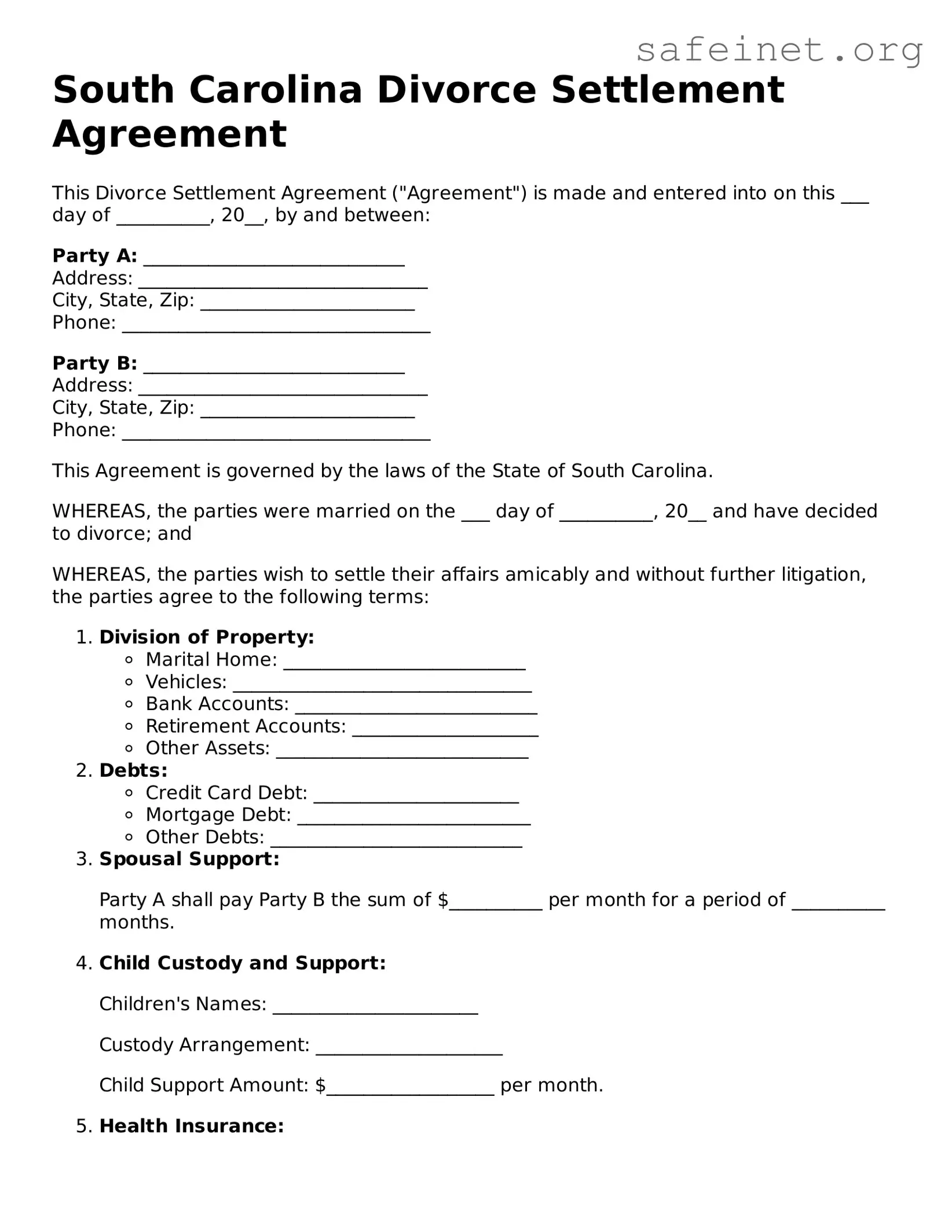
South Carolina Divorce Settlement Agreement
This Divorce Settlement Agreement ("Agreement") is made and entered into on this ___ day of __________, 20__, by and between:
Party A: ____________________________
Address: _______________________________
City, State, Zip: _______________________
Phone: _________________________________
Party B: ____________________________
Address: _______________________________
City, State, Zip: _______________________
Phone: _________________________________
This Agreement is governed by the laws of the State of South Carolina.
WHEREAS, the parties were married on the ___ day of __________, 20__ and have decided to divorce; and
WHEREAS, the parties wish to settle their affairs amicably and without further litigation, the parties agree to the following terms:
Party A shall pay Party B the sum of $__________ per month for a period of __________ months.
Children's Names: ______________________
Custody Arrangement: ____________________
Child Support Amount: $__________________ per month.
Party A shall maintain health insurance for the children until they reach the age of majority.
IN WITNESS WHEREOF, the parties have executed this Agreement as of the date first above written.
_____________________________
Party A
_____________________________
Party B
_____________________________
Witness
_____________________________
Date
| Fact Name | Description |
|---|---|
| Governing Law | The South Carolina Divorce Settlement Agreement is governed by South Carolina law, specifically Title 20, Chapter 3 of the South Carolina Code of Laws. |
| Purpose | This form is used to outline the terms of a divorce settlement between spouses, addressing issues like property division, alimony, and child custody. |
| Filing Requirement | The completed agreement must be filed with the court as part of the divorce proceedings. |
| Mutual Consent | Both parties must agree to the terms outlined in the settlement agreement for it to be valid. |
| Modification | Once signed and approved by the court, the agreement can only be modified under certain circumstances, typically requiring a court hearing. |
| Enforceability | The agreement is legally binding, meaning both parties must adhere to its terms once it has been approved by the court. |
| Child Support | If children are involved, the agreement must include provisions for child support, which will be reviewed according to state guidelines. |
| Alimony Considerations | The agreement may include alimony terms, which should reflect the financial circumstances of both parties. |
| Property Division | It addresses the division of marital property and debts, ensuring that both parties understand their rights and responsibilities. |
| Legal Advice | It is advisable for both parties to seek legal counsel before signing the agreement to ensure that their rights are protected. |
After you gather all necessary information and documents, you can begin filling out the South Carolina Divorce Settlement Agreement form. This form is essential for outlining the terms of your divorce, including asset division, child custody, and support arrangements. Make sure to review each section carefully to ensure all information is accurate and complete.
Once the form is filled out and signed, you will need to file it with the appropriate court. This step is crucial to ensure that your divorce agreement is legally recognized. Be prepared to attend any required court hearings related to your case.
What is a Divorce Settlement Agreement in South Carolina?
A Divorce Settlement Agreement is a legal document that outlines the terms agreed upon by both spouses regarding the division of assets, debts, child custody, and support obligations during a divorce. This agreement is crucial as it helps to ensure that both parties have a clear understanding of their rights and responsibilities post-divorce. Once signed and approved by the court, the agreement becomes a binding contract, which means both parties must adhere to its terms.
How do I create a Divorce Settlement Agreement?
Creating a Divorce Settlement Agreement typically involves negotiation between the spouses. It is advisable to start by discussing key issues such as property division, child custody, and spousal support. Once both parties reach an agreement, it is wise to document the terms in writing. Although you can draft the agreement yourself, consulting with a lawyer can help ensure that the document is comprehensive and legally sound. After drafting, both parties should review and sign the agreement before submitting it to the court for approval.
What should be included in the Divorce Settlement Agreement?
The Divorce Settlement Agreement should include various critical components. First, it should outline the division of marital property and debts, specifying what each party will retain. Additionally, if there are children involved, the agreement must address child custody arrangements, visitation schedules, and child support obligations. Spousal support terms, if applicable, should also be clearly defined. Lastly, including provisions for future changes, such as modifications to custody or support, can be beneficial.
Can a Divorce Settlement Agreement be modified after it is signed?
Yes, a Divorce Settlement Agreement can be modified after it is signed, but only under certain circumstances. If both parties agree to the changes, they can create a new written agreement that outlines the modifications. Additionally, if there are significant changes in circumstances—such as a job loss, relocation, or a change in the needs of the children—either party may petition the court for a modification. It is important to note that any modifications must be approved by the court to be enforceable.
What happens if one party does not comply with the Divorce Settlement Agreement?
If one party fails to comply with the terms of the Divorce Settlement Agreement, the other party has legal options to enforce the agreement. This may involve filing a motion with the court to seek enforcement. The court may then require the non-compliant party to fulfill their obligations or face penalties, which can include fines or even contempt of court. It is essential to keep records of any violations to support your case in court.
Not fully understanding the terms: Many individuals rush through the form without fully grasping the implications of the terms they are agreeing to. It’s crucial to comprehend each section and its potential impact on your future.
Omitting important financial information: Some people fail to disclose all assets and debts. This can lead to disputes later on and may undermine the agreement's validity.
Ignoring state-specific requirements: South Carolina has specific laws regarding divorce settlements. Failing to adhere to these can result in delays or complications in the approval process.
Not considering tax implications: Divorce settlements can have significant tax consequences. Individuals often overlook how alimony, child support, or asset division may affect their tax liabilities.
Forgetting to address child custody and support: Parents sometimes neglect to include clear terms regarding custody arrangements and child support. This can lead to confusion and conflict down the road.
Failing to seek legal advice: Many individuals attempt to navigate the process without consulting an attorney. Legal guidance can provide clarity and help avoid costly mistakes.
Rushing through the process: Some people feel pressured to finalize the agreement quickly. Taking the time to carefully review and negotiate terms is essential for a fair outcome.
Not being honest: Honesty is vital in a divorce settlement. Misrepresenting assets or income can lead to legal repercussions and damage trust between parties.
Neglecting to review the document thoroughly: After filling out the form, individuals often fail to read it again before submission. A final review can catch errors or omissions that could be detrimental.
When navigating a divorce in South Carolina, several forms and documents may accompany the Divorce Settlement Agreement. Each document plays a vital role in ensuring that the divorce process is comprehensive and legally sound. Below is a list of commonly used forms that can help clarify various aspects of the divorce settlement.
Understanding these documents can significantly impact the divorce process. Each form serves a specific purpose, ensuring that both parties are treated fairly and that the agreement is legally binding. Properly completing and filing these forms can help facilitate a smoother transition into post-divorce life.
The South Carolina Divorce Settlement Agreement form is similar to a Separation Agreement. Both documents outline the terms of a couple's separation, including asset division, child custody, and support arrangements. A Separation Agreement is often used when a couple decides to live apart but is not yet ready to file for divorce. This document provides a clear understanding of each party's responsibilities and rights during the separation period, helping to prevent misunderstandings and conflicts.
Another document that shares similarities is the Child Custody Agreement. This agreement specifically focuses on the arrangements regarding the care and custody of children following a divorce. Just like the Divorce Settlement Agreement, it addresses important aspects such as visitation rights, decision-making authority, and child support. Both documents aim to ensure that the best interests of the children are prioritized while providing a framework for parental responsibilities.
The Property Settlement Agreement is also closely related. It details how marital property will be divided between the spouses. This document is crucial in a divorce context, as it helps prevent disputes over assets. Like the Divorce Settlement Agreement, it is legally binding and should be carefully crafted to reflect the couple's wishes regarding property division.
Similar to these agreements is the Marital Settlement Agreement. This document encompasses all aspects of the divorce, including division of assets, debts, and child-related issues. It serves as a comprehensive roadmap for the divorce process, ensuring that both parties are on the same page. The Marital Settlement Agreement can be presented to the court as part of the divorce proceedings, much like the Divorce Settlement Agreement.
The Parenting Plan is another important document that aligns with the Divorce Settlement Agreement. This plan focuses solely on the parenting aspects post-divorce, detailing how parents will share responsibilities and make decisions for their children. It addresses visitation schedules, communication methods, and dispute resolution processes, ensuring that both parents are committed to co-parenting effectively.
A Spousal Support Agreement is also akin to the Divorce Settlement Agreement. This document specifies the terms of alimony or spousal support that one spouse may owe to the other after divorce. Like the Divorce Settlement Agreement, it seeks to provide financial clarity and security for both parties, ensuring that obligations are clearly defined and agreed upon.
The Quitclaim Deed is another related document, especially when real estate is involved in a divorce. This deed transfers ownership of property from one spouse to another. While the Divorce Settlement Agreement may outline the division of property, the Quitclaim Deed formalizes the transfer, ensuring that the ownership is legally recognized and recorded.
A Financial Disclosure Statement is also relevant in this context. This document provides a detailed account of each spouse's financial situation, including assets, debts, income, and expenses. Transparency is key in divorce proceedings, and this statement helps both parties understand their financial standing. It complements the Divorce Settlement Agreement by ensuring that all financial matters are disclosed and considered during negotiations.
Finally, the Divorce Decree itself is a critical document that finalizes the divorce process. While the Divorce Settlement Agreement outlines the terms, the Divorce Decree is the official court order that grants the divorce and incorporates the settlement terms. It serves as a legal confirmation that the parties have reached an agreement, making it an essential part of the divorce journey.
When filling out the South Carolina Divorce Settlement Agreement form, it's important to approach the process with care. Here are some guidelines to help you navigate this important document.
Following these guidelines can help ensure that your Divorce Settlement Agreement is completed correctly and efficiently.
Understanding the South Carolina Divorce Settlement Agreement form is crucial for anyone going through a divorce. However, there are several misconceptions that can lead to confusion. Here are seven common misunderstandings:
This is not true. The Divorce Settlement Agreement can be used by any couple, regardless of whether they have children or not. It addresses the division of assets and debts, which is relevant for all divorcing couples.
This misconception can be misleading. While the agreement is legally binding once signed, it can be modified later if both parties agree to the changes. It’s important to document any modifications properly.
While the form provides a framework for dividing assets, it does not ensure fairness. Each party should negotiate and agree on terms that reflect their individual circumstances and contributions.
This is a misconception. While filing the agreement with the court is important for enforcement, the agreement itself is valid once both parties sign it, regardless of court involvement.
The Divorce Settlement Agreement primarily addresses property division and support. Other aspects, such as child custody and visitation, may require additional documents and considerations.
This is incorrect. Each state has its own requirements and forms. The South Carolina Divorce Settlement Agreement is specific to South Carolina and may not be valid in other states.
Being informed about these misconceptions can help you navigate the divorce process more effectively. Take the time to understand the agreement and consult with professionals if needed.
Filling out the South Carolina Divorce Settlement Agreement form is a crucial step in the divorce process. Understanding its components can significantly impact the outcome of your case. Here are key takeaways to consider:
Taking these steps seriously can facilitate a smoother divorce process and help you reach a fair resolution. Prioritize clarity and completeness to protect your interests.