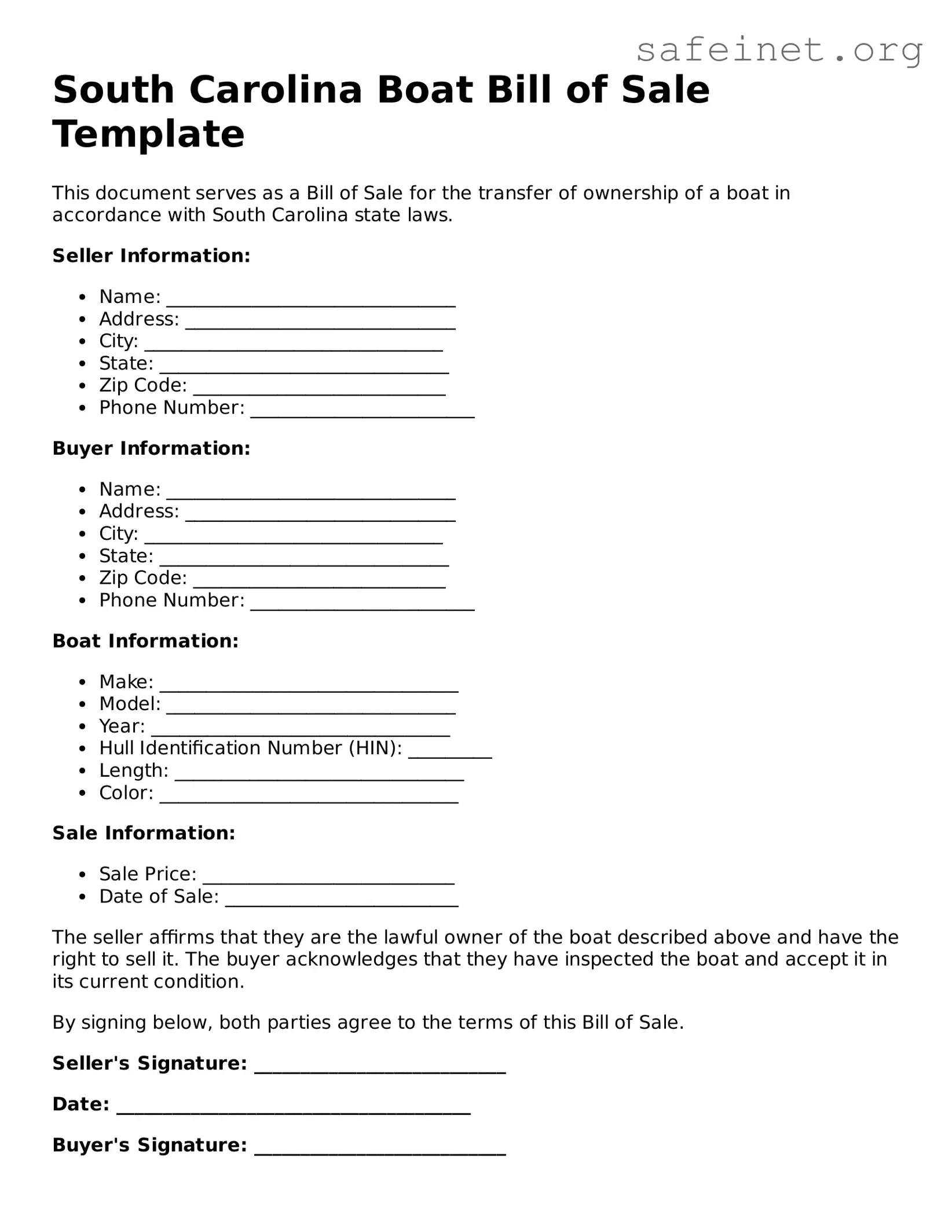
When it comes to buying or selling a boat in South Carolina, having the right documentation is crucial to ensure a smooth transaction. One of the key documents involved in this process is the Boat Bill of Sale form. This form serves as a legal record of the sale, detailing essential information such as the names and addresses of both the buyer and seller, a description of the vessel, including its hull identification number, and the sale price. Additionally, the form may include important clauses that address the condition of the boat, any warranties, and the responsibilities of both parties. By properly completing this document, both the buyer and seller can protect their interests and establish clear ownership rights. Furthermore, a well-prepared Boat Bill of Sale can simplify the registration process with the South Carolina Department of Natural Resources, making it an indispensable tool for anyone involved in the boating community. Understanding the nuances of this form can lead to a more informed and secure transaction, paving the way for enjoyable experiences on the water.
South Carolina Boat Bill of Sale Template
This document serves as a Bill of Sale for the transfer of ownership of a boat in accordance with South Carolina state laws.
Seller Information:
Buyer Information:
Boat Information:
Sale Information:
The seller affirms that they are the lawful owner of the boat described above and have the right to sell it. The buyer acknowledges that they have inspected the boat and accept it in its current condition.
By signing below, both parties agree to the terms of this Bill of Sale.
Seller's Signature: ___________________________
Date: ______________________________________
Buyer's Signature: ___________________________
Date: ______________________________________
| Fact Name | Details |
|---|---|
| Purpose | The South Carolina Boat Bill of Sale is used to document the sale and transfer of ownership of a boat. |
| Governing Law | This form is governed by South Carolina Code of Laws, Title 50, Chapter 21. |
| Parties Involved | The form requires information from both the seller and the buyer. |
| Boat Description | Details such as the boat's make, model, year, and hull identification number must be included. |
| Purchase Price | The sale price of the boat must be clearly stated on the form. |
| Signatures | Both the seller and buyer must sign the document for it to be valid. |
| Notarization | While notarization is not required, it is recommended to provide additional legal protection. |
| Record Keeping | Both parties should keep a copy of the completed Bill of Sale for their records. |
After obtaining the South Carolina Boat Bill of Sale form, you'll need to fill it out carefully. This document serves as proof of the sale and transfer of ownership of a boat. Make sure to provide accurate information to avoid any future issues.
What is a Boat Bill of Sale in South Carolina?
A Boat Bill of Sale is a legal document that records the transfer of ownership of a boat from one person to another in South Carolina. This form serves as proof of purchase and is essential for both the buyer and seller. It typically includes details such as the boat's make, model, year, and identification number, along with the names and addresses of both parties involved in the transaction.
Is a Boat Bill of Sale required in South Carolina?
While a Boat Bill of Sale is not legally mandated for all boat sales in South Carolina, it is highly recommended. This document provides a clear record of the transaction and can be crucial for registering the boat, obtaining a title, or resolving any disputes that may arise in the future.
What information should be included in the Boat Bill of Sale?
The Boat Bill of Sale should include the following information: the names and addresses of the buyer and seller, the boat's make, model, year, and hull identification number (HIN), the purchase price, and the date of the sale. Additionally, both parties should sign the document to validate the transaction.
Can I create my own Boat Bill of Sale?
Yes, you can create your own Boat Bill of Sale. However, it is important to ensure that the document contains all necessary information and complies with South Carolina's requirements. Using a template or form specifically designed for this purpose can help ensure that all relevant details are included.
Do I need to have the Boat Bill of Sale notarized?
Notarization is not a requirement for a Boat Bill of Sale in South Carolina. However, having the document notarized can add an extra layer of authenticity and may help prevent disputes regarding the sale in the future. It is a good practice, especially for higher-value transactions.
What should I do with the Boat Bill of Sale after the sale?
After the sale is complete, both the buyer and seller should keep a copy of the Boat Bill of Sale for their records. The buyer will need this document when registering the boat with the South Carolina Department of Natural Resources. It serves as proof of ownership and may be required for future transactions.
Can I use a Boat Bill of Sale from another state?
Using a Boat Bill of Sale from another state is possible, but it is advisable to ensure that the document meets South Carolina's specific requirements. Each state may have different laws regarding boat ownership transfer, so it's best to use a form that complies with South Carolina regulations to avoid any complications.
What if the boat has a lien on it?
If the boat has a lien, it is crucial to address this before completing the sale. The seller should ensure that the lien is paid off and released before transferring ownership. The Boat Bill of Sale should clearly state whether the boat is being sold free of any liens, as this affects the buyer's rights and ownership status.
What happens if the Boat Bill of Sale is lost?
If the Boat Bill of Sale is lost, it can create challenges, especially for the buyer when trying to register the boat. It is advisable to keep multiple copies of the document. If it is lost, the parties involved may need to create a new Bill of Sale and have both parties sign it again, documenting the original sale details.
Is there a fee associated with registering the Boat Bill of Sale?
There is typically a fee associated with registering a boat in South Carolina, which may include a title fee and registration fees. However, there is no specific fee for the Boat Bill of Sale itself. It is important to check with the South Carolina Department of Natural Resources for the most current fee structure and requirements for boat registration.
Incomplete Information: Many individuals fail to provide all necessary details. This includes missing the seller's or buyer's full name, address, or contact information.
Incorrect Vessel Identification: Mistakes often occur in the boat's identification number (VIN). Ensure that the VIN matches the one on the boat to avoid future complications.
Omitting Purchase Price: Some sellers forget to include the purchase price. This figure is crucial for both parties and for tax purposes.
Not Signing the Document: A common oversight is neglecting to sign the form. Both the buyer and seller must sign for the document to be valid.
Failure to Date the Bill of Sale: Some people forget to include the date of the transaction. This date is important for record-keeping and legal purposes.
Not Keeping Copies: After completing the form, individuals often do not make copies. Keeping a copy for personal records is essential for future reference.
When purchasing or selling a boat in South Carolina, several documents may accompany the Boat Bill of Sale to ensure a smooth transaction. Each of these documents serves a specific purpose, helping to protect both the buyer and the seller while providing necessary information to the state. Below is a list of common forms and documents often used in conjunction with the Boat Bill of Sale.
Having these documents prepared and organized can streamline the buying or selling process of a boat in South Carolina. Each form plays a vital role in ensuring that all legal requirements are met, protecting both parties involved in the transaction. Always consider consulting with a professional if there are any uncertainties regarding the paperwork involved.
The South Carolina Boat Bill of Sale form is similar to the Vehicle Bill of Sale, which serves as a legal document confirming the transfer of ownership of a motor vehicle. Both documents outline the details of the transaction, including the buyer and seller's names, addresses, and signatures. Additionally, they typically include information about the vehicle, such as the make, model, year, and Vehicle Identification Number (VIN). This ensures that both parties have a clear record of the sale, which can be essential for registration and title transfer purposes.
Another document akin to the Boat Bill of Sale is the Motorcycle Bill of Sale. Like the Boat Bill of Sale, this form is used to document the sale of a motorcycle, capturing essential details such as the buyer and seller's information and the motorcycle's specifications. Both forms help protect the interests of both parties by providing a written record of the transaction, which can be useful for future reference, especially in the event of a dispute or for registration with the state.
The Trailer Bill of Sale is also similar to the Boat Bill of Sale, as it serves the purpose of documenting the sale of a trailer. It includes key information about the buyer and seller, as well as details about the trailer itself, such as its make, model, and identification number. This document ensures a smooth transfer of ownership and can be critical for registering the trailer with the appropriate authorities, much like the process for boats.
A Personal Property Bill of Sale shares similarities with the Boat Bill of Sale in that it is used to document the sale of various types of personal property. This document can cover a wide range of items, from furniture to electronics, and includes the names and addresses of both parties, a description of the item, and the sale price. Just as with the Boat Bill of Sale, this form provides legal protection and serves as proof of ownership transfer.
The Aircraft Bill of Sale is another document that parallels the Boat Bill of Sale. This form is specifically designed for the sale of aircraft and includes detailed information about the buyer, seller, and the aircraft being sold. Similar to the Boat Bill of Sale, it functions as a legal record of the transaction, ensuring that ownership is officially transferred and can be registered with the Federal Aviation Administration (FAA).
In the realm of real estate, the Real Estate Purchase Agreement bears similarities to the Boat Bill of Sale. While it typically involves more complex transactions, both documents serve the purpose of formalizing the sale of an asset. They include essential information about the parties involved, a description of the property or item being sold, and the agreed-upon price. Both documents help protect the rights of the buyer and seller by providing a clear record of the transaction.
Lastly, the Livestock Bill of Sale is another document that resembles the Boat Bill of Sale. This form is used to document the sale of livestock, such as cattle or horses. It includes the buyer and seller's information, a description of the animals sold, and the sale price. Like the Boat Bill of Sale, this document serves as proof of ownership transfer and can be important for record-keeping and legal purposes.
When filling out the South Carolina Boat Bill of Sale form, it’s important to follow certain guidelines to ensure the document is valid and serves its purpose effectively. Below is a list of dos and don’ts to consider.
By following these guidelines, you can help ensure a smooth transaction and protect the interests of both the buyer and seller.
The South Carolina Boat Bill of Sale form is an important document for anyone buying or selling a boat in the state. However, several misconceptions surround this form. Below is a list of common misunderstandings:
Understanding these misconceptions can help ensure a smooth and lawful transaction when buying or selling a boat in South Carolina.
When filling out and using the South Carolina Boat Bill of Sale form, consider the following key takeaways: