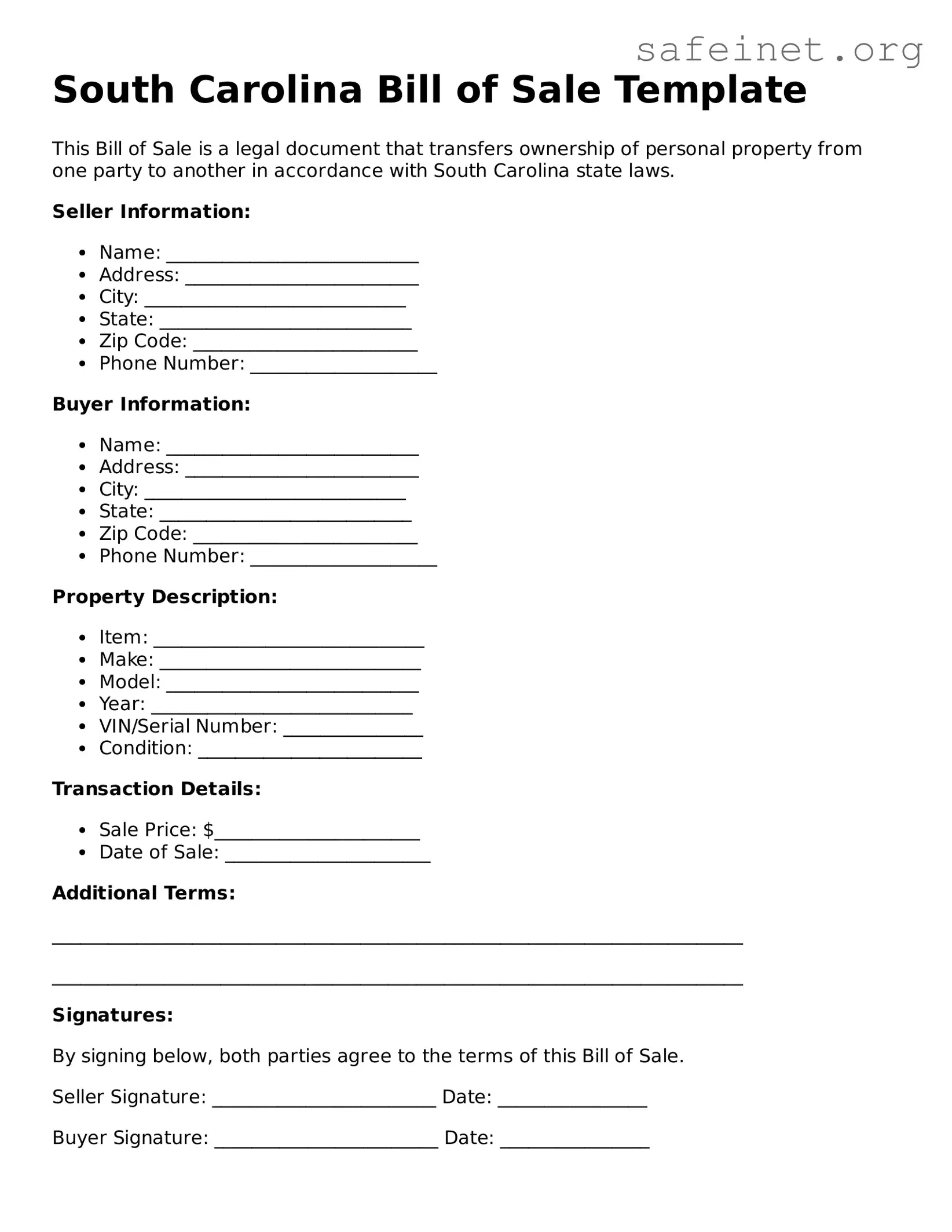
The South Carolina Bill of Sale form serves as a crucial document in the process of transferring ownership of personal property, whether it be a vehicle, a piece of equipment, or other tangible items. This form not only provides a written record of the transaction but also helps protect both the buyer and the seller by detailing essential information about the item being sold. Key components of the form include the names and addresses of both parties, a description of the item, the purchase price, and the date of the transaction. Additionally, it often includes a statement regarding the condition of the item, affirming that it is being sold "as is" unless otherwise specified. This document can be particularly important in South Carolina, where certain items, like vehicles, may require additional documentation for registration and titling purposes. By ensuring that all necessary details are included, the Bill of Sale form helps to minimize disputes and provides legal protection for both parties involved in the sale.
South Carolina Bill of Sale Template
This Bill of Sale is a legal document that transfers ownership of personal property from one party to another in accordance with South Carolina state laws.
Seller Information:
Buyer Information:
Property Description:
Transaction Details:
Additional Terms:
__________________________________________________________________________
__________________________________________________________________________
Signatures:
By signing below, both parties agree to the terms of this Bill of Sale.
Seller Signature: ________________________ Date: ________________
Buyer Signature: ________________________ Date: ________________
This document serves as a receipt for the transaction and is effective upon signing.
| Fact Name | Details |
|---|---|
| Purpose | The South Carolina Bill of Sale form is used to document the sale of personal property, ensuring that both the buyer and seller have a record of the transaction. |
| Governing Law | This form is governed by the South Carolina Code of Laws, specifically Title 30, Chapter 11, which covers the requirements for property transfers. |
| Required Information | Essential details include the names and addresses of both parties, a description of the item being sold, the sale price, and the date of the transaction. |
| Signatures | Both the buyer and seller must sign the form to validate the sale, and it is recommended to have the signatures notarized for added legal protection. |
Once you have the South Carolina Bill of Sale form ready, you can proceed to fill it out. This document requires specific information to ensure a clear and accurate transfer of ownership. Following the steps below will help you complete the form correctly.
After completing the form, ensure that both parties retain a copy for their records. This will provide proof of the transaction and help avoid any potential disputes in the future.
What is a Bill of Sale in South Carolina?
A Bill of Sale is a legal document that records the transfer of ownership of personal property from one person to another. In South Carolina, it serves as proof of the transaction and outlines details such as the item being sold, the sale price, and the parties involved.
Do I need a Bill of Sale for every transaction?
While not every transaction requires a Bill of Sale, it is highly recommended for significant purchases, such as vehicles, boats, or valuable items. This document protects both the buyer and seller by providing a clear record of the sale.
What information should be included in a South Carolina Bill of Sale?
A comprehensive Bill of Sale should include the names and addresses of both the buyer and seller, a description of the item, the sale price, the date of the transaction, and any warranties or conditions of the sale. Including a signature line for both parties is also essential.
Is a Bill of Sale legally binding in South Carolina?
Yes, a Bill of Sale is legally binding in South Carolina, provided it contains all necessary information and is signed by both parties. It serves as evidence of the agreement and can be enforced in court if disputes arise.
Do I need to have the Bill of Sale notarized?
In South Carolina, notarization is not required for a Bill of Sale to be valid. However, having the document notarized can add an extra layer of security and may be beneficial if there are any future disputes regarding the sale.
Can I create my own Bill of Sale?
Yes, you can create your own Bill of Sale. There are many templates available online that you can customize to fit your needs. Just ensure that all required information is included to make it valid.
What if I lose my Bill of Sale?
If you lose your Bill of Sale, it is advisable to create a new one. If possible, obtain a copy from the other party involved in the transaction. Keeping a digital record can also help prevent future loss.
Are there any specific requirements for a vehicle Bill of Sale?
For vehicle transactions in South Carolina, the Bill of Sale should include the vehicle's make, model, year, Vehicle Identification Number (VIN), and odometer reading. Additionally, it may be necessary to complete a title transfer to register the vehicle with the state.
Where can I find a South Carolina Bill of Sale template?
Templates for a South Carolina Bill of Sale can be found online through legal websites, state government resources, or by consulting with a legal professional. Ensure that the template you choose complies with South Carolina laws.
Failing to provide complete information about the buyer and seller. This includes names, addresses, and contact information.
Not accurately describing the item being sold. Details such as make, model, year, and VIN for vehicles should be included.
Leaving out the purchase price. The total amount paid for the item must be clearly stated.
Neglecting to include the date of the transaction. This helps establish the timeline of the sale.
Not signing the document. Both parties must sign the Bill of Sale to make it valid.
Using incorrect or outdated forms. Always ensure you are using the latest version of the South Carolina Bill of Sale form.
Failing to keep a copy of the Bill of Sale for personal records. Both the buyer and seller should retain a copy.
Not checking for additional requirements. Certain items, like vehicles, may require additional documentation or forms.
Overlooking the need for notarization. While not always required, notarizing the Bill of Sale can provide extra protection.
When completing a transaction involving the sale of goods or property in South Carolina, a Bill of Sale is a crucial document. However, there are several other forms and documents that may accompany it to ensure a smooth process. Each of these documents serves a specific purpose and helps clarify the terms of the sale, protect the interests of both parties, and fulfill legal requirements.
These documents, when used alongside the South Carolina Bill of Sale, can help facilitate a clear and legally sound transaction. Ensuring that all necessary paperwork is completed can protect both the buyer and seller, making the process more efficient and transparent.
The South Carolina Bill of Sale is similar to a Vehicle Title Transfer form. Both documents serve as proof of ownership transfer. When selling or buying a vehicle, the title must be signed over to the new owner, just like a Bill of Sale. This ensures that the new owner has legal rights to the vehicle, and it helps to avoid any future disputes regarding ownership.
Another document that resembles the Bill of Sale is the Personal Property Transfer Agreement. This form is used for transferring ownership of personal items, such as furniture or electronics. Like the Bill of Sale, it includes details about the item being sold, the parties involved, and the terms of the sale. Both documents provide a written record of the transaction, which can be helpful for legal purposes.
A Lease Agreement shares similarities with the Bill of Sale in that both involve the transfer of rights. While a Bill of Sale transfers ownership, a Lease Agreement grants temporary possession of property, such as an apartment or car. Both documents outline the terms of the arrangement, ensuring that both parties understand their rights and responsibilities.
The South Carolina Bill of Sale is also akin to a Gift Deed. A Gift Deed is used when property is transferred without payment. Like a Bill of Sale, it documents the transfer of ownership. Both forms require signatures from the giver and receiver, ensuring that the transaction is valid and legally binding.
Another related document is the Receipt for Payment. This document serves as proof that a payment was made for a specific item or service. While a Bill of Sale includes a receipt aspect, it also covers the transfer of ownership. Both documents protect the interests of the buyer and seller by providing a record of the transaction.
Lastly, the Affidavit of Ownership is similar to the Bill of Sale in that it helps establish proof of ownership. This document is often used when the original title is lost or unavailable. Both forms affirm that the signer is the rightful owner of the property, providing a legal basis for ownership claims.
When filling out the South Carolina Bill of Sale form, it's important to follow certain guidelines to ensure the document is valid and meets your needs. Here are seven things you should and shouldn't do:
Following these guidelines will help ensure a smooth transaction and protect both parties involved.
When it comes to the South Carolina Bill of Sale form, several misconceptions can lead to confusion. Understanding these misconceptions can help individuals navigate the process more effectively. Here are eight common misunderstandings:
Understanding these misconceptions can help individuals make informed decisions when engaging in transactions that require a Bill of Sale in South Carolina.
When utilizing the South Carolina Bill of Sale form, several important considerations should be kept in mind. These takeaways can help ensure that the transaction is conducted smoothly and legally.