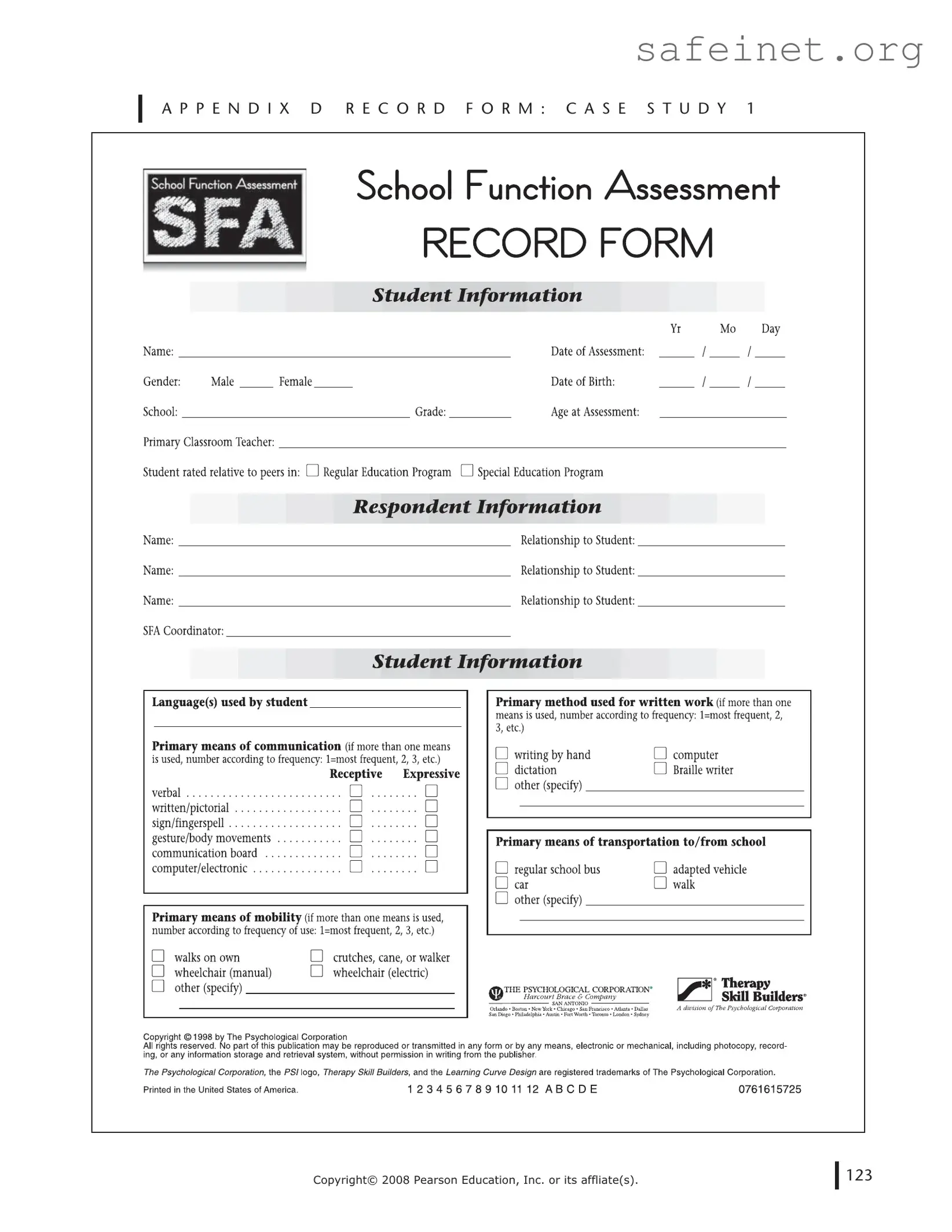
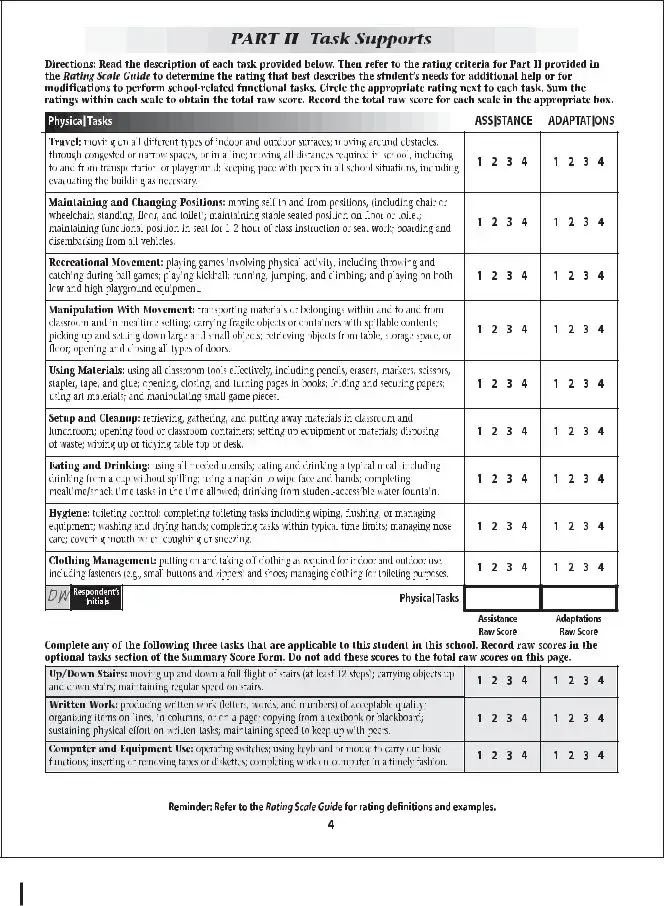
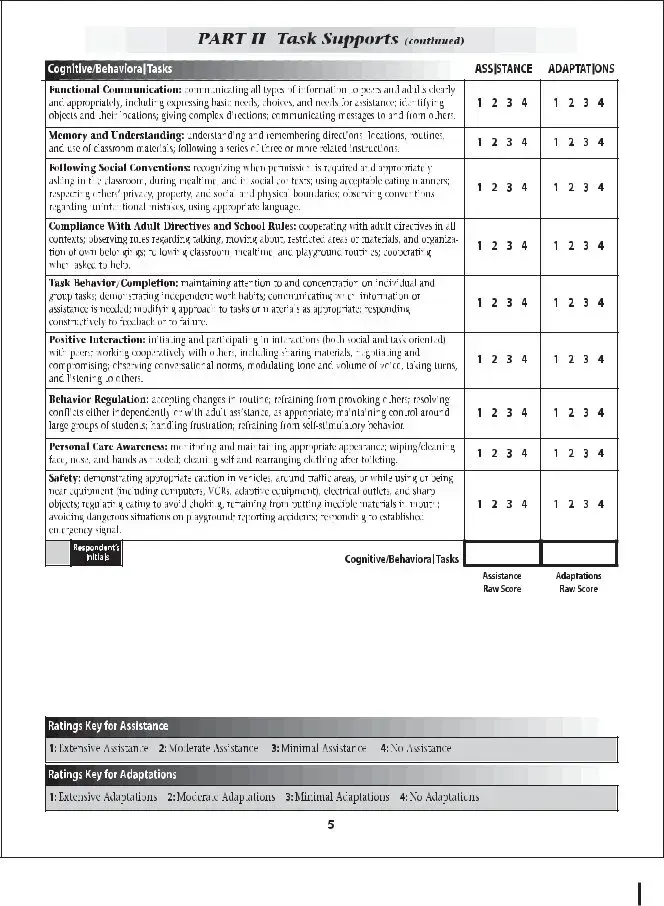
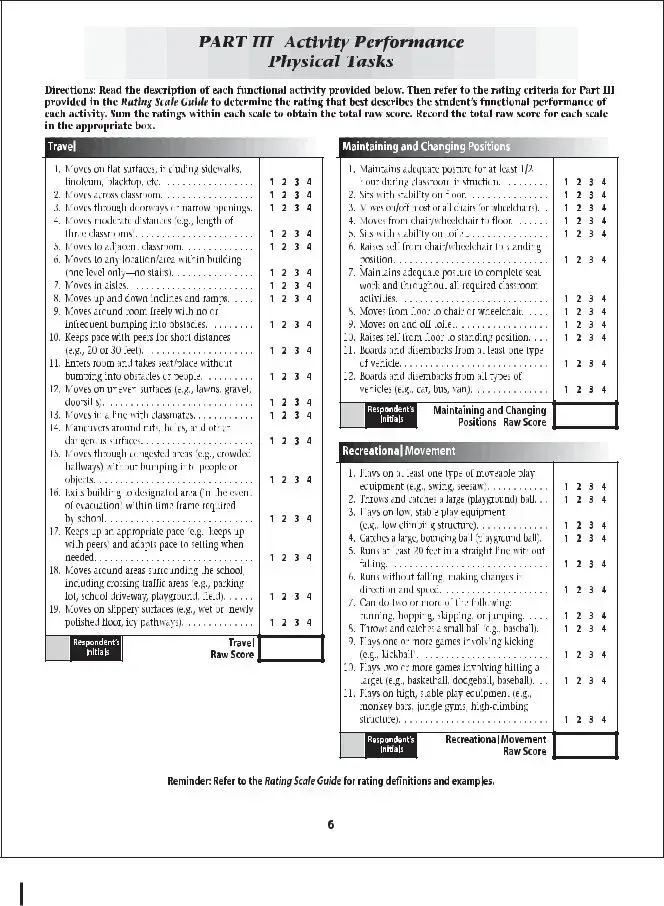
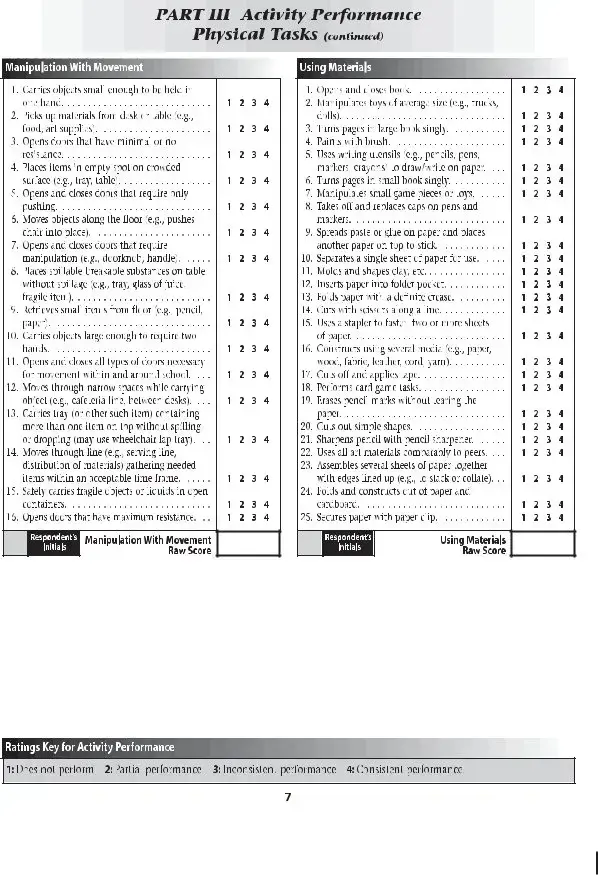
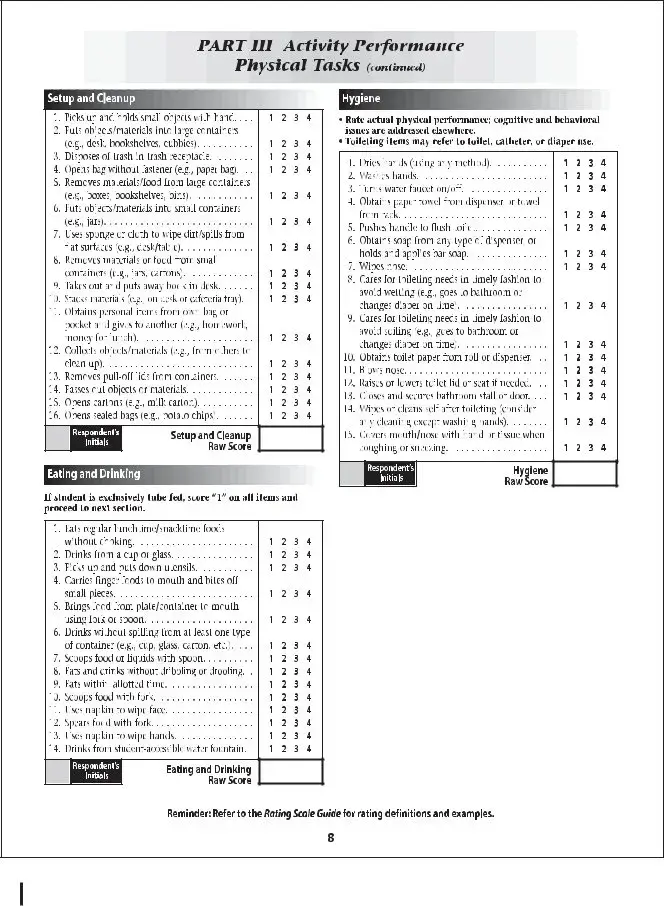
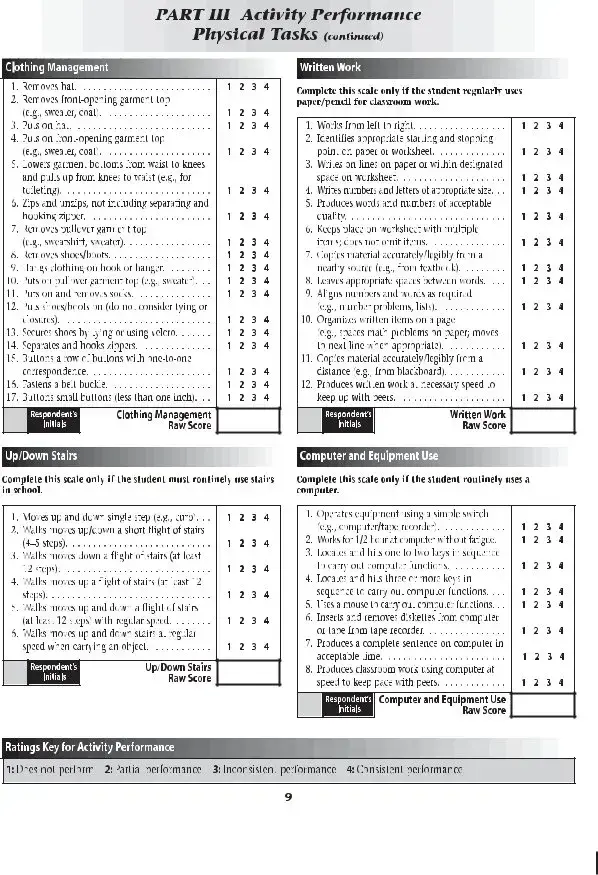
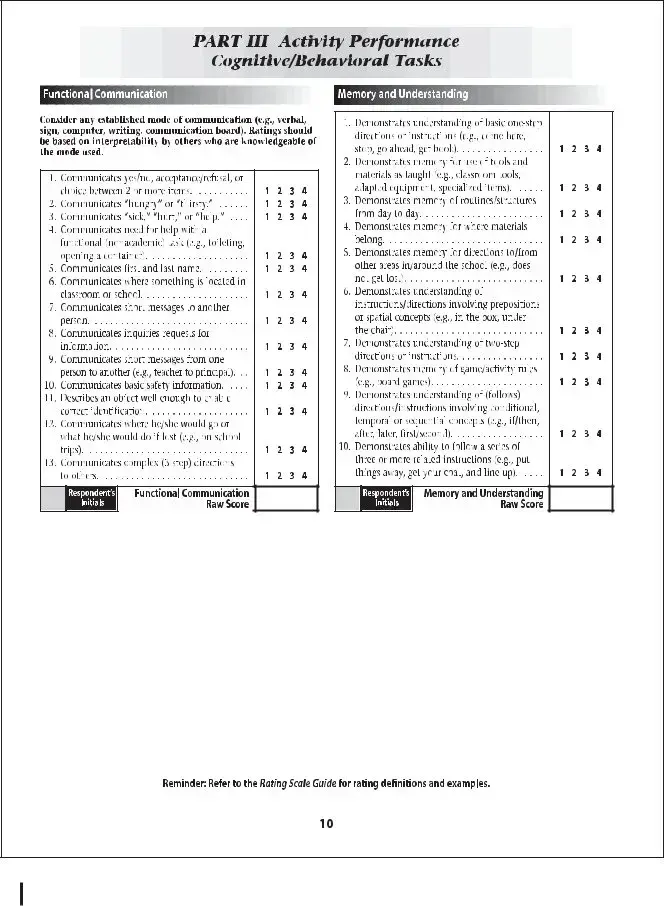
The School Function Assessment (SFA) form plays a crucial role in evaluating a student’s ability to participate in school activities. This assessment focuses on the functional skills necessary for students to engage effectively in their educational environment. It encompasses various domains, including self-care, mobility, and social interactions, allowing educators and specialists to identify areas where support may be needed. By gathering information from teachers and other school personnel, the SFA provides a comprehensive view of a student’s performance in the school setting. This data is invaluable for developing individualized education plans (IEPs) and tailoring interventions to meet specific needs. Ultimately, the SFA serves as a bridge between a student’s capabilities and the educational resources available, ensuring that every child has the opportunity to thrive in school.
A P P E N D I X D R E C O R D F O R M : C A S E S T U D Y 1 |
Copyright© 2008 Pearson Education, Inc. or its affliate(s).
123
R E C O R D F O R M : C A S E S T U D Y 1 |
124
Copyright© 2008 Pearson Education, Inc. or its affliate(s).
R E C O R D F O R M : C A S E S T U D Y 1 |
Copyright© 2008 Pearson Education, Inc. or its affliate(s).
125
R E C O R D F O R M : C A S E S T U D Y 1 |
126
Copyright© 2008 Pearson Education, Inc. or its affliate(s).
R E C O R D F O R M : C A S E S T U D Y 1 |
Copyright© 2008 Pearson Education, Inc. or its affliate(s).
127
R E C O R D F O R M : C A S E S T U D Y 1 |
128
Copyright© 2008 Pearson Education, Inc. or its affliate(s).
R E C O R D F O R M : C A S E S T U D Y 1
Copyright© 2008 Pearson Education, Inc. or its affliate(s).
129
R E C O R D F O R M : C A S E S T U D Y 1 |
130
Copyright© 2008 Pearson Education, Inc. or its affliate(s).
R E C O R D F O R M : C A S E S T U D Y 1
Copyright© 2008 Pearson Education, Inc. or its affliate(s).
131
R E C O R D F O R M : C A S E S T U D Y 1 |
132
Copyright© 2008 Pearson Education, Inc. or its affliate(s).
| Fact Name | Description |
|---|---|
| Purpose | The School Function Assessment (SFA) is designed to evaluate a student's functional performance in a school setting. |
| Age Range | This assessment is typically used for students aged 5 to 12 years, covering elementary school grades. |
| Components | The SFA includes sections on participation, task supports, and activity performance to provide a comprehensive overview. |
| Administration | The assessment can be completed by teachers or other professionals familiar with the student's performance in school. |
| Scoring | Scores are derived from observations and input from teachers, helping to identify areas of need for support. |
| Governing Laws | In many states, the SFA is used in compliance with the Individuals with Disabilities Education Act (IDEA). |
| Outcome | The results from the SFA inform individualized education plans (IEPs) and support services for students. |
After obtaining the School Function Assessment form, the next steps involve carefully filling it out to ensure all necessary information is accurately captured. This process is essential for evaluating the student's needs and developing appropriate support strategies.
What is the School Function Assessment form?
The School Function Assessment (SFA) form is a tool designed to evaluate a student's performance in school-related activities. It focuses on how well a student can participate in various school functions, including academic tasks, social interactions, and mobility within the school environment. This assessment helps educators and support staff understand a student's strengths and areas for improvement.
Who can complete the School Function Assessment form?
The SFA can be completed by teachers, special education professionals, or other school personnel familiar with the student's daily activities and performance. Input from parents or guardians can also be valuable, as they can provide insights into the child's behavior and skills outside of the school setting.
What age group is the School Function Assessment form designed for?
The SFA is intended for students in kindergarten through sixth grade. It is particularly useful for those who may have disabilities or other challenges that affect their ability to function in a school environment. The assessment can help identify specific needs for support and intervention.
How is the information from the School Function Assessment used?
The information gathered from the SFA is utilized to develop individualized education plans (IEPs) or other support strategies tailored to the student's needs. By understanding the student's functional abilities, educators can create appropriate accommodations and interventions to enhance learning and participation.
What areas does the School Function Assessment cover?
The SFA assesses several key areas, including participation in academic tasks, social interactions, and mobility. It evaluates how well students engage in classroom activities, interact with peers, and navigate the school environment. This comprehensive approach provides a well-rounded view of a student's functional capabilities.
Is the School Function Assessment form standardized?
Yes, the SFA is a standardized assessment tool. It follows specific guidelines and criteria to ensure consistency in how information is collected and interpreted. This standardization helps in comparing results across different students and settings, making it a reliable resource for educators and specialists.
How long does it take to complete the School Function Assessment form?
The time required to complete the SFA can vary depending on the individual student and the setting. Generally, it takes about 30 to 60 minutes to gather the necessary information. However, the process may take longer if additional observations or discussions with parents and staff are needed.
Can the School Function Assessment form be used for students with varying disabilities?
Absolutely. The SFA is designed to be inclusive and can be used for students with a wide range of disabilities, including physical, cognitive, and emotional challenges. Its adaptable nature allows educators to assess each student's unique needs and tailor support accordingly.
Where can I find the School Function Assessment form?
The SFA form is typically available through educational institutions, special education departments, or online resources provided by educational publishers. Schools often have copies on hand, and educators can request access to the form from their administration or special education teams.
Failing to read the instructions thoroughly. Many individuals overlook the guidelines provided, which can lead to incomplete or inaccurate responses.
Not providing specific examples. Respondents often give vague answers instead of detailing specific situations where the student demonstrates their abilities or challenges.
Overlooking the importance of context. People sometimes forget to consider the environment in which the student functions, which can significantly impact their performance.
Misunderstanding the rating scale. Some individuals may misinterpret the scale used for responses, leading to inconsistent or misleading evaluations.
Neglecting collaboration with other professionals. Failing to consult with teachers, therapists, or other specialists can result in an incomplete assessment of the student's needs.
Rushing the completion of the form. Taking the time to reflect on each question is crucial. Hasty responses often lead to errors and omissions.
When working with the School Function Assessment form, several other documents are often utilized to provide a comprehensive view of a student's needs and abilities. Each of these forms plays a critical role in the assessment process, ensuring that educators and support staff have the necessary information to make informed decisions.
Using these documents in conjunction with the School Function Assessment form creates a well-rounded approach to understanding and supporting a student's educational journey. Each form contributes valuable information, ensuring that all aspects of a student's needs are addressed effectively.
The School Function Assessment (SFA) form is comparable to the Individualized Education Program (IEP). Both documents focus on the needs of students with disabilities, ensuring that they receive appropriate educational support. The IEP outlines specific educational goals and services tailored to the individual student, while the SFA assesses a student's functional abilities in a school environment. This allows educators to identify areas where additional support may be needed, ensuring a comprehensive approach to the student's education.
Another document similar to the SFA is the Functional Behavioral Assessment (FBA). The FBA is designed to identify the underlying causes of challenging behaviors in students. Like the SFA, it emphasizes understanding a student's needs within the school setting. The FBA collects data on the student's behavior and the context in which it occurs, helping educators develop strategies to support positive behavior changes. Both documents aim to enhance the educational experience by addressing specific functional needs.
The Assessment of Basic Language and Learning Skills (ABLLS) shares similarities with the SFA as well. The ABLLS evaluates a student's language and learning skills, providing a framework for assessing their functional communication abilities. Both assessments are utilized to inform instructional strategies and support services. While the SFA focuses on broader school function, the ABLLS zeroes in on language and learning, making it a complementary tool for educators working with students with diverse needs.
The Vineland Adaptive Behavior Scales (VABS) also relate closely to the SFA. The VABS assesses a student's adaptive behaviors, such as communication, daily living skills, and socialization. Similar to the SFA, it provides a comprehensive view of a student's functional capabilities, allowing educators and support staff to tailor interventions effectively. Both tools aim to improve a student's ability to function independently and successfully within the school environment.
The Pediatric Evaluation of Disability Inventory (PEDI) is another assessment that aligns with the goals of the SFA. The PEDI evaluates functional capabilities and performance in children with disabilities. It gathers information about a child's self-care, mobility, and social function. By comparing the results of the PEDI with the SFA, educators can gain a more holistic understanding of a student's functional abilities and the support required to foster their success in school.
Similar to the SFA, the Behavior Assessment System for Children (BASC) focuses on assessing behavioral and emotional functioning in children. The BASC provides insights into a student's social skills, emotional regulation, and behavior patterns. Both assessments help identify areas for intervention and support, ensuring that students receive the necessary resources to thrive in an educational setting.
The Curriculum-Based Measurement (CBM) is another document that shares commonalities with the SFA. CBM is used to monitor student progress in academic areas, providing data on their functional performance in the classroom. While the SFA emphasizes overall school functioning, CBM focuses specifically on academic skills. Together, they offer educators a comprehensive view of a student's strengths and areas for improvement.
The Comprehensive Assessment of Spoken Language (CASL) is akin to the SFA in that it evaluates communication skills in children. The CASL assesses a student's ability to understand and use spoken language, which is crucial for success in school. Both assessments provide valuable information that can inform instructional strategies and interventions, helping to ensure that students can effectively communicate and engage in their learning environment.
Lastly, the Wechsler Individual Achievement Test (WIAT) is similar to the SFA as it measures academic skills and achievement. The WIAT assesses areas such as reading, math, and writing, providing insights into a student's academic performance. While the SFA looks at functional abilities within the school context, the WIAT focuses on specific academic competencies. Together, they help educators create a well-rounded support plan for students, addressing both functional and academic needs.
When filling out the School Function Assessment form, it’s important to approach the task thoughtfully. Here are some key do's and don'ts to consider:
The School Function Assessment (SFA) form is a valuable tool used in educational settings to evaluate a student's performance in school-related tasks. However, several misconceptions can cloud its purpose and effectiveness. Here are six common misconceptions:
Understanding these misconceptions can lead to a more effective use of the School Function Assessment, ultimately benefiting students and their educational experiences.
Filling out the School Function Assessment form is an important task for educators and professionals involved in student support. Here are some key takeaways to consider:
Utilizing the School Function Assessment form effectively can lead to better outcomes for students. Understanding its purpose and the information it seeks to capture is crucial.