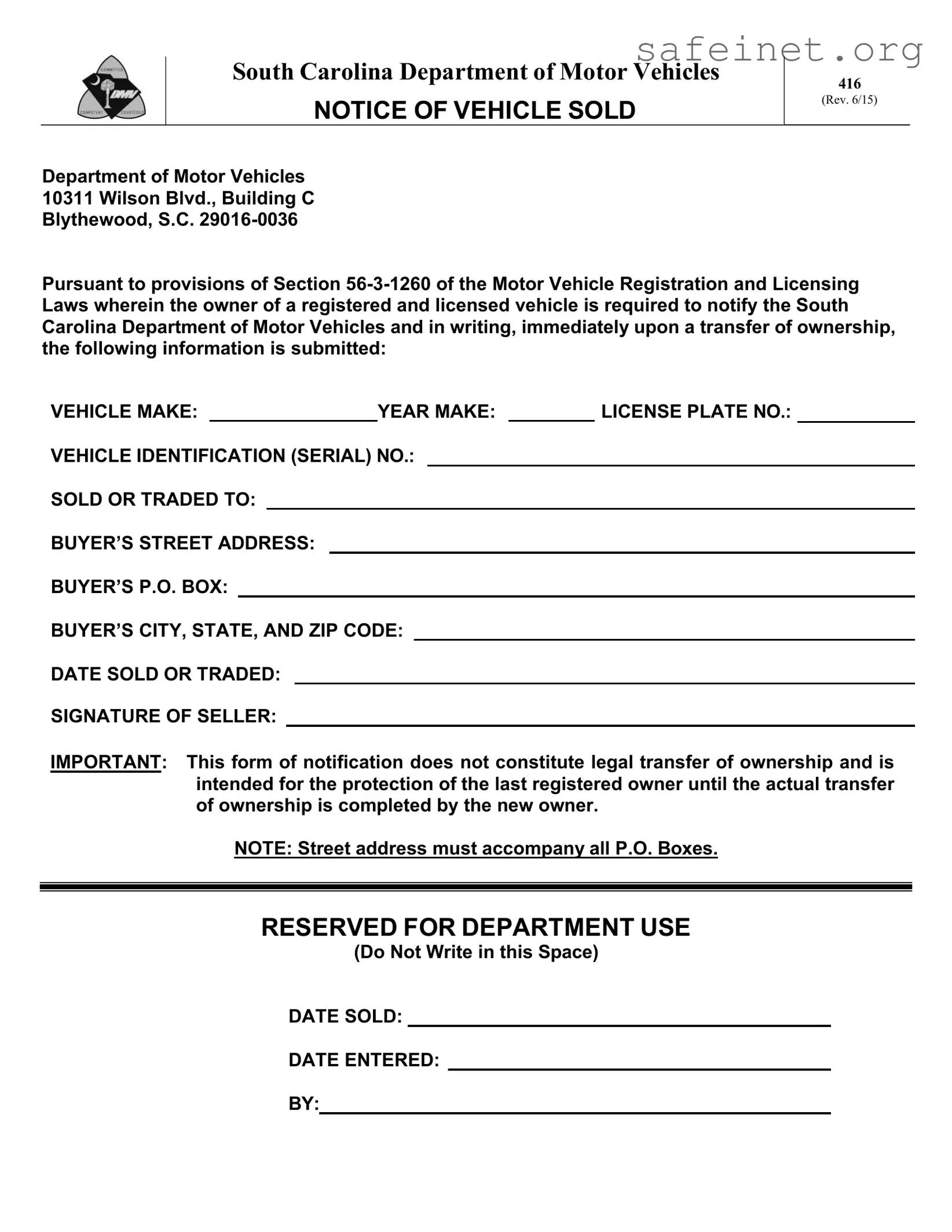
The South Carolina DMV 416 form serves a crucial role in the process of vehicle ownership transfer within the state. This form is designed for individuals who have sold or traded their registered vehicles and need to formally notify the South Carolina Department of Motor Vehicles (DMV) of this change. It requires the seller to provide essential information, including the vehicle's make, year, license number, and the unique vehicle identification number (VIN). Additionally, the seller must include the name and address of the new owner, along with the date of the sale or trade. It is important to note that while this form acts as a notification of the sale, it does not legally transfer ownership; rather, it protects the last registered owner until the new owner completes the transfer process. Proper completion of the DMV 416 form is vital, as it ensures that the DMV has accurate records and helps prevent potential liability issues for the seller. Furthermore, the form emphasizes the necessity of including a street address alongside any P.O. Box information, highlighting the importance of clear communication with the DMV. Ultimately, this form is a key step in the vehicle sale process, ensuring that all parties are informed and protected.

South Carolina Department of Motor Vehicles |
416 |
NOTICE OF VEHICLE SOLD |
(Rev. 6/15) |
|
Department of Motor Vehicles
10311 Wilson Blvd., Building C
Blythewood, S.C.
Pursuant to provisions of Section
VEHICLE MAKE: |
|
YEAR MAKE: |
|
LICENSE PLATE NO.: |
VEHICLE IDENTIFICATION (SERIAL) NO.:
SOLD OR TRADED TO:
BUYER’S STREET ADDRESS:
BUYER’S P.O. BOX:
BUYER’S CITY, STATE, AND ZIP CODE:
DATE SOLD OR TRADED:
SIGNATURE OF SELLER:
IMPORTANT: This form of notification does not constitute legal transfer of ownership and is intended for the protection of the last registered owner until the actual transfer of ownership is completed by the new owner.
NOTE: Street address must accompany all P.O. Boxes.
RESERVED FOR DEPARTMENT USE
(Do Not Write in this Space)
DATE SOLD:
DATE ENTERED:
BY:
| Fact Name | Description |
|---|---|
| Form Purpose | The SC DMV 416 form serves as a notification to the South Carolina Department of Motor Vehicles regarding the sale or trade of a registered vehicle. |
| Governing Law | This form is governed by Section 56-3-1260 of the Motor Vehicle Registration and Licensing Laws of South Carolina. |
| Notification Requirement | Owners must notify the DMV in writing immediately upon transferring ownership of a vehicle to ensure proper record-keeping. |
| Information Required | Key details needed on the form include vehicle make, year, license number, vehicle identification number, and the buyer's information. |
| Signature Requirement | The seller must sign the form, confirming the accuracy of the information provided and the sale or trade of the vehicle. |
| Legal Transfer Clarification | Filing the SC DMV 416 does not legally transfer ownership; it protects the last registered owner until the new owner completes the transfer. |
| P.O. Box Requirement | When providing an address, a street address must accompany any P.O. Box listed to ensure accurate processing by the DMV. |
Filling out the SC DMV 416 form is a straightforward process. This form is essential for notifying the South Carolina Department of Motor Vehicles about the sale or trade of a vehicle. After completing the form, you will need to submit it to ensure that your records are updated. Here’s how to fill it out step by step.
Once you have completed these steps, review the form for accuracy. After confirming that all the information is correct, submit the form to the DMV as instructed. This will help protect you as the last registered owner until the new owner completes the transfer of ownership.
What is the purpose of the SC DMV 416 form?
The SC DMV 416 form, also known as the Notice of Vehicle Sold, is designed to notify the South Carolina Department of Motor Vehicles about the sale or trade of a registered vehicle. This form must be completed and submitted by the seller immediately upon transferring ownership. It helps protect the last registered owner until the new owner completes the official transfer of ownership.
What information do I need to provide on the SC DMV 416 form?
When filling out the SC DMV 416 form, you will need to provide specific details about the vehicle being sold or traded. This includes the vehicle's make, year, license number, and vehicle identification number (VIN). Additionally, you must include the buyer's information, such as their street address, city, state, and ZIP code, as well as the date of the sale or trade. Lastly, your signature as the seller is required to validate the notification.
Does submitting the SC DMV 416 form transfer ownership of the vehicle?
No, submitting the SC DMV 416 form does not constitute a legal transfer of ownership. It serves only as a notification to the DMV that the vehicle has been sold or traded. The actual transfer of ownership is completed when the new owner registers the vehicle in their name. This form helps protect the last registered owner from any liabilities related to the vehicle until the new owner has officially registered it.
What should I do if I sold my vehicle but forgot to submit the SC DMV 416 form?
If you have sold your vehicle and forgot to submit the SC DMV 416 form, it is important to do so as soon as possible. This notification helps ensure that you are not held responsible for any future incidents related to the vehicle. You should complete the form and send it to the South Carolina DMV immediately. If you have any concerns about potential liabilities, consider contacting the DMV for further guidance on how to protect yourself after the sale.
Incomplete Information: One of the most common mistakes is not filling out all required fields. Ensure that every section, including vehicle make, year, license number, and vehicle identification number, is completely filled out. Missing information can delay processing.
Incorrect Address: Providing an incorrect or incomplete address for the buyer can lead to issues. It is essential to include both the street address and the P.O. Box, if applicable, to ensure proper delivery of notifications.
Signature Issues: Forgetting to sign the form is another frequent error. The seller's signature is crucial for validating the transfer. Double-check that the signature is present and matches the name listed on the form.
Misunderstanding the Purpose: Some individuals mistakenly believe that submitting this form finalizes the transfer of ownership. However, it merely serves as a notification to the DMV. Make sure to understand that actual ownership transfer must be completed by the new owner.
When dealing with vehicle ownership transfers in South Carolina, the SC DMV 416 form is just one piece of the puzzle. To ensure a smooth transition and compliance with state laws, several other forms and documents may be necessary. Below is a list of commonly used documents that accompany the SC DMV 416 form.
Understanding these documents can simplify the vehicle transfer process and ensure compliance with South Carolina laws. Each form plays a vital role in protecting the rights of both the seller and the buyer, making it essential to have them in order during the transaction.
The Vehicle Bill of Sale is a document that serves as proof of the sale of a vehicle. Like the SC DMV 416 form, it includes essential details such as the make, model, and year of the vehicle, as well as the names and addresses of both the seller and buyer. This document is often required by state authorities to facilitate the transfer of ownership and ensure that the vehicle's registration is updated accordingly.
The Application for Title is another document that shares similarities with the SC DMV 416 form. It is used when a vehicle changes ownership and requires the new owner to apply for a title in their name. Both documents require information about the vehicle, including its identification number, and both serve to formalize the ownership transfer process. The Application for Title is crucial for ensuring that the new owner is recognized legally as the vehicle's owner.
The Notice of Transfer of Ownership is similar to the SC DMV 416 form in that it is also a notification to the relevant motor vehicle department about a change in vehicle ownership. This document typically includes the seller's and buyer's information, along with details about the vehicle. It serves a similar purpose in protecting the seller from liability for any issues that may arise after the sale, until the new owner officially registers the vehicle.
The Vehicle Registration Application is another related document. While it is primarily used to register a vehicle in the new owner's name, it often accompanies the sale process. Both the Vehicle Registration Application and the SC DMV 416 form require details about the vehicle and the parties involved. They work together to ensure that the vehicle is legally recognized under the new owner's name.
The Release of Liability form is designed to protect the seller from any future claims or liabilities related to the vehicle after it has been sold. Like the SC DMV 416 form, it requires the seller to provide information about the vehicle and the buyer. This document ensures that once the vehicle is sold, the seller is no longer responsible for any incidents involving the vehicle, thus serving a protective function for the previous owner.
The Odometer Disclosure Statement is often required during the sale of a vehicle to document the mileage at the time of transfer. Similar to the SC DMV 416 form, it provides important information that must be disclosed during the sale. Both documents help to ensure transparency in the transaction and protect the interests of both the seller and buyer.
The Affidavit of Vehicle Ownership is a document that can be used when the original title is lost or unavailable. It serves to declare ownership of a vehicle, similar to how the SC DMV 416 form notifies the DMV of a sale. Both documents require the owner to provide specific information about the vehicle and affirm their ownership, thus facilitating the transfer process even in the absence of a physical title.
The Title Transfer Form is specifically used to officially transfer the title of a vehicle from one owner to another. Like the SC DMV 416 form, it requires details about the vehicle and the parties involved in the transaction. This form is essential for legally recording the change in ownership and ensuring that the new owner is recognized by the state.
The Vehicle Ownership Transfer Agreement is another document that outlines the terms of the sale between the buyer and seller. Similar to the SC DMV 416 form, it includes information about the vehicle and the parties involved. This agreement serves to clarify the terms of the sale and protect both parties, ensuring that the ownership transfer is conducted smoothly and legally.
The Duplicate Title Application is used when a vehicle owner needs to replace a lost or damaged title. While it serves a different purpose than the SC DMV 416 form, both documents are essential in the ownership transfer process. The Duplicate Title Application ensures that the new owner can obtain a valid title, which is necessary for registering the vehicle and proving ownership.
When filling out the South Carolina DMV 416 form, it's important to follow certain guidelines to ensure accuracy and compliance. Here are some key dos and don'ts:
By following these guidelines, you can help ensure a smooth process when notifying the DMV of a vehicle sale or trade.
Here are five common misconceptions about the South Carolina DMV 416 form, along with clarifications for each:
When filling out the SC DMV 416 form, keep the following key takeaways in mind: