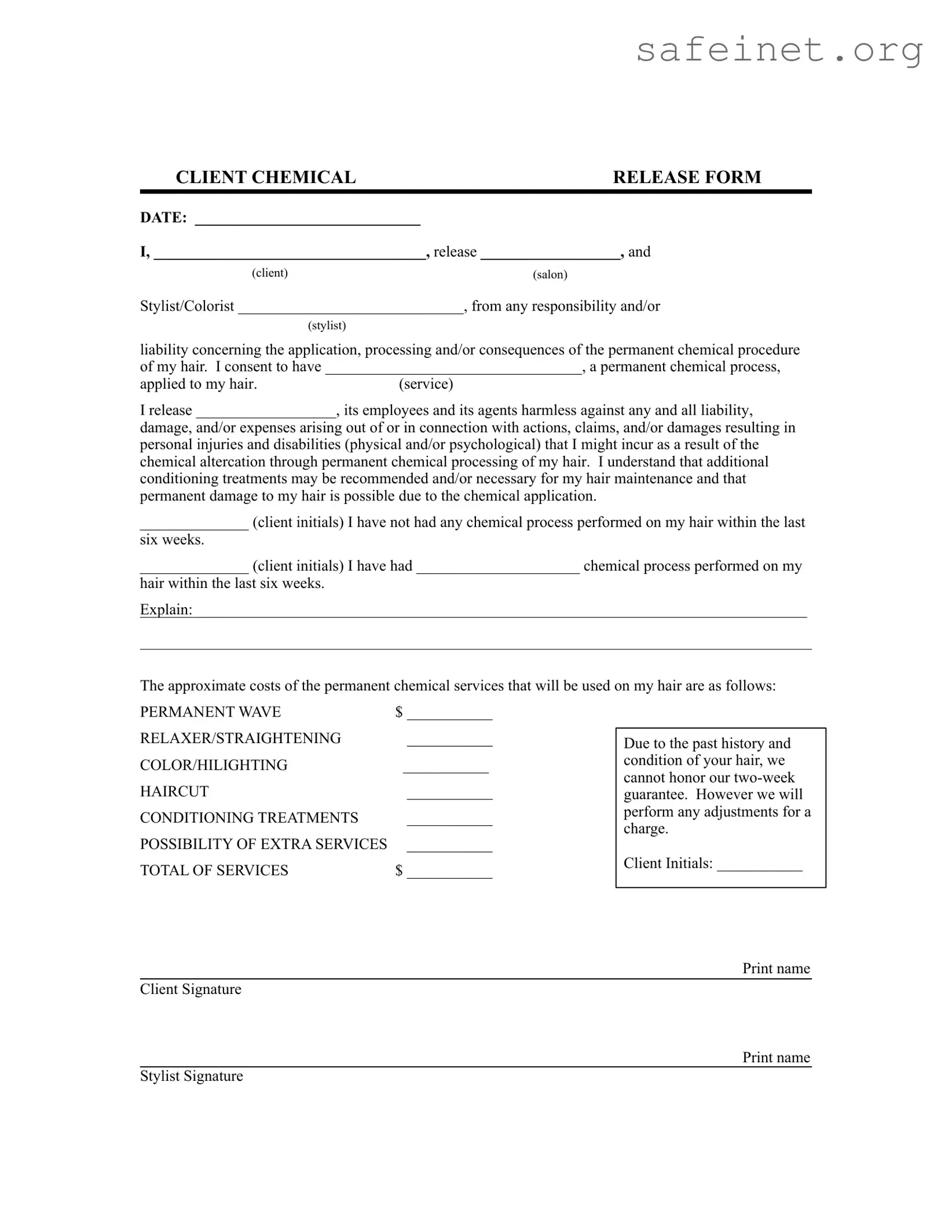
When considering a permanent chemical service at a salon, understanding the Salon Chemical Waiver form is crucial for both clients and stylists. This form serves as a release of liability, protecting the salon and its professionals from any potential claims arising from the chemical treatment. Clients are asked to provide their name and the name of the stylist performing the service, along with the specific chemical process being applied. The waiver outlines the risks associated with chemical treatments, including possible personal injuries and damage to hair. Clients must acknowledge their hair's condition and any previous chemical processes, ensuring that stylists can make informed decisions about the treatment. Additionally, the form details the estimated costs for various services, such as permanent waves, relaxers, and conditioning treatments. By signing this document, clients agree to the terms and conditions, including the understanding that further conditioning may be necessary for hair maintenance. This proactive approach helps foster clear communication and sets the stage for a successful salon experience.

CLIENT CHEMICALRELEASE FORM
DATE: _____________________________
I, ___________________________________, release __________________, and
(client)(salon)
Stylist/Colorist _____________________________, from any responsibility and/or
(stylist)
liability concerning the application, processing and/or consequences of the permanent chemical procedure of my hair. I consent to have _________________________________, a permanent chemical process,
applied to my hair.(service)
I release __________________, its employees and its agents harmless against any and all liability,
damage, and/or expenses arising out of or in connection with actions, claims, and/or damages resulting in personal injuries and disabilities (physical and/or psychological) that I might incur as a result of the chemical altercation through permanent chemical processing of my hair. I understand that additional conditioning treatments may be recommended and/or necessary for my hair maintenance and that permanent damage to my hair is possible due to the chemical application.
______________ (client initials) I have not had any chemical process performed on my hair within the last
six weeks.
______________ (client initials) I have had _____________________ chemical process performed on my
hair within the last six weeks.
Explain: ______________________________________________________________________________
The approximate costs of the permanent chemical services that will be used on my hair are as follows:
PERMANENT WAVE |
$ ___________ |
|
|
RELAXER/STRAIGHTENING |
___________ |
|
|
Due to the past history and |
|||
COLOR/HILIGHTING |
___________ |
condition of your hair, we |
|
HAIRCUT |
___________ |
cannot honor our |
|
guarantee. However we will |
|||
CONDITIONING TREATMENTS |
___________ |
perform any adjustments for a |
|
charge. |
|||
POSSIBILITY OF EXTRA SERVICES |
___________ |
||
Client Initials: ___________ |
|||
TOTAL OF SERVICES |
$ ___________ |
||
|
|||
|
|
|
Print name
Client Signature
Print name
Stylist Signature
| Fact Name | Description |
|---|---|
| Purpose of the Waiver | This form releases the salon and its employees from liability related to chemical hair treatments. |
| Client Consent | Clients must consent to the application of permanent chemical processes on their hair. |
| Potential Risks | Clients acknowledge the possibility of permanent damage to their hair due to chemical applications. |
| Previous Treatments | Clients must disclose any chemical treatments received within the last six weeks. |
| Cost Estimates | The form includes estimated costs for various permanent chemical services. |
| Adjustments Policy | While a two-week guarantee is not honored, adjustments can be made for a fee. |
| Governing Laws | Specific state laws may govern the use of such waivers; clients should check local regulations. |
Completing the Salon Chemical Waiver form is an important step in ensuring that both the client and the salon are clear about the procedures being undertaken and the associated risks. This form serves to protect both parties by outlining the client's consent and understanding of the chemical services being performed. Here’s how to fill it out correctly:
What is a Salon Chemical Waiver form?
The Salon Chemical Waiver form is a document that clients sign to acknowledge the risks associated with chemical treatments for their hair. It releases the salon and its staff from liability related to the application and potential consequences of these treatments.
Why do I need to sign this form?
Signing the form ensures that you understand the potential risks involved in chemical processes, such as permanent waves or relaxers. It also protects the salon from legal claims if something goes wrong during or after the treatment.
What types of services are covered by this waiver?
The waiver covers various permanent chemical services, including permanent waves, relaxers, straightening treatments, and any other chemical processes that may alter the structure of your hair.
What should I disclose about my hair history?
It is crucial to inform the stylist about any chemical processes you have had in the last six weeks. This includes treatments like coloring, highlighting, or any other chemical alterations. This information helps the stylist assess the condition of your hair and determine the safest approach for your treatment.
What happens if I have had a chemical process recently?
If you have undergone a chemical process within the last six weeks, you must provide details on the form. This disclosure helps the stylist understand your hair's current state and the potential risks of further chemical treatments.
What are the potential risks of chemical treatments?
Chemical treatments can cause various issues, including hair damage, breakage, or changes in texture. The waiver outlines these risks, emphasizing that permanent damage is possible and that additional conditioning treatments may be necessary for maintenance.
What costs are associated with the services listed in the waiver?
The waiver includes approximate costs for different services, such as permanent waves, relaxers, and conditioning treatments. Clients are encouraged to review these costs before proceeding with any treatment.
Will I receive any guarantees after my treatment?
The waiver states that, due to the history and condition of your hair, the salon may not honor a two-week guarantee for the results of the treatment. However, adjustments can be made for a fee if necessary.
What if I experience issues after my treatment?
If you experience any problems after your chemical treatment, it is important to communicate with your stylist. They can assess the situation and recommend solutions, which may involve additional services for a charge.
Is my signature on the waiver mandatory?
Yes, your signature is mandatory. It indicates that you have read and understood the terms of the waiver, including the risks involved with the chemical treatments you are about to receive.
Inaccurate Personal Information: Clients often forget to fill in their full name or provide incorrect details. This can lead to confusion and complications in the service process.
Missing Date: Failing to write the date at the top of the form can create issues with record-keeping and service timelines.
Inconsistent Chemical History: Clients may not accurately disclose their recent chemical treatments. This oversight can lead to adverse reactions or unsatisfactory results.
Omitting Initials: Some clients neglect to initial the sections indicating their understanding of potential risks and recommendations. This could imply a lack of acknowledgment of the information provided.
Failure to Specify Services: Clients sometimes leave the service section blank or incomplete. This can result in misunderstandings about the specific treatments being performed.
Not Reviewing Costs: Clients may overlook the cost section. This can lead to unexpected expenses if they are not aware of the pricing before the service begins.
Ignoring Recommendations: Some clients might skip reading the notes about additional conditioning treatments or the possibility of permanent damage. This can lead to dissatisfaction if the expected outcomes are not achieved.
When visiting a salon for chemical treatments, it's important to understand the various forms and documents that may accompany the Salon Chemical Waiver form. Each of these documents serves a specific purpose, ensuring that both the client and the salon are protected and informed throughout the process. Below are some commonly used forms that complement the Salon Chemical Waiver.
Understanding these documents can enhance the salon experience and foster a better relationship between clients and stylists. Being informed helps clients make educated decisions about their hair care and ensures a smoother process during chemical treatments.
The Salon Chemical Waiver form shares similarities with a Medical Release Form. Both documents require individuals to acknowledge the risks associated with a procedure, whether it be a chemical treatment for hair or a medical procedure. In both cases, clients must provide informed consent, indicating that they understand the potential outcomes and agree to release the service provider from liability. The language in both forms emphasizes personal responsibility and the importance of understanding the risks involved.
Another document akin to the Salon Chemical Waiver is the Tattoo Consent Form. This form also serves to inform clients about the potential risks associated with getting a tattoo, such as allergic reactions or infections. Just like the Salon Chemical Waiver, the Tattoo Consent Form releases the tattoo artist from liability, ensuring that the client is aware of the consequences of their decision. Both documents emphasize informed consent, requiring clients to acknowledge their understanding of the procedures and their potential outcomes.
A Hair Extension Release Form is another similar document. This form informs clients about the risks involved in applying hair extensions, including damage to natural hair or allergic reactions to the adhesive. Like the Salon Chemical Waiver, it requires clients to release the stylist from any liability related to the application process. Both documents aim to protect service providers while ensuring that clients are fully aware of the implications of their choices.
The Laser Hair Removal Consent Form also shares common ground with the Salon Chemical Waiver. Clients must acknowledge the potential side effects and risks associated with laser treatments, such as skin irritation or discoloration. This form, like the Salon Chemical Waiver, includes a release of liability, making it clear that clients accept responsibility for their decisions and the outcomes of the procedure.
Similarly, a Body Piercing Consent Form is comparable to the Salon Chemical Waiver. This document outlines the risks involved in body piercing, such as infection or allergic reactions. Clients must give their consent and release the piercer from liability, mirroring the structure and intent of the Salon Chemical Waiver. Both forms focus on ensuring that clients understand the potential consequences of their choices.
The Cosmetic Procedure Consent Form is another document that resembles the Salon Chemical Waiver. This form is used for various cosmetic procedures, requiring clients to acknowledge the risks and potential complications. Like the Salon Chemical Waiver, it includes a liability release, ensuring that clients are informed about the procedure and accept responsibility for any adverse effects that may arise.
A Personal Trainer Liability Waiver also shares similarities with the Salon Chemical Waiver. In this case, clients must acknowledge the risks associated with physical training, such as injury or strain. The waiver protects the trainer from liability, similar to how the Salon Chemical Waiver protects the stylist. Both documents emphasize informed consent and the importance of understanding the risks involved in the respective services.
The Pet Grooming Release Form is another document that aligns with the Salon Chemical Waiver. Pet owners must acknowledge the risks associated with grooming procedures, such as allergic reactions or injuries. This form also includes a liability release, ensuring that the groomer is protected from claims related to the grooming process. Both documents highlight the need for clients to be informed about the potential risks and to accept responsibility for their decisions.
Lastly, a Fitness Class Waiver is similar to the Salon Chemical Waiver. Participants in fitness classes must understand the risks involved in physical activities, such as injury or strain. This waiver releases the instructor from liability, just as the Salon Chemical Waiver protects the stylist. Both documents aim to ensure that clients are aware of the risks and agree to assume responsibility for their participation.
When filling out the Salon Chemical Waiver form, it’s important to ensure that you complete it accurately and thoughtfully. Here are five things you should and shouldn’t do:
Misconceptions about the Salon Chemical Waiver form can lead to misunderstandings regarding the responsibilities of both the client and the salon. Below are six common misconceptions:
When considering the use of a Salon Chemical Waiver form, several important aspects should be kept in mind. This document serves as a crucial agreement between the client and the salon, particularly regarding chemical treatments. Here are some key takeaways:
In summary, the Salon Chemical Waiver form is a vital document that protects both the client and the salon. By carefully reviewing and understanding its contents, clients can make informed decisions about their hair treatments.