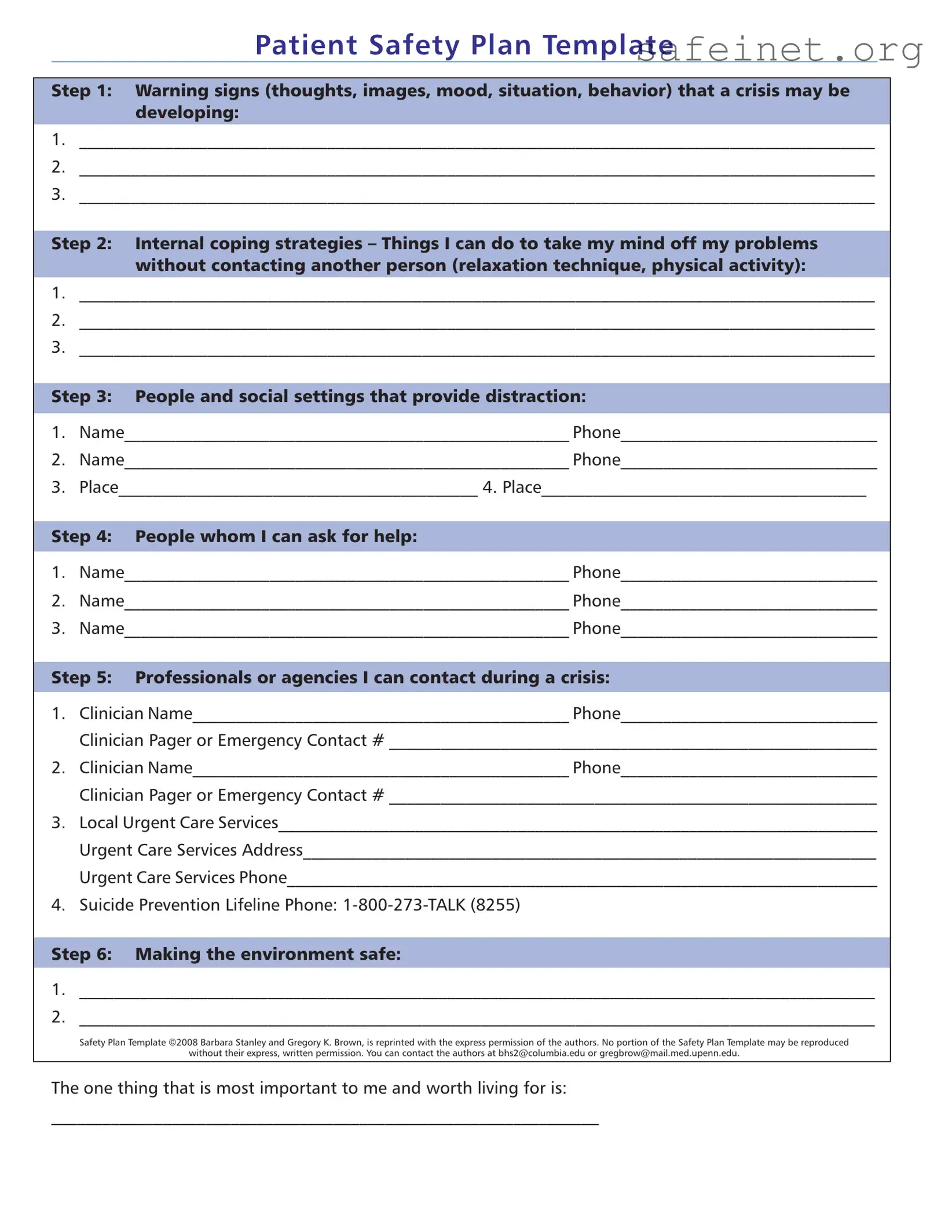
The Safety Plan form is a vital tool designed to help individuals manage crises effectively and safely. It guides users through a structured process to identify warning signs that may indicate a developing crisis. Recognizing these signs is the first step in preventing escalation. Next, the form encourages individuals to outline internal coping strategies, which are personal techniques that can provide relief without needing to reach out to others. Additionally, it emphasizes the importance of social support by listing people and places that can offer distraction during tough times. Identifying trusted individuals who can provide help is crucial, as is knowing the professionals or agencies to contact in a crisis. The form also includes a section on making the environment safer, which is essential for minimizing risks. Finally, it prompts users to reflect on what matters most to them, reinforcing the importance of hope and purpose. This comprehensive approach empowers individuals to take control of their mental health and create a personalized plan for navigating difficult moments.

Patient Safety Plan Template
Step 1: Warning signs (thoughts, images, mood, situation, behavior) that a crisis may be developing:
1._____________________________________________________________________________________________
2._____________________________________________________________________________________________
3._____________________________________________________________________________________________
Step 2: Internal coping strategies – Things I can do to take my mind off my problems without contacting another person (relaxation technique, physical activity):
1._____________________________________________________________________________________________
2._____________________________________________________________________________________________
3._____________________________________________________________________________________________
Step 3: People and social settings that provide distraction:
1.Name____________________________________________________ Phone______________________________
2.Name____________________________________________________ Phone______________________________
3.Place__________________________________________ 4. Place______________________________________
Step 4: People whom I can ask for help:
1.Name____________________________________________________ Phone______________________________
2.Name____________________________________________________ Phone______________________________
3.Name____________________________________________________ Phone______________________________
Step 5: Professionals or agencies I can contact during a crisis:
1.Clinician Name____________________________________________ Phone______________________________
Clinician Pager or Emergency Contact # _________________________________________________________
2.Clinician Name____________________________________________ Phone______________________________
Clinician Pager or Emergency Contact # _________________________________________________________
3.Local Urgent Care Services______________________________________________________________________
Urgent Care Services Address___________________________________________________________________
Urgent Care Services Phone_____________________________________________________________________
4.Suicide Prevention Lifeline Phone:
Step 6: Making the environment safe:
1._____________________________________________________________________________________________
2._____________________________________________________________________________________________
Safety Plan Template ©2008 Barbara Stanley and Gregory K. Brown, is reprinted with the express permission of the authors. No portion of the Safety Plan Template may be reproduced
without their express, written permission. You can contact the authors at [email protected] or [email protected].
The one thing that is most important to me and worth living for is:
________________________________________________________________
| Fact Name | Description |
|---|---|
| Purpose of the Safety Plan | The Safety Plan is designed to help individuals identify warning signs of a crisis and develop strategies for coping and seeking help. |
| Step-by-Step Process | The form guides users through a structured process, encouraging them to outline their warning signs, coping strategies, and support systems. |
| Customization | Each Safety Plan can be tailored to the individual's specific needs, making it a personal and effective tool for crisis management. |
| Confidentiality | The information contained in the Safety Plan is private and should only be shared with trusted individuals or professionals. |
| Governing Laws | In many states, mental health crisis planning is supported by laws that emphasize patient rights and the importance of crisis intervention strategies. |
| Access to Resources | The Safety Plan encourages individuals to list local resources, including urgent care services and crisis hotlines, ensuring they have immediate access to help when needed. |
After completing the Safety Plan form, it is essential to keep it in a safe place where it can be easily accessed during times of need. This plan will serve as a guide to help manage crises effectively.
What is the purpose of the Safety Plan form?
The Safety Plan form is designed to help individuals identify warning signs of a potential crisis and outline strategies to cope with those feelings. It serves as a personalized guide to manage distress and seek support when needed. By documenting coping strategies, support systems, and emergency contacts, individuals can feel more prepared to handle difficult situations effectively.
How do I fill out the warning signs section?
In the warning signs section, you should list specific thoughts, images, moods, situations, or behaviors that indicate you may be entering a crisis. Reflect on your past experiences to identify patterns. For example, you might note feelings of hopelessness or certain triggers that lead to distress. This step is crucial as it helps you recognize early signs of a crisis.
What should I include in the internal coping strategies section?
In this section, list activities that help you distract yourself from negative thoughts without needing to reach out to others. These can include relaxation techniques, hobbies, or physical activities. Examples might be deep breathing exercises, going for a walk, or engaging in creative pursuits. The goal is to have a set of go-to strategies that you can use independently when you feel overwhelmed.
Who should I list as people and social settings that provide distraction?
Consider including friends, family members, or social groups that you enjoy spending time with. These are individuals or environments that uplift your mood and help you take your mind off your problems. Provide names and contact information for easy access when you need support. Additionally, think about places that make you feel comfortable and safe, such as a favorite café or park.
What types of professionals or agencies should I include for crisis contact?
List mental health professionals, such as therapists or counselors, who are familiar with your situation. Include their contact information, as well as any emergency contacts they may provide. You should also consider local urgent care services and the Suicide Prevention Lifeline. Having these contacts readily available can make it easier to reach out for help during a crisis.
How can I make my environment safer?
In this section, think about specific actions you can take to create a safer space for yourself. This might include removing harmful objects or setting up a designated safe area in your home. Consider what changes would make you feel more secure and at ease. It’s important to take proactive steps to minimize risks and enhance your sense of safety.
Leaving sections blank: Many individuals forget to fill out important sections, especially in the initial steps. Each part of the form is designed to capture crucial information about warning signs and coping strategies. Ensure every section is completed to provide a comprehensive safety plan.
Not being specific: When describing warning signs or coping strategies, vague answers can lead to confusion during a crisis. Instead of writing “feeling sad,” try to identify specific thoughts or situations that trigger those feelings. This clarity can make a significant difference in understanding and managing emotions.
Failing to update contact information: It's essential to provide accurate and current contact details for friends, family, or professionals. Outdated phone numbers or addresses can hinder access to support during critical moments. Regularly review and revise this information to ensure it remains relevant.
Ignoring the importance of professional help: Some people may overlook the need to list professionals or agencies. This can lead to a lack of immediate resources during a crisis. Identify reliable contacts, such as therapists or hotlines, to have at your fingertips when needed.
Neglecting environmental safety: The section on making the environment safe is often underutilized. It's crucial to consider physical surroundings and remove any potential hazards. Taking proactive steps can create a safer space, which is vital for mental well-being.
The Safety Plan form serves as a crucial tool for individuals seeking to manage their mental health and navigate crises. Alongside this form, several other documents can enhance the support system and provide additional resources. Below is a list of commonly used forms and documents that complement the Safety Plan.
Utilizing these documents in conjunction with the Safety Plan can create a more robust framework for managing mental health challenges. Each form plays a unique role in fostering a supportive environment, empowering individuals to take charge of their well-being.
The Crisis Intervention Plan is similar to the Safety Plan form as it also outlines steps to take during a mental health crisis. This document typically includes identifying warning signs, coping strategies, and resources for support. Like the Safety Plan, it emphasizes personal strengths and community connections, ensuring individuals have a clear understanding of who to contact and what actions to take in moments of distress.
The Advance Directive serves a similar purpose by focusing on an individual's preferences for medical treatment during a crisis. This document allows individuals to express their wishes regarding healthcare decisions when they are unable to communicate. Both the Advance Directive and the Safety Plan encourage proactive planning to ensure that a person's needs and preferences are respected in challenging situations.
The Behavioral Health Safety Assessment shares similarities with the Safety Plan by evaluating risk factors and protective factors related to an individual’s mental health. This assessment identifies specific concerns and outlines strategies to mitigate risks. Both documents aim to create a comprehensive approach to safety, fostering awareness and preparedness in the face of potential crises.
The Wellness Recovery Action Plan (WRAP) is another document that aligns with the Safety Plan by focusing on personal recovery and wellness strategies. WRAP emphasizes self-care and proactive measures to maintain mental health. It includes coping strategies and support networks, similar to the Safety Plan, and encourages individuals to take an active role in their recovery journey.
When filling out the Safety Plan form, keep these important tips in mind:
Understanding the Safety Plan form can be crucial for those who may be experiencing a crisis or need support. However, several misconceptions can cloud its purpose and effectiveness. Here are five common misunderstandings:
By addressing these misconceptions, individuals can better utilize the Safety Plan form as a valuable resource in managing their mental health and ensuring their safety.
Here are some key takeaways about filling out and using the Safety Plan form: